Maxfli Tour vs. Snyder Tour: DTC Budget Ball Showdown
Our driver, iron, and wedge tests reveal how these budget balls compare to tour‑issue alternatives.
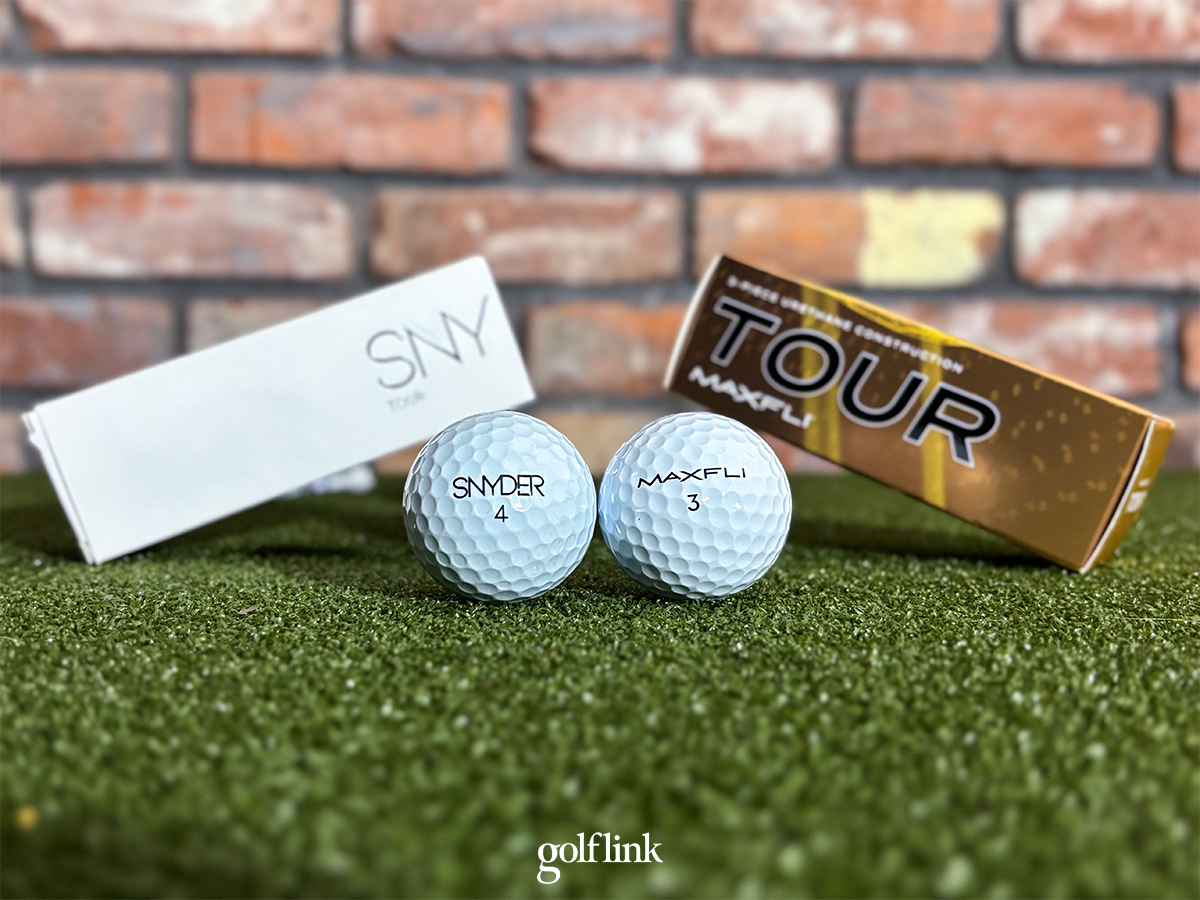
Just because you’re a better player with the speed to warrant a urethane-covered, tour-caliber ball, doesn’t mean you should spend $58 on a dozen golf balls.
Maxfli Tour and Snyder Tour provide two compelling alternatives, and when you buy them in bulk, they only set you back around $30 per dozen.
Maxfli has been a front-runner in the direct-to-consumer ball category in recent years, even adding a couple PGA Tour wins and a Ryder Cup appearance to its resume thanks to Ben Griffin’s use of the Maxfli Tour X.
Meanwhile, Snyder is an up-and-coming DTC option, offering six balls, from 2-piece distance to five-piece tour-caliber options at affordable prices.
So, how do these budget balls compare to each other, and more importantly, to the premium-priced tour-issue alternatives?
We put them to the test to find out.
How We Tested Maxfli Tour vs. Snyder Tour
We tested both the Maxfli Tour and the Snyder Tour using our standardized golf ball testing protocol on the SkyTrak ST Max launch monitor.
We use strict benchmarks for swing speed, shot quality, and delivery dynamics (neutral face and path) to keep results as consistent as possible. Because we test with human swings, not robots, our data reflects the performance differences you can actually expert to see on the course, not microscopic variances under perfect conditions.
Individual results will vary, but the patterns we see across dozens of shots are meaningful.
Learn more about how we test golf balls. You can also check out our full Maxfli Tour test data here and our Snyder Tour test data here.
Maxfli Tour vs. Snyder Tour Overview
Maxfli Tour
SHOP DICKS
SHOP GOLF GALAXY
Snyder Tour
SHOP SNYDER
SHOP AMAZON
Sometimes we compare two balls with completely different makeups, so you can see just how much of a performance difference can be baked into a ball’s DNA. Other times we compare balls with nearly identical construction, so you can see which one performs better in the areas you prioritize most.
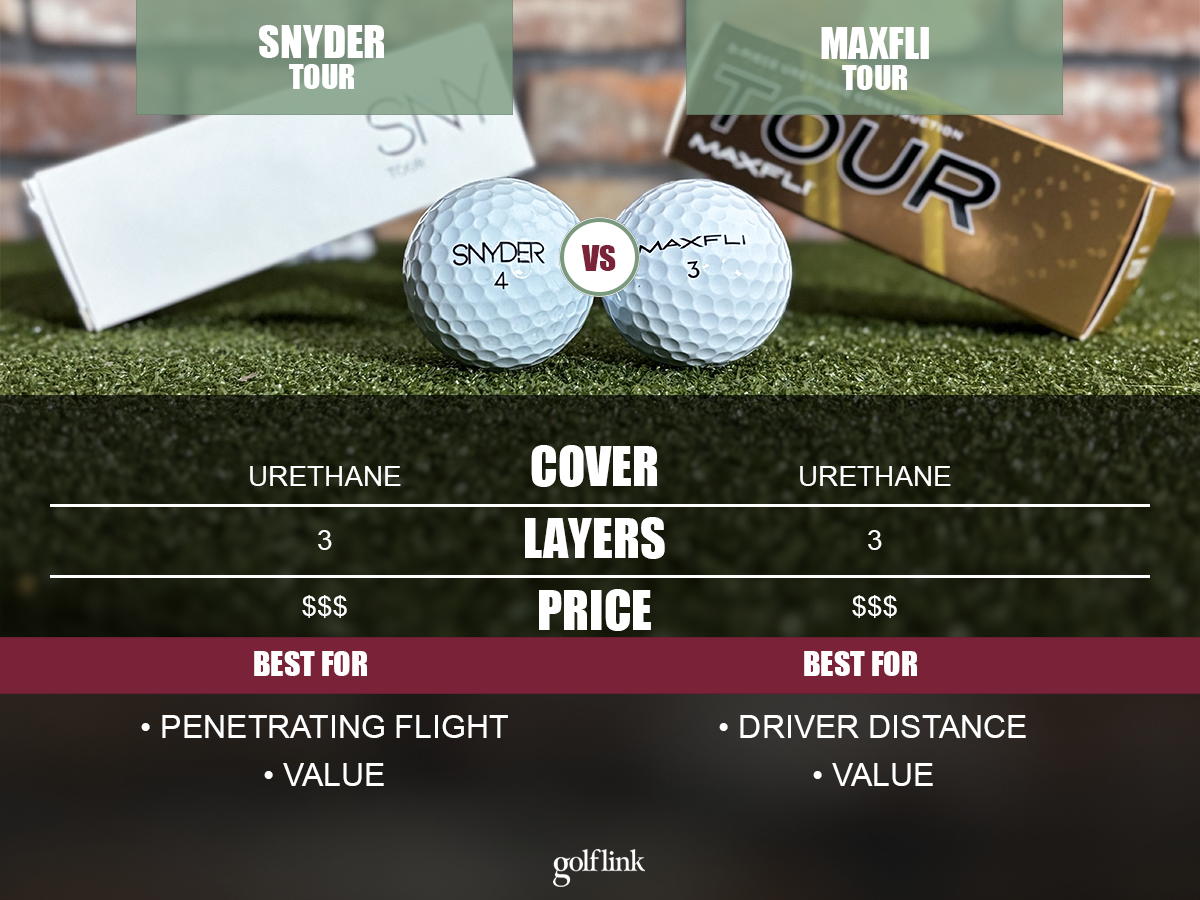
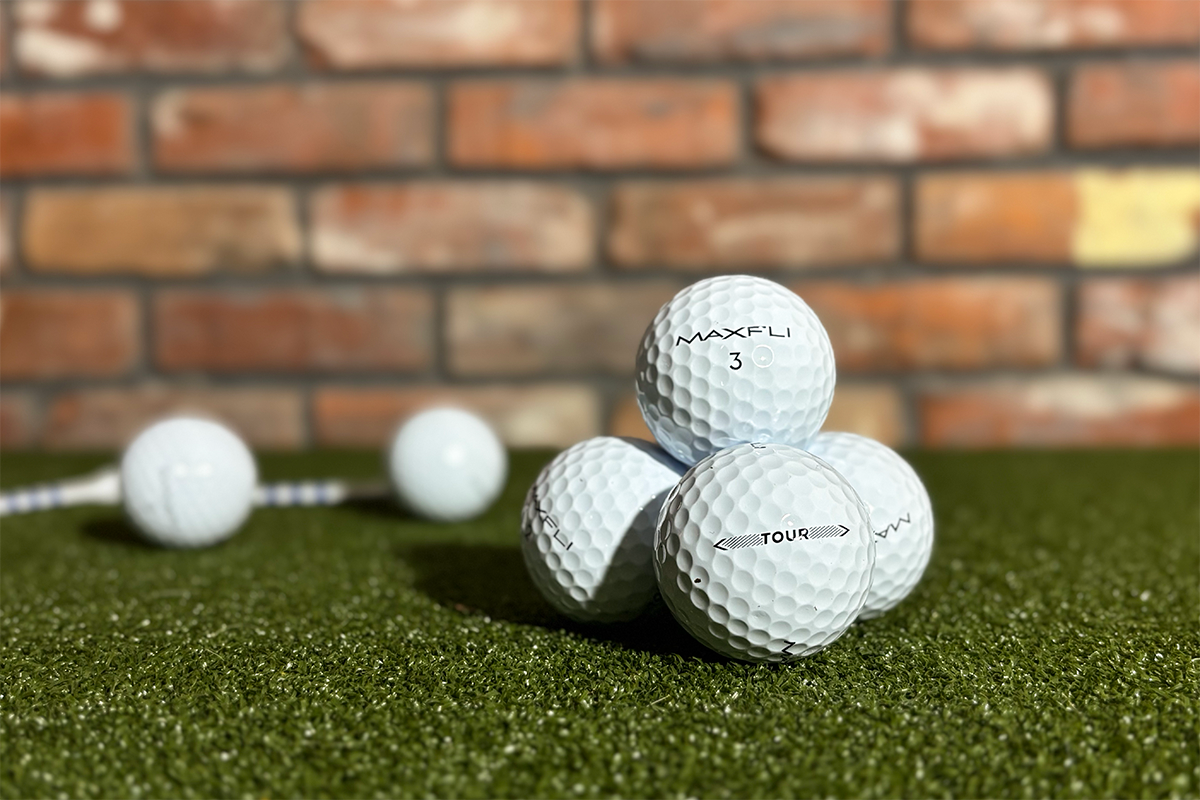
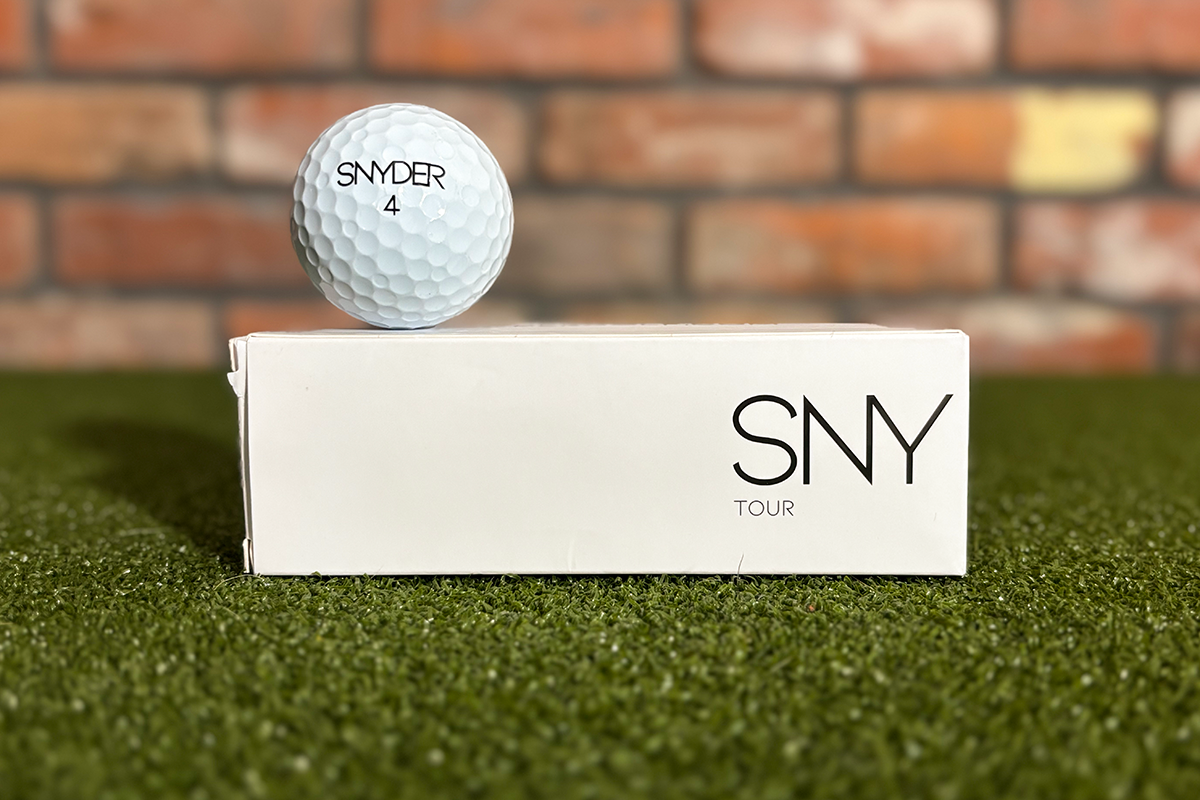
This comparison between Maxfli Tour [Read our full review here] and Snyder Tour is the latter. Both are 3-piece, urethane-covered balls priced well below tour-issue balls with the same construction.
|
Maxfli Tour |
Snyder Tour |
|
|
Cover |
Urethane |
Urethane |
|
Layers |
3 |
3 |
|
OEM Description |
Mid trajectory, mid long game spin, high short game spin |
Excellent distance, soft feel, greenside control |
|
Price |
$40 ($30 4-doz bulk) |
$39 ($33 6-doz bulk) |
Chrome Tour vs. Pro V1: Tested Head‑to‑Head
Driver Performance
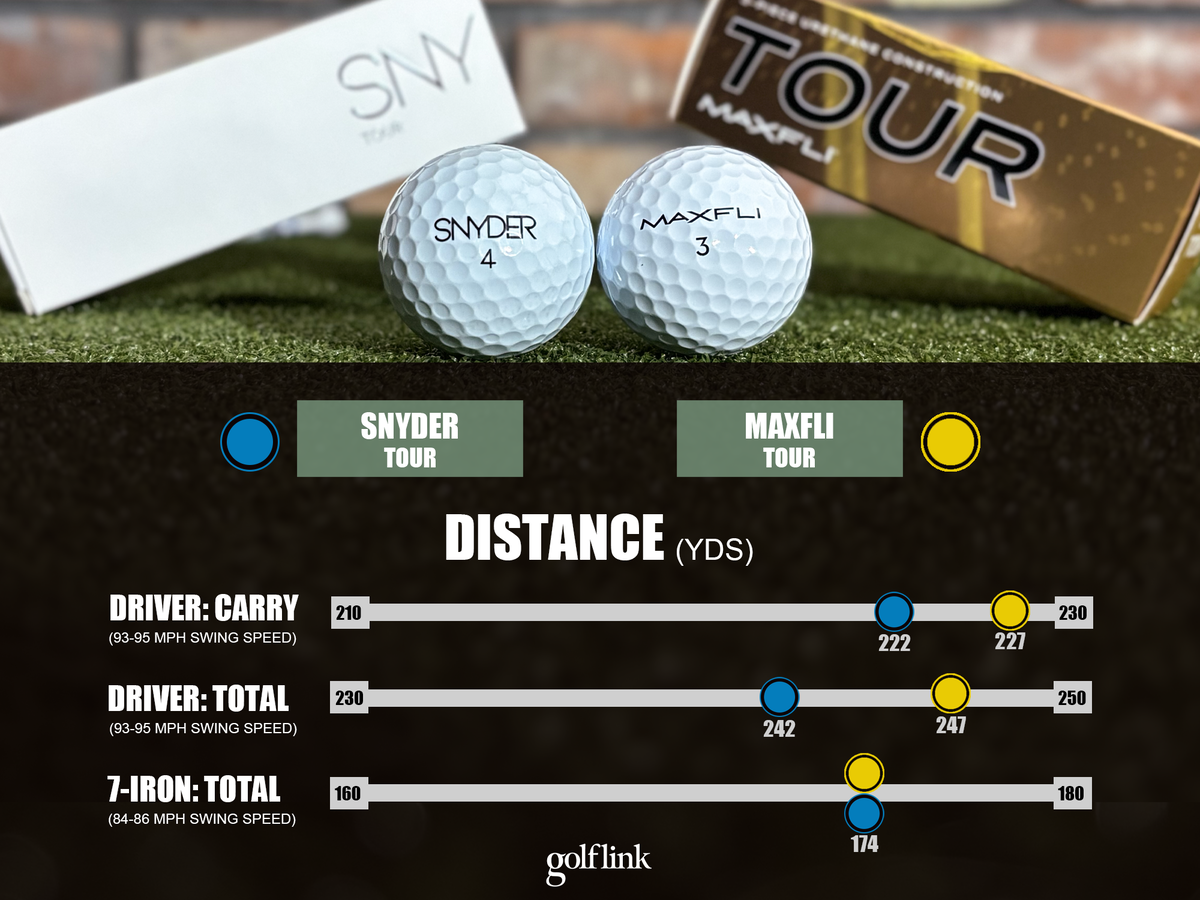
Maxfli Tour won the distance-off-the-tee battle. Faster ball speeds, slightly less spin, and a slightly higher launch helped it carry and roll farther than Snyder Tour – and just about every other ball – in our driver test.
With an average total distance of 242 yards in our driver test, Snyder Tour also proved to be better than average among the nearly two dozen golf balls we’ve tested so far, validating its status as a high-performing ball off the tee at a budget price.
|
Data |
Maxfli Tour |
Snyder Tour |
|
Ball Speed (mph) |
137.9 |
136.1 |
|
Carry (yds) |
226.5 |
222.0 |
|
Total (yds) |
246.6 |
242.0 |
|
Spin (rpm) |
2338 |
2512 |
|
Launch |
15.9° |
15.1° |
|
Offline (yds) |
17.5 |
11.8 |
7-Iron Performance
When it comes to performance in our 7-iron test, what we really care about is how the spin, apex, descent angle, and roll numbers compare to the field. Those give us the best answer to the question: how well can it hold a green?
The raw spin, launch and descent angle numbers are not as important as their relative performance against each other, and the group of balls in our database.
In that context, both balls fell a little below average.
|
Data |
Maxfli Tour |
Snyder Tour |
|
Ball Speed (mph) |
111.4 MPH |
112.0 |
|
Carry (yds) |
162.5 |
162.1 |
|
Roll (yds) |
10.9 |
11.9 |
|
Spin (rpm) |
4122 |
4321 |
|
Launch |
19.1° |
17.1° |
|
Apex (yds) |
24.0 |
21.6° |
|
Descent Angle |
41.1° |
39.3° |
Ball Flight
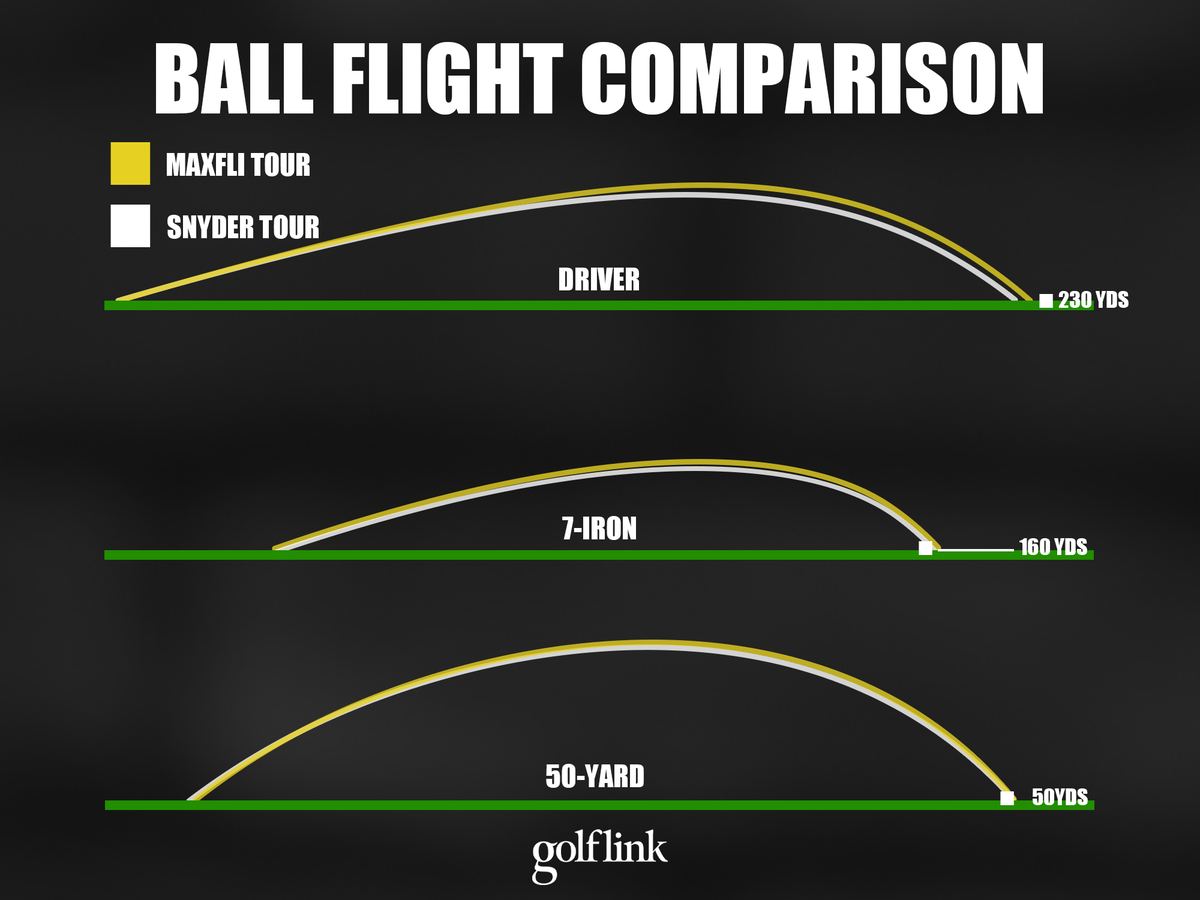
Snyder Tour showed more spin in our 7-iron test, but launched and peaked lower, creating a flatter descent angle and a little more roll out than Maxfli Tour.
The two-degree difference between the two should be the biggest takeaway from this test. If you prefer a lower flight, or want to bring your current flight down, Snyder is a better fit for you.
On the other hand, if you want to launch it a little higher with your irons, Maxfli Tour will fit your game better.
Also noteworthy, Maxfli Tour’s apex and descent angles are narrowly below the average mark. While you may notice a performance dropoff when compared to the elite balls in this category (Titleist Pro V1), you’re unlikely to see a dip compared to the majority of alternatives.
Distance
Maxfli Tour and Snyder Tour were nearly identical from a distance perspective in our 7-iron test. Separated by about a foot in both carry and total distance, there is no meaningful difference in that category between the two balls, and both churned out above average 7-iron distances overall.
50-Yard Wedge Performance
Comparatively, our 50-yard test showed a similar result to our 7-iron test. The Snyder Tour launched lower with more spin and a lower apex than Maxfli Tour. Roll, meanwhile, was virtually identical between the two balls.
Unlike our 7-iron test, however, both the Snyder and Maxfli Tour balls were near or above the overall average from 50-yards.
We’ll count that as another with for the DTC category.
|
Metric |
Maxfli Tour |
Snyder Tour |
|
Ball Speed (mph) |
52.9 |
53.0 |
|
Spin (rpm) |
6526 |
6624 |
|
Launch |
32.6° |
31.6° |
|
Apex (yds) |
9.8 |
9.5 |
|
Descent Angle |
43.0° |
41.9° |
|
Carry (yds) |
50.5 |
50.4 |
|
Roll (yds) |
2.5 |
2.6 |
Maxfli Tour vs. Snyder Tour: How to Choose
When we look at the test as a whole, both Snyder Tour and Maxfli Tour performed well, especially when you factor in cost.
Both are better than average off the tee (Maxfli Tour is actually one of the very longest off the tee), and right around average with irons and wedges, while checking in roughly $25 per dozen less than the premium alternatives when you buy in bulk.
That’s a big factor to consider.
If there’s one caveat, it’s that both balls give up a little ground in the iron game, especially if you put a premium on stopping power.
Maxfli Tour is for golfers who prioritize:
- Maximum distance off the tee
- Higher ball flight profile with irons and wedges
- Steeper descent angles into greens
- Best bulk value
Snyder Tour is for golfers who prioritize:
- More spin with irons and wedges
- Strong distance off the tee
- Lower launch/ball flight with irons and wedges
- Better per dozen value
Tour B X vs. Chrome Tour X: Two Balls, Two Superpowers
Final Shot
If average performance into greens is suitable for your game, then you probably don’t need to spend the $58 per dozen on golf balls that the tour-issue brands are charging this year.
Maxfli and Snyder both offer highly competitive alternatives with prices low enough to force you to seriously consider your priorities.
The difference between Snyder and Maxfli’s offerings in this category, based on our testing, is clear. If you want max distance and a higher ball flight, try Maxfli Tour. If you prefer a lower flight and a little more spin, try Snyder Tour.
Chrome Tour vs. Kirkland Signature: Are the Gains Worth It?