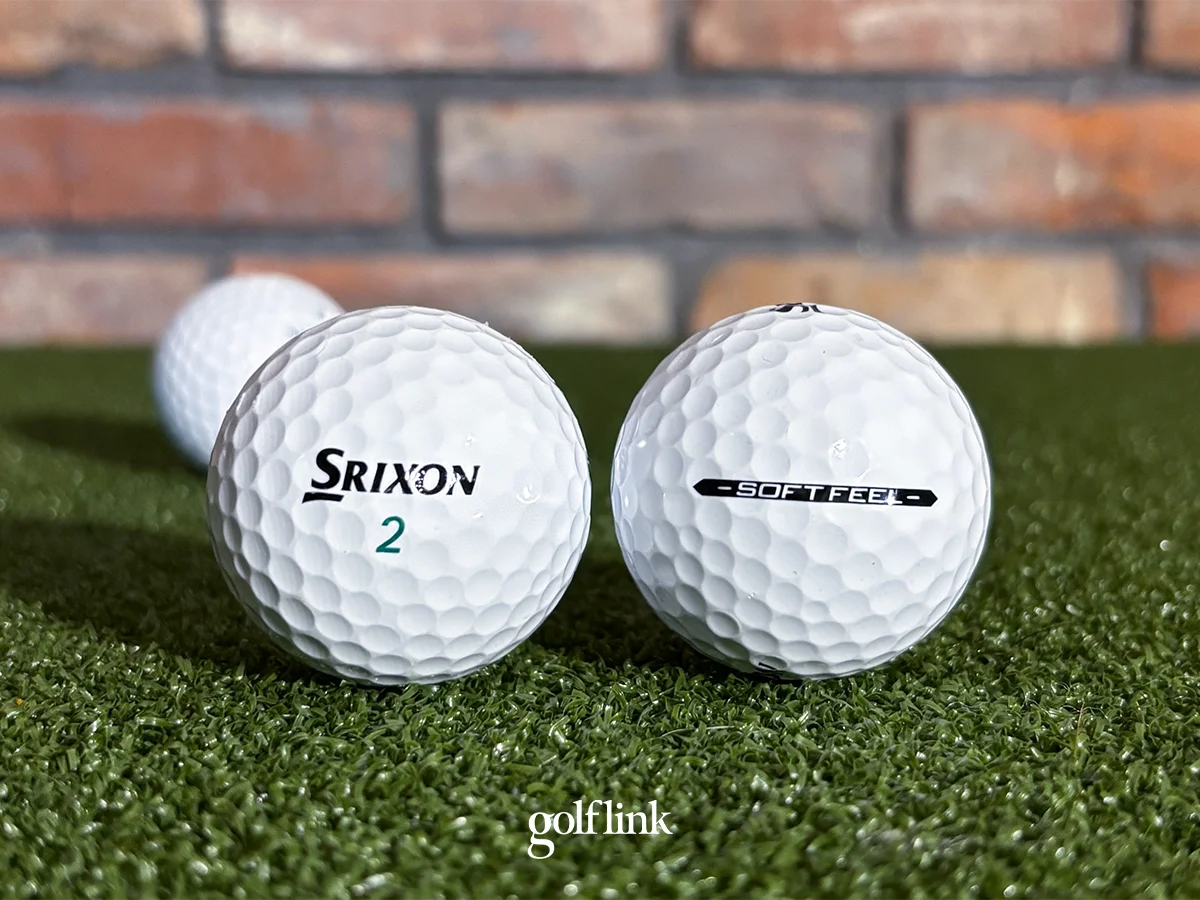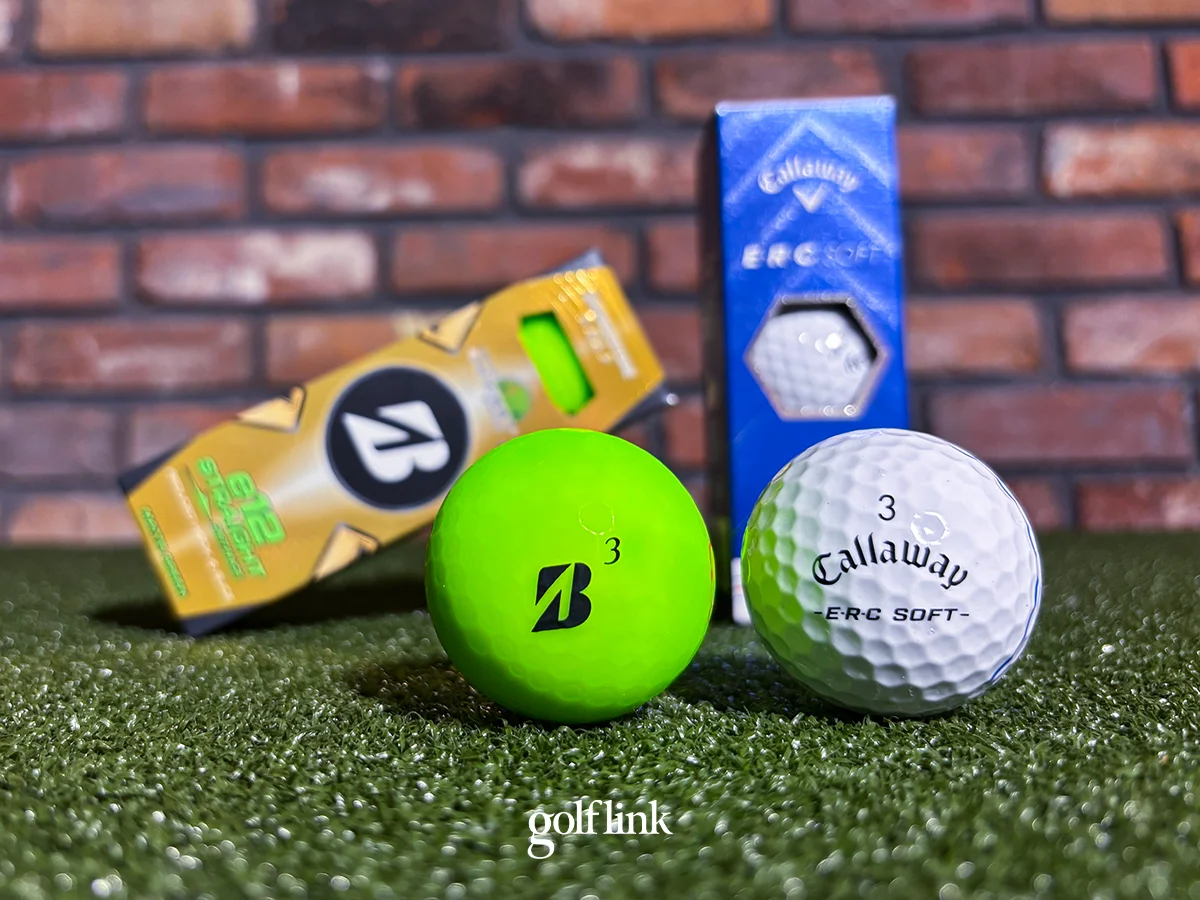

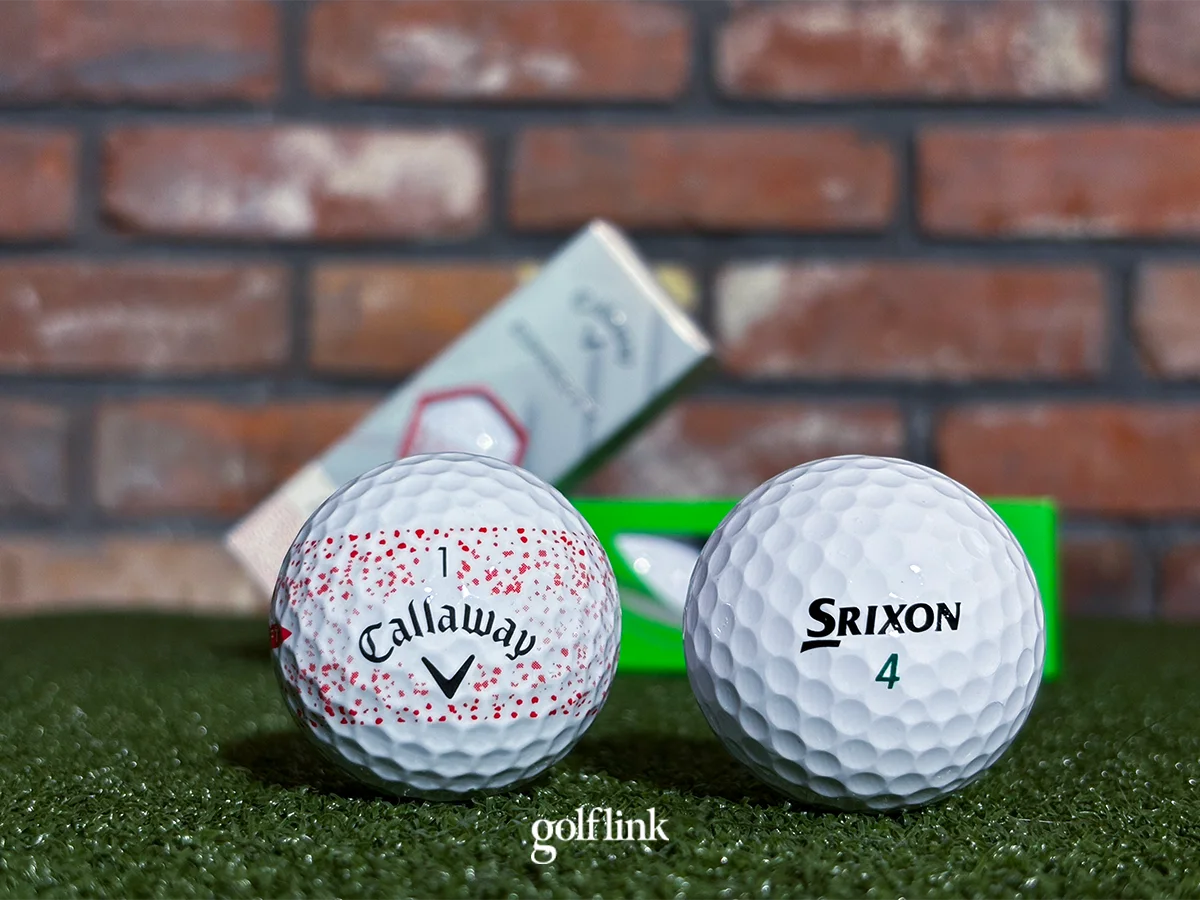
Callaway Supersoft and Srixon Soft Feel are both built around the same basic pitch: a soft, two-piece ball that's easy to compress at slower swing speeds and easy on the wallet. With each within a club-length of $25 a dozen, they're two of the most popular budget balls in golf.
With nearly identical profiles to the naked eye, you’d think the performance gap between the two would be indistinguishable. You’d be wrong.
We put both through our full golf ball testing, and the data shows a clear gap between these two balls.
Here's exactly how they compare.
How We Tested Callaway Supersoft & Srixon Soft Feel
We tested Callaway Supersoft and Srixon Soft Feel using our standardized golf ball testing protocol on the SkyTrak ST Max launch monitor.
Because we use human swings, not robots, our data reflects the performance differences you can actually expect to see on the course, not microscopic variances under perfect conditions. We use strict benchmarks for swing speed, shot quality, and delivery dynamics to keep results as consistent as possible.
Individual results will vary, but the patterns we see across dozens of shots are meaningful.
Learn more about how we test golf balls and see the complete list of every golf ball we've tested. You can also check out our complete Srixon Soft Feel test data here and Callaway Supersoft test data here.
Callaway Supersoft vs. Srixon Soft Feel Overview
Both balls are two-piece, low-compression designs built to get airborne easily and feel soft off the face. That's where the similarities end. In our test, Supersoft outperformed Soft Feel in three out of four performance categories, and the gap in stopping power in particular isn't close.
| Category | Callaway Supersoft | Srixon Soft Feel |
|---|---|---|
| Cover | Ionomer | Ionomer |
| Layers | 2-Piece | 2-Piece |
| Price | $26/dozen | $24/dozen (bulk: $17/dozen, 2 dozen minimum) |
Ball Flight Comparison
| Category | Callaway Supersoft | Srixon Soft Feel |
|---|---|---|
| Driver Spin | Low | Low |
| Driver Launch | High | High |
| 7-Iron Spin | Low | Low |
| 7-Iron Launch | High | Low |
| 50-Yard Spin | Low | Low |
| 50-Yard Launch | High | Mid |
Both balls lean on a low-spin, high-launch driver profile to generate distance despite modest ball speed, and neither one spins much with the irons or wedge — that's the two-piece, low-compression category in a nutshell.
Where they actually split is launch angle. Supersoft launches higher through the bag, in the 7-iron test and the 50-yard test alike, and that higher window is doing more of the stopping-power work than raw spin is.
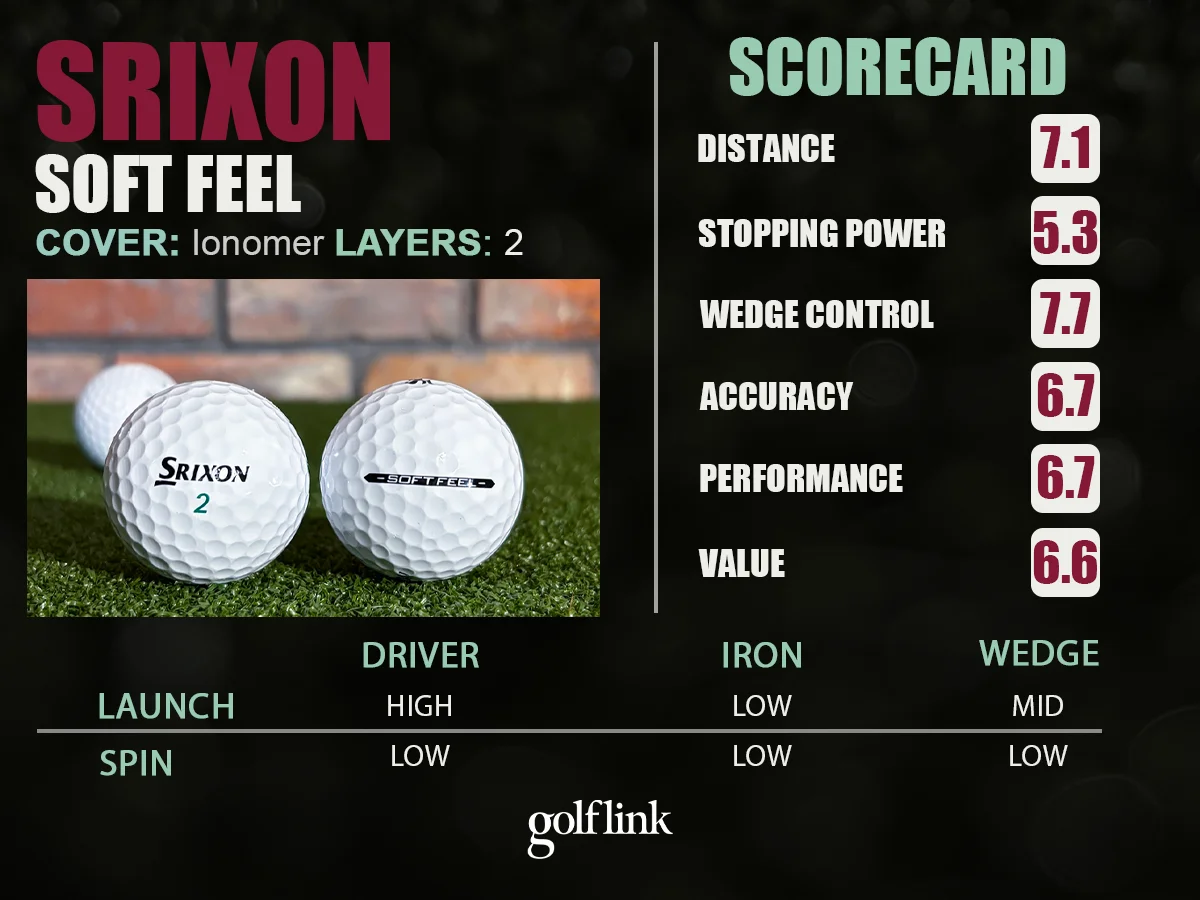
Supersoft and Soft Feel finished close in our distance test, with Soft Feel coming out slightly ahead. Soft Feel's edge in ball speed translated to about a yard and a half more total distance.
Neither ball is a distance standout at our mid-90s test swing speeds, but Soft Feel's numbers were only a yard and a half off our full-field average, a solid result for a ball that’s built primarily for slower swing speeds and not meant to prioritize distance.
Check out or complete Srixon Soft Feel review.
| Category | Callaway Supersoft | Srixon Soft Feel | Winner |
|---|---|---|---|
| Ball Speed (mph) | 133.6 | 135.3 | Soft Feel |
| Carry (yds) | 214.4 | 218.4 | Soft Feel |
| Total (yds) | 238.9 | 240.1 | Soft Feel |
| Distance Score | 6.8 | 7.1 | Soft Feel |

Stopping Power is where the two balls separate, and it's not really a spin story — both balls carry low 7-iron spin. It's a launch story. Supersoft's higher launch angle produced a steeper 42.4-degree descent angle, and that's what held it to just 10.1 yards of roll. Soft Feel came in flatter, at a 36.6-degree descent angle, and rolled out a full 15.1 yards after landing — five yards farther from a 7-iron.
If you need your approach shots to hold anywhere close to the pin, don’t overlook that gap. Supersoft's stopping power performance dominated Soft Feel in our 7-iron test, and the extra 7-iron spin it carried (4,197 RPM to Soft Feel's 3,691) only added to that advantage.
| Category | Callaway Supersoft | Srixon Soft Feel | Winner |
|---|---|---|---|
| 7-Iron Spin (RPM) | 4,197 | 3,691 | Supersoft |
| Descent Angle | 42.4° | 36.6° | Supersoft |
| Roll (yds) | 10.1 | 15.1 | Supersoft |
| Stopping Power Score | 7.6 | 5.3 | Supersoft |
Wedge Control
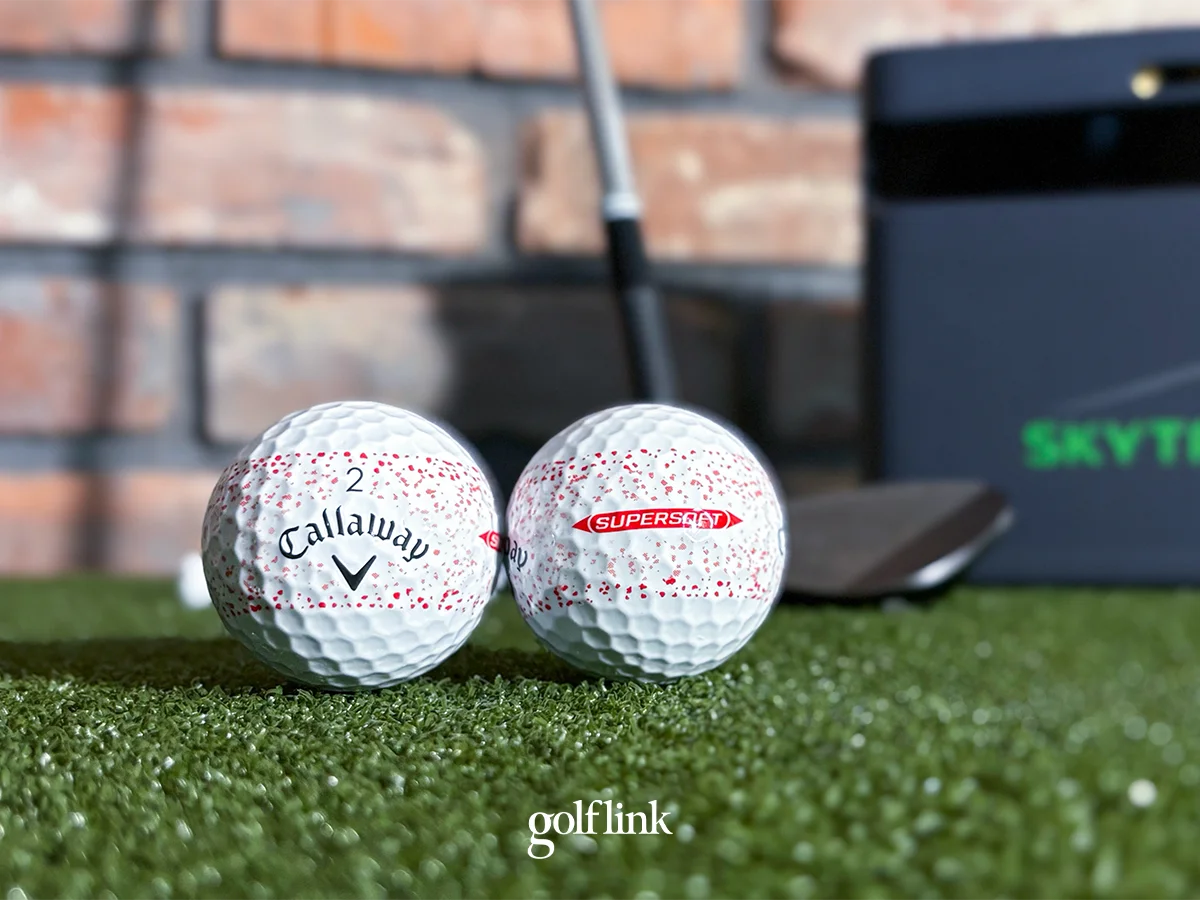
From 50 yards, Soft Feel closed the gap again. Both carry Low spin off the wedge, and Soft Feel actually produced more raw spin — 5,894 RPM to Supersoft's 5,600 — but Supersoft's High launch angle (34.5° to Soft Feel's Mid 31.6°) kept its rollout a touch tighter, 3.3 yards to Soft Feel's 3.8.
It's a near-even category, and either ball will give you more short-game control than you'd expect from a $25-and-under two-piece ball.
| Category | Callaway Supersoft | Srixon Soft Feel | Winner |
|---|---|---|---|
| 50-Yard Spin (RPM) | 5,600 | 5,894 | Soft Feel |
| 50-Yard Launch | 34.5° | 31.6° | Supersoft |
| Roll (yds) | 3.3 | 3.8 | Supersoft |
| Wedge Control Score | 7.8 | 7.7 | Supersoft |
Accuracy
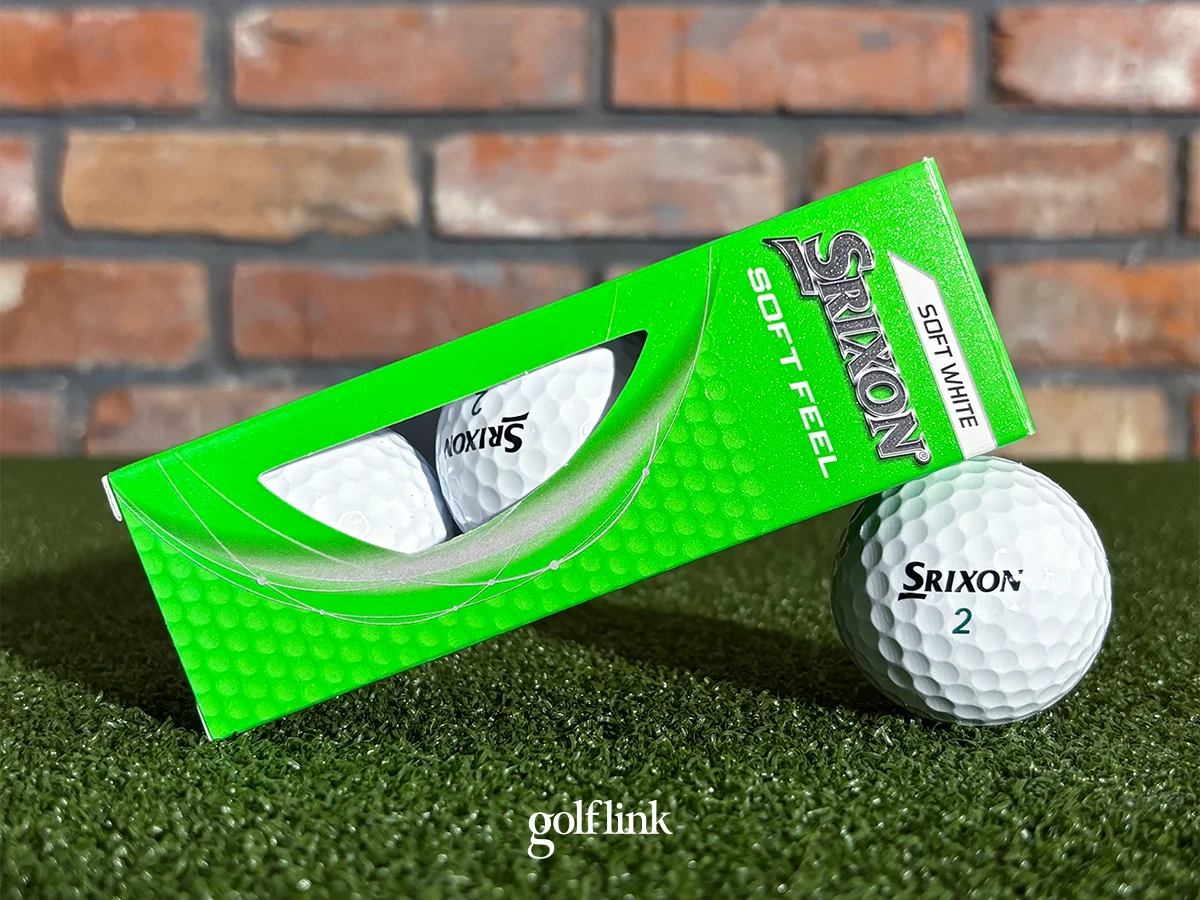
Neither ball is built to fight sidespin, but Supersoft came out slightly ahead. Off the driver, Soft Feel actually posted tighter dispersion (11.1 yards offline to Supersoft's 11.7), despite carrying more sidespin (250 RPM to 230 RPM). With the irons, the two were essentially identical in dispersion, but Supersoft's higher iron sidespin (149 RPM to 105 RPM) didn't end up costing it much in the final number.
The difference is small enough that neither ball should be your pick if accuracy off the tee is your top concern.
| Category | Callaway Supersoft | Srixon Soft Feel | Winner |
|---|---|---|---|
| Driver Sidespin (RPM) | 229.7 | 250.3 | Supersoft |
| Driver Offline (yds) | 11.7 | 11.1 | Soft Feel |
| 7-Iron Sidespin (RPM) | 149.1 | 105.4 | Soft Feel |
| 7-Iron Offline (yds) | 4.4 | 4.4 | Tie |
| Accuracy Score | 7.3 | 6.7 | Supersoft |
Overall Performance
Unlike some of the closely-matched balls we've compared, this isn't a coin flip. Supersoft's 7.4 overall performance score beat Soft Feel's 6.7, driven almost entirely by the gap in stopping power.
| Category | Callaway Supersoft | Srixon Soft Feel |
|---|---|---|
| Distance | 6.8 | 7.1 |
| Stopping Power | 7.6 | 5.3 |
| Wedge Control | 7.8 | 7.7 |
| Accuracy | 7.3 | 6.7 |
| Overall Performance | 7.4 | 6.7 |
Which Ball Should You Choose?
Neither of these is a ball built for precision. They're both entry-level, low-compression options designed to be soft and affordable, and both do that job.
Choose Callaway Supersoft If:
- You want complete performance: Supersoft beat Soft Feel in stopping power, wedge control, and accuracy, and gave up very little in distance.
- You want better hold on approach shots: Supersoft’s biggest advantage was in our 7-iron test.
- You just want the better all-around ball of the two: Supersoft is the head-to-head winner based on the entirety of our testing.
Choose Srixon Soft Feel If:
- Price matters more to you than stopping power: At $17 a dozen in bulk, Soft Feel is the more affordable of the two, and its extra rollout with the irons can actually work in your favor if you tend to come up short on approach shots.
- You prefer a (relatively) firmer feel off the face: Soft Feel’s higher compression means it has a slightly more solid feel at impact that Supersoft.
If you're choosing between the two, our data says Supersoft is simply the better overall performer for basically the same price. Soft Feel's case comes down to that $17 bulk price and a slightly firmer feel for players who don’t want the “marshmallow” feeling at impact.