ERC Soft vs. e12 Straight: Same DNA, Different Game
We tested two of the best premium distance balls head-to-head on the SkyTrak ST Max
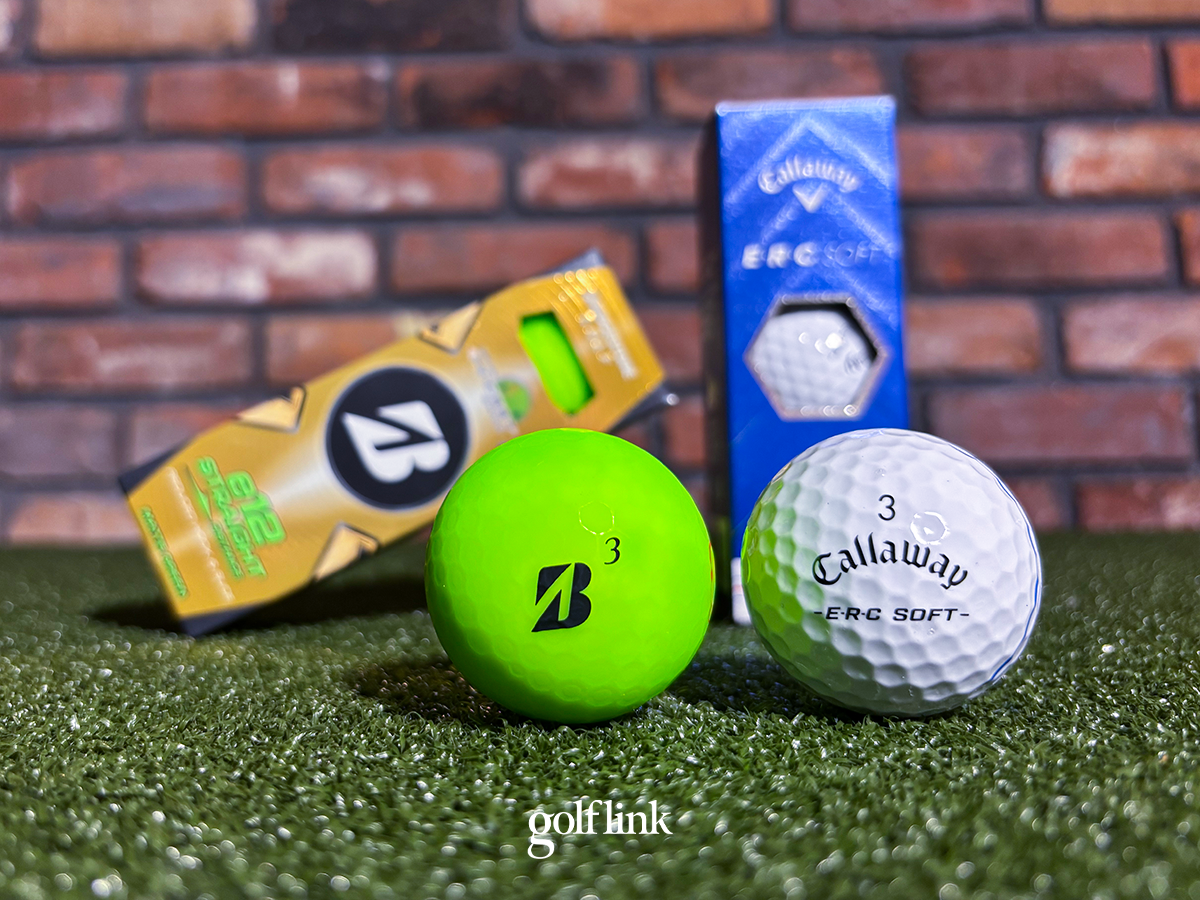
Both the Bridgestone e12 Straight and the Callaway ERC Soft are built for recreational golfers who want to shoot lower scores. But they go about it in very different ways.
The e12 Straight leans hard into its straight-flight promise. The ERC Soft uses a hybrid cover to deliver something closer to tour-ball performance.
Both are among the best in their class at what they're trying to do. Here's what our testing showed about how they differ, and how to decide which one is best for you.
How We Tested e12 Straight & ERC Soft
We tested both balls using our standardized golf ball testing protocol on the SkyTrak ST Max launch monitor.
Because we use human swings, not robots, our data reflects the performance differences you can actually expect to see on the course, not microscopic variances under perfect conditions. We use strict benchmarks for swing speed, shot quality, and delivery dynamics to keep results as consistent as possible.
Individual results will vary, but the patterns we see across dozens of shots are meaningful.
Learn more about how we test golf balls and see the complete list of every golf ball we've tested. You can also check out our complete Callaway ERC Soft test data here and see our full Bridgestone e12 Straight test data here.
e12 Straight vs. ERC Soft Overview
E12 STRAIGHT: AMAZON
E12 STRAIGHT: GOLF GALAXY
ERC SOFT: CALLAWAY
ERC SOFT: GOLF GALAXY
ERC SOFT: AMAZON
Bridgestone e12 Straight and Callaway ERC Soft are two of the top balls in what I call the premium distance category. They’re not tour-caliber, urethane-covered balls. But they’re not the $20 per dozen, two-piece, sheer distance balls, either. They’re designed for distance but as three-layer balls, they’re at least attempting to provide top-of-class control into and around the greens.
But they’re not identical, either. ERC Soft features a hybrid cover that includes a grip urethane coating, and is built as a low-spin ball to maximize distance. Meanwhile, e12 Straight, as the name suggests, is built to reduce sidespin and fly straighter.
You can read our full Bridgestone e12 Straight review and our complete Callaway ERC Soft Review.
|
Bridgestone e12 Straight |
Callaway ERC Soft |
|
|
Cover |
Surlyn (ionomer) |
Hybrid (urethane-coated ionomer) |
|
Layers |
3 |
3 |
|
OEM Description |
Straight flight, low side spin |
High launch, low spin, soft feel |
|
Price |
$34 |
$39 |
Performance Snapshot
Distance:
- ERC Soft: About 5 yards longer off the tee; our highest-ranked distance ball in the entire test
- e12 Straight: Solid distance, but clearly not the priority of its design
Stopping Power:
- ERC Soft: Significantly better; uses a steep descent angle and more spin to hold greens
- e12 Straight: Limited stopping power; lower spin and lower ball flight mean more roll
Accuracy:
- e12 Straight: Tied for the highest accuracy score of any ball we tested; actually does what it says on the box
- ERC Soft: Accuracy is the tradeoff for all that distance; won’t help you fix a slice or hook
Who It's For:
- e12 Straight: Players who primarily want to eliminate big misses
- ERC Soft: Players who want distance and short game performance
Ball Flight Comparison:
| Category | ERC Soft | e12 Straight |
| Driver Spin | Low | Low |
| 7-Iron Spin | Mid | Low |
| Wedge Spin | Mid | Low |
| Driver Launch | High | Mid |
| 7-Iron Launch | High | Low |
| Wedge Launch | High | High |
Distance
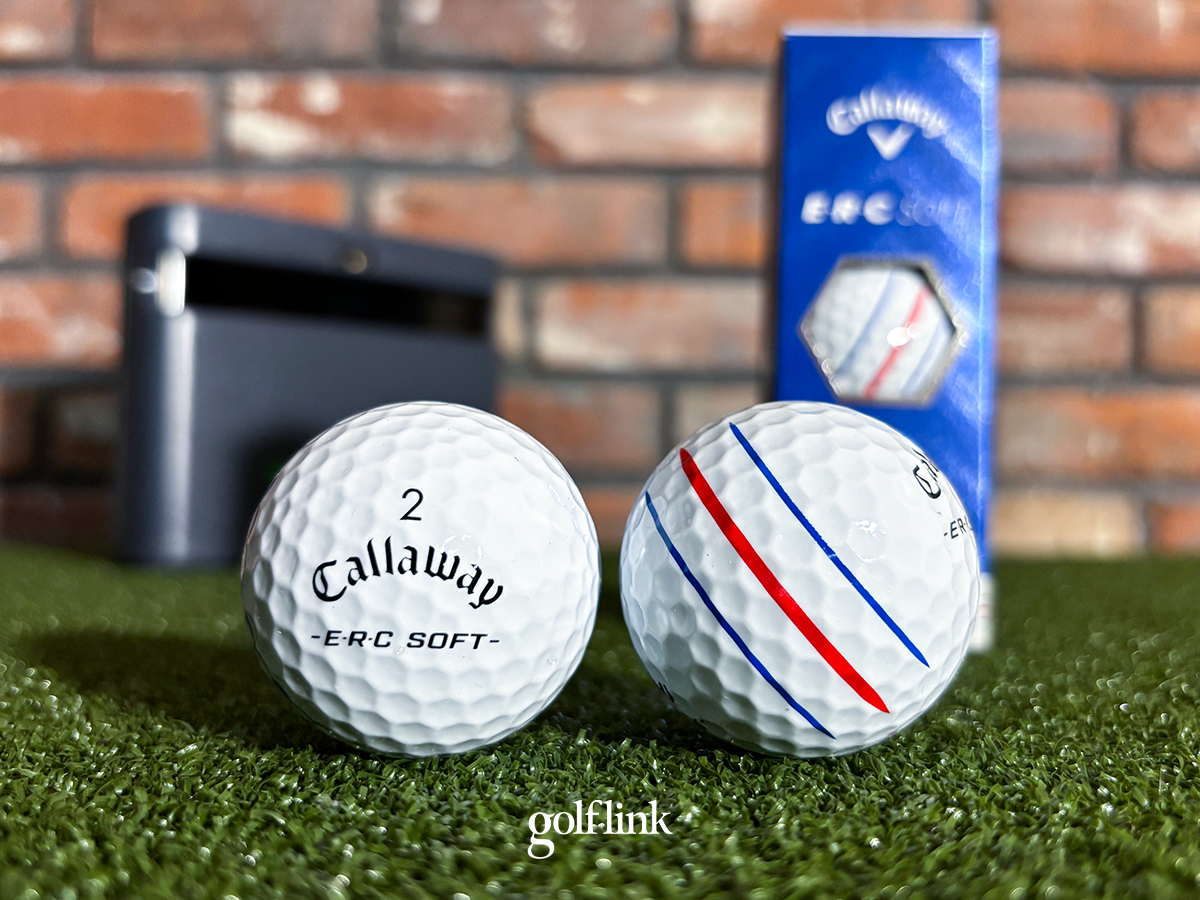
Let's start where most golfers in this category start when they're shopping for a ball: distance.
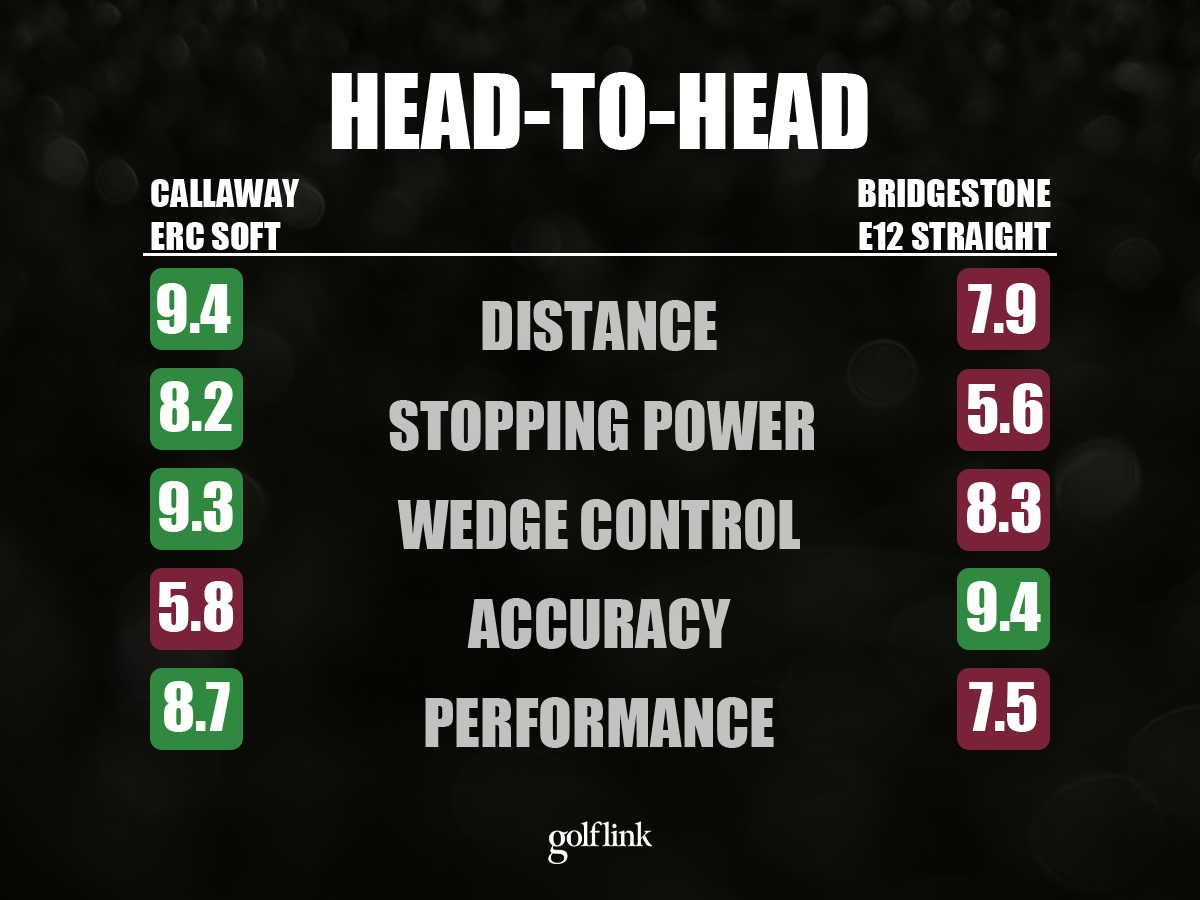
ERC Soft picked up five yards of total distance on the e12 Straight, driven almost entirely by a dramatically higher launch and peak height. At 16.6 degrees, ERC Soft's driver launch was among the highest of any ball in our test. The e12 Straight, at 13.1 degrees, launched about four degrees lower.
Spin was nearly identical between the two—2,277 rpm for the e12 Straight vs. 2,256 for ERC Soft. The ERC Soft's distance advantage comes from getting the ball higher in the air and maximizing carry.
To put those five yards in perspective: that's about half a club. Over the course of 18 holes, you'd notice that.
Players who already hit the ball high off the tee may see more competitive distances from e12 Straight than we saw in our test.
| Category |
e12 Straight |
ERC Soft |
Winner |
|
Carry (yds) |
218.3 |
227.9 |
ERC Soft |
|
Total (yds) |
242.5 |
247.6 |
ERC Soft |
|
Spin (rpm) / SD |
2277 / 304 |
2256 / 313 |
– |
|
Launch Angle |
13.1° |
16.6° |
– |
|
Apex (yds) |
20.3 |
27.0 |
ERC Soft |
|
Offline (yds) |
8.3 |
9.9 |
e12 Straight |
Stopping Power
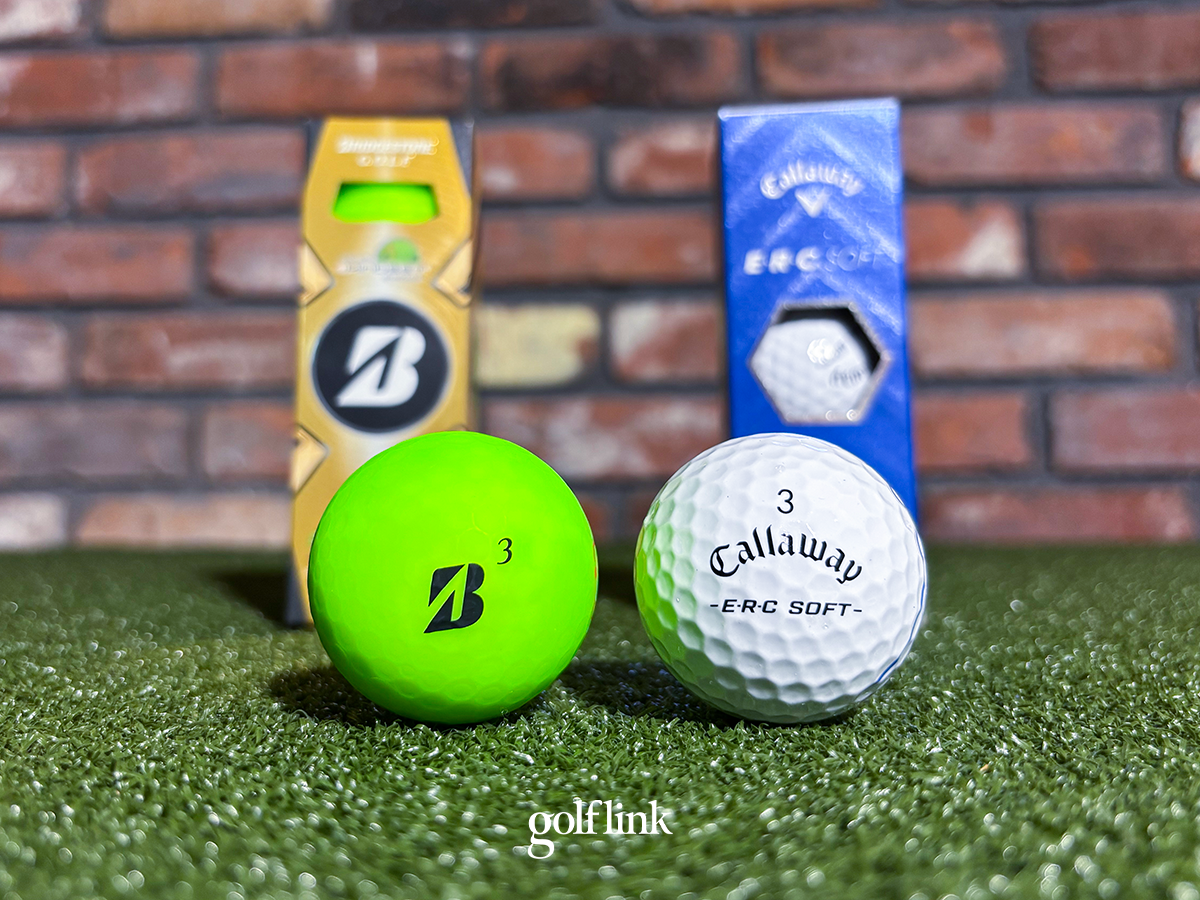
Distance and accuracy off the tee are fine for bragging rights, but for most golfers, approach game performance determines how many biridie putts you get, and how long they are.
If you’re on the fence between ERC Soft and e12 Straight, the stopping power performance should put you squarely into one category or the other pretty quickly.
One rolls forever, giving you more distance. The other stops reasonably quickly, giving you control into greens.
ERC Soft generated 677 more RPMs of 7-iron spin than the e12 Straight, and launched higher, peaked higher, and landed at a much steeper angle. As a result it stopped almost five yards shorter than e12 Straight.
The e12 Straight rolled out nearly 14 yards. That’s a huge difference when you’re hitting into greens.
These exact numbers won’t translate to your game, but the gap between them will. Regardless of your swing speed, launch angle and course conditions, expect ERC Soft to stop much quicker.
| Category |
e12 Straight |
ERC Soft |
|
Carry (yds) |
167.8 |
164.4 |
|
Roll (yds) |
13.8 |
8.9 |
|
Total (yds) |
181.4 |
173.4 |
|
Spin (rpm) |
3718 |
4395 |
|
Launch |
17.9° |
20.3° |
|
Apex (yds) |
22.3 |
26.3 |
|
Descent Angle |
38.3° |
43.4° |
Wedge Control
The short game difference is more nuanced than the stopping power comparison.
ERC Soft generated more spin and a higher launch angle from 50 yards, but both were among the highest-launching of our entire 50-yard test. And neither reached the high spin category, either. With 6473 RPM of backspin ERC Soft showed a mid-spin profile, while e12 Straight’s 6175 RPM made it a low-spin ball, designations based on the spin output of our entire 43-ball test.
Around the greens, it’s all about getting the ball to stop, and ERC Soft actually did that exceptionally well. Its 1.6 yards of rollout was aided by that high launch, a high peak height, and steep descent angle. While many skilled players consider a lower-trajectory, higher-spinning greenside shot to be more in control, ERC Soft is the best-performing ball around the greens of any non-urethane ball.
In other words, if you want the distance benefits of a low-spin non-urethane ball, none are better in the short game than ERC Soft.
Meanwhile, e12 Straight’s 8.3 in our wedge test is respectable, but not as strong around the greens.
| Category |
e12 Straight |
ERC Soft |
|
Spin (rpm) |
6175 |
6473 |
|
Launch |
34.1° |
35.9° |
|
Apex (yds) |
9.5 |
9.6 |
|
Roll (yds) |
2.5 |
1.6 |
Accuracy
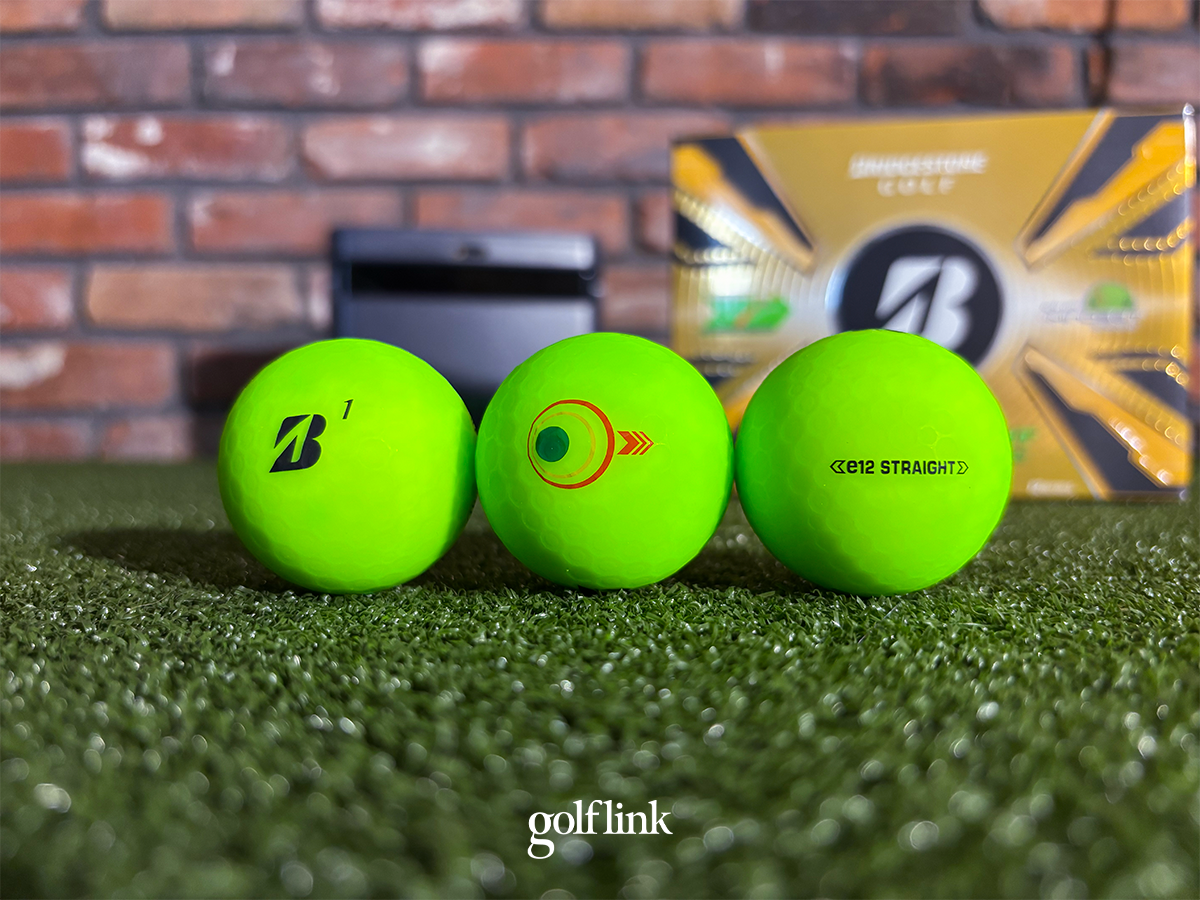
Can e12 Straight deliver where its name promises? You bet.
Bridgestone e12 Straight was about a yard and a half closer to center with driver in our test, and also generated way less sidespin, just 74.3 RPM compared to the 322.5 RPM from ERC Soft.
That earned e12 Straight a 9.4 accuracy score in our testing. That tied as the highest accuracy score of any ball in our 43-ball test.
I must say, it’s refreshing that the name isn't marketing nonsense. This ball legitimately flies straighter.
ERC Soft’s high sidespin contributed to one of the lowest accuracy scores in our test, just 5.8. No ball will turn good shots into bad ones, but unlike e12 Straight, it won’t help keep your bad shots in play.
Which Ball Is Better for You?
Choose e12 Straight if:
You want to fly it straighter than almost anything else on the market. With the highest accuracy score in our 43-ball test, the e12 Straight delivers on its one big promise. If you fight a slice or hook, this ball will limit the damage.
Just understand that the tradeoff for those benefits is limited stopping power.
Choose ERC Soft if:
You want everything the e12 Straight isn't. ERC Soft leads our entire test in distance and gives you really good short game performance for a non-urethane ball.
The hybrid cover does improve stopping power with the irons, and wedge control rivals some urethane-covered balls.
The catch is accuracy. ERC Soft produced the second-highest sidespin in our test, and its 5.8 accuracy score reflects that. If you play a relatively straight ball flight naturally, the ERC Soft's advantages are compelling.
Long or Straight?
ERC Soft was the stronger overall performer in our test. It won in every category except accuracy, and the margins in distance, stopping power, and short game weren’t particularly close.
But accuracy matters, especially for many mid and high-handicap players shopping in this category. If you fight a nagging ball flight issue, the ERC Soft's high sidespin is a problem. That’s where e12 Straight, with its 9.4 accuracy score, can change your game. It won’t turn huge slices into fairway-splitting drives, but it can be the difference between being safely in bounds and heading back to re-tee.
Both balls are good, they're just built to solve different problems. Identify yours, and the choice is easy.
Titleist Pro V1 vs Callaway ERC Soft: Which Fits Your Game?