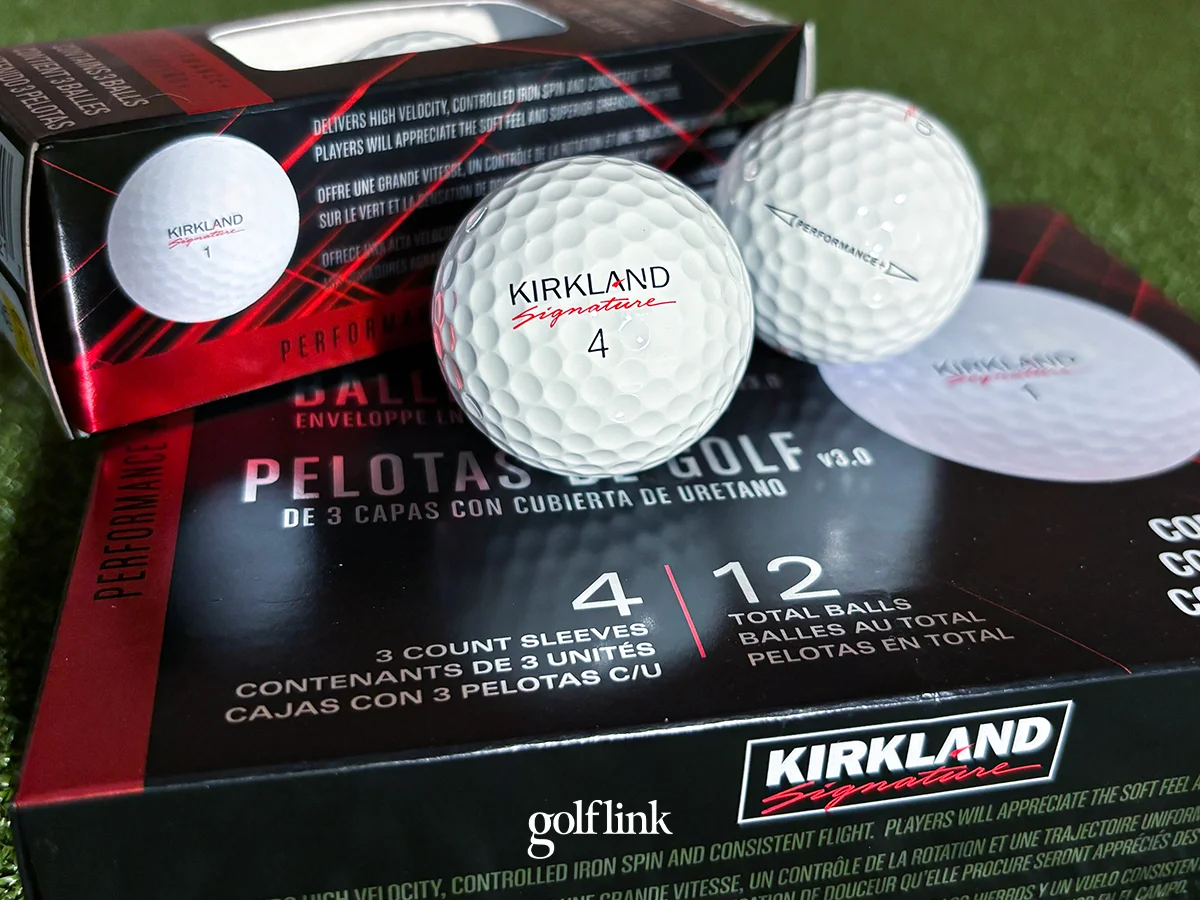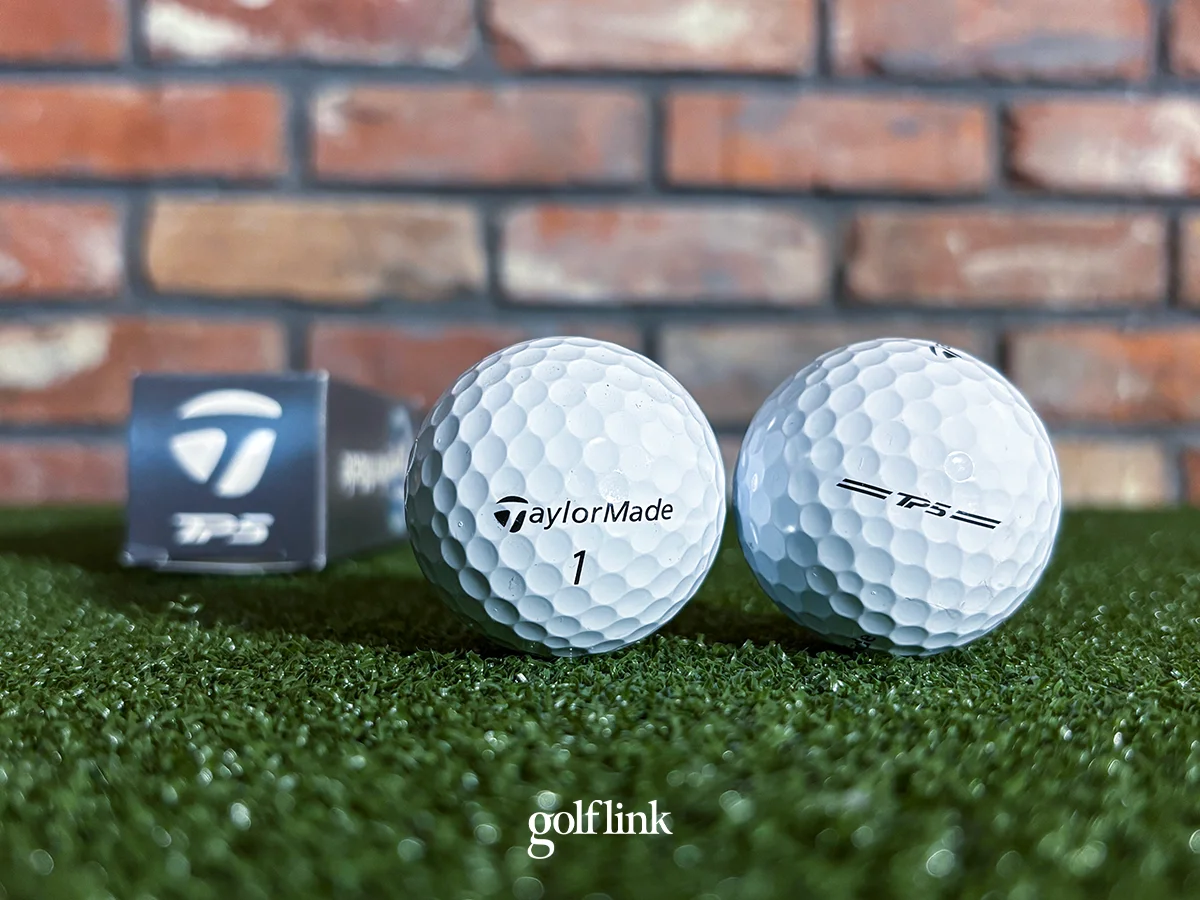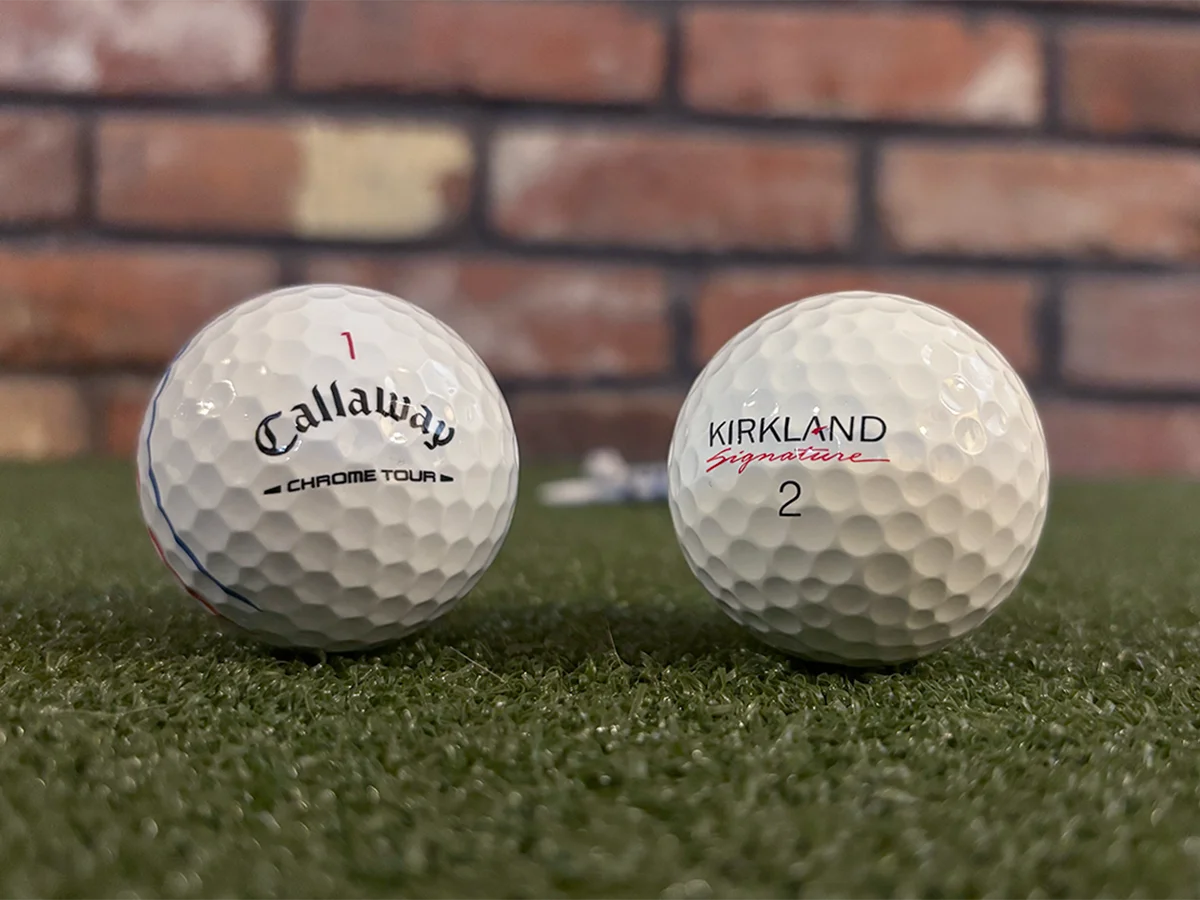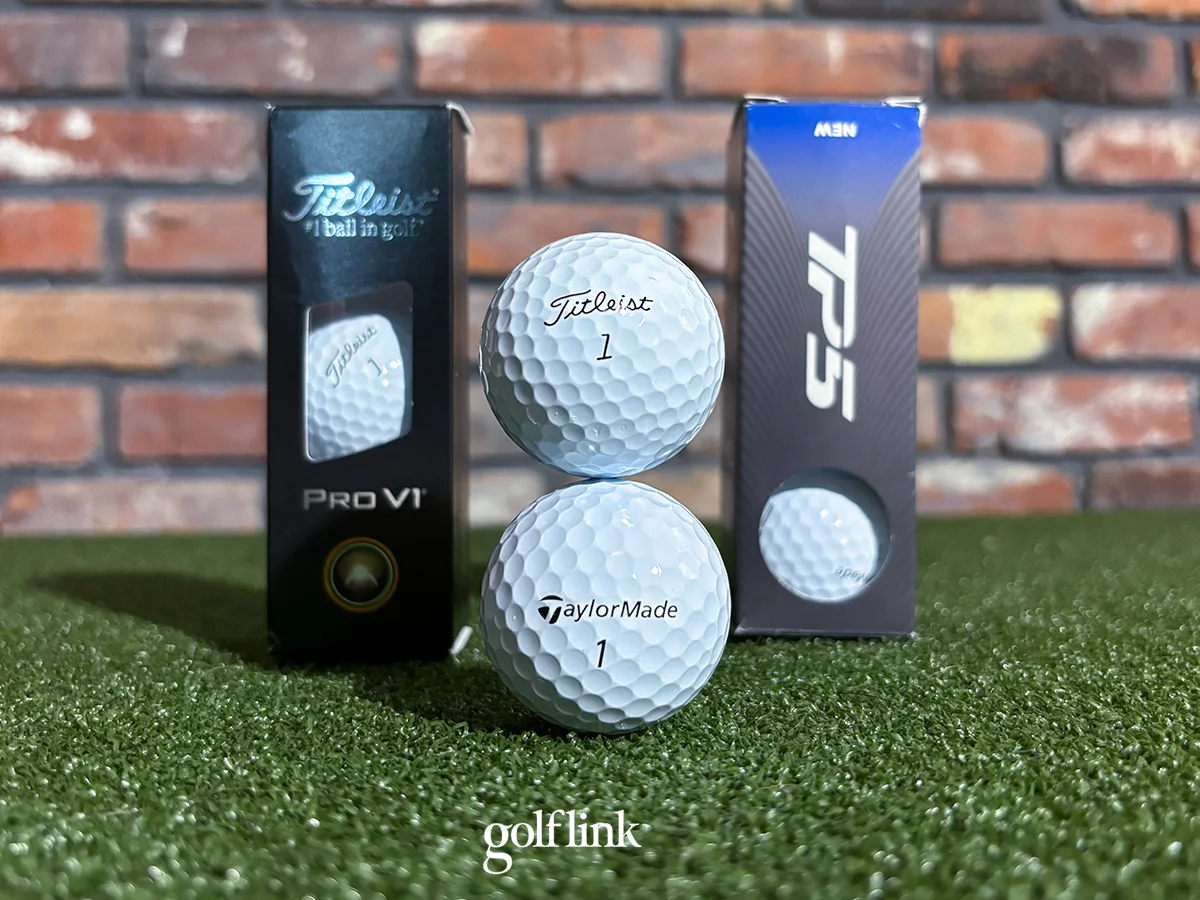

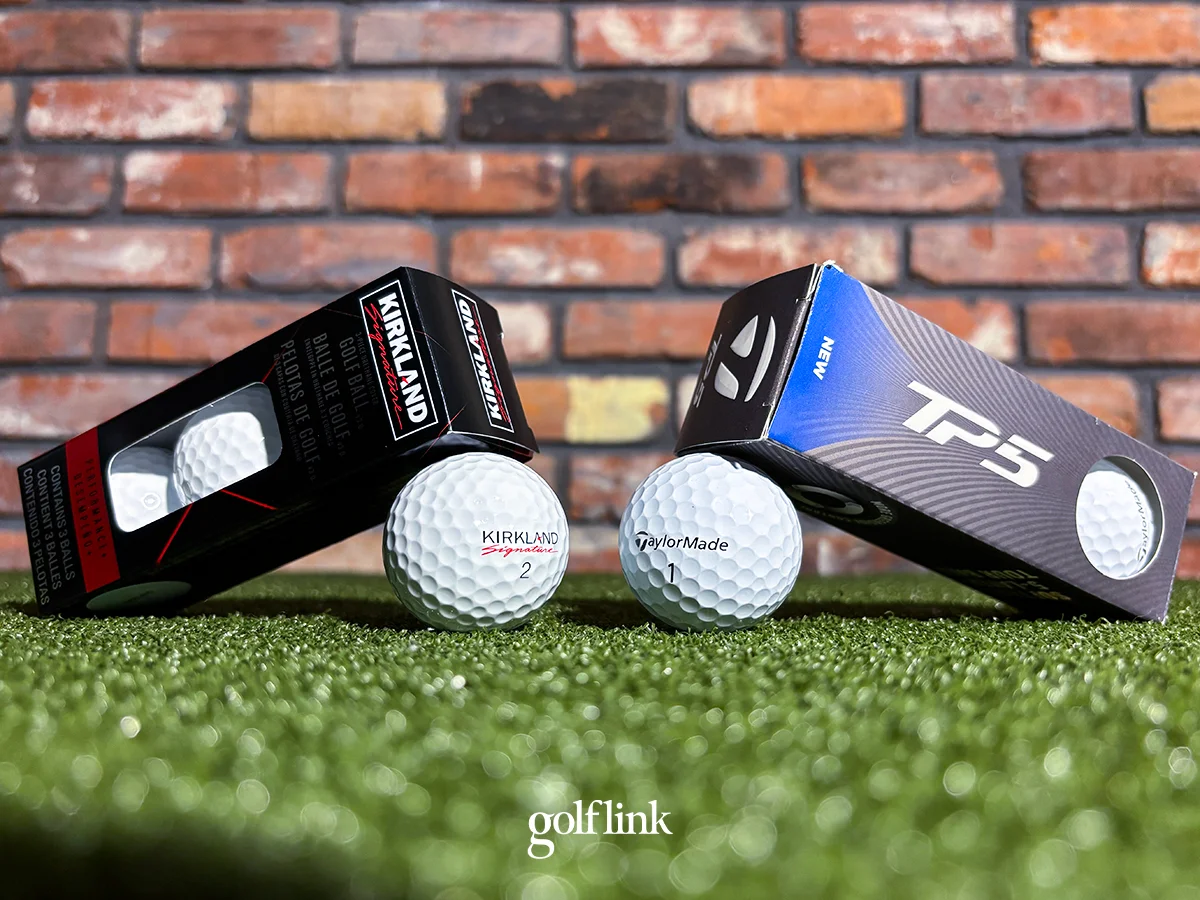
The Kirkland Signature Performance+ v3.0 and TaylorMade TP5 don't belong in the same conversation. Not according to conventional wisdom, anyway.
One is a Costco ball you buy 24 at a time. The other is a five-piece, tour-level ball with TaylorMade's name on it and a $57 price tag. Compared to the $19 a dozen K-Sig, that's a $38 gap.
But we test balls, and what we found in our test doesn't exactly line up with conventional wisdom.
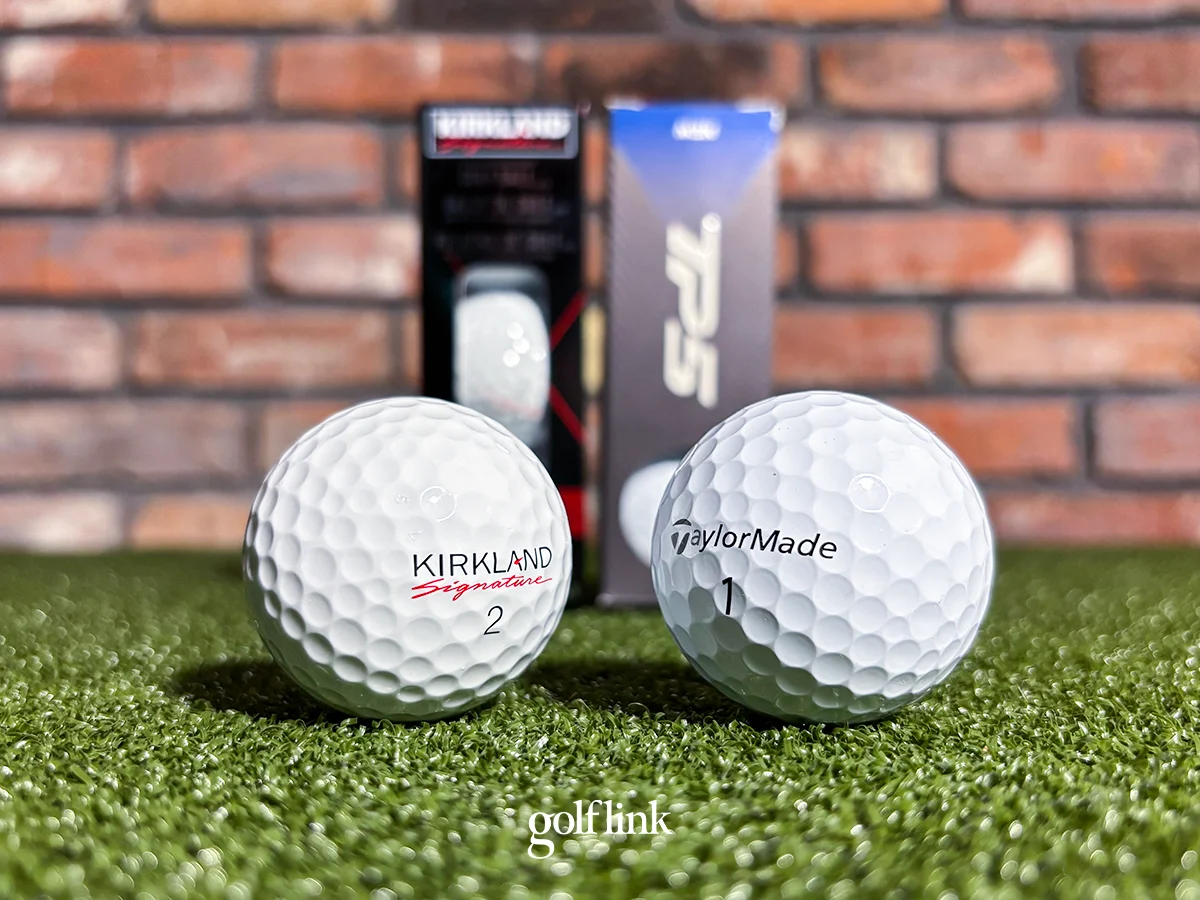
Here's exactly how the Kirkland Signature Performance+ v3.0 and TaylorMade TP5 compare head-to-head.
How We Tested Kirkland Signature & TP5
We tested both balls using our standardized golf ball testing protocol on the SkyTrak ST Max launch monitor.
Because we use human swings, not robots, our data reflects the performance differences you can actually expect to see on the course, not microscopic variances under perfect conditions. We use strict benchmarks for swing speed, shot quality, and delivery dynamics to keep results as consistent as possible.
Individual results will vary, but the patterns we see across dozens of shots are meaningful.
Learn more about how we test golf balls and see the complete list of every golf ball we've tested. You can also check out our complete TaylorMade TP5 test data here and our Kirkland Signature test data here.
Kirkland Signature vs. TP5 Overview
Kirkland Signature and TP5 are both multi-layer, urethane-covered golf balls. They're both positioned as premium performers.
This is where things get interesting. Two balls with identical stopping power scores and indistinguishable performance around the greens, but one costs three times as much as the other.
So, should your decision strictly come down to how much you value performance off the tee?
| Kirkland Signature | TaylorMade TP5 | |
|---|---|---|
| Cover | Urethane | Urethane |
| Layers | 3 | 5 |
| Price | $19/dozen | $57/dozen |
TP5 vs. K-Sig Performance Snapshot
Distance:
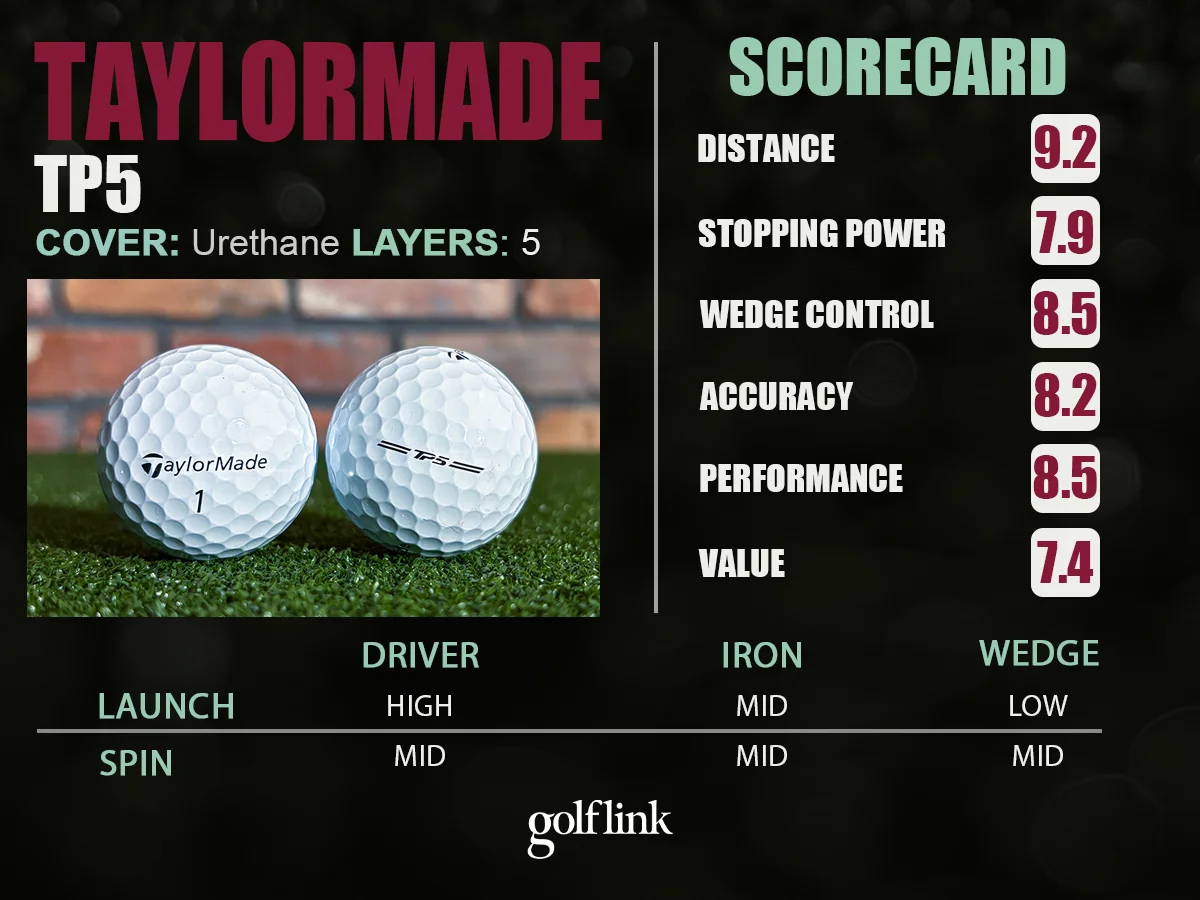
- TP5: About 9 yards longer with driver in our test; among the longest balls overall
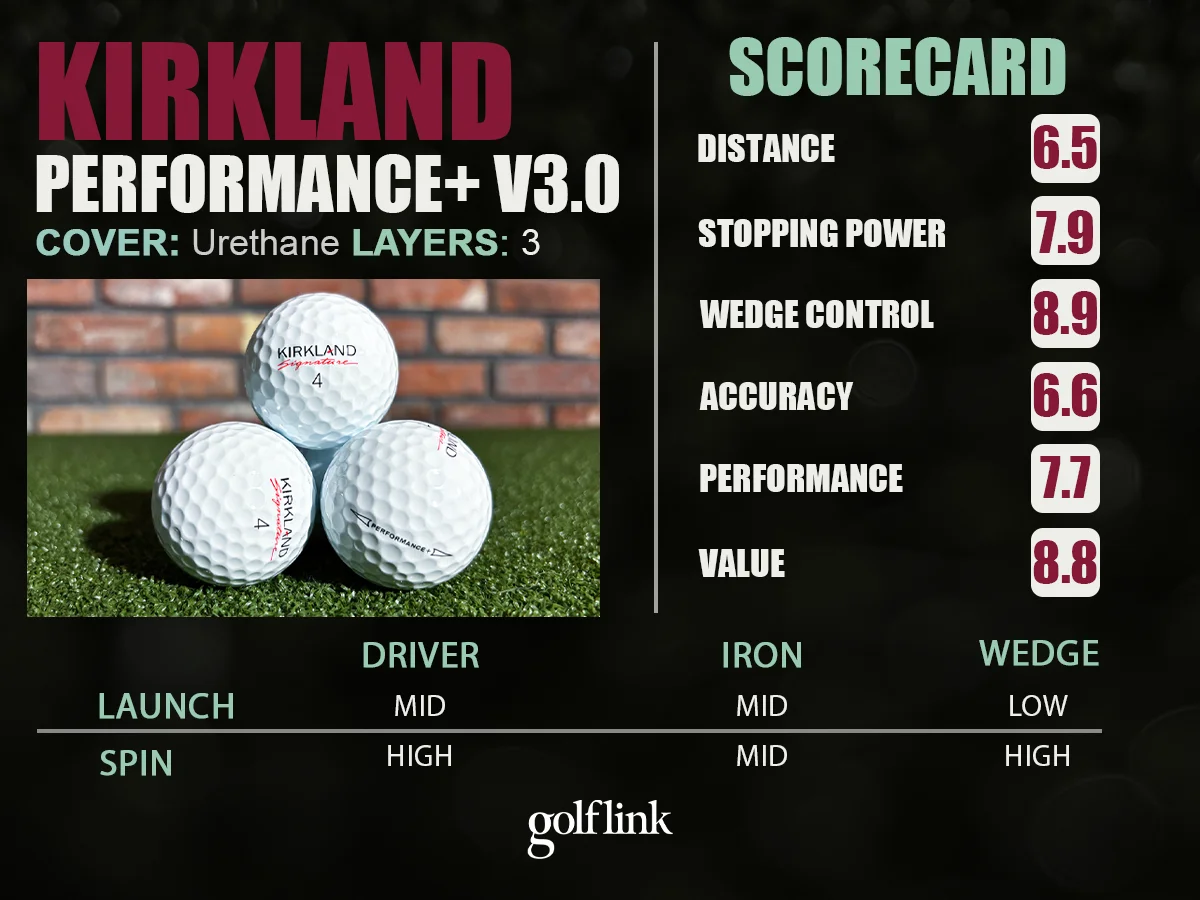
- K-Sig: Below-average distance and worse accuracy performances make up the biggest performance gap between the two balls
Stopping Power:
- TP5: A little less spin and slightly shallower descent angle led to about 1 more yard of roll out compared to K-Sig in our test
- K-Sig: Slightly more spin and steeper descent angle assist stopping power
Short Game:
- K-Sig: Its 8.9 wedge control score edges TP5, though that discrepancy is likely indistinguishable on the course for most players
- TP5: Competitive, but for the price difference, we would have liked to see a convincing advantage
Value:
- K-Sig: One of the best value balls in the entire test; hard to argue with $19 if you can live with sacrifices off the tee; Best pricing through Costco only available to members
- TP5: Mid-pack value score; you're paying a premium for the all-around performance and brand recognition
Ball Flight Comparison
| Category | TP5 | K-Sig |
| Driver Spin | High | Mid |
| Iron Spin | Mid | Mid |
| Wedge Spin | High | Mid |
| Driver Launch | Mid | High |
| Iron Launch | Mid | Mid |
| Wedge Launch | Low | Low |
TP5 picked up nine yards of total distance on the K-Sig, which is a gap you'd notice on the course. Much of that can be traced back to the fact that TP5 launched four degrees higher, peaked eight yards higher, and generated 237 fewer RPMs of spin. That ball flight profile is optimized for distance, particularly at our mid-90s swing speed test.
K-Sig launched lower and spun more, which cost it carry distance. It made up some ground through roll, but not nearly enough to close the gap.
The nine-yard distance advantage is TP5's clearest win in this comparison. At mid-90s swing speeds, you'll probably see that difference every time you pull driver.
| K-Sig | TP5 | Winner | |
|---|---|---|---|
| Ball Speed / Smash | 135.8 / 1.46 | 137.9 / 1.50 | TP5 |
| Carry (yds) | 218.0 | 230.6 | TP5 |
| Total (yds) | 238.0 | 247.4 | TP5 |
| Spin (rpm) / SD | 2732 / 308 | 2495 / 339 | TP5 |
I was surprised by our stopping power comparison results. Given the price difference and tour clout, I expected TP5 to create noticeable separation here. Instead, K-Sig closed the performance gap.
How do two balls with that price gap end up in the same place?
Our data shows they took slightly different paths to get there. K-Sig generated slightly more iron spin and a little steeper descent angle. TP5 lproduced faster ball speeds, which showed up in total distance, but rolled out about one extra yard compared to K-Sig. At the end of the day, the stopping power scores proved to be the same.
Both balls rolled out roughly the same distance, about 9-10 yards. I doubt most recreational players switching from one to the other would notice much difference in stopping power on the course, but it's not the convincing TP5 win I was expecting.
| K-Sig | TP5 | |
|---|---|---|
| Ball Speed / Smash | 110.1 / 1.30 | 112.4 / 1.37 |
| Carry (yds) | 158.9 | 163.3 |
| Roll (yds) | 9.3 | 10.4 |
| Total (yds) | 168.4 | 173.4 |
| Spin (rpm) / SD | 4621 / 321 | 4464 / 229 |
| Launch | 18.8° | 18.1° |
| Apex (yds) | 23.4 | 23.3 |
| Descent Angle | 42.3° | 41.1° |
Wedge Control
K-Sig actually outperformed TP5 in the short game thanks to more spin (7,095 rpm vs. 6,955), and a steeper descent angle, which helped it roll out a foot or two less. K-Sig was more consistent from 50 yards as well, with slightly tighter standard deviations in spin and ball speed
K-Sig’s 8.9 to 8.5 edge in wedge control is a modest gap, but the direction of the result is remarkable: the $19 ball beats the $57 ball from 50 yards.
| Category | K-Sig | TP5 |
|---|---|---|
| Ball Speed (mph) / SD | 49.4 / 1.4 | 51.9 / 1.6 |
| Spin (rpm) / SD | 7095 / 218 | 6955 / 271 |
| Launch | 31.4° | 29.9° |
| Apex (yds) | 8.5 | 8.6 |
| Carry (yds) | 45.5 | 48.8 |
| Roll (yds) | 2.4 | 3.0 |
| Total (yds) | 47.5 | 51.6 |
Accuracy
TP5's distance dominance is only part of its advantage off the tee. It also held an edge in our accuracy test.
TP5 finished an average of 5.5 yards offline with 158.5 RPM of sidespin in our accuracy test. Although K-Sig’s 3.5 yards offline kept it closer to the center, the 280 RPM of sidespin was among the highest in our test, a red flag that indicates it can stray quickly when your face-to-path dynamics don’t match up.
Which Ball Is Better for You?
Choose TP5 If:
You want the best all-around performer and distance is a priority. TP5 posted one of the highest distance scores in our entire 43-ball test, added better driver accuracy, without giving up noticeable ground in short game performance.
At $57 a dozen, it's priced at the top of the market, but its performance justifies the price for discerning players.
Choose K-Sig If:
You want the better value. At $19 per dozen (roughly $0.79 per ball), K-Sig's is one of the best value balls in our test. It matches TP5's stopping power, edges it out in wedge control, but gives up meaningful distance off the tee.
If you lose balls regularly, play for enjoyment rather than performance optimization, or just want to see what all the Kirkland hype is about, the K-Sig experience is worth the price.
Ball Out
TP5 is the better overall performer. It won in distance, ball speed, and driver accuracy. For a serious golfer focused on squeezing every yard and maintaining reliable accuracy, the performance upgrade is an advantage.
But the $38-per-dozen gap is impossible to ignore. K-Sig matching TP5 in stopping power and outperforming it from 50 yards isn't a gimmick. If you're wondering if K-Sig holds up against premium tour balls, the answer is: more than you'd expect, but with sacrifices off the tee.