Vice Pro Golf Ball Review: Strengths & Weaknesses to Know Before You Buy
A tour-caliber ball for under $40 a dozen. Here's what you gain and what you give up.
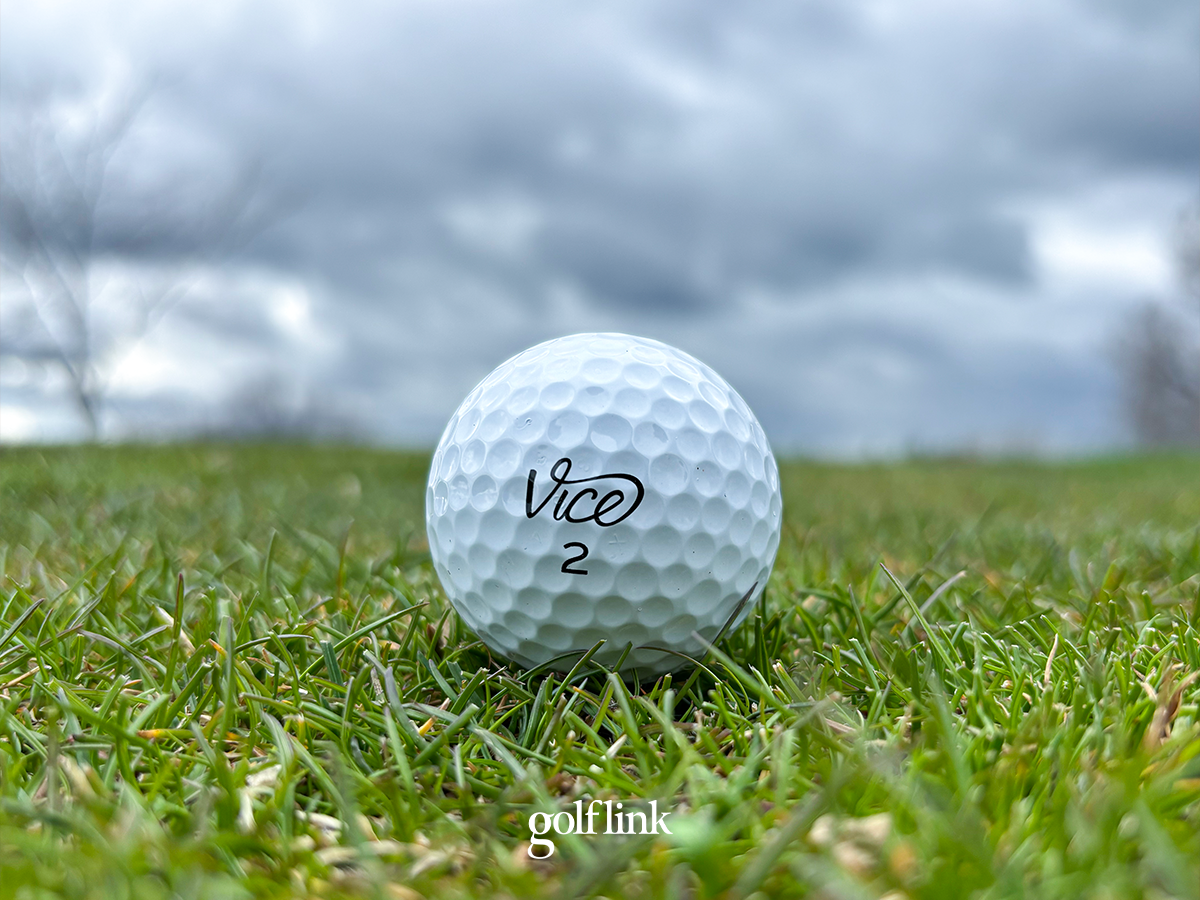
Vice Pro is the unofficial “Number One Direct-to-Consumer Ball in Golf.”
The upside to the DTC option? It’s more than $20 a dozen cheaper than the tour-caliber alternatives when you buy in bulk.
The downside? That’s what our testing sought out. Here’s what we learned.
How We Tested Vice Pro
We put the Vice Pro through our published golf ball testing protocols using the SkyTrak ST Max launch monitor. That means human swings under strict bands for swing speed, impact quality, and delivery dynamics.
To see performance from tee to green, we test driver, 7-iron, and 50-yard wedge shots with each ball.
We tested 43 golf balls in total for 2026 then translated the raw data into 1-10 scores in the categories that matter most to your game. That lets you easily see how each ball stacks up to the field.
See the complete list of every golf ball we’ve tested or dive into the full Vice Pro test data here.
Vice Pro Specs, Pricing & Performance
Check Vice
Check Walmart
Check Amazon
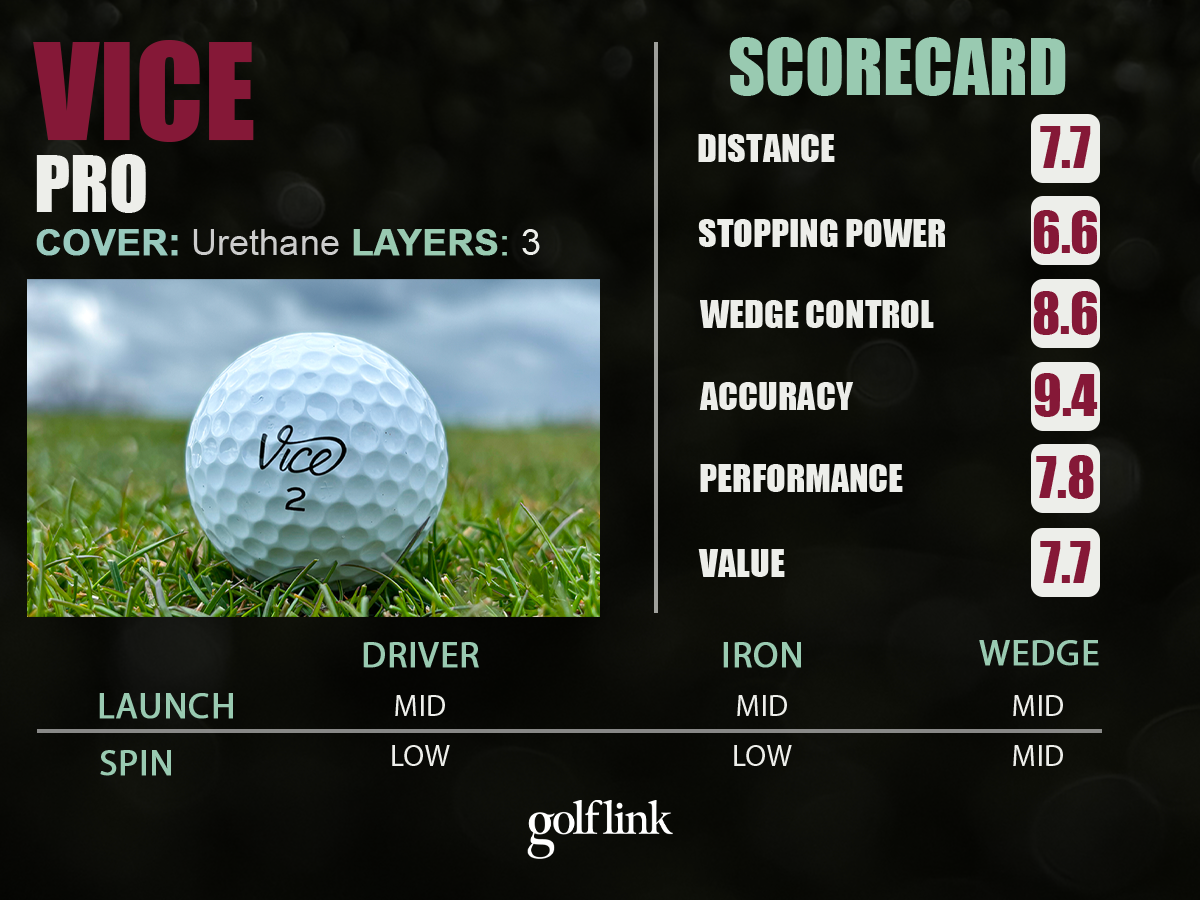
Cover: Urethane
Layers: 3-Layers
Price: $39/dozen (bulk: $34/dozen, 6 dozen minimum)
It’s easy to see why Vice Pro is such a popular golf ball. Low-handicappers appreciate the tour-caliber build, complete with a urethane cover and 3-piece construction.
Mid-handicappers are drawn to the blend of distance and greenside control.
Even beginners and high-handicap players have an excuse to play it: Vice Pro tied for the highest accuracy score in our testing. And at this price point, nobody sweats hitting one in the water, either.
|
Vice Pro |
Spin |
Launch |
|
Driver |
Low |
Mid |
|
7-Iron |
Low |
Mid |
|
50-Yard Shot |
Mid |
Mid |
Distance: 7.7/10
In our distance test, Vice Pro was a little better than average, but that doesn’t paint the whole picture.
Our driver test is done at swing speeds in the mid to low 90s, where Vice Pro produced low spin and mid-launch, and peaked too low to get maximum distance.
Players with faster swing speeds naturally create more spin. That’s when Vice Pro’s low-spin profile becomes an advantage, helping faster swing speed players find the optimal launch window to unlock the ball’s full distance potential.
|
Category |
Vice Pro |
|
Ball Speed |
136.0 MPH |
|
Carry (yds) |
218.3 |
|
Total (yds) |
241.5 |
|
Distance Score |
7.7 |
Titleist Pro V1 vs Vice Pro: Our Test Helps You Choose
Stopping Power: 6.6/10
The biggest surprise of our Vice Pro test is that it struggled to stop in our iron test.
It carried low spin in our iron test and a somewhat flat descent angle. Even though it got up to a respectable apex, that alone wasn’t enough to keep it from running out.
That’s a symptom of being a lower-spin ball. Low spin can boost distance – and Vice Pro was longer than all but one other ball in our 7-iron test – but that comes with a tradeoff.
If control into greens is a top priority, Vice Pro simply may not be the best fit.
|
Category |
Vice Pro |
|
7 Iron Apex (yds) |
23.9 |
|
7 Iron Descent Angle |
40.1° |
|
7 Iron Roll |
12.3 |
|
Stopping Power Score |
6.6 |
Wedge Control: 8.6/10
To its credit, Vice Pro broke free from its low-spin profile when it mattered most: in our wedge control test.
It created enough spin to stick greens and the right ball flight to keep control in the player’s hands. The 8.6/10 Wedge Control score against the full field is strong, but when compared against other 3-piece urethane balls, it’s about average. You get the performance this DNA promises, but not much more than that.
|
Category |
Vice Pro |
|
50-Yard Spin (RPM) |
6758 |
|
50-Yard Launch |
32.8 |
|
Wedge Control Score |
8.6 |
Accuracy: 9.4/10
I didn’t see this elite accuracy performance coming from Vice Pro before our testing. But its ability to resist sidespin takes it from a budget alternative to tour balls to a legitimate option for virtually every player.
The 46 RPM of sidespin in our driver accuracy test is exceptionally low and can help take the sting out of those slices, and turn them into innocent pushes instead.
|
Category |
Vice Pro |
|
Driver Sidespin (RPM) |
45.7 |
|
Driver Offline (yds) |
12.3 |
|
7-Iron Sidespin (RPM) |
122.5 |
|
7-Iron Offline (yds) |
10.0 |
|
Accuracy Score |
9.4 |
Value: 7.7/10
Vice made a name for itself by offering exceptional value, and while there’s more competition at that level now than ever before, Vice Pro is still in the mix.
It may not be the best performance-per-dollar of our 2026 test, but if you want to play a premium ball that excels around the greens, and you don’t want to pay more than $40 a dozen, Vice Pro is on the short list of balls you must consider.
Who is Vice Pro For?
The takeaway we’ve been building toward is that Vice Pro can be a good fit for almost any golfer.
If you’re looking for value, greenside performance and accuracy, it delivers all three. Mid-to-fast swing speed players get the added bonus of better distance than our test might suggest.
The exception is if you prioritize stopping power and control in the approach game. Then, a higher-spinning ball (like its sibling Vice Pro Plus) would be a better fit.
Since most of its strengths aren’t exclusive to any specific skill level, you’ll find all kinds of players gaming Vice Pro. That’s exactly why it’s the unofficial Number One Direct-to-Consumer Ball in Golf.