Titleist Pro V1 vs Callaway ERC Soft: Which Fits Your Game?
No trophies, just data. Our testing highlights the differences that impact your game.
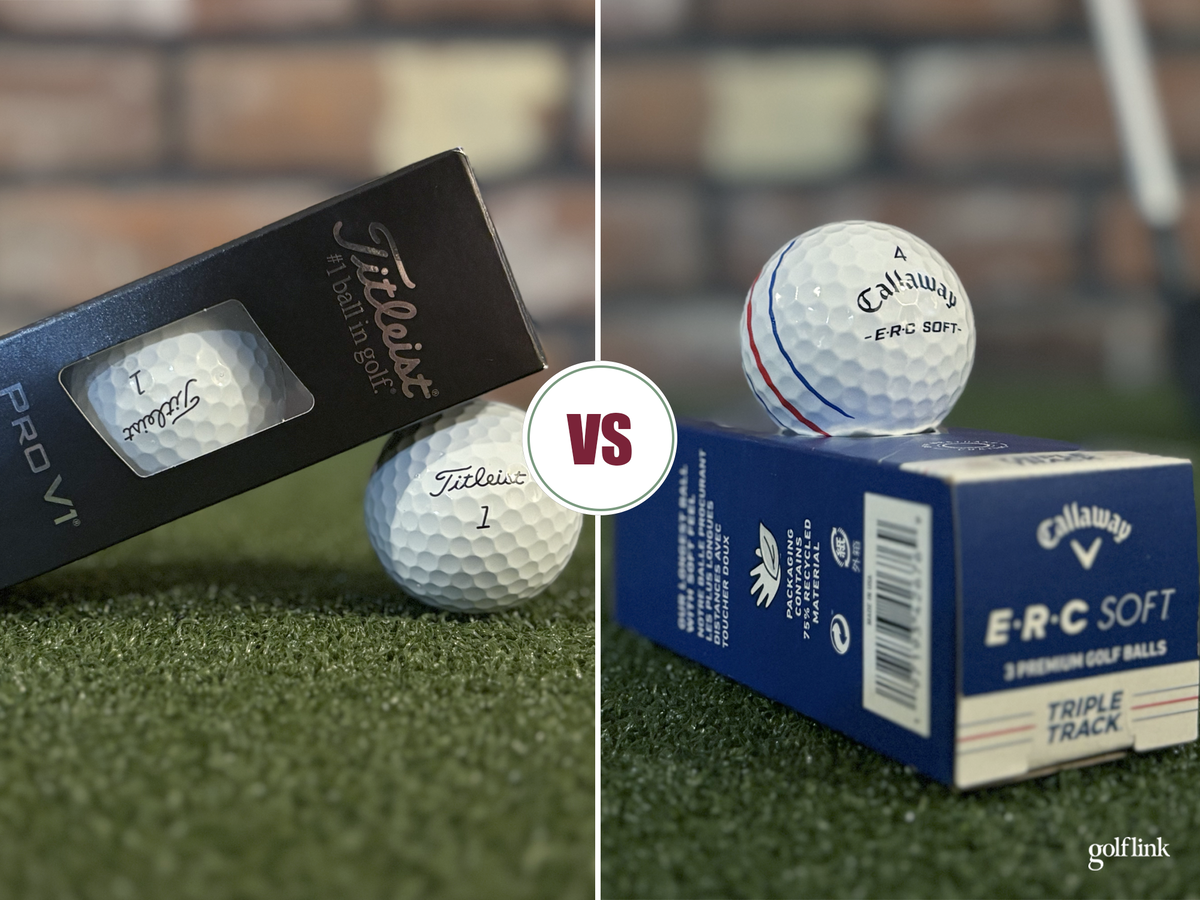
Titleist Pro V1 is one of the most popular golf balls on the professional tours. The Callaway ERC Soft has likely never taken flight on any professional tour, ever.
So why compare them?
The goal isn't to crown a winner. Both balls are among the best in their categories, but they're built with different priorities.
Once you see where each ball shines, and the sacrifices they make, you can easily decide which one actually fits your game.
How We Test Golf Balls
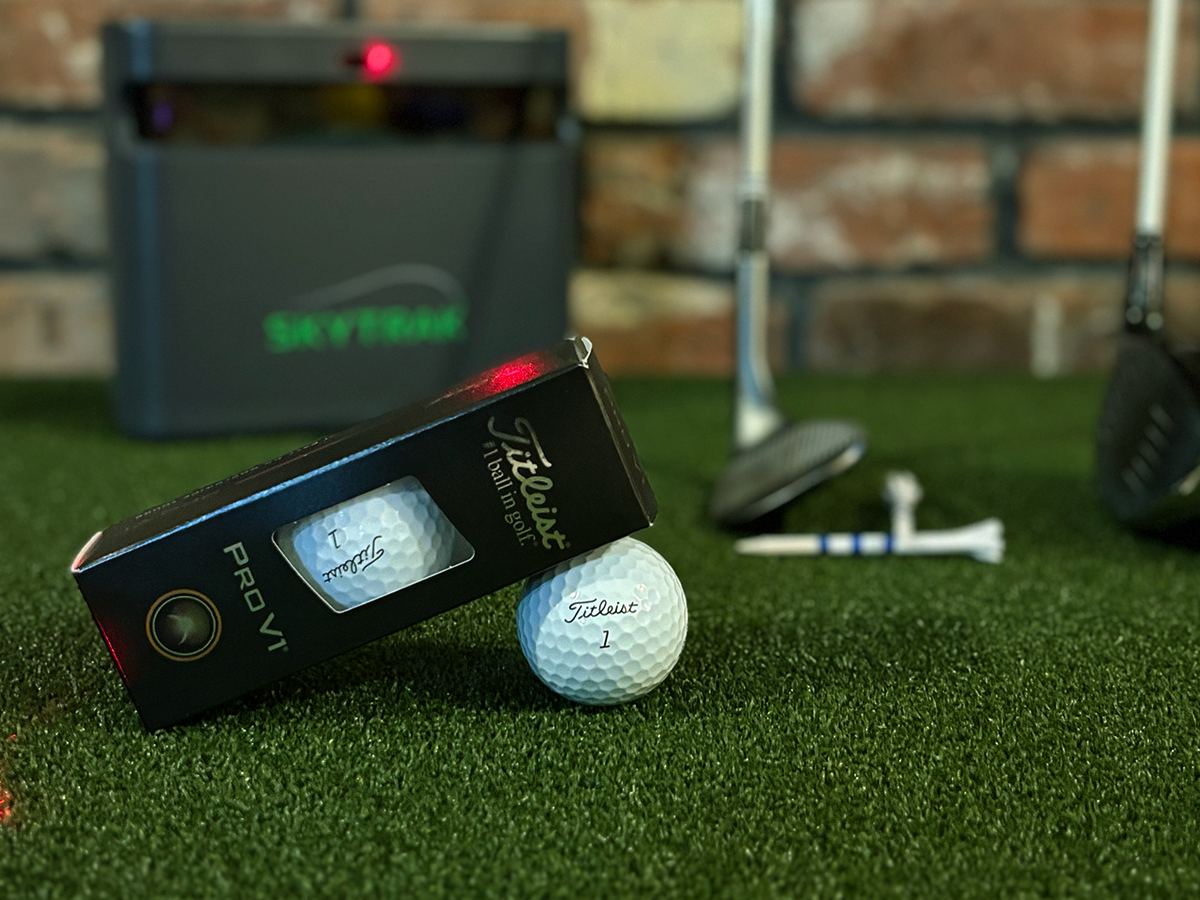
We tested both the Titleist Pro V1 and the Callaway ERC Soft using our standardized golf ball testing protocol using the SkyTrak ST Max launch monitor.
Instead of relying on robot testing, we use strict swing speed and impact-quality bands to evaluate each ball with a driver, 7-iron, and 50-yard shot. Then we assess performance in the categories that matter most: distance, stopping power, and accuracy.
Because we use humans, not robots, our results reflect how balls perform on the course with natural swing-to-swing variation. Learn more about how we test golf balls.
Titleist Pro V1 vs. Callaway ERC Soft: At a Glance Comparison
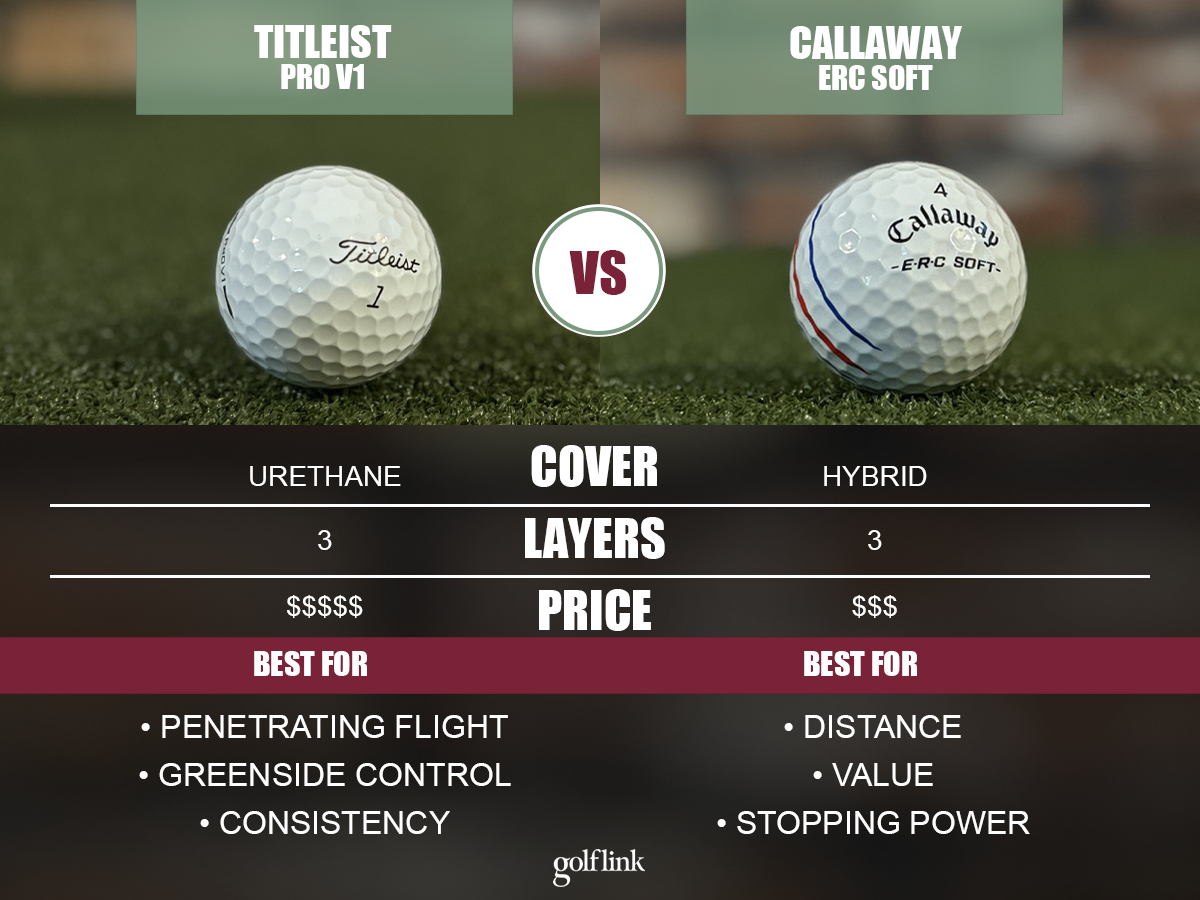
So just how different is the DNA of the Titleist Pro V1 from the Callaway ERC Soft? In this case, it’s what’s on the outside that counts. Their cover materials place them in distinctly different categories.
| Category | Pro V1 | ERC Soft |
| Price | $58 | $40 |
| Construction | 3-Piece/Urethane Cover | 3-Piece/Hybrid Cover |
| Driver Distance | Mid | Longer |
| Iron Spin | High | Mid |
| Greenside Spin | High | Mid |
| Stopping Power | Highest | Mid-High |
Titleist Pro V1
With a urethane cover, the Pro V1 is a premium, tour-level ball designed for faster swing speeds, a penetrating flight, and world-class greenside control.
Callaway ERC Soft
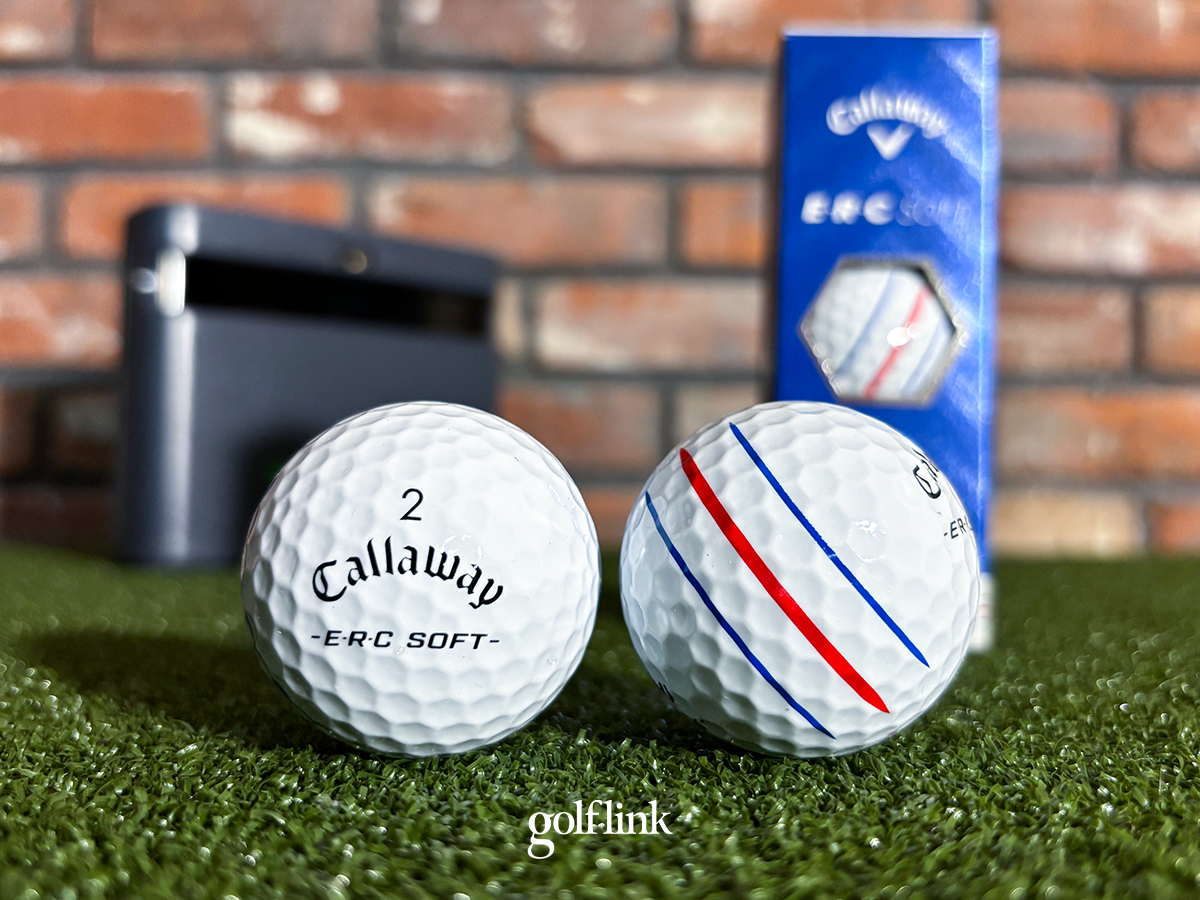
The ERC Soft uses a hybrid cover with a urethane coating. That design suggests Callaway is targeting mid-handicap golfers who want some of the greenside control of a urethane-covered ball, without giving up the distance boost of an ionomer-covered ball.
The ERC Soft also costs about $20 per dozen less than the Pro V1, which makes it an appealing option for players seeking performance without paying top dollar.
Check out our complete Callaway ERC Soft review.
Performance Snapshot
Distance (Mid-90s Driver Speed):
- ERC Soft: About 10 yards longer off the tee with higher launch and lower spin
- Pro V1: More penetrating ball flight with driver
Stopping Power:
- Pro V1: More spin in iron and wedge testing and better overall stopping power
- ERC Soft: Relies more on height than spin to hold greens
Accuracy & Workability:
- Pro V1: More workable
- ERC Soft: Straighter flight
Who It's For:
- Pro V1: Faster swing speeds players who prioritize control
- ERC Soft: Moderate swing speed players who prioritize distance & straight flight
See the complete data from our test of the Titleist Pro V1 and the Callaway ERC Soft.
Performance: Titleist Pro V1 vs. Callaway ERC Soft
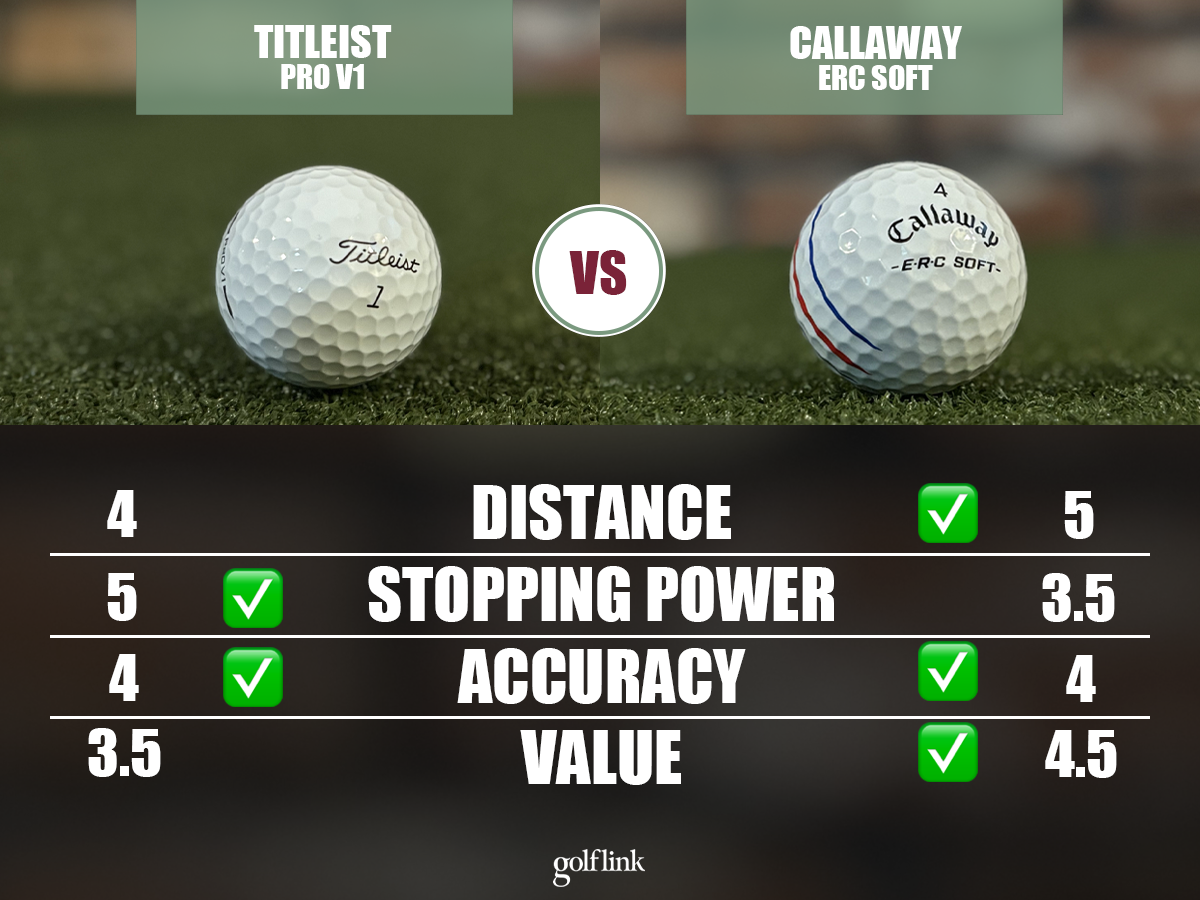
Just how much better is the Pro V1 around the greens, and how much longer is the ERC Soft?
Distance
Our testing showed that with driver swing speed in the mid-90s, the ERC Soft consistently produced about 10 yards more total distance than Pro V1.
That advantage came from a combination of higher ball speed, higher launch profile, a higher apex, and lower driver spin, which created a more optimized overall ball flight.
It’s worth noting that Pro V1 is designed to handle faster swing speeds without sacrificing efficiency, and at higher speeds, the distance gap would likely narrow.
Stopping Power
Predictably, our stopping power comparison favored Pro V1.
Under identical swing speeds (85.5 mph) in our 7-iron test, Pro V1 and ERC Soft produced almost identical ball speed and launch angles. Pro V1, however, created upwards of 500 RPMs more spin and stopped significantly quicker than ERC Soft. That stopping power wasn’t just a result of superior spin. Pro V1 also produced a higher apex and steeper descent angle, which helped it stop quicker.
In our 50-yard test, Pro V1 launched lower and with more spin than ERC Soft, exactly what it’s designed to do, and with just two yards of roll, it churned out appreciable stopping power in that test as well.
However, ERC Soft showed its teeth from 50 yards as well, and actually stopped about one foot quicker in our 50-yard test than Pro V1. This illustrates how a steeper descent angle can compensate for lower spin on some shots.
The difference is how that stopping power is created. Pro V1 uses more spin, which translates to more control and predictability. ERC Soft, however, relies on higher launch and steeper descent angles, which can stop the ball quickly but with less precision and touch.
Accuracy & Workability
Accuracy and workability are equally biased ways of describing the same thing: how straight, or curved, does the ball fly?
Better players rely on seeing a specific shot shape and executing it, and often prefer a workable ball that allows them to make it happen. Since urethane-covered balls spin more, they’re more workable.
Other players prefer a more accurate ball that can fight excessive curvature, whether it can create straight shots or simply reduce the severity of a slice or hook. Non-urethane-covered balls usually spin less and fly straighter.
Which one is better? That’s up to the player.
Our testing showed that each of these balls did what it’s made to do.
Pro V1 had more side spin in the driver test and finished a few yards farther from center on average. ERC Soft stayed closer to the center and had less sidespin.
When it comes to accuracy and workability, you can choose your own weapon. And this is one area that will likely determine which category of ball works better for your game.
Value
The Titleist Pro V1 has been the gold standard among golf balls for virtually this entire century. Its dominance on the professional tours provides all the validation you need to classify it as an elite performing ball. With that performance comes the top-end price, and Titleist rightfully commands top-dollar for the Pro V1. That price is getting closer to $60 per dozen every year.
Even though it’s about $20 per dozen less than Pro V1, ERC Soft is priced at the top-end of its class as well. It’s rare to see non-urethane covered balls near the $40 per dozen mark, but that’s about what a box of ERC Soft costs these days.
Head-to-head, ERC Soft cranks out more distance off the tee and outperforms other balls in its class around the greens. Pro V1, meanwhile, lives up to its reputation of best-in-class stopping power and control.
The decision comes down to whether those performance advantages are worth the extra cost.
Which Ball is Better For You?
Like we said earlier, there’s no better ball out of these two, just one that’s better for your game. Here’s how to decide which ball is better for you.
Consider playing Titleist Pro V1 if you:
- Have a faster swing speed (100 mph+ with driver)
- Prioritize stopping power and control with irons and wedges
- Prefer a more workable ball and/or more penetrating flight
- Prefer premium performance with minimal tradeoffs over affordability
Consider Callaway ERC Soft if you:
- Prioritize distance off the tee
- Prefer a straighter and/or higher ball flight
- Want better-than-expected green-holding power without sacrificing distance off the tee
- Prefer a quality ball under $40/dozen
Ball Out
Figuring out which ball is better for your game on paper is only the first step to figuring out which ball is best for you on the course.
This comparison is a starting point, not a final answer. Your next step is to test the ball that fits your priorities in your own game.
Take it to the practice area. See how it reacts around the greens. Play a few holes and evaluate the distance and shot shape it produces.
That’s how you’ll find out for sure which ball is best for you.