Titleist Pro V1 vs Pro V1x: Which One Actually Fits Your Game
We tested Pro V1 vs Pro V1x to find out exactly where the differences show up, and where they don't.
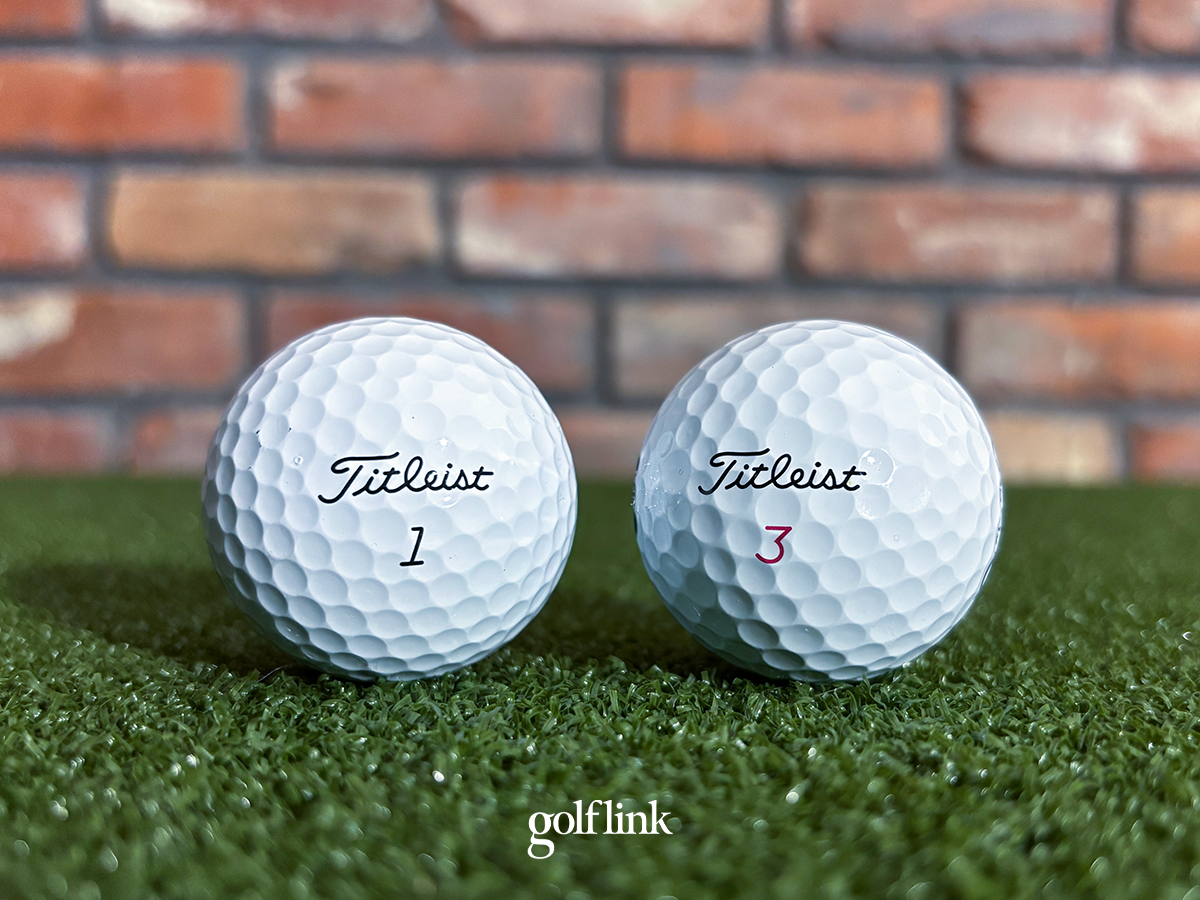
Pro V1 or Pro V1x?
Golfers have been debating it for decades, and for good reason. At close to $60 a dozen, getting this one wrong stings.
We tested Pro V1 vs Pro V1x on a launch monitor. Where do the differences between these two balls actually show up in your game, and where are they too small to notice on the course?
Here’s what we found.
How We Tested Titleist Pro V1 and Pro V1x
We tested Titleist Pro V1 and Pro V1x using our standardized golf ball testing protocol on the SkyTrak ST Max launch monitor.
We use human swings, not robots, so our testing identifies the performance differences that most golfers can expect to see on the golf course, not microscopic differences under perfect conditions.
We use strict guardrails for swing speed and ball speed, delivery dynamics (face and path) and shot quality (measured by strike location and smash factor) to ensure our results represent the golf ball’s performance. These benchmarks also keep our results consistent across every ball we test.
While individual results will vary, the patterns we see across dozens of shots are meaningful. Learn more about how we test golf balls and see the complete list of every golf ball we’ve tested.
You can also see our full Titleist Pro V1 test data here and our Titleist Pro V1x test data here.
TItleist Pro V1 vs Pro V1x Overview
On the inside, the difference between Titleist Pro V1 and Pro V1x is one layer. Pro V1 is a 3-piece ball, Pro V1x is 4-pieces.
And if you read the boxes closely, you’ll notice that Pro V1 feels softer, flies lower, and spins less than Pro V1x.
The question is, how drastic are those differences? And if they’re big enough to impact your game, where will you notice them?
|
Category |
Titleist Pro V1 |
Titleist Pro V1x |
|
Cover |
Urethane |
Urethane |
|
Layers |
3-piece |
4-piece |
|
Brand Description |
Extraordinary distance; increased drop-and-stop control; very low long game spin; penetrating trajectory; very soft feel |
Extraordinary distance; increased drop-and-stop control; low long game spin; high trajectory; soft feel |
|
Price |
$58 |
$58 |
Pro V1 vs Pro V1x: Ball Flight Comparison
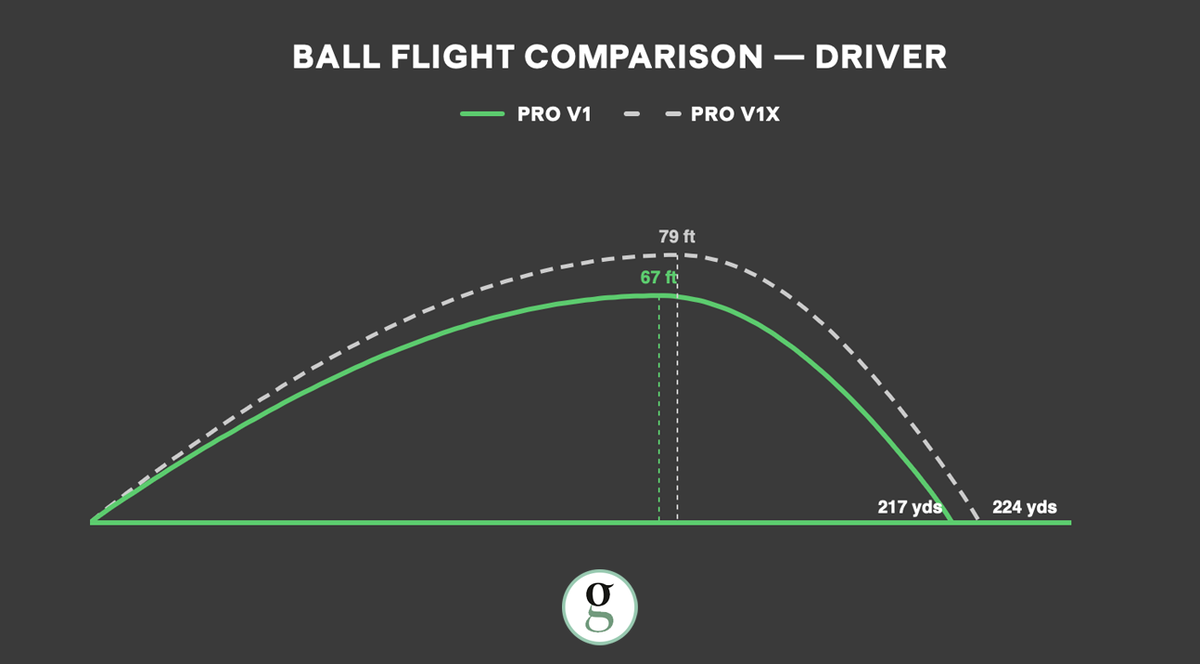
Ball flight is one of the areas where Titleist highlights differences between Pro V1 and Pro V1x. Pro V1x is built to deliver a higher trajectory with more spin.
Driver Ball Flight
That’s exactly what we saw in our driver test. Pro V1x peaked 12 feet higher than Pro V1, and at our driver testing swing speeds, mid-90s, that led to a distance advantage for Pro V1x.
But that advantage may shrink or even flip depending on swing speed. Players with faster swing speeds may generate too much spin and hit Pro V1x too high to get maximum distance.
That’s where the lower spin profile and penetrating ball flight of Pro V1 come in handy. And it’s not just swing speed that influences optimal distance, your own launch characteristics play a role too.
If you lose distance because you hit it too low, consider Pro V1x. If you lose distance because you hit it too high, expect Pro V1 to help.
Check out our complete Titleist Pro V1x Review here.
7-Iron Ball Flight
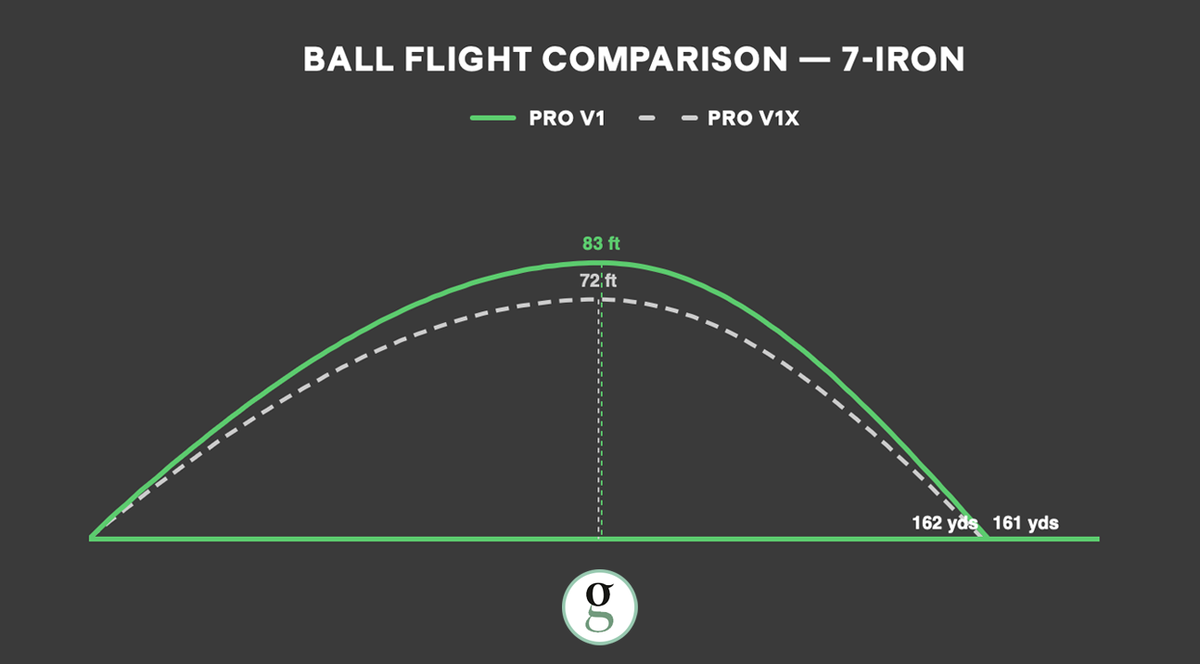
In our iron test, Pro V1 actually flipped the script and flew higher than Pro V1x, the opposite of what Titleist’s hyper-controlled testing suggests.
My takeaway from that isn’t that Titleist is wrong or that the Pro V1 will fly higher for everyone, but it suggests to me that the trajectory difference with irons is closer than one might assume.
If human testing can flip what these balls are “supposed to do” under strict swing speed and impact controls, then the actual difference in this area may be too small to notice on the course.
Wedge Ball Flight
In our 50-yard wedge test, Pro V1 and Pro V1x once again behaved as expected.
Pro V1x peaked higher and produced more spin. Pro V1 actually launched a skosh higher, but peaked lower with its signature penetrating flight, and both balls stopped quickly in our 50-yard test.
|
Category |
Pro V1 |
Pro V1x |
|
Driver Spin |
High |
High |
|
7-Iron Spin |
High |
High |
|
Wedge Spin |
Mid |
High |
|
Driver Launch |
Mid |
High |
|
7-Iron Launch |
High |
Mid |
|
Wedge Launch |
Mid |
Low |
Distance: Is Pro V1 or Pro V1x Longer?
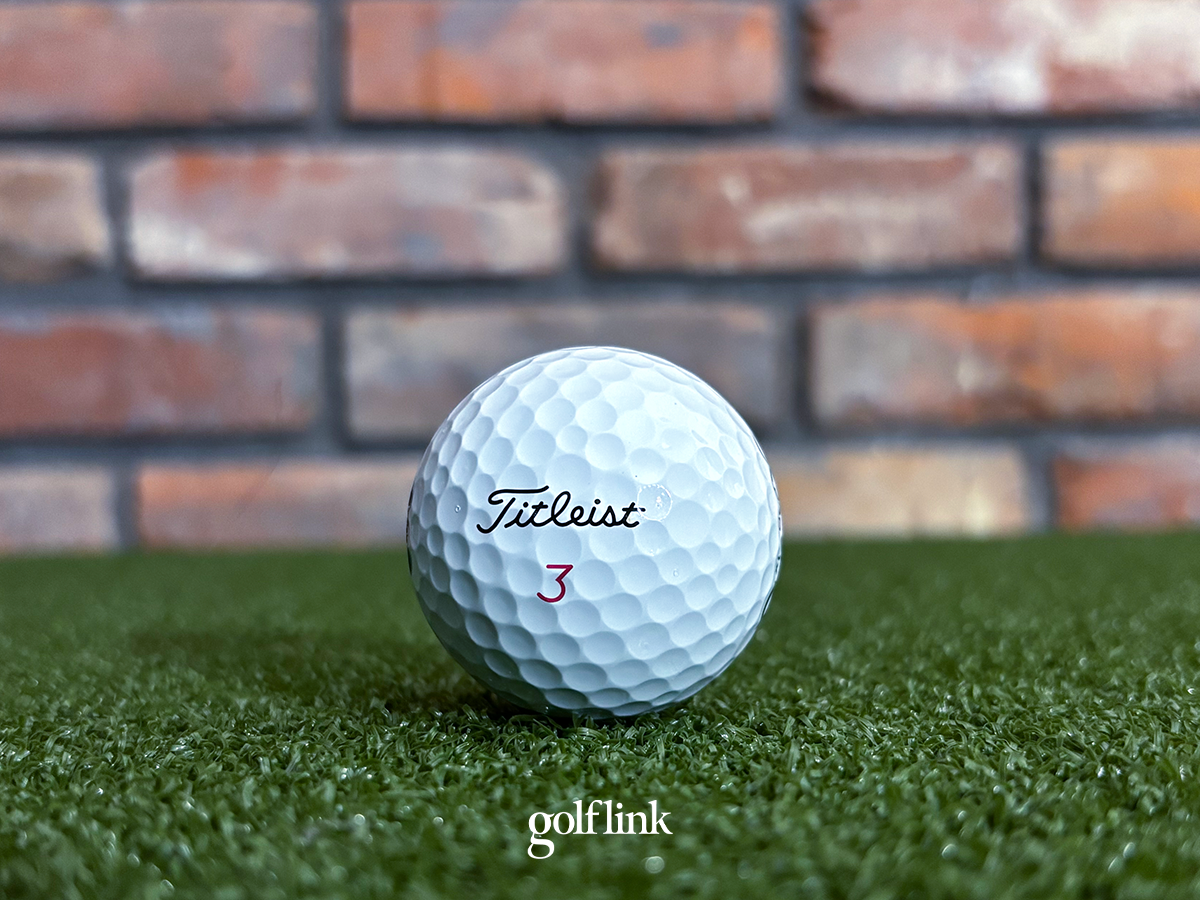
In our test, Pro V1x won the distance battle against Pro V1.
But when you look at the numbers, you can see that it’s not a matter of which ball is longer, it’s a question of which ball is longer for your swing.
Our driver test is conducted at modest mid-90 MPH swing speeds, which tilts the scales in favor of the higher-launching, higher spinning Pro V1x. Players with similar swing speeds should take note.
Faster swingers risk ballooning Pro V1x. Those players would be better served by Pro V1 to optimize ball flight for maximum distance.
|
Category |
Pro V1 |
Pro V1x |
|
Driver Carry (yds) |
217.3 |
224.4 |
|
Driver Total (yds) |
236.7 |
242.1 |
|
Distance Score |
6.4 |
7.7 |
Pro V1 vs Kirkland Signature Golf Balls: What Our Test Revealed
Stopping Power
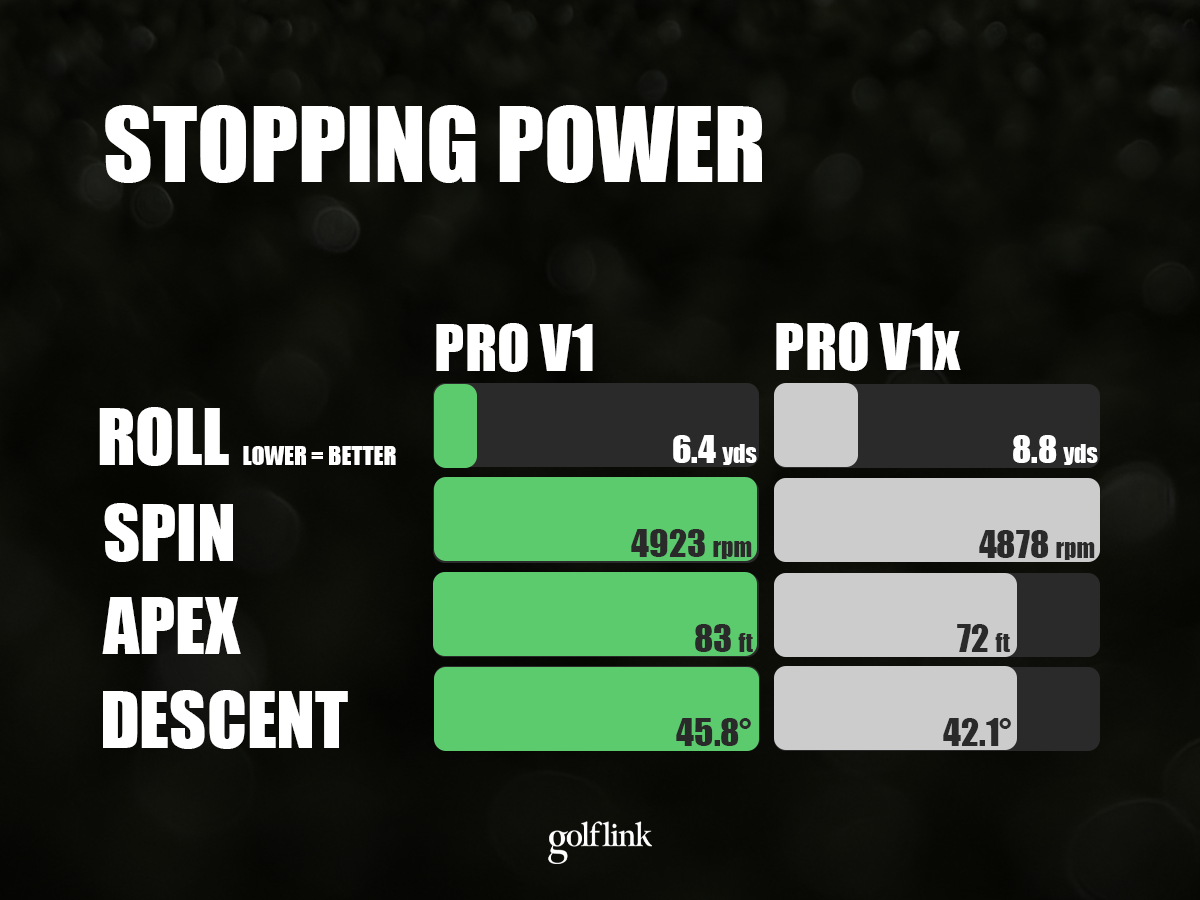
In our testing, Pro V1 beat every other ball we tested in Stopping Power, more than 40 balls total, thanks to high spin and the steepest descent angle we saw.
Pro V1x held its own here too, and this is actually the category where Titleist suggests it should beat Pro V1. Our test didn’t bear that out, but different swing deliveries might. It’s a closer race than most golfers might expect.
Bottom line, both balls are elite at stopping quickly on the greens. That gives players more control over a vital facet of the game and explains why these balls are so popular on tour.
|
Category |
Pro V1 |
Pro V1x |
|
7-Iron Roll (yds) |
6.4 |
8.8 |
|
7-Iron Spin (RPM) |
4923 |
4878 |
|
7-Iron Apex (yds) |
27.8 |
23.9 |
|
7-Iron Descent Angle |
45.8° |
42.1° |
|
Stopping Power Score |
9.4 |
8.5 |
Wedge Control
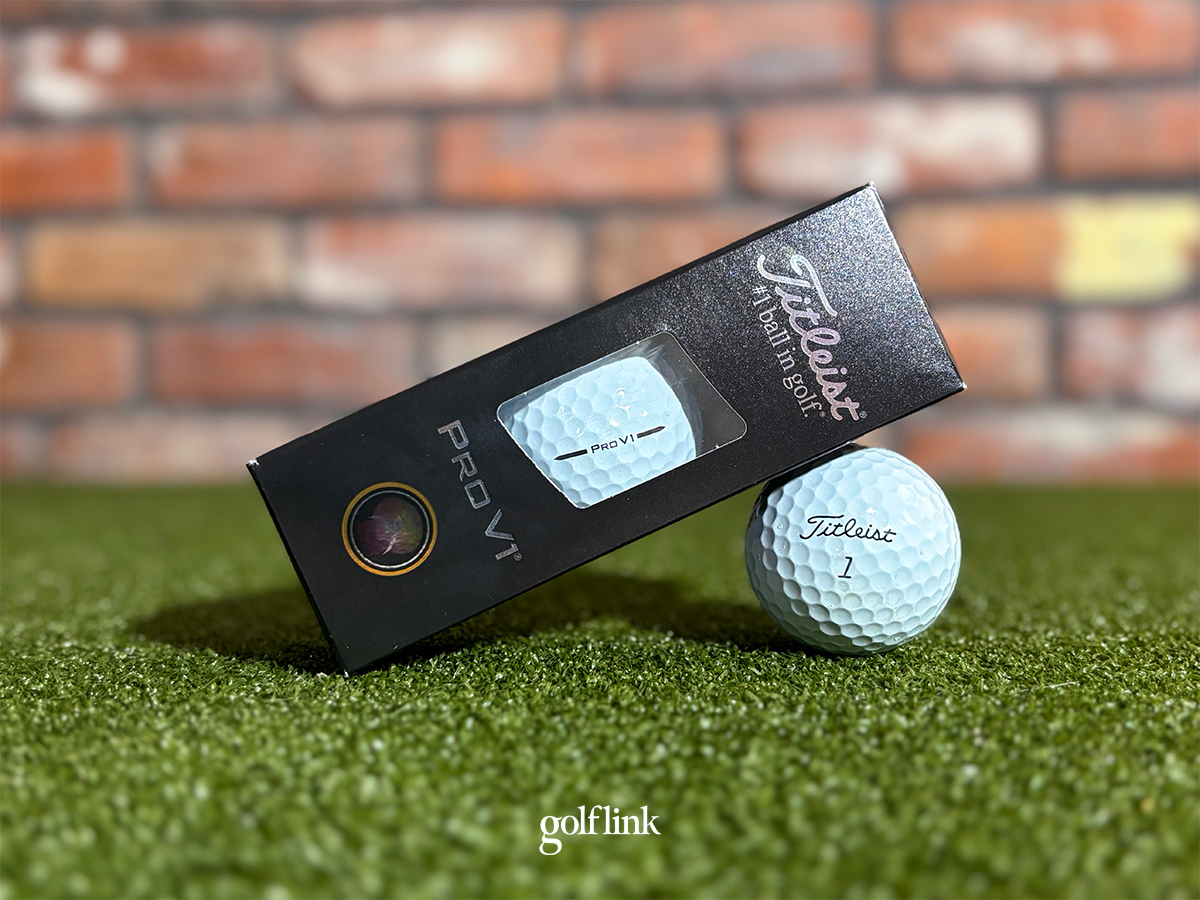
Titleist Pro V1 and Pro V1x are two of the best balls for wedge control of 2026.
Expect anything different?
Pro V1x edged Pro V1 in our wedge control scoring thanks to a combination slightly lower launch angle, more spin, and a few inches less roll out.
This is actually one of the areas where these two balls demonstrated the most separation. Pro V1x produced the most spin of any ball in our wedge test, almost 1,000 RPM more than Pro V1.
Pro V1 held true to its penetrating ball flight, peaking about four feet lower from 50 yards than Pro V1x.
Both balls stopped quickly, it’s just a matter of how you want to get there.
|
Category |
Pro V1 |
Pro V1x |
|
50-Yard Launch |
32.6° |
31.1° |
|
50-Yard Spin (RPM) |
6798 |
7733 |
|
50-Yard Roll (yds) |
2.0 |
2.1 |
|
Wedge Control Score |
8.8 |
9.2 |
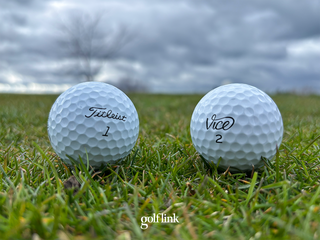
Titleist Pro V1 vs Vice Pro: Our Test Helps You Choose
Accuracy & Workability
Sidespin is an ally to some players, and an enemy to others.
Do you want to see your ball fly straight, and avoid trouble? Or do you want to carve it into tight hole locations and shape it around the course?
I’ve said it before and I’ll say it again: the opposite of accuracy isn’t inaccuracy – at least not in this context – it’s workability.
With its lower-spin profile, Pro V1 resisted sidespin better overall than the higher-spinning Pro V1x. While both balls are workable compared to the 40-plus balls we’ve tested, players who prefer a bit straighter flight would benefit from Pro V1. Shot-shapers will have more freedom with Pro V1x.
|
Category |
Pro V1 |
Pro V1x |
|
Driver Sidespin (RPM) |
246 |
209 |
|
Driver Offline (yds) |
9.0 |
7.5 |
|
7-Iron Sidespin (RPM) |
64 |
203 |
|
7-Iron Offline (yds) |
6.5 |
8.0 |
|
Accuracy Score |
7.4 |
6.7 |
Overall Performance
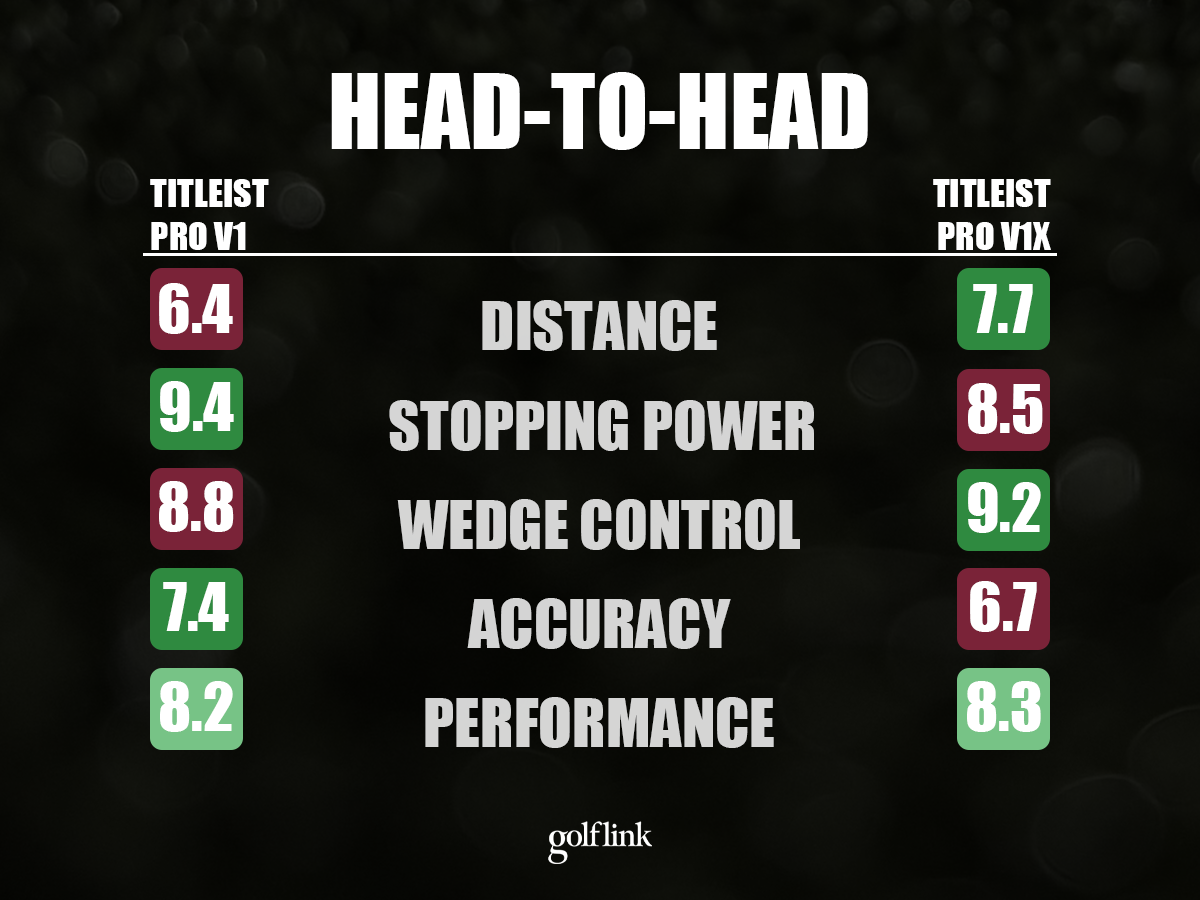
The difference between Pro V1 and Pro V1x, in a nutshell, is Pro V1x flies a little higher and spins a little more.
That largely bore out in our testing.
But what does that mean for your game?
In our test, it helped Pro V1x earn a distance advantage and a dominant performance in our 50-yard wedge test. Meanwhile, Pro V1 proved to fly a little straighter and it’s impeccable stopping power performance remains unbeaten.
While Pro V1x technically racked up the higher overall performance score, the margin tells the real story.
|
Category |
Pro V1 |
Pro V1x |
|
Distance |
6.4 |
7.7 |
|
Stopping Power |
9.4 |
8.5 |
|
Wedge Control |
8.8 |
9.2 |
|
Accuracy |
7.4 |
6.7 |
|
Overall Performance |
8.2 |
8.3 |
Should You Play Pro V1 or Pro V1x?
If you didn’t already know it, our testing proves that Titleist Pro V1 and Pro V1x both deliver better players the performance they demand.
But they do it in different ways, and each plays to the strengths of different players.
- Players who need lower spin and trajectory to maximize driver distance, and prefer a slightly more subtle curve would benefit from Pro V1.
- Players who need more spin and higher ball flight to optimize distance, want high spin tee-to-green, and want maximum shot-shaping abilities fit better into Pro V1x.
You probably know which player you are. The debate was never about which ball is better. It was about which ball is better for you.
Now you know.