
Every golfer eventually must decide: do I want a laser, or do I want a map?
A rangefinder gives you one number to one target, and you can take that number to the bank. A GPS gives you the entire hole, with hazards, layup numbers, and green shape, plus front/center/back numbers that are usually within a yard or two. Neither one is better. The right one just depends on how you play.
I've used both over the last few years, including a few nifty GPS golf speakers that add premium sound to GPS distances.
Here’s a quick way to figure out which type you actually need, and eight or the latest and greatest options to get you around the course.
Rangefinder or GPS? Decide in 30-Seconds
- Pick a rangefinder if you play the same courses a lot, walk more than you ride, and want point-and-shoot precision.
- Pick a handheld GPS if you play different courses, travel for golf and like to plan one hole at a time instead of one shot at a time.
- Pick a GPS speaker if you ride, you already play music on the course, and you'd like your yardages to come with it.
How We Test
Every rangefinder here went through our standardized testing: 36 holes on the course where distances were checked against course markers, laser readings, and other GPS units when possible, and tested for accuracy down to the foot in a controlled, presmeasured environment.
Product | Type | Price | Best For |
Vistaget Golvia Ultra | Rangefinder | $299 | Most feature-packed rangefinder |
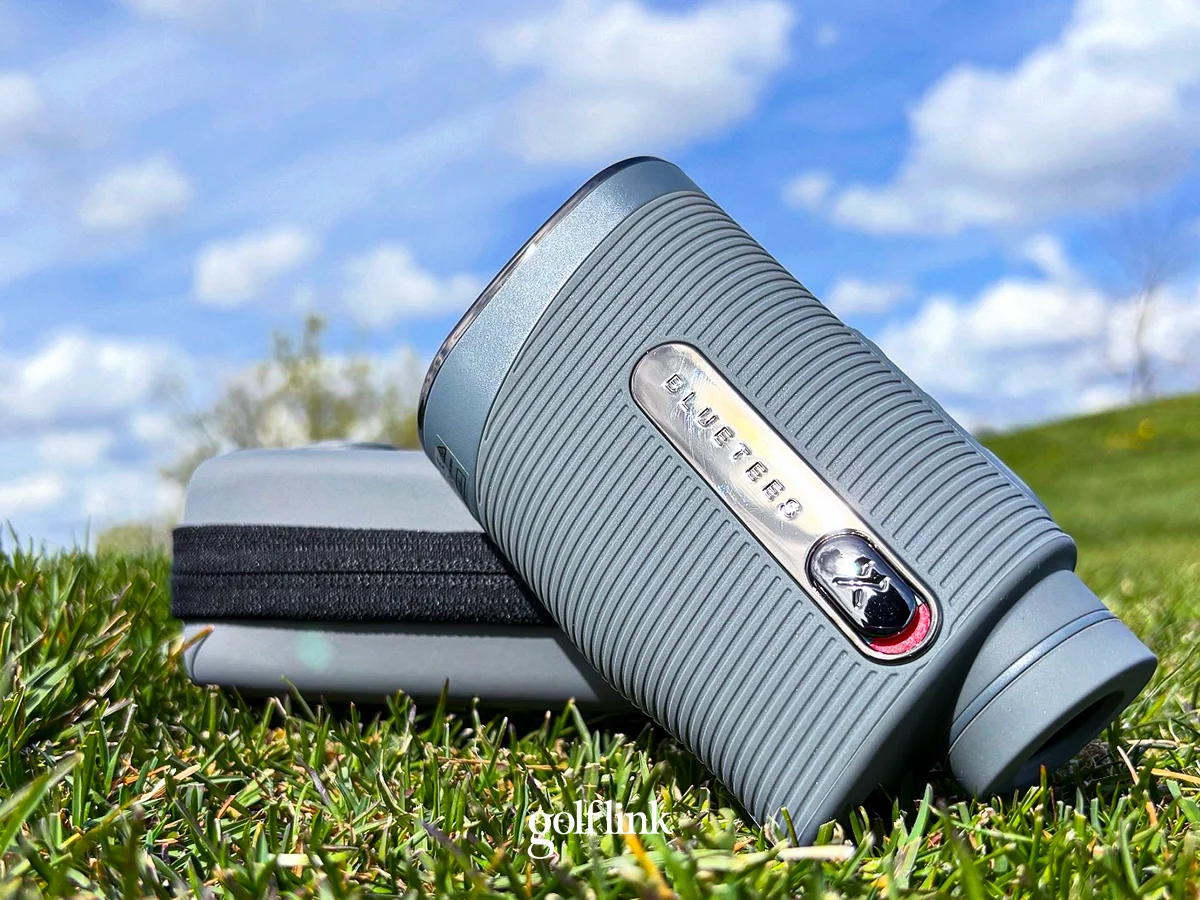
Bushnell Tour V7 Shift | Rangefinder | $399 | Most trustworthy |
Shot Scope Pro L5 | Rangefinder | $229 | Best Value |
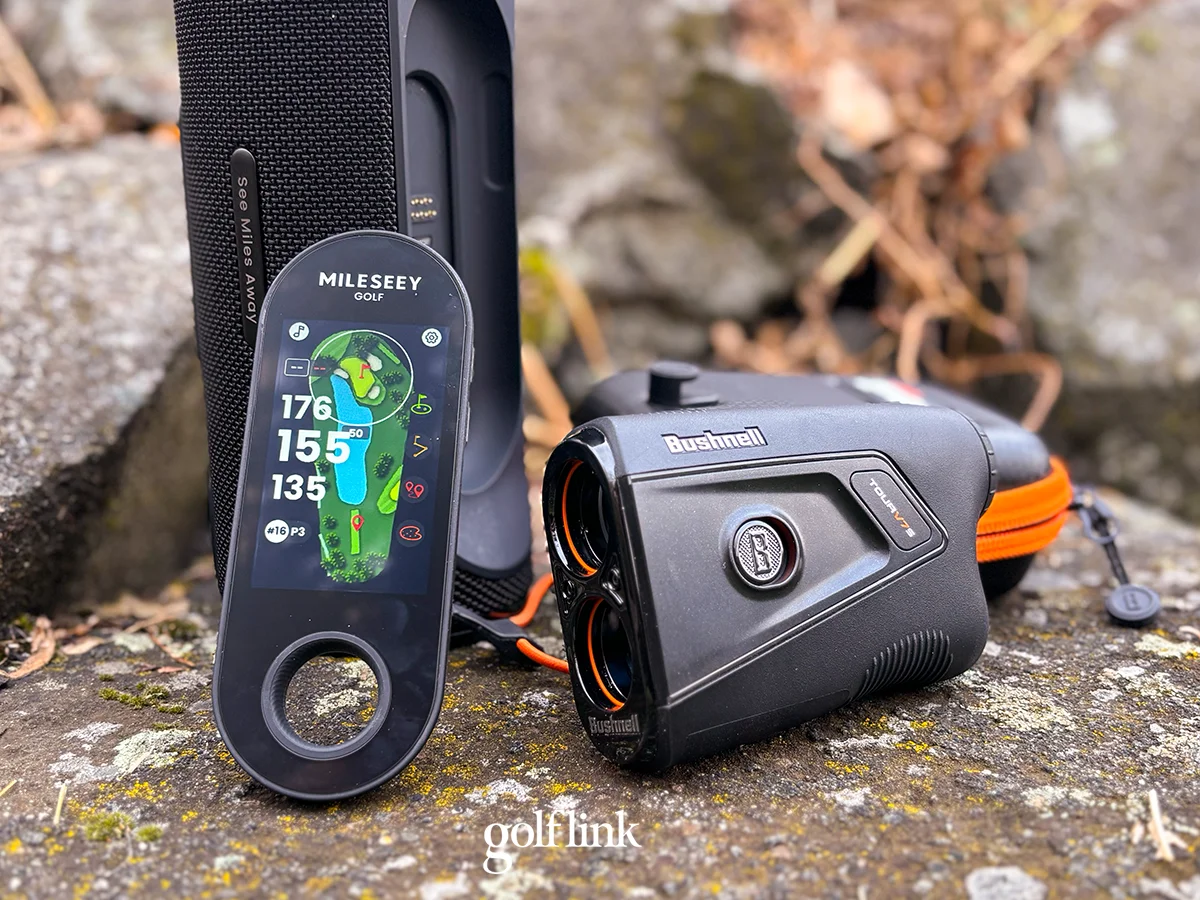
Mileseey GeneSonic Go | Handheld GPS | $229 | Walkers |
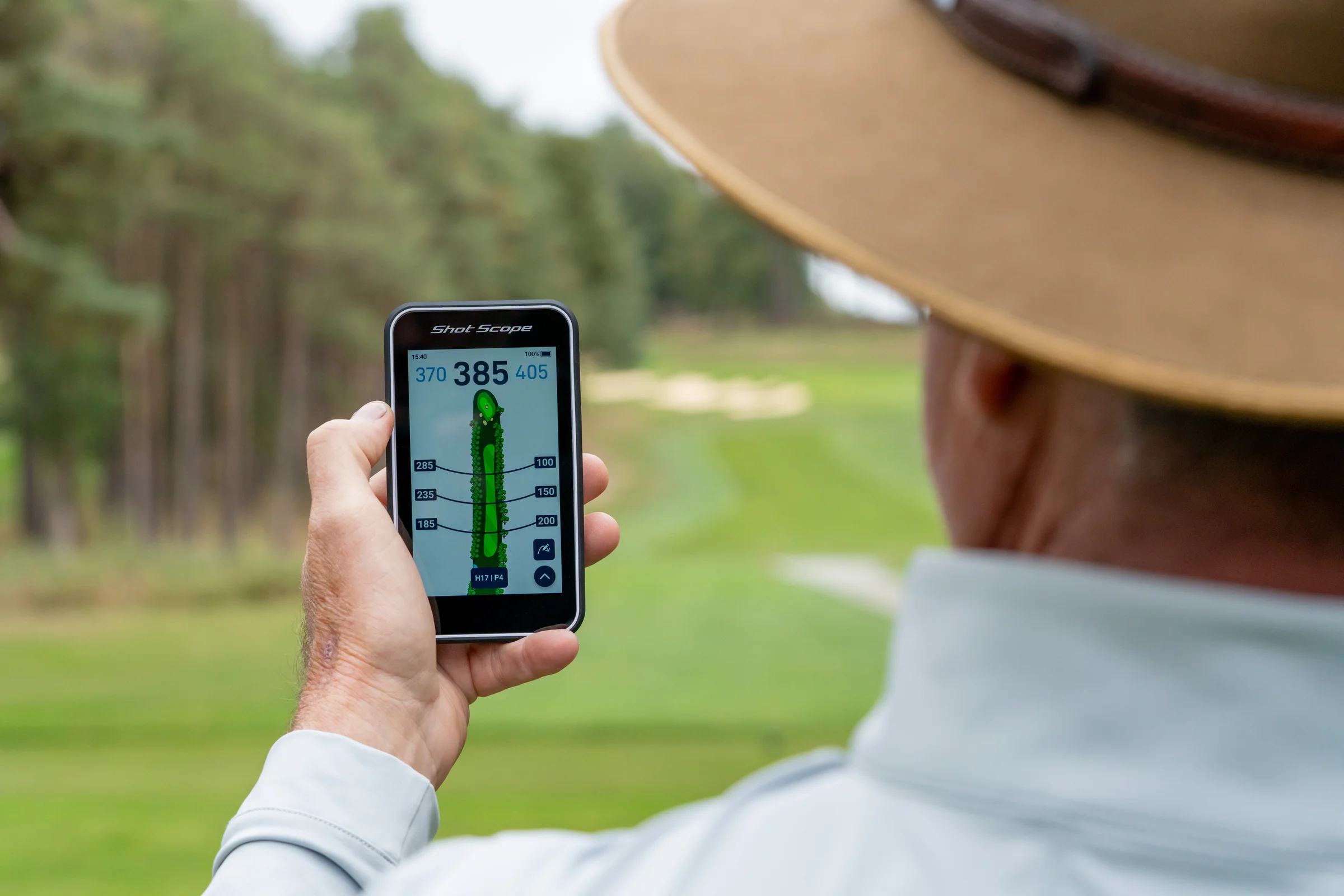
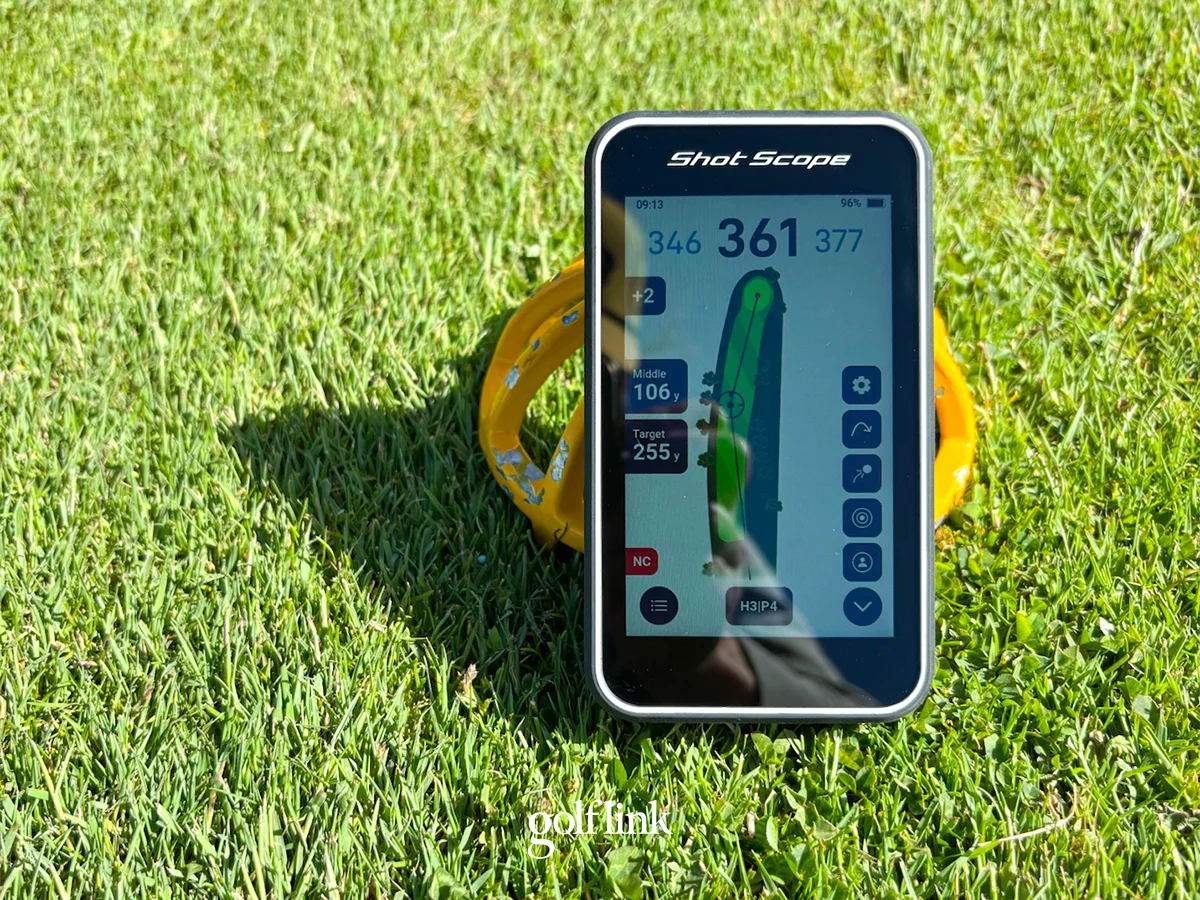
Shot Scope H50 | Handheld GPS | $199 | Feature-packed for riders |
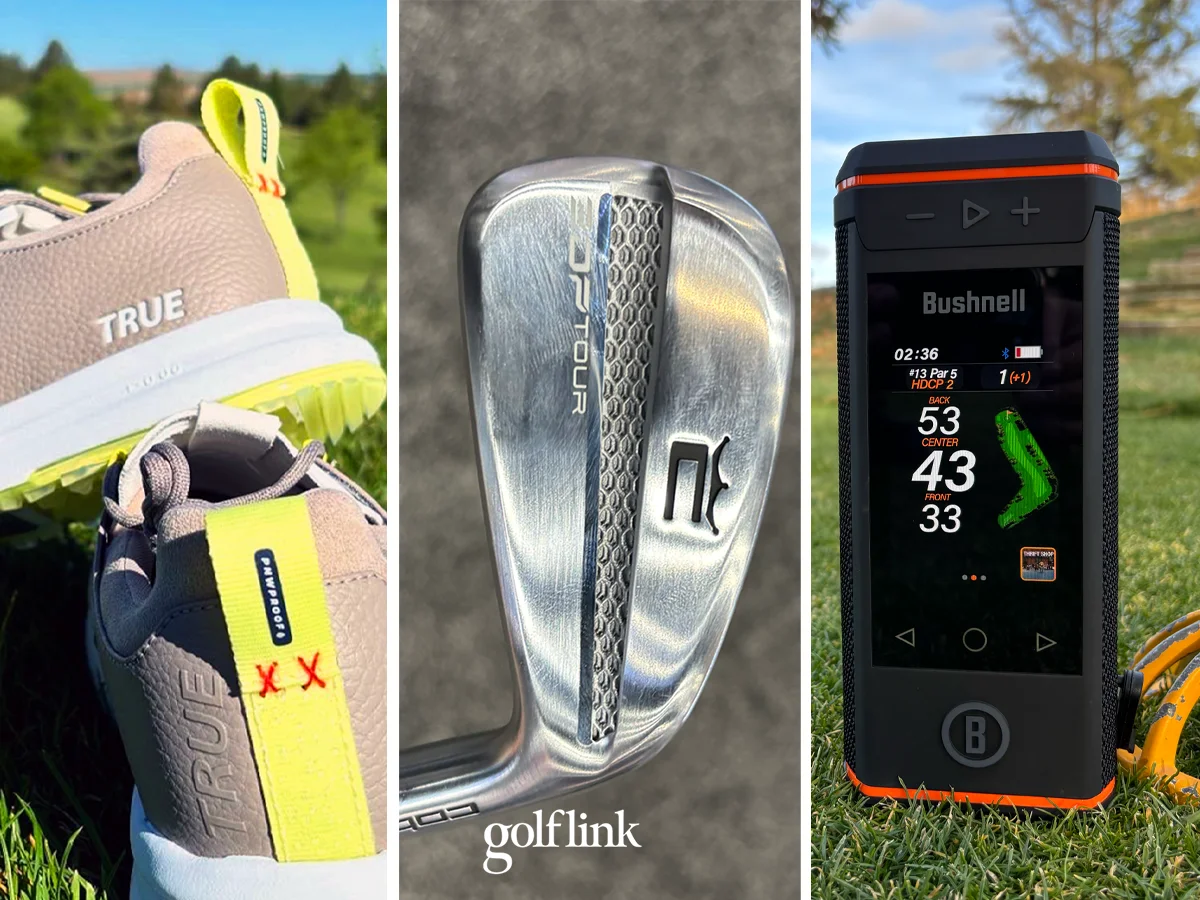
Bushnell Wingman HD | GPS Speaker | $249 | Best overall GPS speaker |
Mileseey GeneSonic Pro | GPS Speaker | $299 | Phone-free GPS and sound |
Dprofy V3 Pro | GPS Speaker | $149 | Budget |
Rangefinders: When Exact Numbers Matter
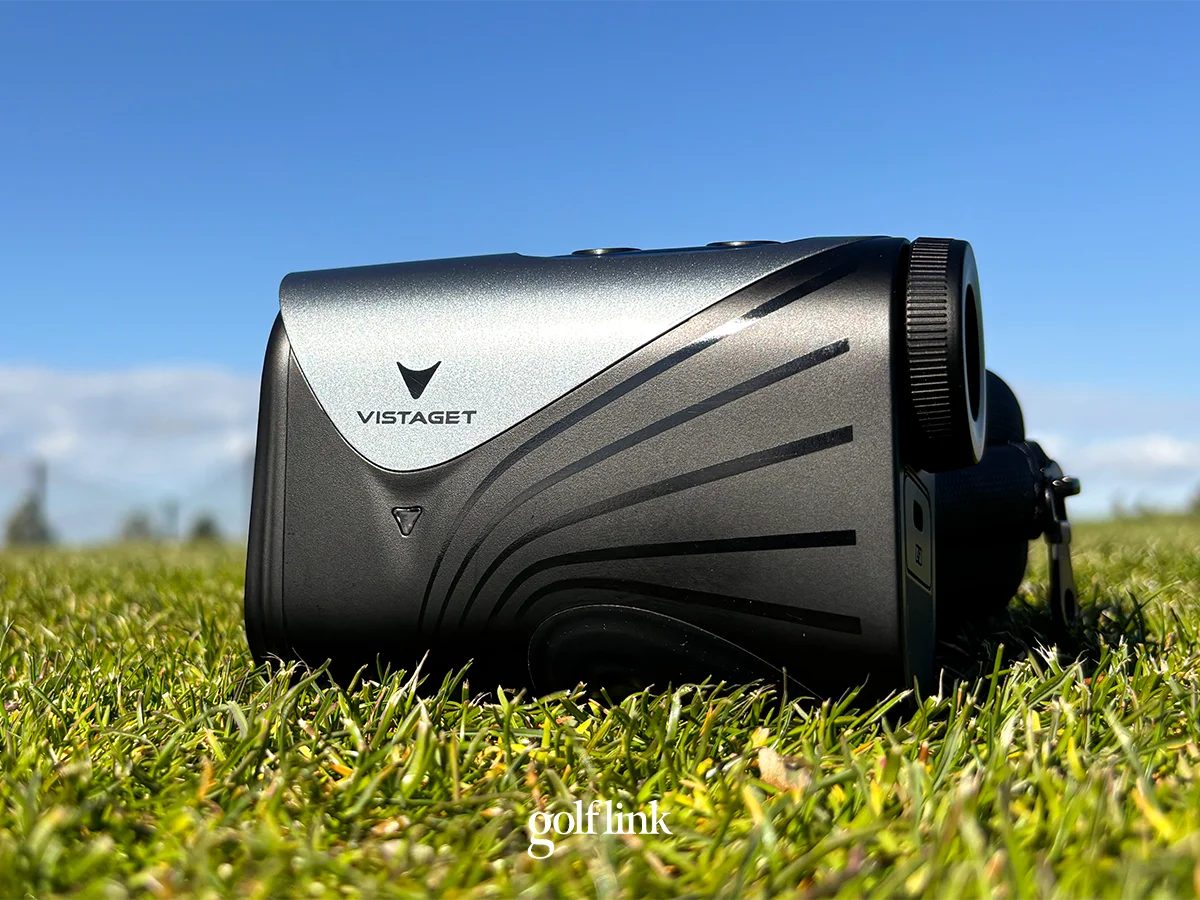
Why it wins: Accuracy was consistently within a yard, and the LCD display with optical image stabilization earned a 10/10 for optics. I actually prefer it head-to-head against premium alternatives. It also factors atmospheric pressure, temperature, and humidity into its distances, which I didn't know I needed until I had it.
On the course: You can pre-program your own club distances, and the rangefinder recommends a club right in the viewfinder, no app or connection required. Setting those distances up is a chore, but I'd rather do it on the couch than on the 7th tee. Then there's triangulation. While I was testing the Golvia Ultra, I hit a shot into the wrong fairway, down a steep hill from my hole. I didn’t want to lug my bag up and down that hill, but also didn’t want to make the right swing with the wrong club and find the out of bounds long of my target or the fescue-covered slope short. I used the triangulation to get a precise distance before dropping my bag, walking down the hill with only the right club in hand, and playing the shot with confidence.
Watch out for: There's no external slope on/off toggle.
Bottom line: High-level features without any on-course hassle. Read the full Vistaget Golvia Ultra review.
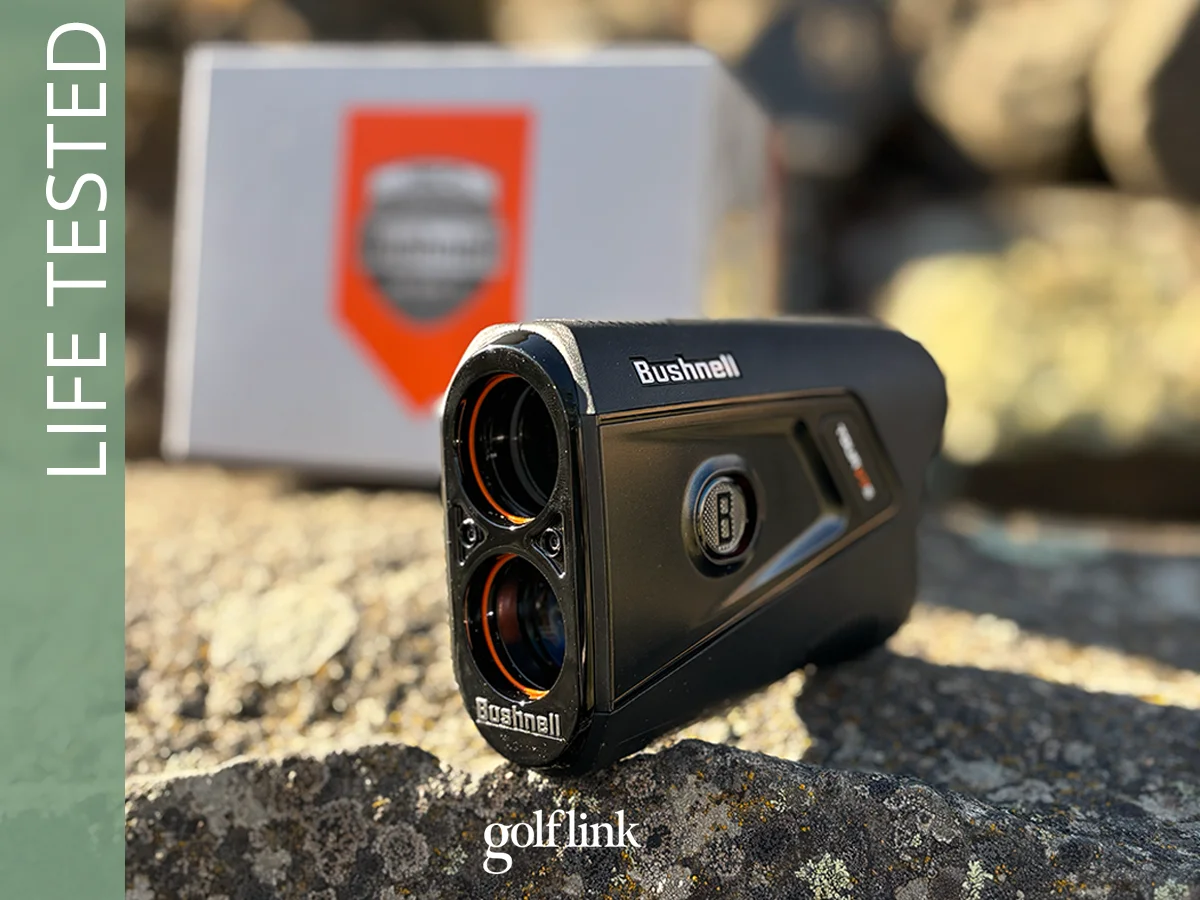
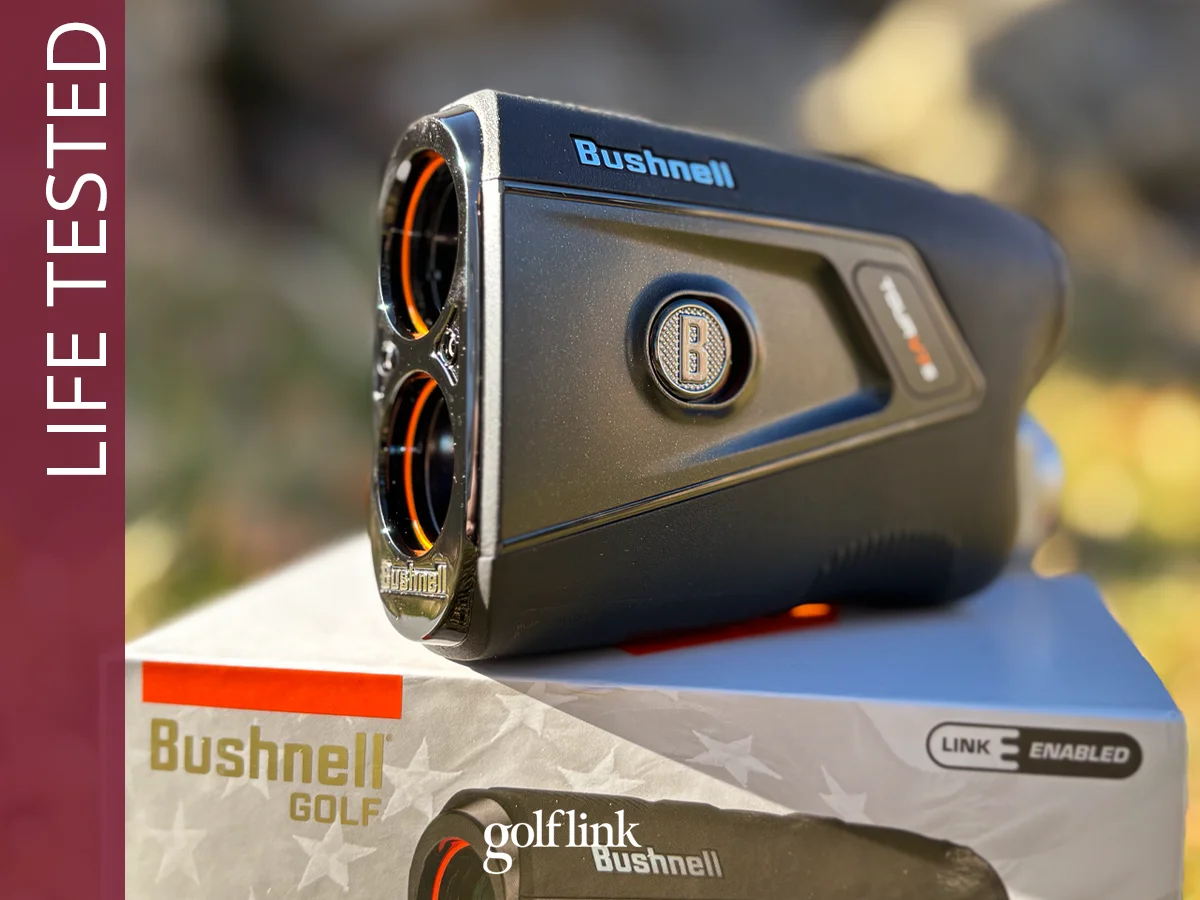
Why it wins: In our accuracy test, the Tour V7 Shift returned the exact same distance, the correct one, on every shot. That earned a perfect 10/10, and it also scored 10s for ease of use and magnet strength. The external slope toggle is simple, the Slope First feature highlights the slope-adjusted distance in green, and the BITE magnetic mount is as strong as any I've tested.
Watch out for: Bushnell's LINK-enabled club recommendations only work with compatible Foresight or Bushnell launch monitors, and most golfers won't have one. It also runs on a replaceable battery instead of a rechargeable one, and it's the priciest rangefinder here. If you're not using the LINK feature, the Golvia Pro and Shot Scope Pro L5 performed just as well in our testing and cost less.
Bottom line: If you want accuracy you never have to question and zero learning curve, this is the benchmark. Just know you're paying a premium for the name and for a feature many golfers can't use. Read the full Bushnell Tour V7 Shift review.
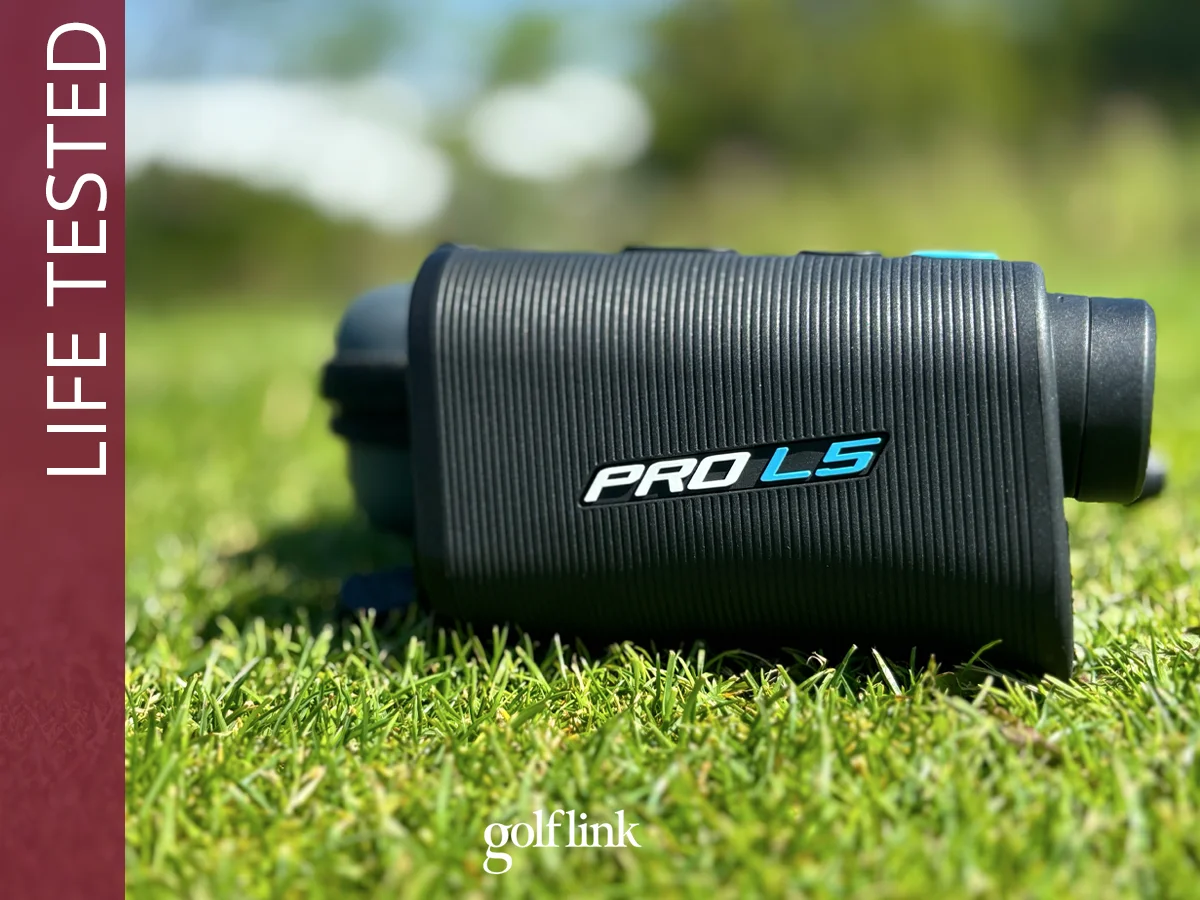
Why it wins: It scored a perfect 10/10 in accuracy, ease of use, and magnet strength. The OLED display, paired with 7x zoom, is the first rangefinder optics that genuinely impressed me, because almost every rangefinder claims "crystal clear" and few standout in that department. There's a slope on/off switch right on top of the unit, so you never scroll through a menu, and scan mode makes it easier than hitting a flagstick from 200 yards away. Even the Mode button only does one thing: switch between yards and meters. That's what I'm talking about.
On the course: I tested it over multiple rounds and checked its numbers against course markings, GPS readings, and a course I've played countless times. The less-is-more approach works for me. Yes, you can pay for a rangefinder that pairs with an app or a launch monitor, and those are cool, but sometimes simpler is better.
Watch out for: It uses a replaceable CR2 battery instead of a rechargeable one, and the battery door can be tricky to open. The red display can also be hard to read against a bright sky. On the battery, Shot Scope estimates 5,800 measurements, and with two batteries in the box, that will last most golfers several seasons.
Bottom line: Every feature you need and nothing you don't, with a two-year warranty. Just point, shoot, and play. Read the full Shot Scope Pro L5 review.
Handheld GPS: When You Want the Whole Hole
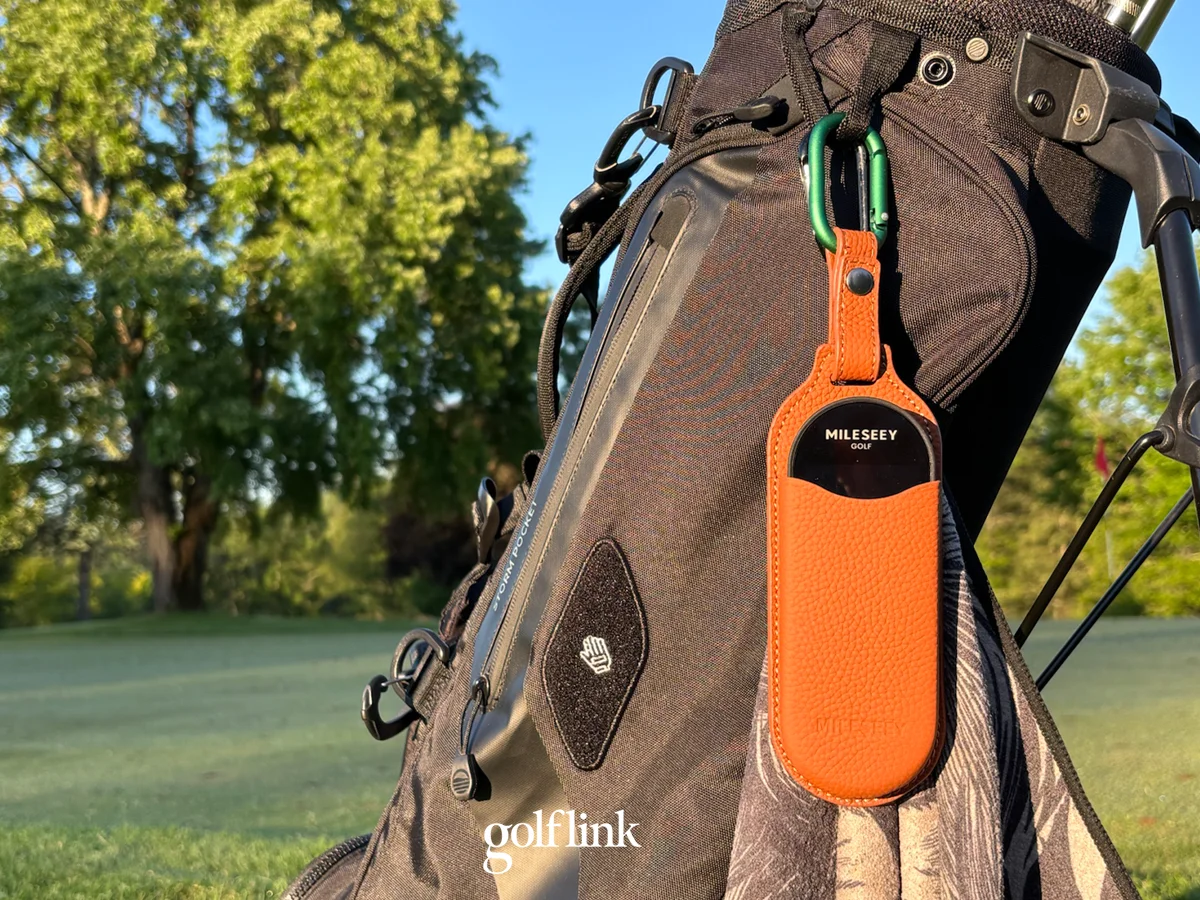
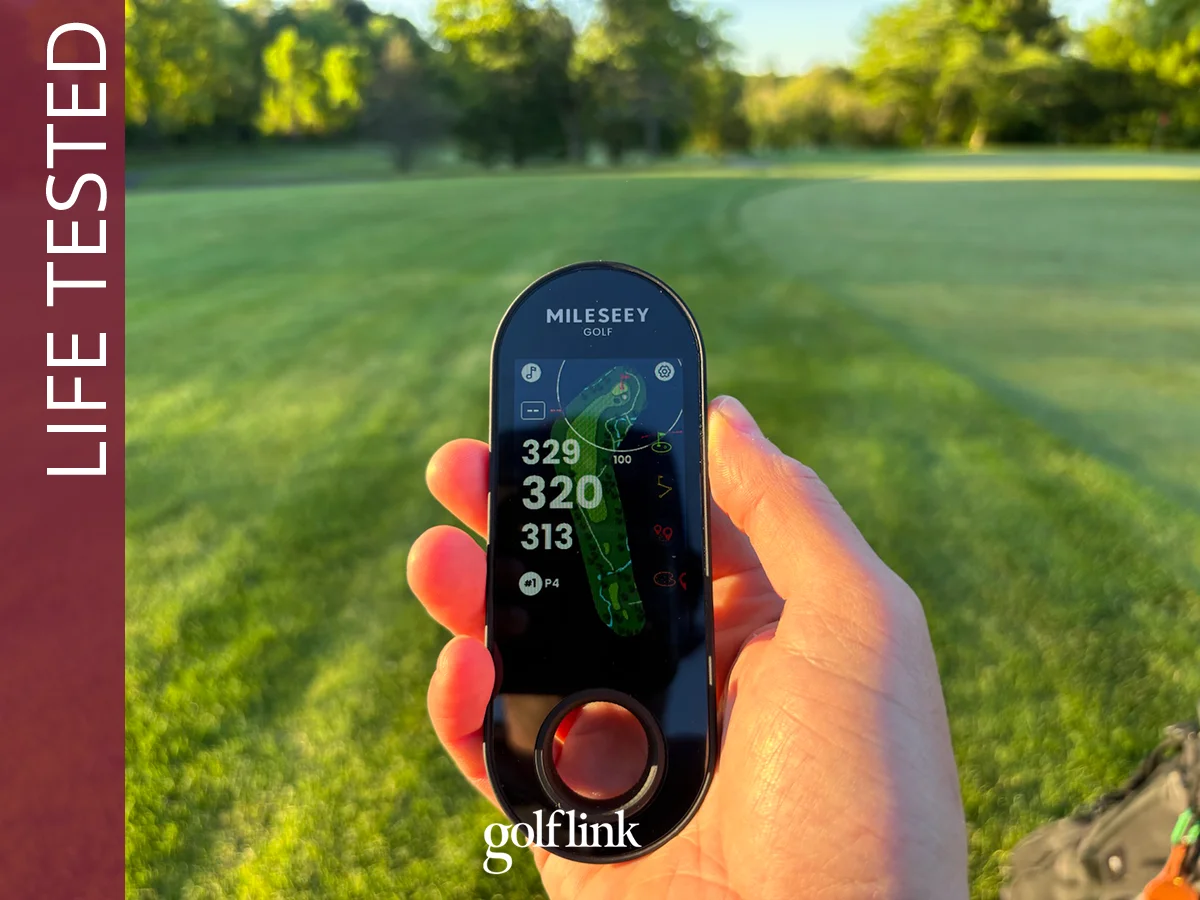
Why it wins: It weighs 108 grams on my kitchen scale, less than half the weight of the 270g Shot Scope H50, and I never felt it in my pocket during a walking round. It loads fast, with no waiting around on the first tee. The 3-inch color touchscreen shows the entire hole, and you can tap anywhere on the map for a distance. Accuracy was consistent across two courses.
Watch out for: The scorecard. It won't let you skip score entry at startup, and it kept prompting me to enter scores when all I wanted was a number for my approach shot. I keep a paper scorecard anyway, so that was an unnecessary hoop to jump through.
Bottom line: If you walk and want full maps for under the $349 you'd pay for a SkyCaddie Pro 4x, this is the easy recommendation. Read the full Mileseey GeneSonic Go review.
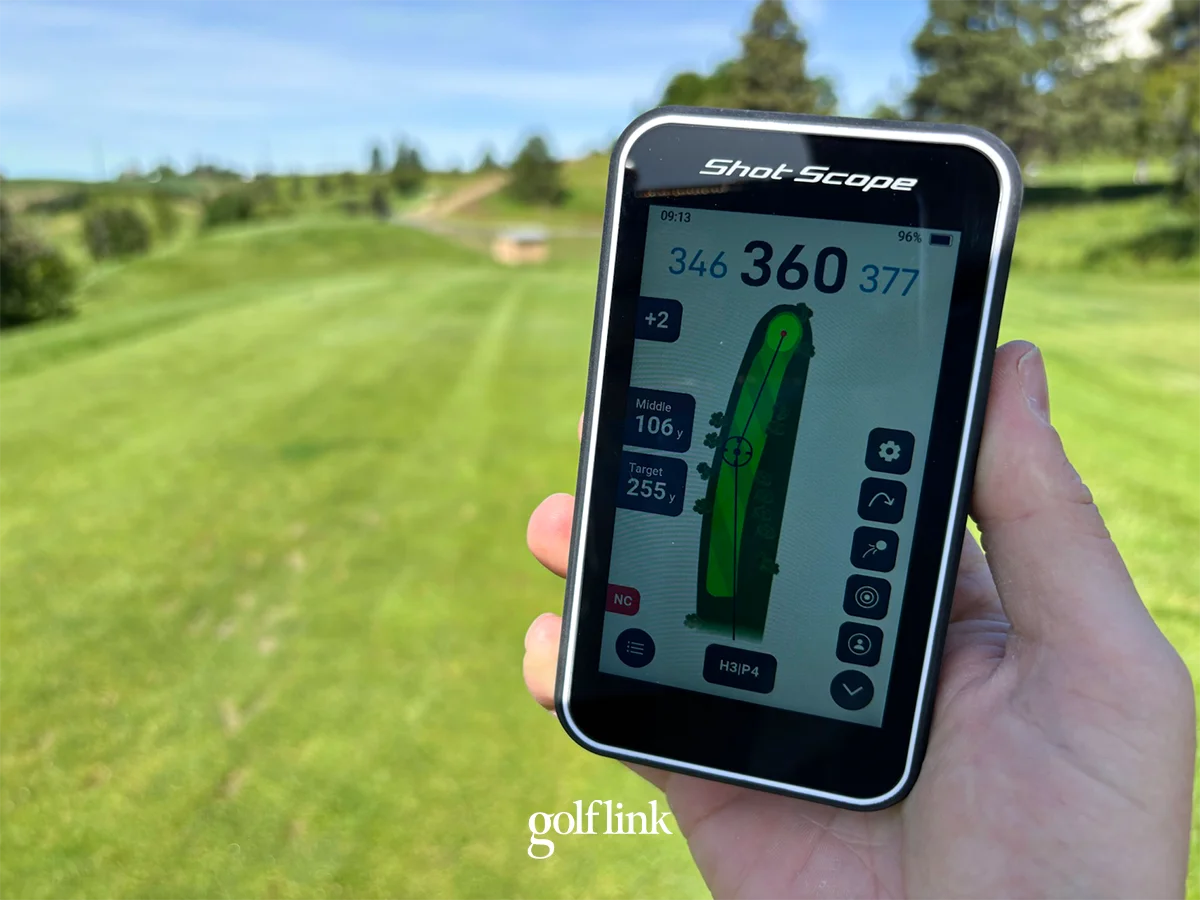
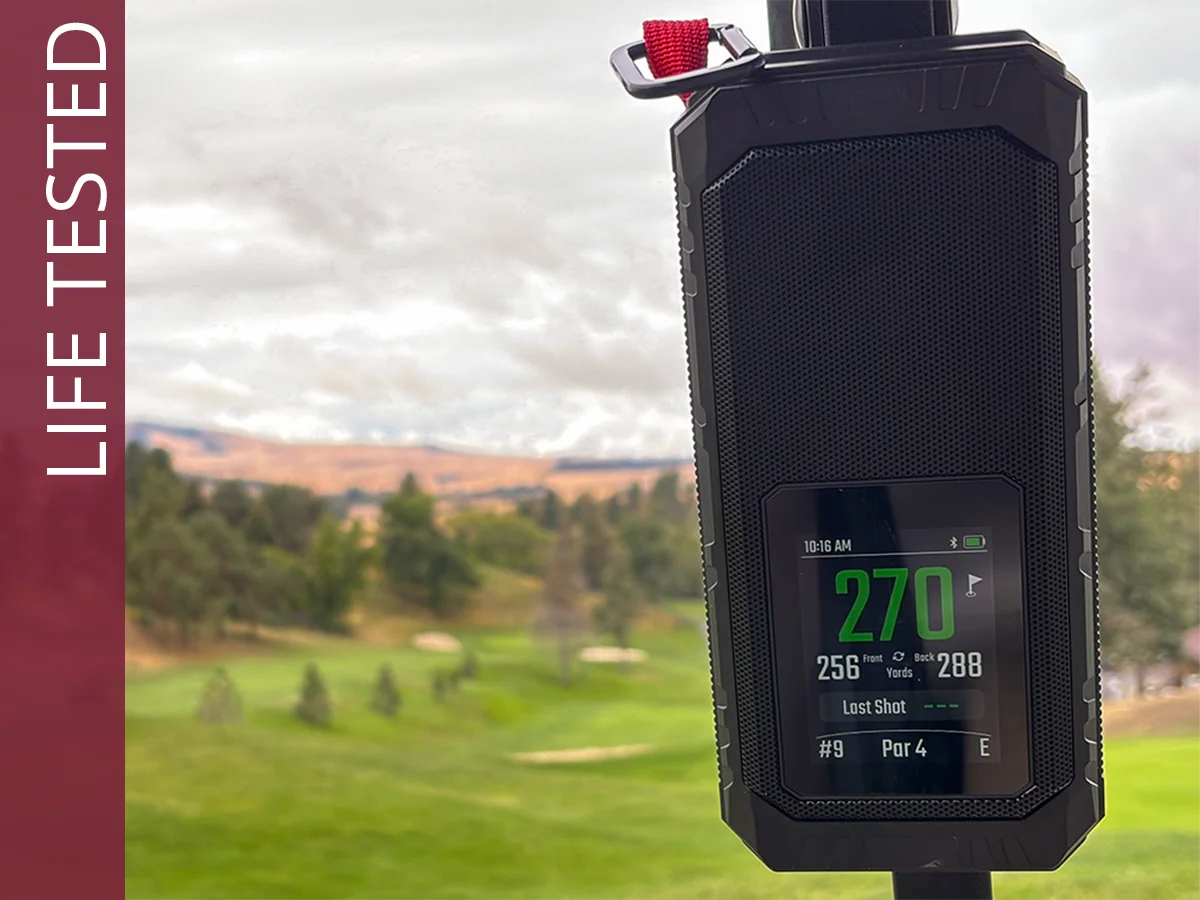
Why it wins: I first tested it on a golf getaway to Gamble Sands, a course I needed distances on for every shot, and its numbers stayed within a yard of the cart's GPS, with my rangefinder backing them up. The AMOLED screen is readable in harsh sun, the magnet survived rough cart paths without budging, and the green contour maps are a perk you rarely get at this price. They're accurate, but not detailed enough to replace a physical green book.
Watch out for: At 270 grams, it's bigger than most smartphones. After one walking round with it in my pocket, I knew that wasn't the ideal use case. I wouldn’t recommend it if you plan on walking most rounds, unless you use a push cart where you can easily stash it. Shot tracking is also manual.
Bottom line: For $199 with no subscription, you'd be hard-pressed to find this much capability in any other unit. Mount it on a cart and enjoy it. Read the full Shot Scope H50 review.
GPS Speakers: When You Want Music With Your Maps
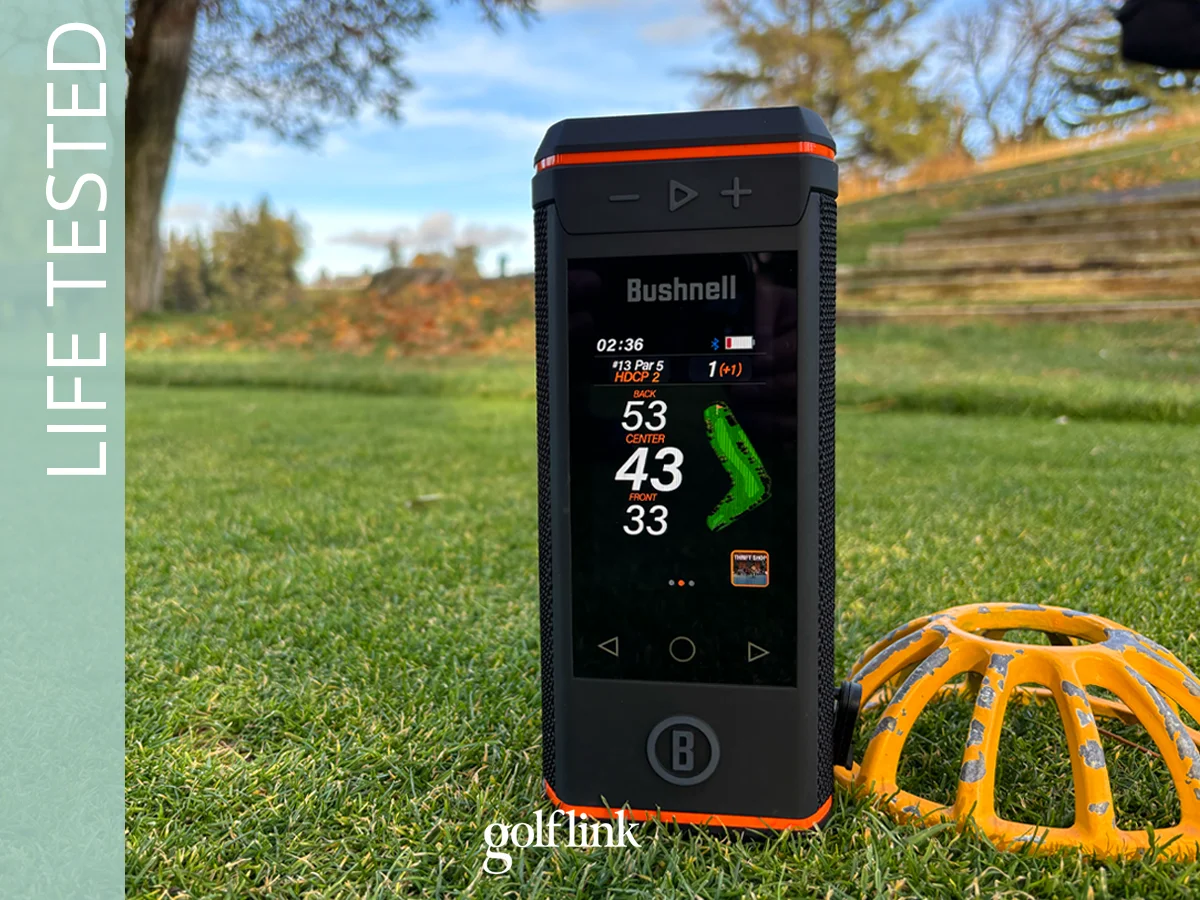
Why it wins: I took it out for 36 holes, and the setup took about 10 minutes: download the Bushnell Golf app, create a profile, connect. The hole map auto-updates as you play, with front, center, and back distances. Swipe for hazards, green view, and shot distances. Two 15-watt speakers and two passive radiators produce a fuller sound than any portable golf speaker I've used. When I compared it to my go-to home speaker, I couldn't pick a favorite.
Watch out for: The maps aren't interactive on the touchscreen, so you can't get a distance to any spot on the hole. Battery life also fell short of two rounds, around six hours in my testing, and it died around the 32nd hole. This can vary based on volume.
Bottom line: It's a great speaker and a very good golf GPS, and at $249 it replaces two products. Read the full Bushnell Wingman HD review.
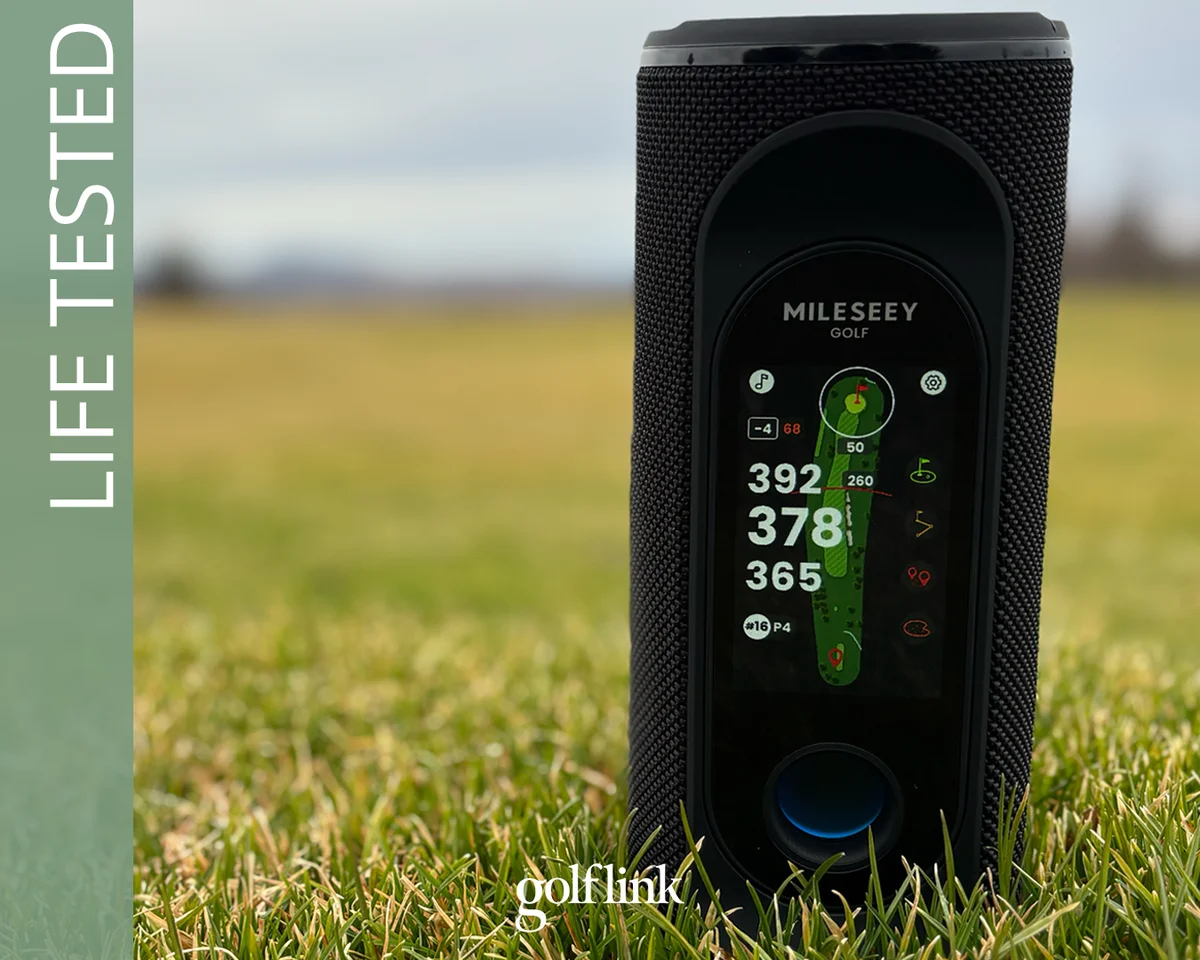
Why it wins: It's the easiest GPS speaker to use of any I've tested. From the home screen, it took 12 seconds to enter golf mode, find my course, pick my tees, and load the first hole. The GPS stayed within a yard or two of my SkyCaddie Pro 4X, and spot-checks against a laser rangefinder were always within a yard. The sound stayed clear even at a volume well beyond reasonable for a golf course. There's no app and no subscription.
Watch out for: It's pricey, and it's built for riders, not walkers. I'd clip it to a push cart, but on days I carry my bag, it stays home.
Bottom line: If you hate apps and subscriptions and play with music, this is the one. Read the full Mileseey GeneSonic Pro review.
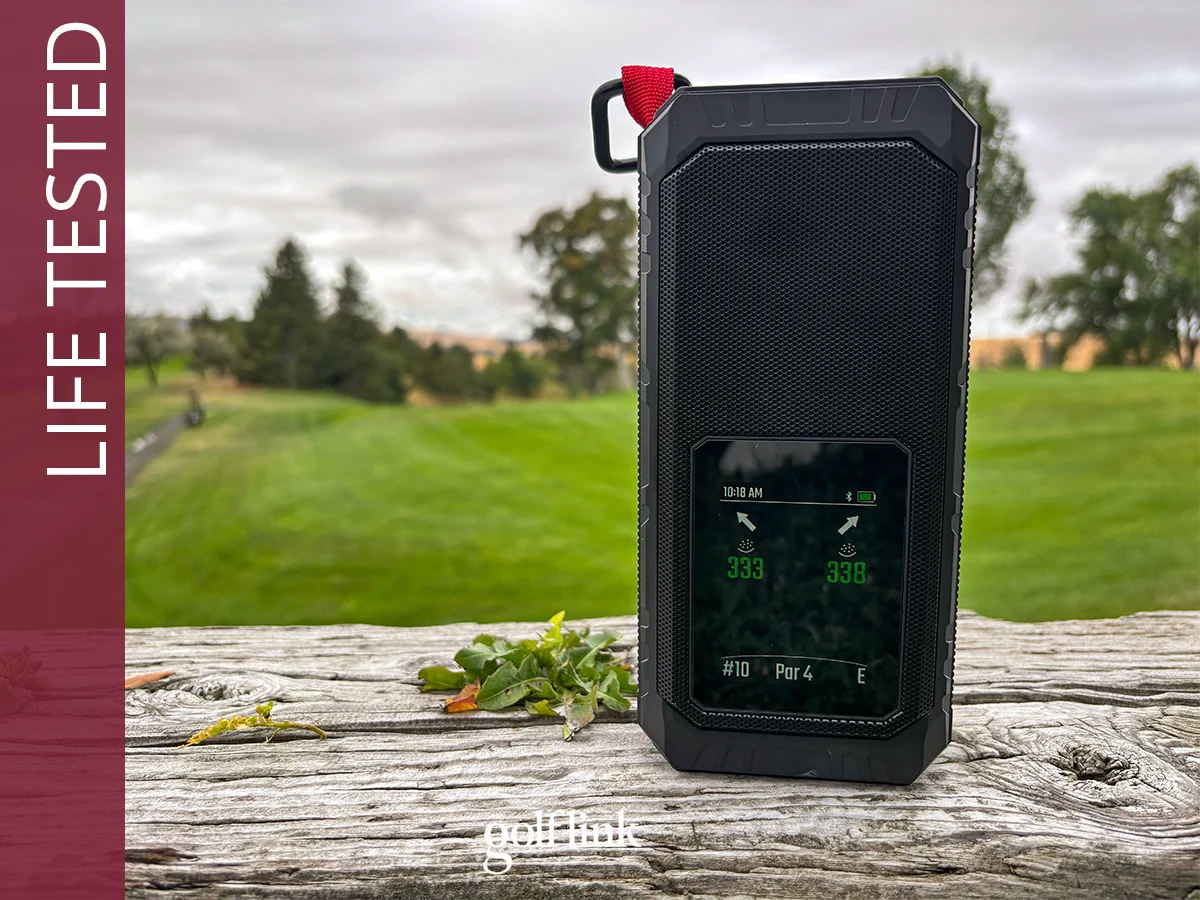
Why it wins: The GPS is the best part. There are no full hole maps, but you get a green map with adjustable pin placement, front, middle, and back distances, and hazard yardages. I'll take that trade. The distances were accurate every time I checked them, auto-advance worked smoothly, and the magnet locked onto a cart bar and didn't move.
Watch out for: In my original testing, the speaker faded in and out all round, but only once the GPS app was open. Dprofy has since released an app update that eliminated the problem. Still, the Wingman HD adds color hole maps, and has never given me audio issues, if you’re willing to spend next-tier money.
Bottom line: Accurate GPS and a rock-solid mount at a low price, as long as you're okay with a value brand's risk of the occasional hiccup. Read the full Dprofy V3 Pro review.
Which Should You Buy?
- You walk and want the exact number: the Golvia Ultra if you want features, the Tour V7 Shift if you want it simple, the Pro L5 if you want to save money.
- You walk and want a map: the GeneSonic Go.
- You ride and like to plan: the Shot Scope H50.
- You ride and want music: the Wingman HD, or the GeneSonic Pro if you don't want to deal with an app.
- You want to spend the least: the Dprofy V3 Pro.
I'd love to tell you there's a clear winner in the rangefinder vs. GPS debate. There isn't. There's only the right answer for how you play, and you've got eight good options to choose from.