Shot Scope H50 Review: Full-Featured Handheld GPS for $199
Accuracy, green maps, & battery tested. Why Shot Scope H50 is for golfers who want the big picture.
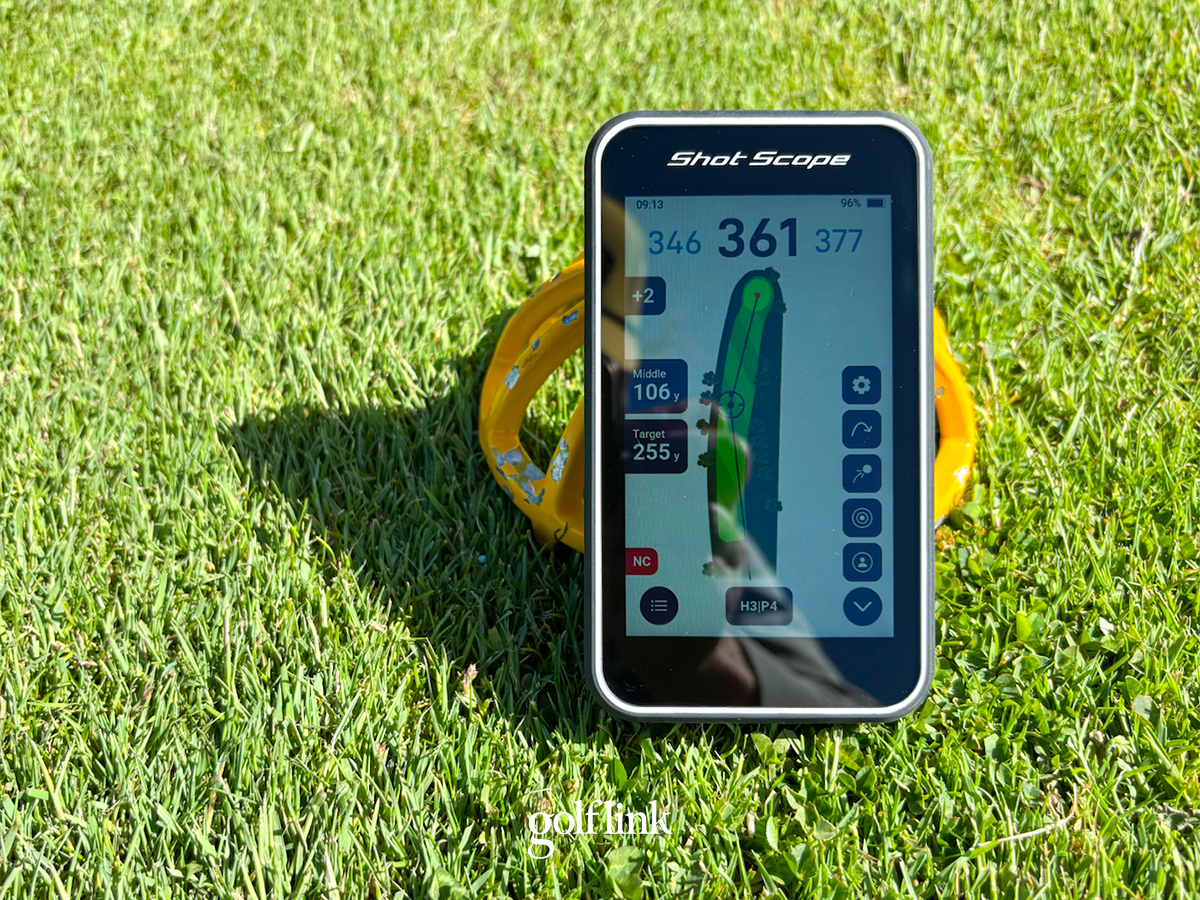
Rangefinders get you a quick and accurate number. Handheld GPS units get you a map and a number to a generic target.
The Shot Scope H50, the latest handheld GPS device from one of the industry’s blue bloods, wants to give you a strategy. Full-color hole maps, green contour maps, shot tracking, and an easy-to-read screen so you can actually see it all. All that for a hair under $200.
So, after a few rounds testing the H50, does that pitch hold water? The case is strong, but not universal.
GPS or Rangefinder?
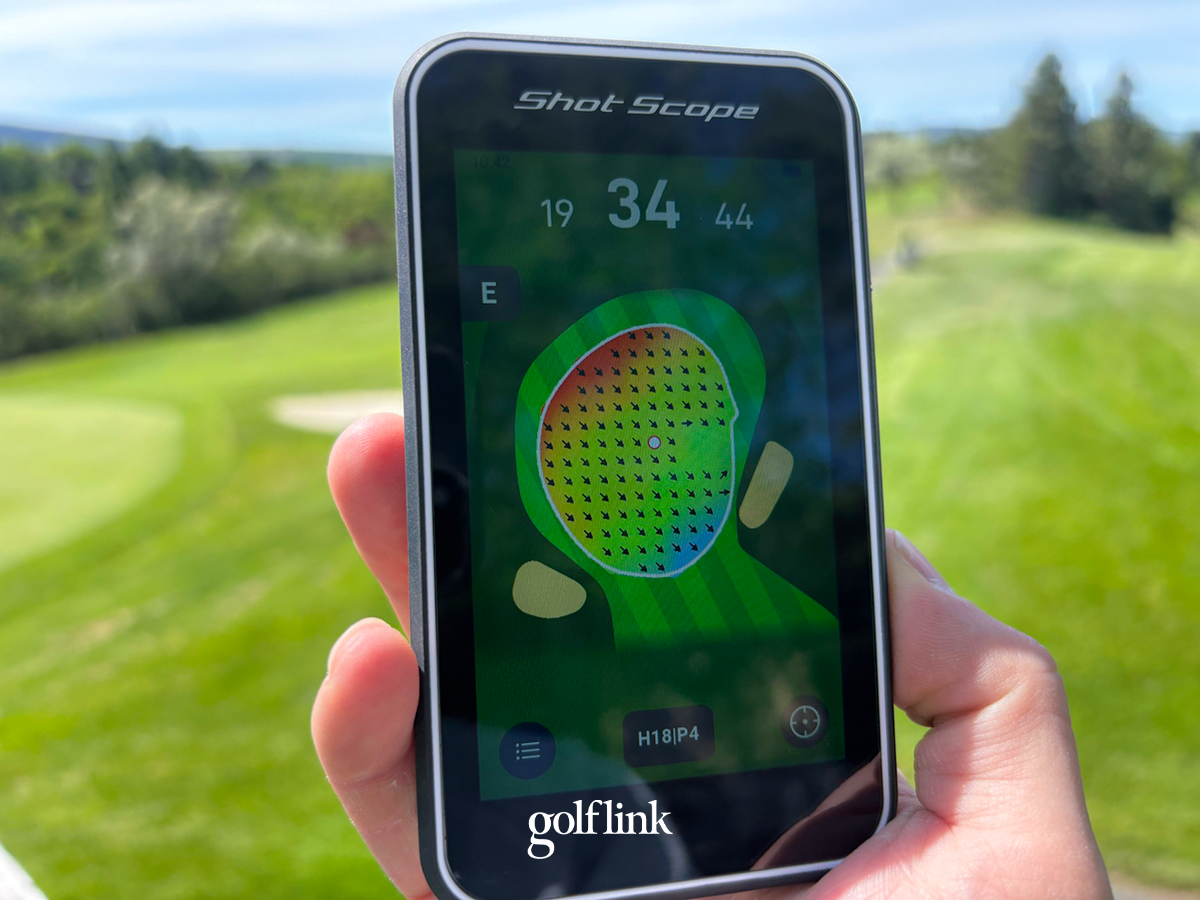
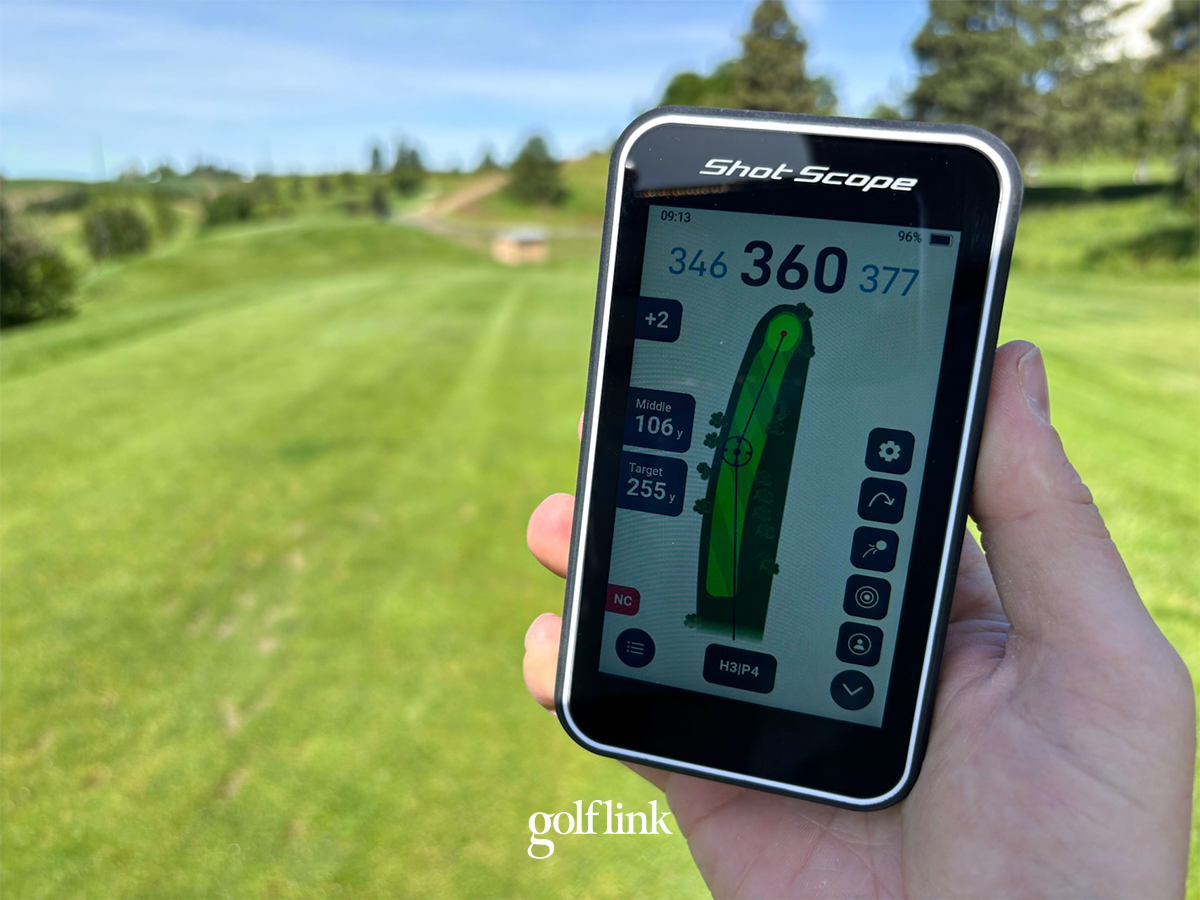
A laser tells you the distance to one point. A GPS handheld like the Shot Scope H50 shows you the entire hole. Hazards, doglegs, layup numbers, and green shape.
The trade is essentially less pinpoint precision to a specific target for more course-management information at a glance. Whether that trade is worth it for you depends on how you play.
How We Tested the Shot Scope H50 Handheld GPS
Check Shot ScopeCheck Amazon
Price: $199
Weight: 270 grams
Battery Life: 15+ hours
Waterproof Rating: IPX7
Features: Maps, lay-ups, hazards, green view
I tested the Shot Scope H50 across several rounds, including walking and riding. I checked distances against course yardage markers, the golf course's own cart-mounted GPS maps, and distances I measured with a rangefinder. I also compared the H50's green contour maps to the GolfLogix green book for my home course.
Is the Shot Scope H50 Accurate?
My first rounds testing the H50 came on the first day of a golf getaway to Gamble Sands. It was the perfect arena to begin testing because, unlike when I play my familiar home course, I actually needed the distances on every shot.
On that trip we had GPS distances in the golf cart, and I carried a rangefinder as well. That gave me plenty of opportunity to put the H50’s accuracy to the test, and it passed.
The H50’s distances were consistently within a yard of the cart’s GPS distances, and my rangefinder always corroborated those numbers.
With any GPS device, you’re getting measurements to predetermined targets, typically the front, middle, and back of the green. On the H50, you can also move the flag to get the distance to the day’s hole location. Compared to a rangefinder, that’s technically still an estimate, but that small discrepancy is the tradeoff for having full hole maps in your hand.
Green Contour Maps: How They Compare to a Real Green Book
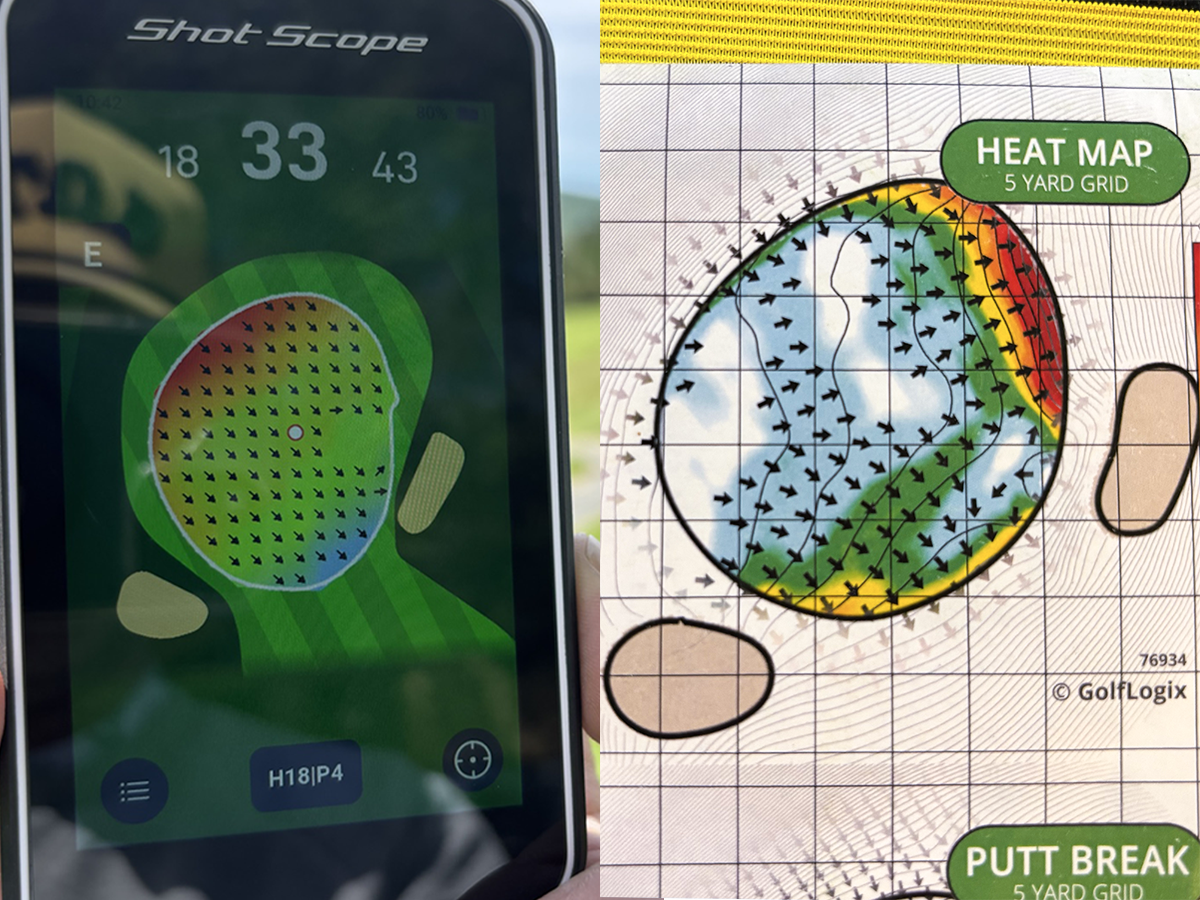
Here's how the Shot Scope H50 green map compares to the GolfLogix green book for the same green
The first time I heard about the H50, I felt Shot Scope was underselling the fact that it’s loaded with green contour maps. That’s a perk that’s typically reserved for premium subscriptions or much more expensive devices.
Since I have the GolfLogix green-reading book for my home course, which is undefeated against my own two eyes and my spotty memory, I had the perfect opportunity to see how the H50’s green maps stack up.
The verdict? The H50’s green maps are accurate, but not very detailed. They’re useful for planning approach shots and getting a sense of which direction putts will break. On a $199 full-color GPS, those green maps are a considerable perk. But in my opinion, they’re not detailed enough to replace a physical green book if green-reading is your goal.
Battery, Display, and Everyday Usability
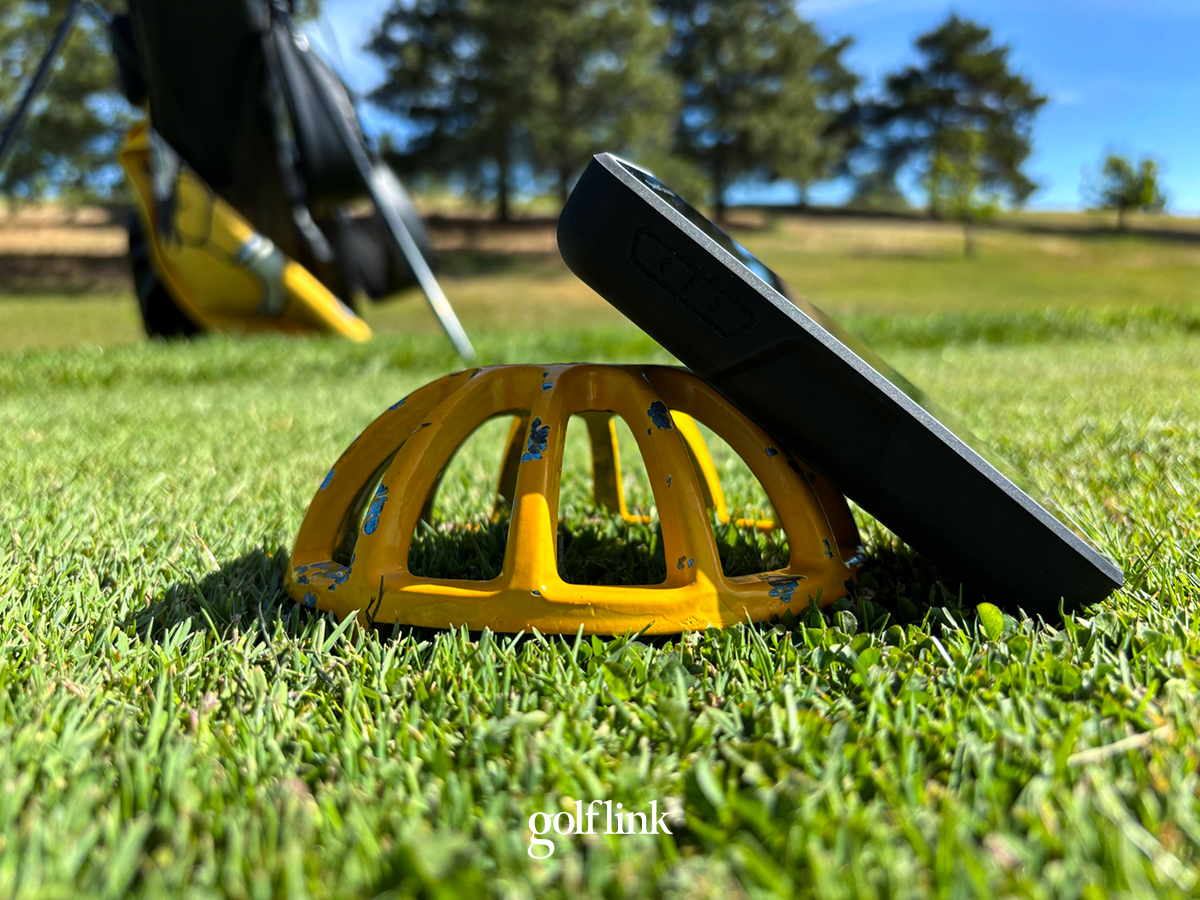
With a strong built-in magnet, the H50 is not particularly sleek or lightweight
The AMOLED screen is visible in harsh sun, the interface is user friendly, and the battery life is a non-issue. Shot Scope lists it at 15+ hours. Based on my on-course testing, I agree with that estimate.
Shot Scope’s claim about the cart magnet being extra-strong checks out. It survived rough cart paths without budging.
The biggest usability tradeoff is simply the H50’s size. At 270 grams, it’s bigger than most smartphones. After one round walking with it in my pocket while carrying my clubs, it was clear that’s not the ideal use case. It’s best when mounted to a cart, or even a push cart. If you walk most of your rounds without a push cart, I’d look for a slimmer, lighter alternative.
You can track shots using the H50, and take advantage of Shot Scope’s subscription-free game-tracking dashboard, which I’ve used for years and highly recommend to anyone looking to identify and improve their weaknesses.
That tracking, however, is manual, rather than the automatic tracking you get with Shot Scope’s game-tracking GPS watches, so there’s a little more on-course or post-round effort required.
Is a GPS Handheld Worth It Over a Rangefinder?
At $199 with no subscription, the H50 is more than fairly priced. Good luck finding units this capable (shot tracking, dynamic distances, green maps, full-color maps) at this price.
If the appeal of a handheld GPS is information over precision, that price is even more attractive.
Who Should Choose the H50 (and Who Should Stick With a Rangefinder)
For some golfers, the trade of giving up precise distances to one target in exchange for a wider view of the hole is a no-brainer. Golfers who play a variety of courses, regularly travel for golf, take a cart more often than they walk, and prefer to strategize one hole at a time rather than one shot at a time would probably enjoy a handheld GPS like the H50 much more than a traditional rangefinder.
For others, the tradeoff isn’t worth it. Players who usually stick to the same familiar courses, who walk more than they ride, and who want point-and-shoot precision more than a full hole map are more likely to benefit from a rangefinder.
There’s no clear-cut winner in the GPS vs. rangefinder debate. It all comes down to how you play. If you do fall into the GPS category, the H50 at $199 is tough to beat.