
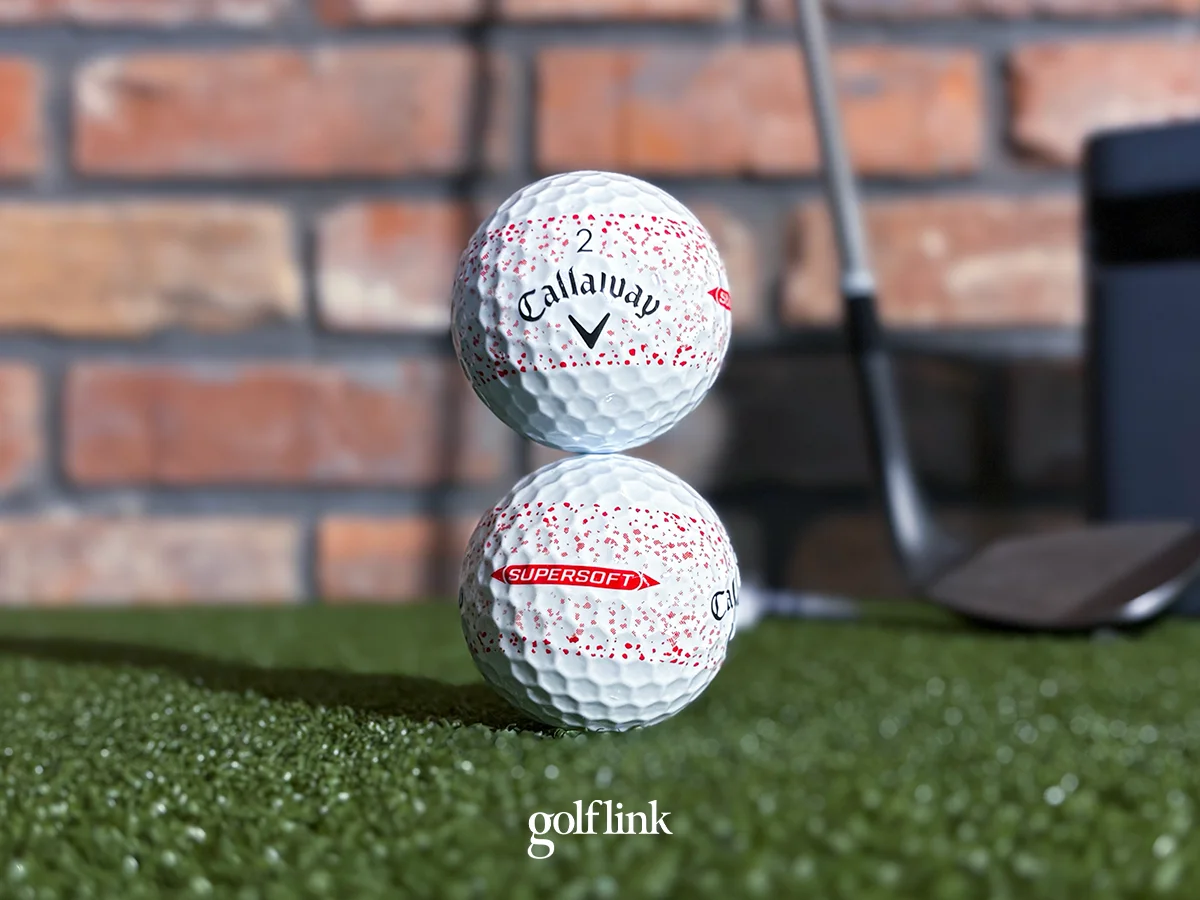
Supersoft has been Callaway's high-volume, low-price option for over a decade, and the pitch has never changed: a big, low-compression core wrapped in a simple two-piece build designed to get airborne from slower swing speeds with a soft feel at impact.
The question with any ball this cheap is always the same — what are you giving up? Our testing shows the answer is less than you'd expect.
How We Tested Callaway Supersoft
We put Callaway Supersoft through our published golf ball testing protocols using the SkyTrak ST Max launch monitor. That means human swings under strict bands for swing speed, impact quality, and delivery dynamics.
To see performance from tee to green, we test driver, 7-iron, and 50-yard wedge shots with each ball.
We tested 43 golf balls in total for 2026 then translated the raw data into 1-10 scores in the categories that matter most to your game. That lets you easily see how each ball stacks up to the field.
See the complete list of every golf ball we've tested or dive into the full Supersoft test data here.
Callaway Supersoft Specs, Pricing & Performance
Fast Facts
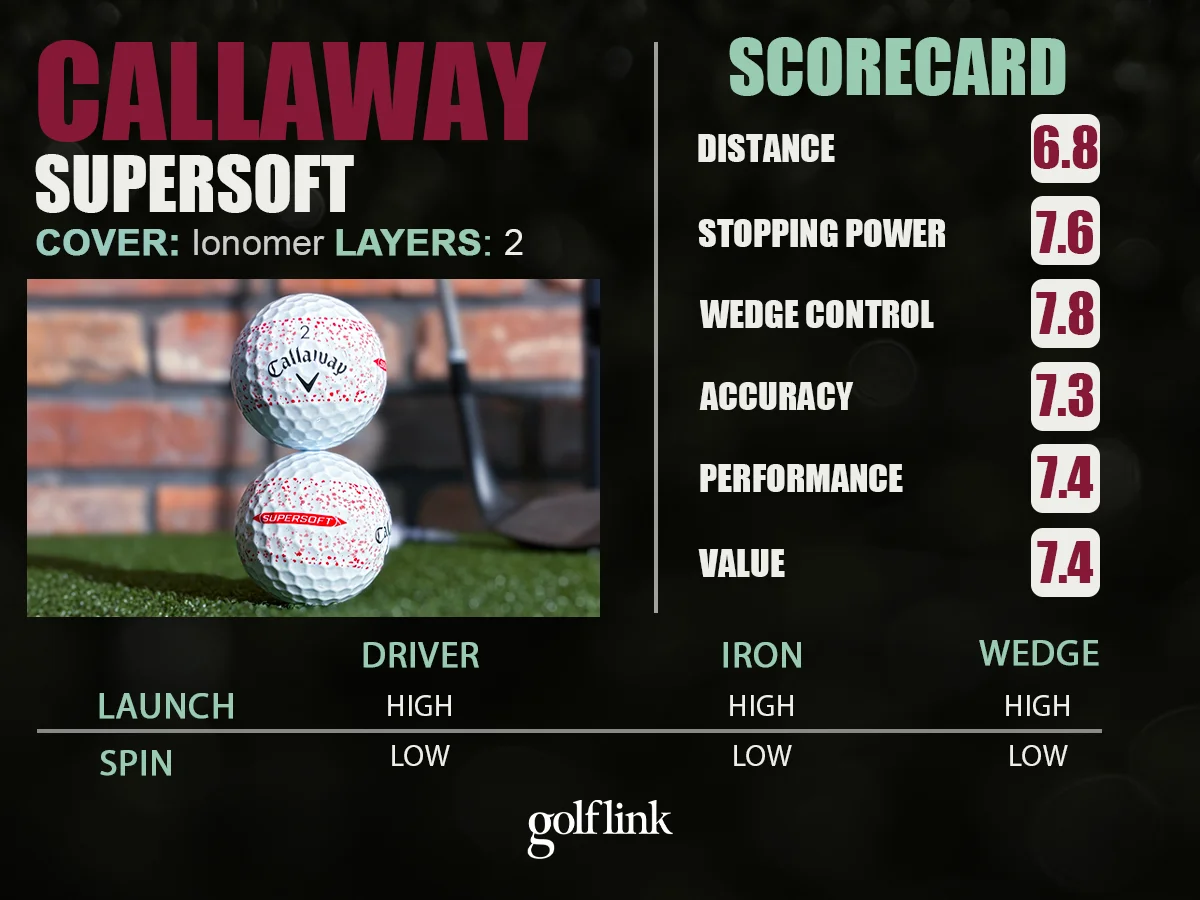
Cover: Ionomer
Layers: 2-Piece
Price: $26/dozen
Supersoft is a two-piece, low-compression ball designed around simple goals: help slower swing speeds get the ball up and out with a soft feel and minimal spin off the tee. Callaway's HyperElastic SoftFast Core is the biggest part of that equation, and in our testing it produced a low-spin, high-launch driver flight that's exactly what Callaway promises.
What surprised us wasn't the driver number — it's how well Supersoft held up in the iron game for a ball at this price point. A high launch angle through the 7-iron test translates into more stopping power than you'd guess from a $26 two-piece ball. That doesn't carry all the way to the 50-yard wedge test, where the data tells a different story.
Callaway Supersoft
Spin
Launch
Driver
Low
High
7-Iron
Low
High
50-Yard Shot
Low
High
Distance: 6.8/10
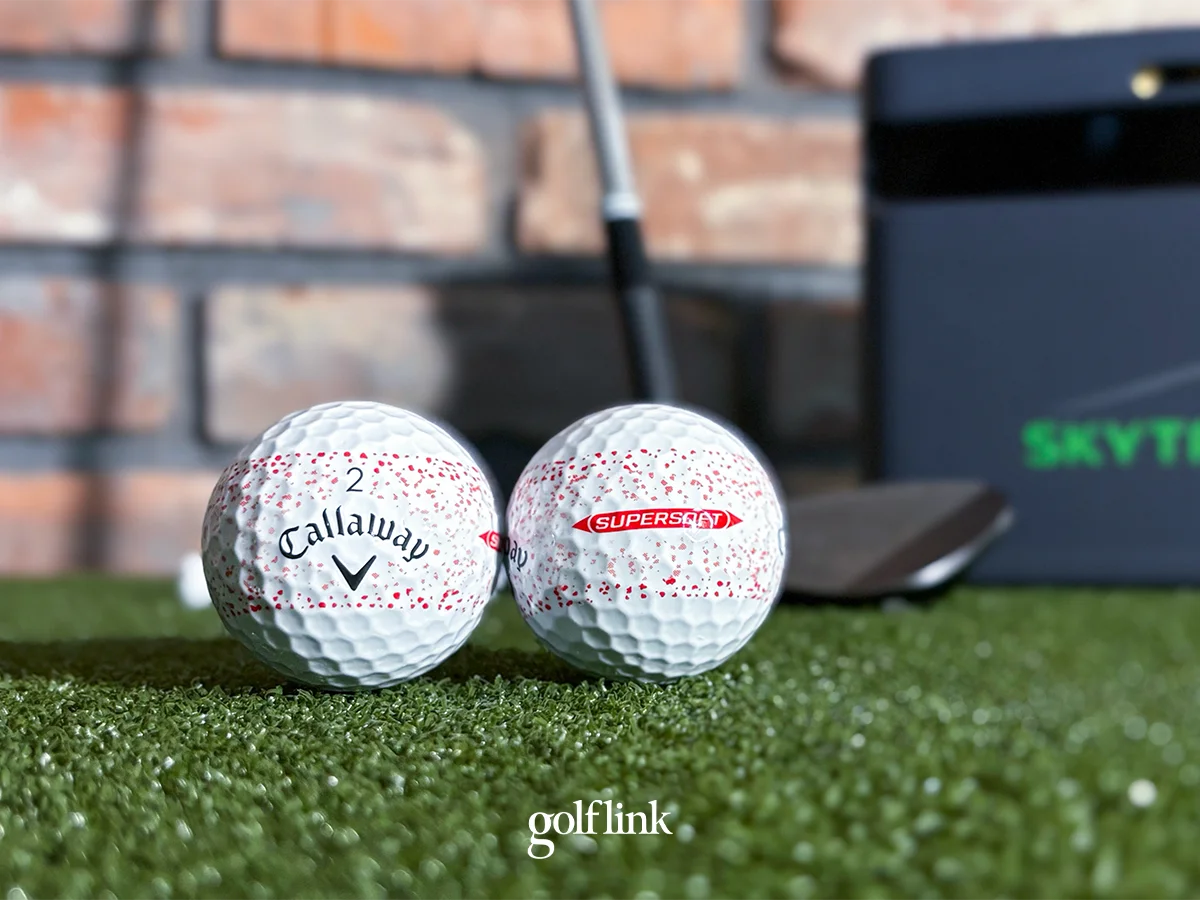
Supersoft ranked in the bottom quarter of our field for distance, totaling 238.9 yards off the driver — the 11th-shortest total of the 43 balls we tested. That's the tradeoff for a core built around low compression and easy launch rather than ball speed.
Its 7-iron numbers followed the same pattern: solid, unspectacular, and clearly built for accessibility over outright power.
Category
Callaway Supersoft
Ball Speed
133.6 MPH
Carry (yds)
214.4
Total (yds)
238.9
Distance Score
6.8
Stopping Power: 7.6/10
Stopping power is a genuine bright spot for Supersoft. Despite being in a class of balls that offers the least stopping power, Supersoft finished just above our 43-ball field average. That’s a win.
Supersoft's high 7-iron apex and relatively steep descent angle held the ball to just 10.1 yards of roll, a couple feet better than our field average despite its low-spin profile.
The takeaway: Supersoft is proof that a higher launch angle can make up for the lost stopping-power that low-spin balls are known for. If you've written off budget two-piece balls because you think none of them can hold a green, Supersoft could be the exception to the rule.
Category
Callaway Supersoft
Apex (yds)
25.4
Descent Angle
42.4°
Roll
10.1
Stopping Power Score
7.6
Wedge Control: 7.8/10
From 50 yards, Supersoft's high 34.5-degree launch angle did everything it could to offset its low-spin profile, holding rollout to 3.3 yards despite modest 5,600 RPM of spin.
Worth knowing, though: Wedge Control is a category where the whole field scores high thanks to a large group of balls bunched behind the best few. Supersoft's 7.8 score is actually in the bottom-quarter overall. Our test data suggests this is the category where you give up the most performance in exchange for the budget construction and soft feel.
Category
Callaway Supersoft
50-Yard Spin (RPM)
5,600
50-Yard Launch
34.5°
Wedge Control Score
7.8
Accuracy: 7.3/10
Supersoft's accuracy numbers were below average in both our driver and 7-iron tests.
At 230 RPM of sidespin with driver and 149 RPM with 7-iron, neither were a disaster, but neither was a strength, either.
The good news is that those spin rates didn't translate into much actual dispersion in the 7-iron test (just 4.4 yards offline), so the real-world miss might be smaller than the sidespin suggests.
Category
Callaway Supersoft
Driver Sidespin (RPM)
230
Driver Offline (yds)
11.7
7-Iron Sidespin (RPM)
149
7-Iron Offline (yds)
4.4
Accuracy Score
7.3
Value: 7.4/10
At $26 a dozen, Supersoft is a solid value. It’s modestly above our 43-ball average, even if it's not among the standouts. It can’t touch the stopping power you get from $57 tour balls like Pro V1 and Chrome Tour X, but it does compete with many more expensive balls in distance and accuracy.
The biggest tradeoff shows up around the green, where (predictably) wedge control is soft. Supersoft isn't a ball that does everything well for the price, but it does more of the important things well than its $26 price suggests.
Who Is Callaway Supersoft For?
Supersoft is built for golfers with moderate-to-slower swing speeds who want a soft-feeling ball without paying tour-ball prices. If you've been playing an entry-level ball because you assume you have to give up stopping power to save money, Supersoft could change your mind, even if it doesn’t blow you away.