Blade vs. Mallet Putter: Here’s How to Decide
From forgiveness to feel, here's everything you need to know to make the right choice for your game
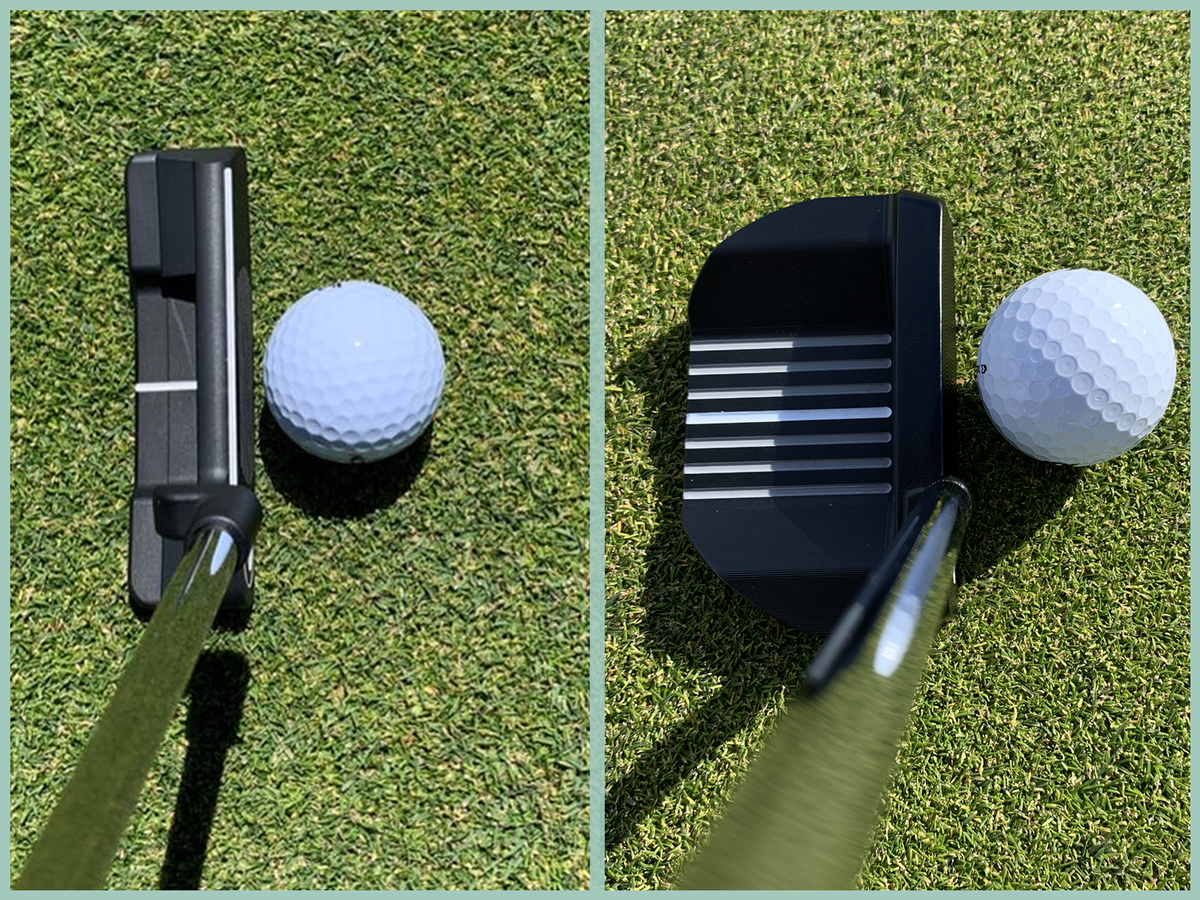
Is your putter helping or hurting your game? It’s a simple question with complex answers. Nobody makes every putt, but once you know which specific areas of your putting you want to improve, finding the right style of putter can make a huge difference.
The blade vs. mallet putter decision shouldn’t be based on looks alone. Your choice influences forgiveness, consistency, and even which putts you make more often.
Blade vs. Mallet Putter: Quick Comparison Chart
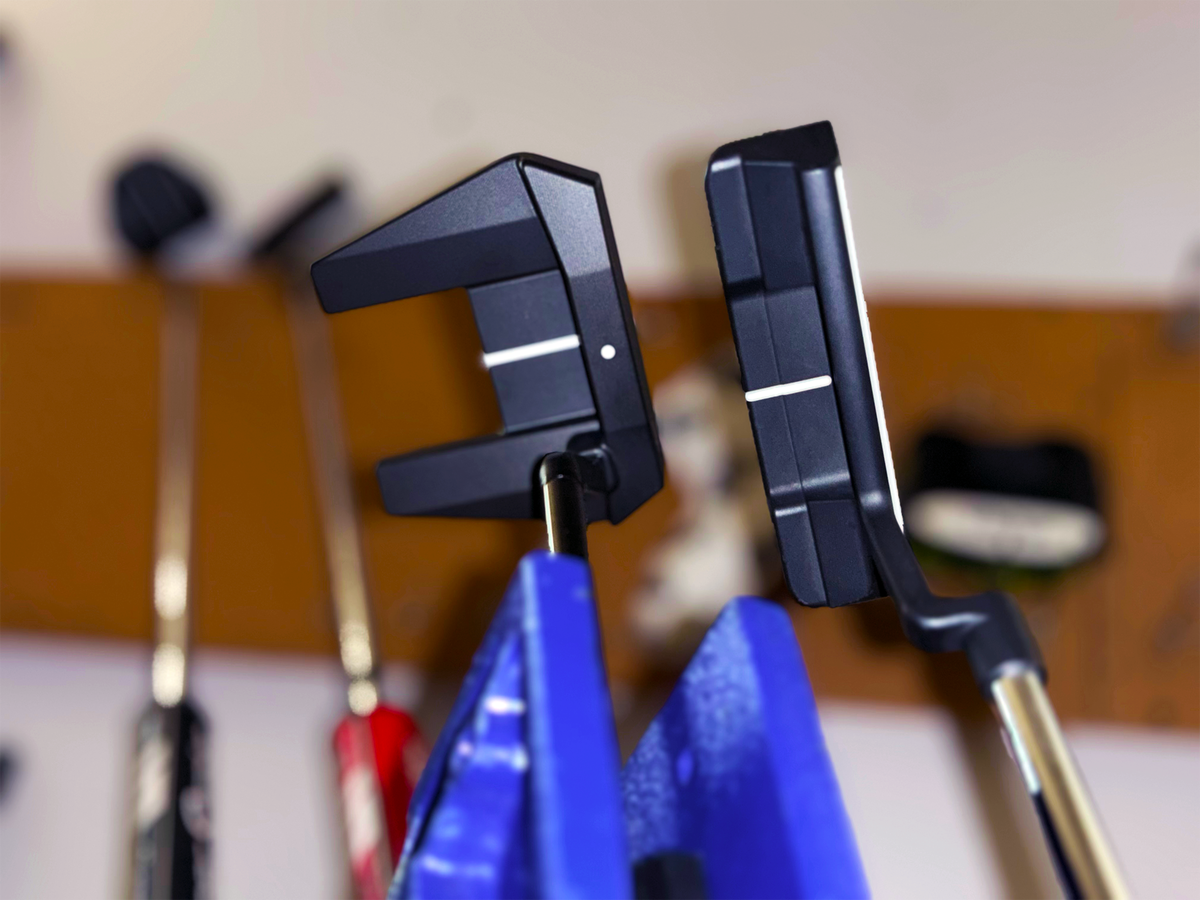
Here are the foundational differences between blade and mallet putters.
|
Feature |
Blade |
Mallet |
|
Shape |
Narrow, traditional |
Large, round or squared |
|
Forgiveness |
Low |
High |
|
Best For |
Arced strokes (toe hang) |
Straight strokes (face balanced) |
|
Most effective |
Mid to long-range putts |
Short-range putts |
What is a Blade Putter?
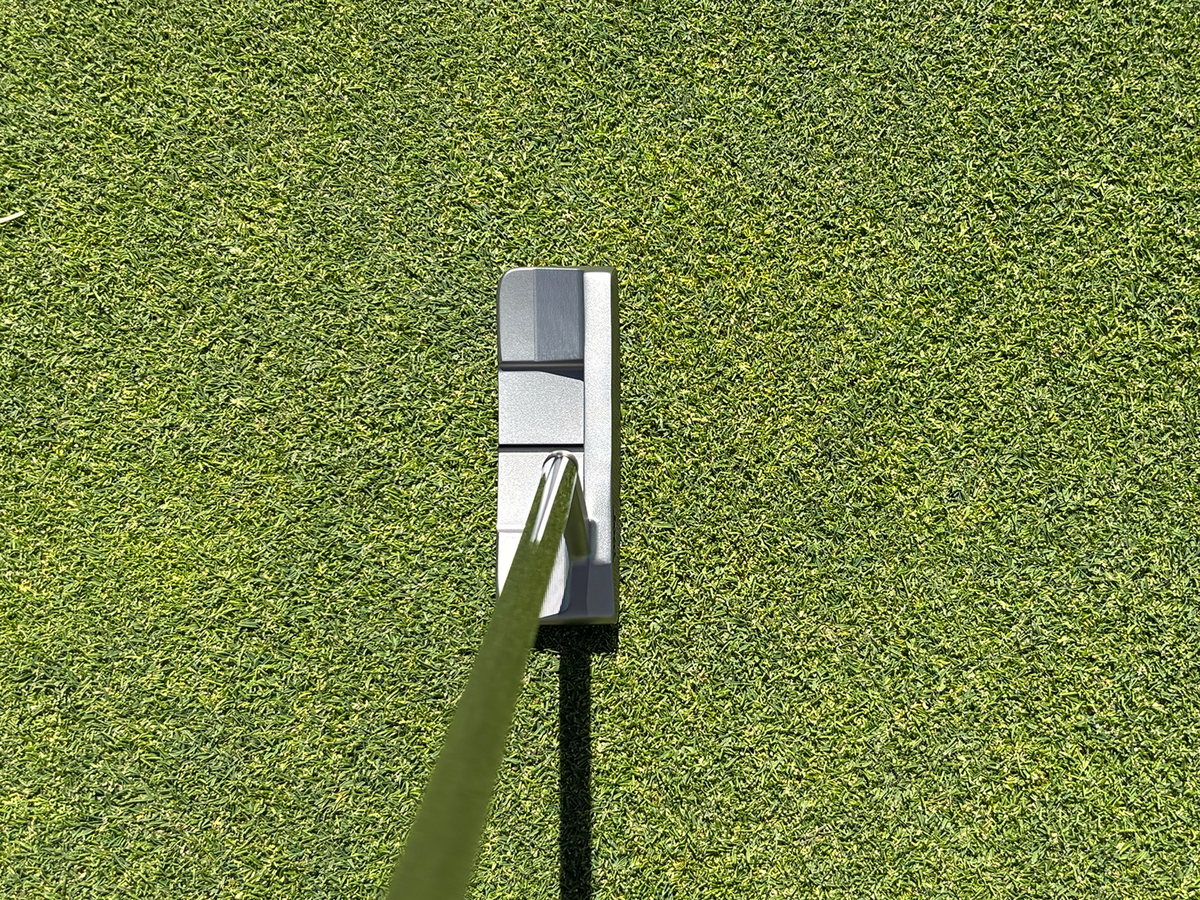
A look at a blade putter from the address position
Blade putters are a style of putters that feature a narrow head, with only somewhere around an inch of depth behind from the face to the trailing edge of the head.
In fact, I measured the depth of three blade putters, and two checked in at exactly 1 inch depth, and the third was an inch and a quarter deep.
Blade style putters appeal to players for a handful of reasons. First, they offer the most traditional look of any style of putter. Players who like a sleek, classic-looking putter are typically drawn to blade putters.
There are also some performance characteristics that attract some players to blade putters. Generally speaking, blade putters usually fit players with an arced putting stroke.
It’s actually the weighting profile of the putter, not the shape of the head, that influences which type of stroke (arced or straight) it fits. That said, blade putters are more likely to have some toe hang, which helps players with an arced stroke. Meanwhile, mallet putters are more likely to be face-balanced, which helps players with a straight stroke.
Still, don’t make the a mistake of assuming all blades fit arced strokes and all mallets fit straight strokes.
Lastly, blade putters are less forgiving on off-center strikes because of their smaller head and limited perimeter weighting.
What is a Mallet Putter?
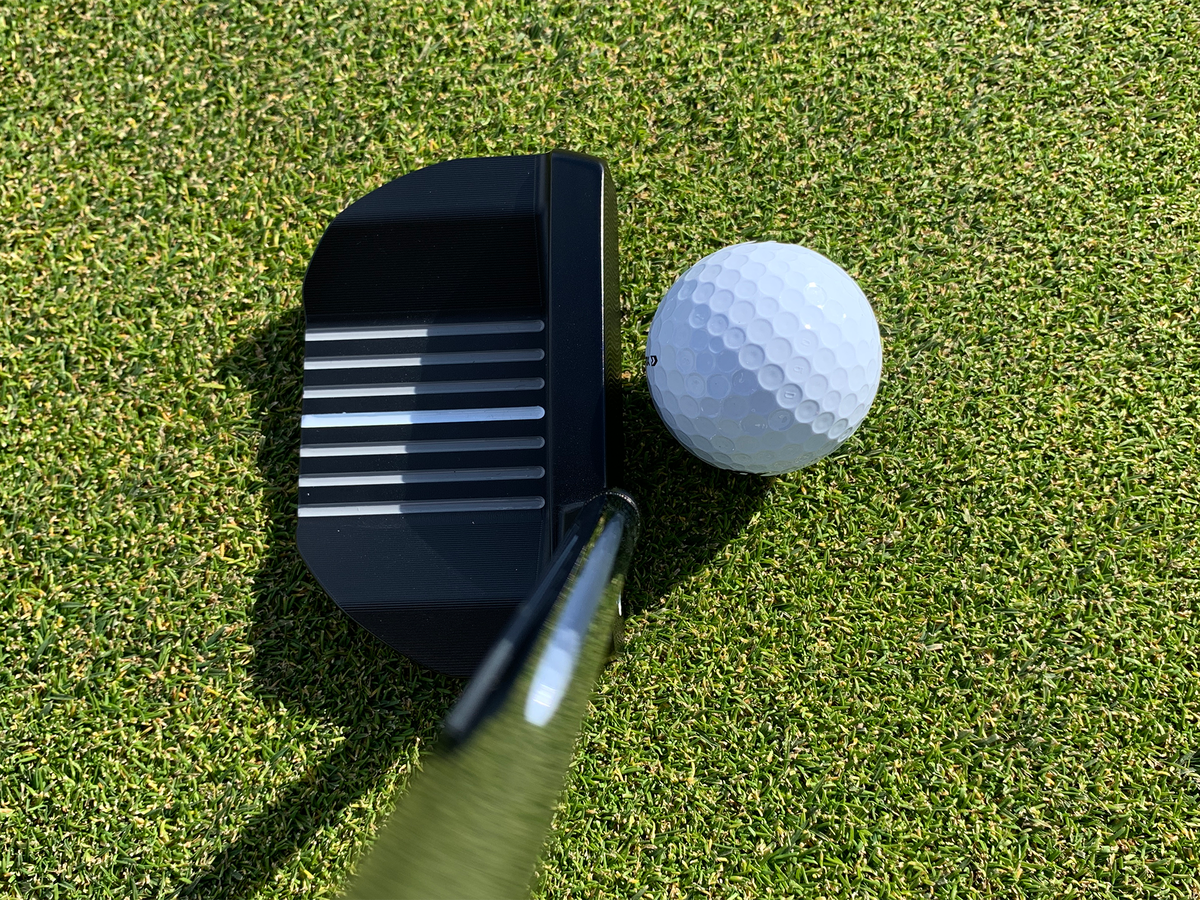
Mallet putter in the address position
Mallet putters have a large head, usually three inches deep or more from the face to the trailing edge. While mallets are defined by size, they come in a variety of shapes. There are squared versions of mallets, fang mallets, and rounded mallets. And of course, some are bigger than others.
With a bigger head, OEMs have more room to distribute weight in mallet putters. That allows them to increase MOI, reduce face twisting at impact, and deliver a more forgiving putter.
If you have a straight back and straight through stroke, you should be shopping for a face-balanced putter.
If you’re among the growing number of players embracing the zero-torque putter movement, then your stroke type doesn’t matter, but you’ll quickly find that the vast majority of zero torque putters fall into the mallet category, with only a few blade styles to choose from.
Sure, you’re more likely to find a mallet that’s face-balanced than a blade, but never assume that just because a putter is a mallet, that it’s face balanced, or just because it’s a blade that it has toe hang.
How to Choose Between a Blade and a Mallet Putter
Unsure whether you should go with a blade putter or a mallet putter? Not for long. Here’s a quick guide to deciding.
Priority Putts
Which putts are most important to you? This could influence which type of putter you want.
MyGolfSpy tested the performance of blade vs. mallet putters and found that mallet putters were more effective than blade putters from five feet, but blade putters performed better from 10 and 20 feet.
- Consider a mallet putter if: Your distance control is good but you’re tired of missing 5-footers
- Consider a blade putter if: You want improved feel from mid to long range
Forgiveness Factor
How much forgiveness do you need in your putter? Since mallet putters offer more forgiveness and stability, think about how much you rely on those traits when picking your putter.
- Consider a mallet putter if: Misses off the toe and heel are regularly causing putts to come up short and veer offline
- Consider a blade putter if: you really want to feel it and pay the price for missing the center (some people do)
If you you consistently hit the center (good for you!), either style can work.
Personal Preference
Given how starkly different blade and mallet putters look, and the discrepancy in forgiveness between the two, I’ll bet you have a personal preference towards one of the styles. I wouldn’t recommend anyone makes this important of an equipment decision based solely on personal preference, but it’s always worth factoring in which putter you’re more comfortable standing over.
As long as the putter you put in the bag agrees with your putting stroke (more on that in a second), it’s OK to factor in which one you want in the bag.
Stroke Type
Before we dive into stroke type, we have two important clarifications. First, the profile of a putter (whether it’s a blade or mallet) does not go hand-in-hand with its toe hang or face-balanced profile, despite some generalities.
Second, if you opt for a zero torque putter, then your stroke type does not matter, since those putters are designed to stay square to your stroke, regardless of the shape of your stroke.
That said, the first thing you need to know before you purchase a putter is whether you have a straight stroke or an arced stroke. Don’t guess at this. Your perception of your putter’s path is unreliable.
The easiest way to find out for sure is to record your stroke. I simply place my phone on a table with the camera hanging off end edge, and record a few strokes.
- Get a putter with toe hang if: you have an arced stroke
- Get a face balanced putter if: you have a straight stroke
You can find face-balanced blade putters, but mallet putters are more common in the face-balanced category. If you have an arced stroke and need a putter with toe hang, you’ll find that most blade and mallet putters are available in toe hang option.

Why You Need a Putter Fitting and How to Do It Yourself
Best Blade and Mallet Putters of 2025
We've tested and evaluated putters in all categories and profiles. Here are some of our favorite blade and mallet putters of 2025.
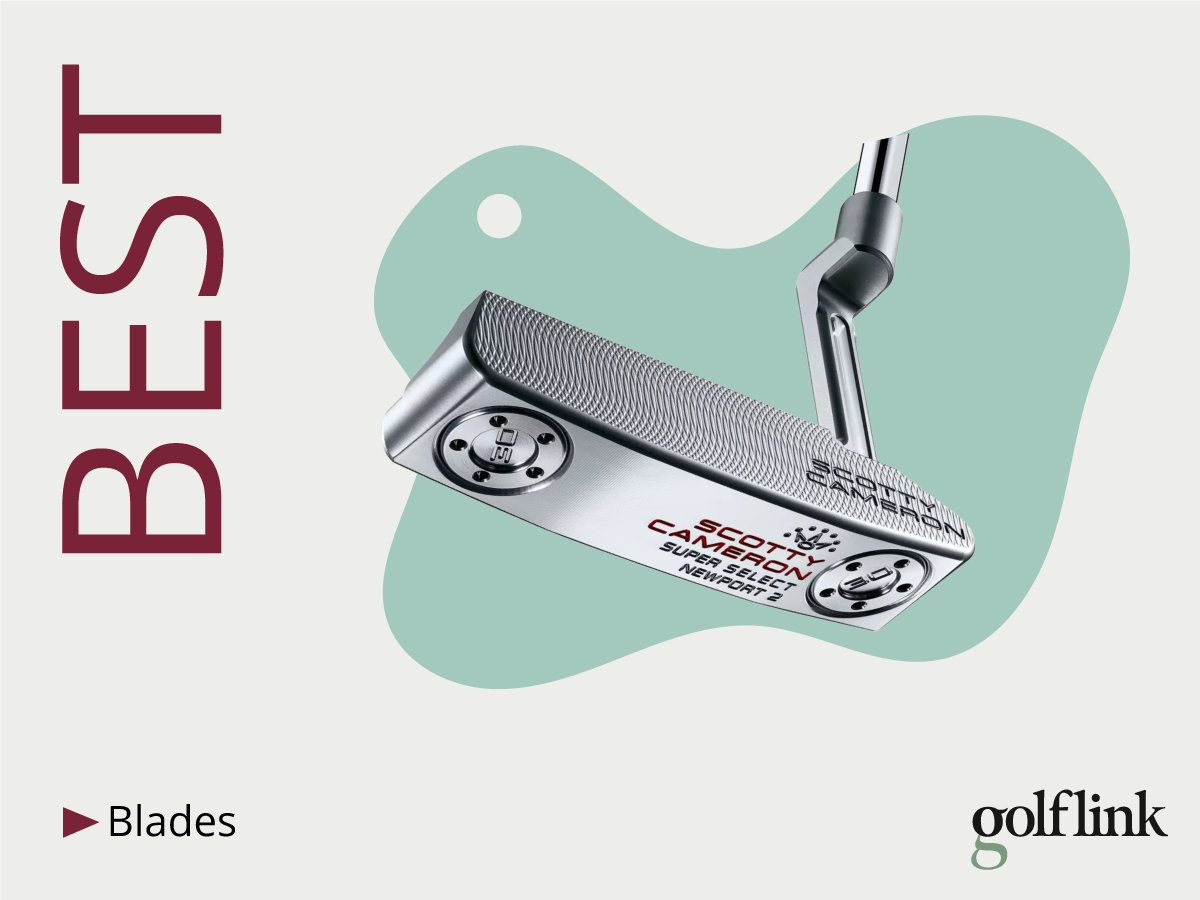
Best Blade Putter: Scotty Cameron Super Select Newport 2
Pros:
- Arguably the most quintessential classic blade putter of today
- Improved forgiveness thanks to optimized weight distribution
- Milling pattern designed for feel, consistency and feedback
Cons:
- Premium price
The 10 Best Blade Putters of 2025
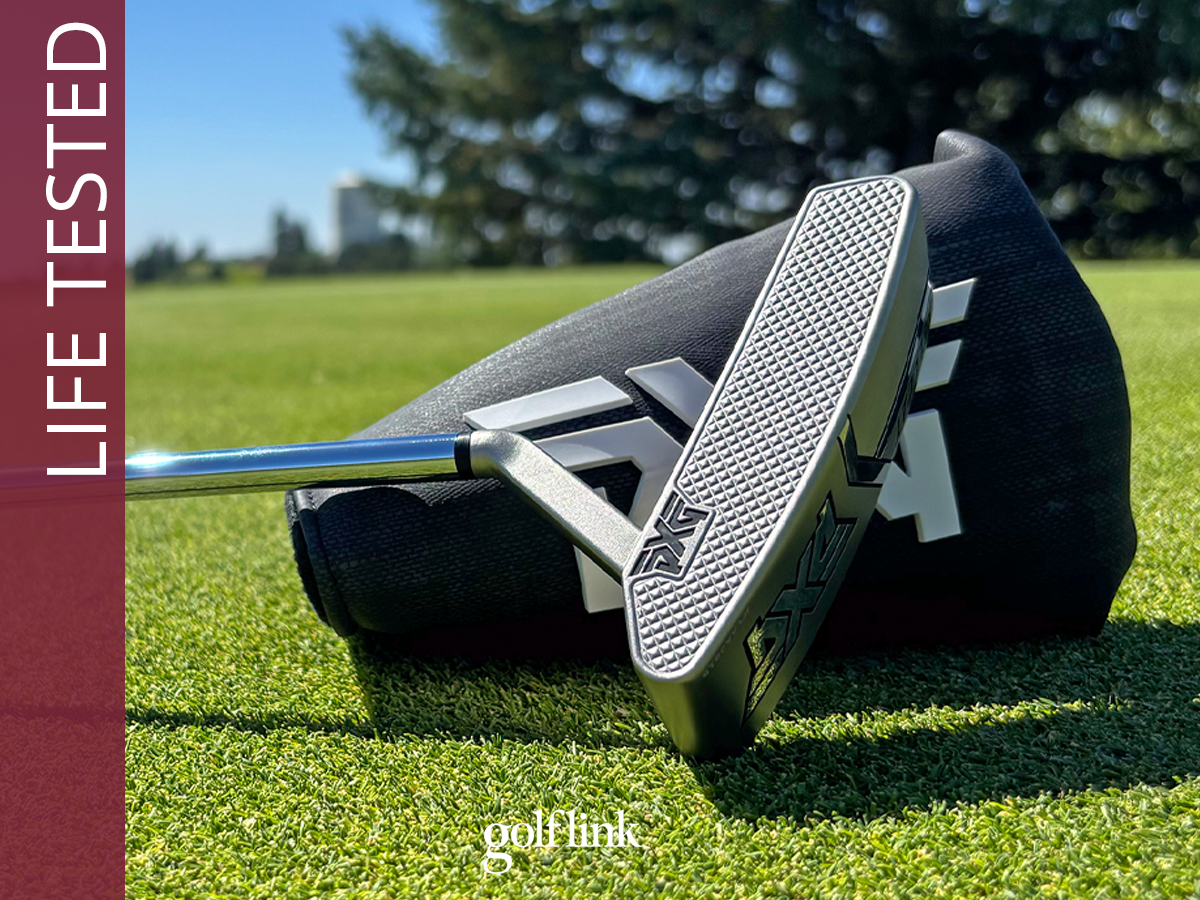
Best Zero Torque Blade Putter: PXG Hellcat ZT
Pros:
- Classic blade looks in a zero torque profile to fit any stroke
- Excellent feel and feedback
- Best value putter of 2025 and perhaps the best value golf club we’ve ever tested
- Zero torque technology in a familiar shape putter
PXG Hellcat ZT Review: The Zero Torque Putter for the Masses
Best Budget Blade Putter: Cleveland HB SOFT 2
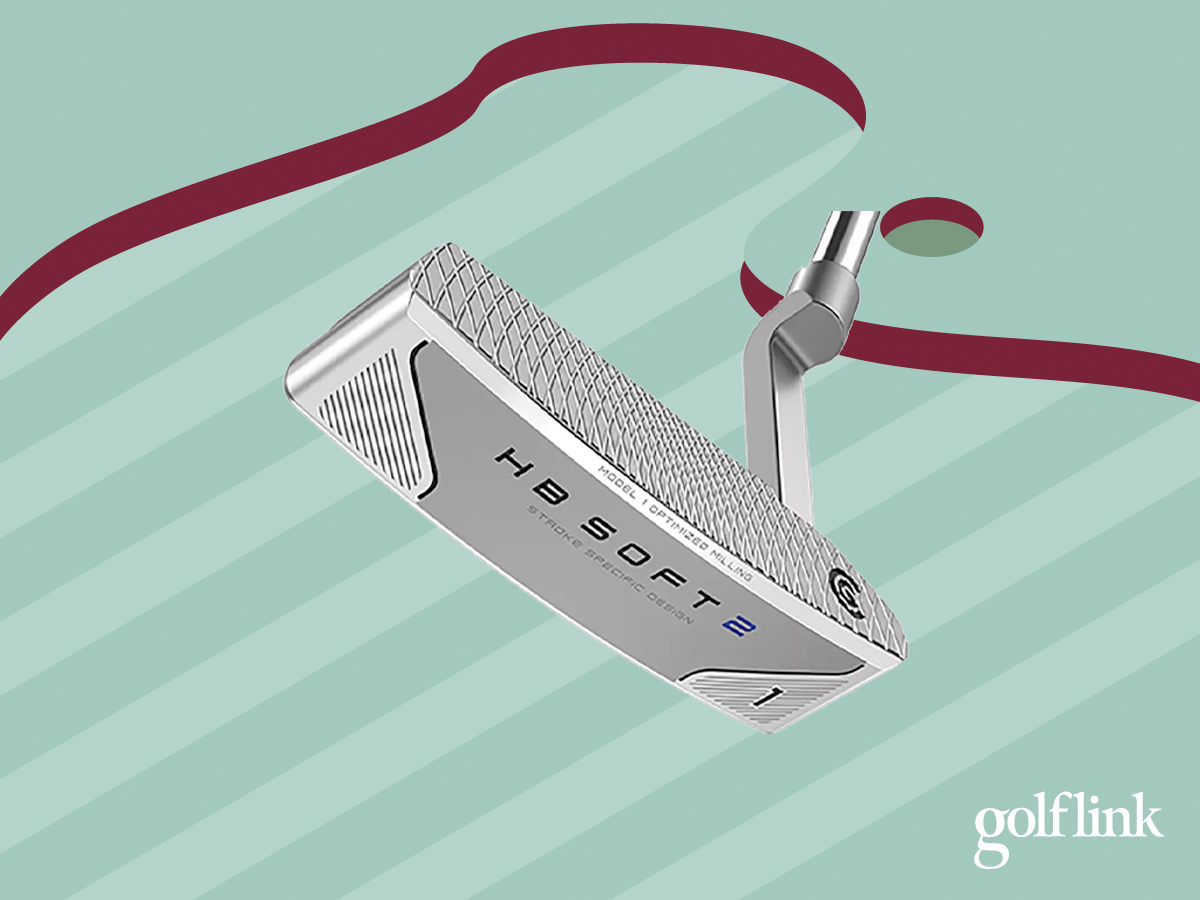
Pros:
- Milled face and satisfying feel
- Sleek looks
- Premium stitched headcover included
Cons:
- Many head shapes only available in right-handed versions
The Best Budget Putters Under $100 and $200 of 2025
Best Mallet Putter: TaylorMade Spider
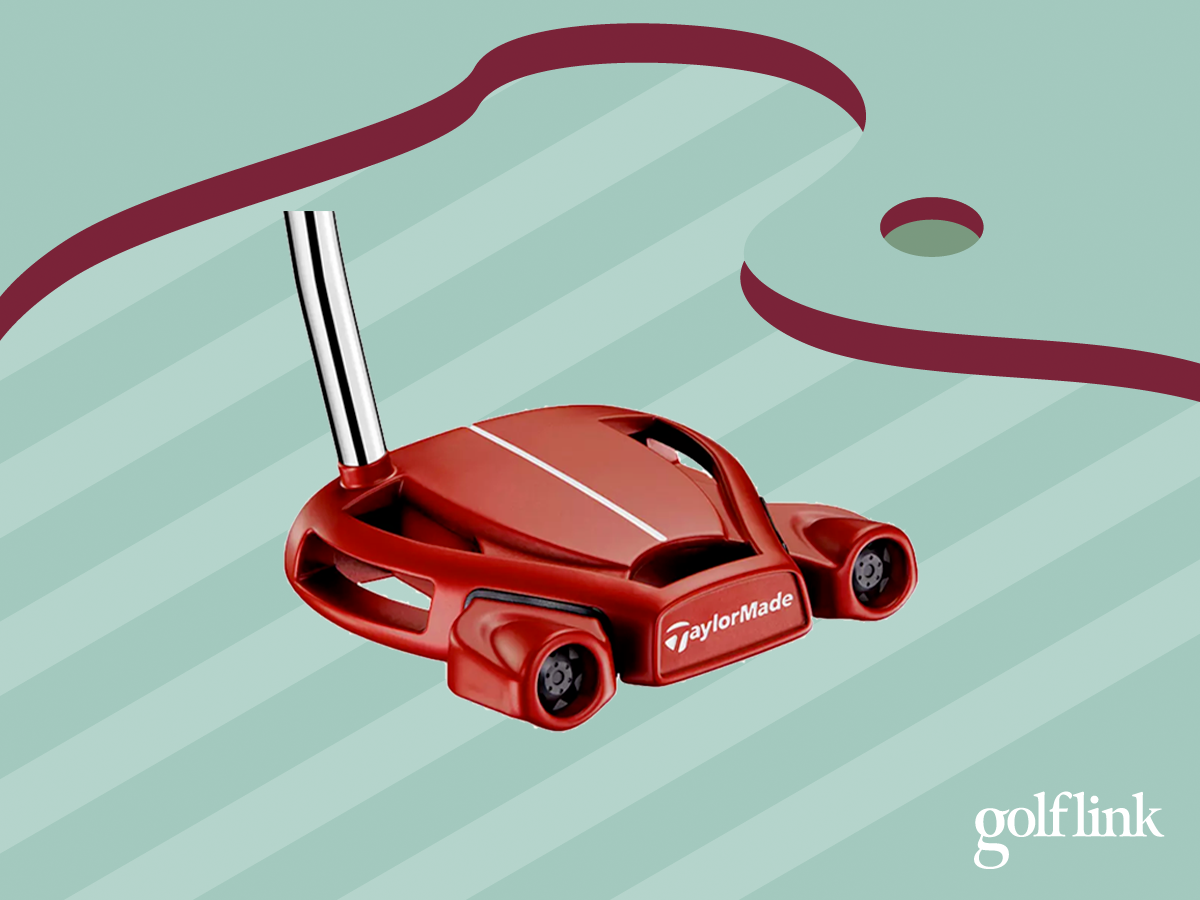
Pros:
- It’s good enough for Scotty Scheffler, Rory McIlroy and Nelly Korda
- Lightweight core and heavy frame result is high MOI head for tighter dispersion and fewer 3-putts
- Coming up on 20 years since the first Spider, this is officially a classic line of putters available in virtually any spec you want
Cons:
- Distinct shape may not suit some players tastes
Best Zero Torque Mallet: L.A.B OZ.1
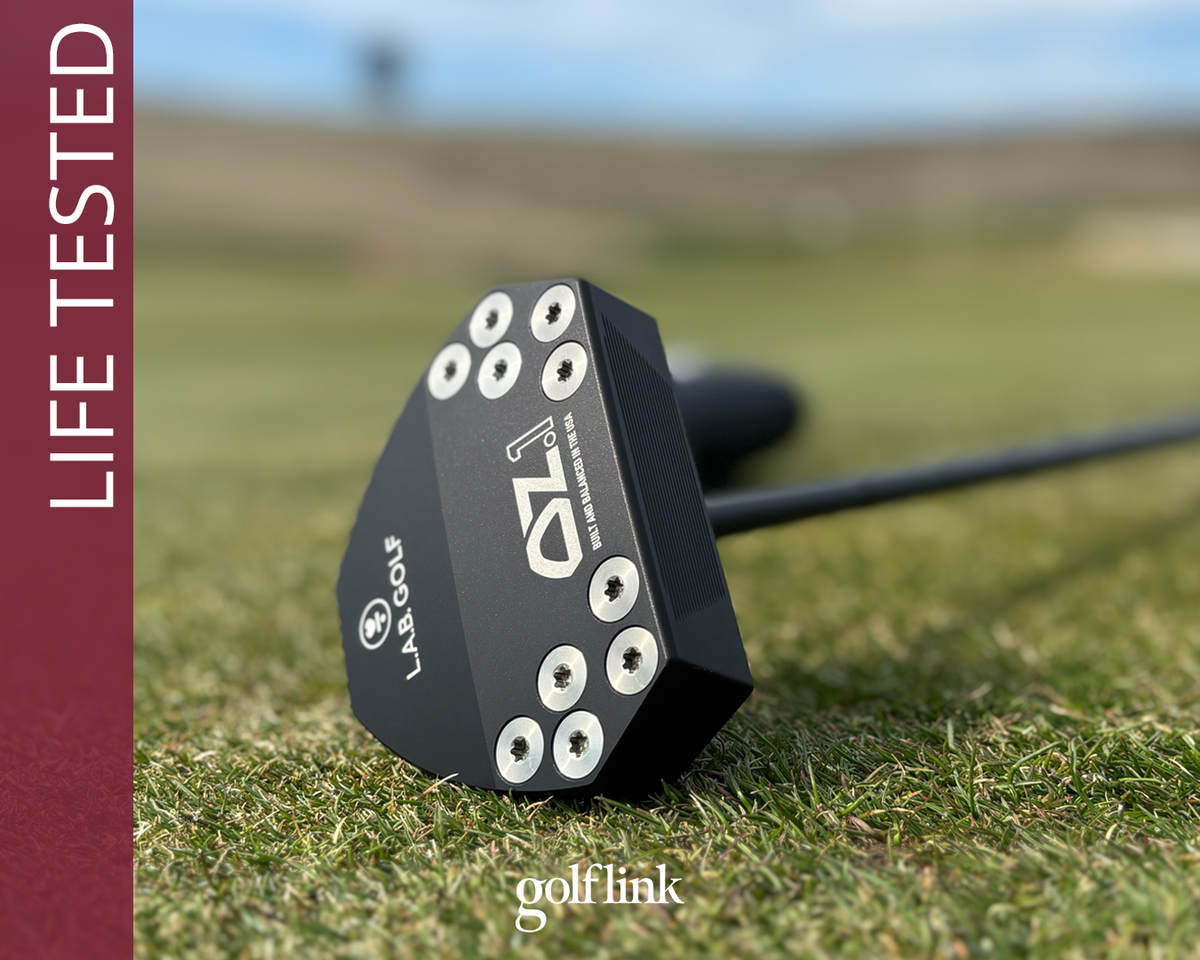
L.A.B OZ.1 during GolfLink testing
Pros:
- Hand balanced to stay square to your stroke
- GolfLink testing showed a dramatic improvement in putting using the OZ.1
- Almost every spec is customizable
Cons:
- Premium price put it out of reach for many players
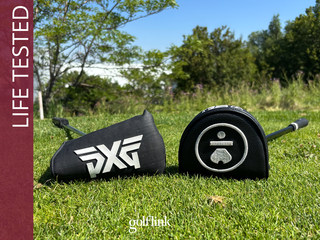
L.A.B vs. PXG: Which Zero Torque Putter Actually Wins?
Best Budget Mallet: Tommy Armour Impact No. 3
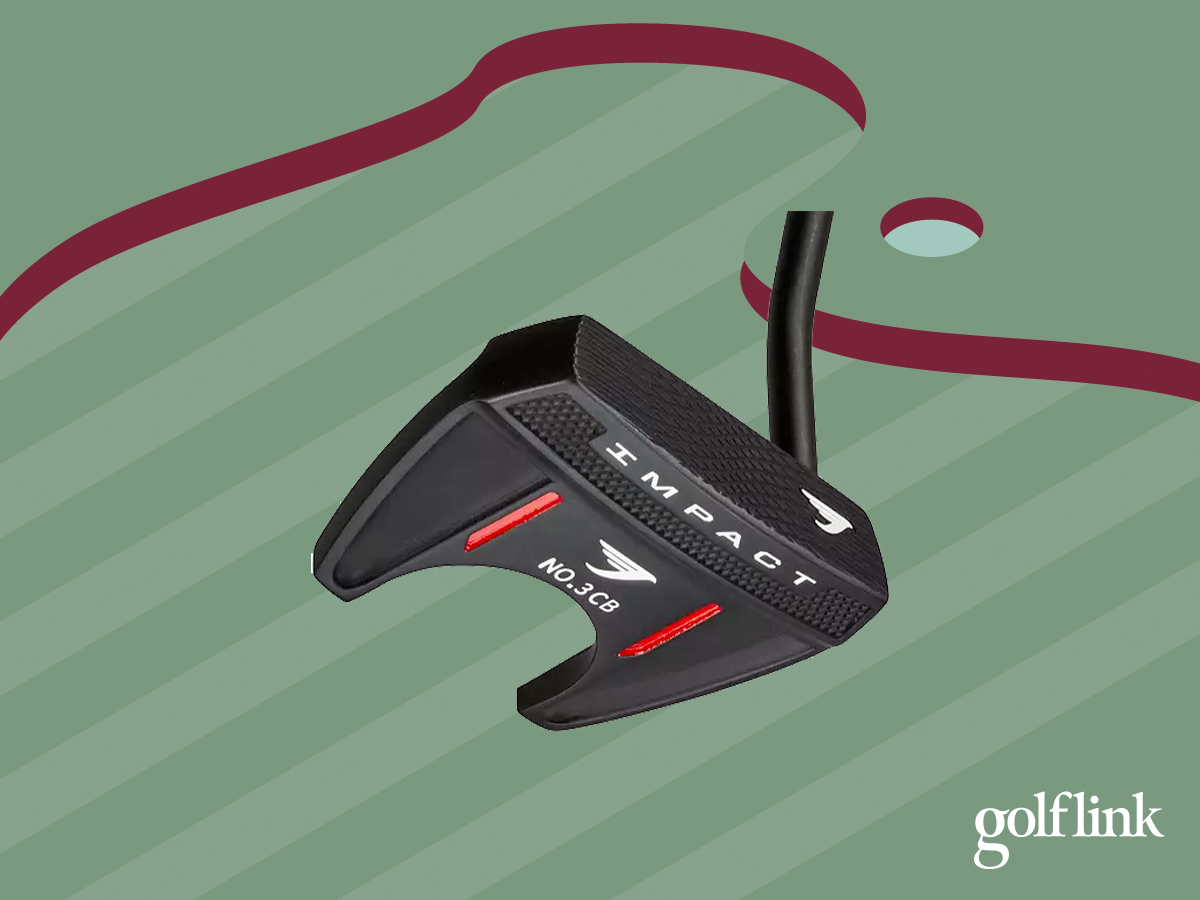
Pros:
- Counterbalanced and standard options available
- Looks great at address
Cons:
- All models are face balanced, no toe hang options
Blade vs. Mallet Putter FAQs
Here are the answers to your blade vs. mallet putter questions.
Why are mallet putters more forgiving?
Mallet putters have larger heads, allowing designers to push more weight to the perimeter. That increases MOI, reduces twisting on off-center strikes, and improves dispersion and distance control.
Can beginners use a blade or mallet putter?
Beginners can use either style of putter, but because mallet putters are more forgiving and beginners have yet to refine their stroke, a mallet putter would typically be a better option for most beginners.
Which is better for high-handicappers?
Typically, high handicap players benefit from the most forgiving clubs, which in this case would be a mallet putter.
However, once a player has moved from the beginner to the high-handicap category, they may have a more consistent putting stroke and more defined tendencies and preferences. Depending on what those preferences and tendencies are, it’s perfectly reasonable for a high-handicap player to use a blade putter.
Which type of putter is best for better players?
You can make the case that better players who consistently hit the center of the face on their putts don’t rely on the forgiveness benefits of a mallet putter as much as beginners and high handicap players. In those cases, better players can move down the list of criteria and determine which style fits their eye best and which types of putts they prioritize most to determine which putter they should use.
Just because better players can use blade putters, doesn’t mean they can’t use a mallet. Nelly Korda, Scottie Scheffler and Rory McIlroy are perfect examples. They all use a version of the mallet-style TaylorMade Spider putter.
Which is better for a straight stroke?
Players with a straight back and straight through putting stroke should use a face balanced putter (unless they choose a zero torque putter instead). Face balanced putters can come in blade or mallet styles, but it’s easier to find a face-balanced mallet than a face-balanced blade putter.
How do I know what putting stroke I have?
Don’t guess or assume you know what type of putting stroke you have. I made that mistake and missed putts to the left for an entire year before watching my stroke on camera and realizing I had it all wrong.
Record your stroke from above by hanging a phone over the edge of a table. Do this on a wood floor (with straight lines) or use an alignment aid in the frame to emphasize the shape of your stroke.
Blade vs. Mallet Final Verdict: Which Should You Get?
If you need forgiveness in the form of better distance control and tighter dispersion, and your prioritize short putts, then a mallet putter is better for you.
If you love the timeless look of a sleek blade putter and trust yourself to stroke putts off the center, then there’s no doubt you’re a blade player.
Regardless of which you choose, make sure you match the toe hang profile to your stroke type, or else your investment into better putting will be futile.
If you’re curious what all the zero torque hype is all about, then you don’t need to worry about your stroke type. That tech is proving to be the future of putters, and even though there are only a few zero torque blade-style putters, those selections are growing, and there are more options for discerning players who want to try a zero torque putter.