Steel vs. Graphite Iron Shaft: Expert Advice on Performance, Feel & Fit
Think graphite is just for slow swings? An expert fitter sets the record straight
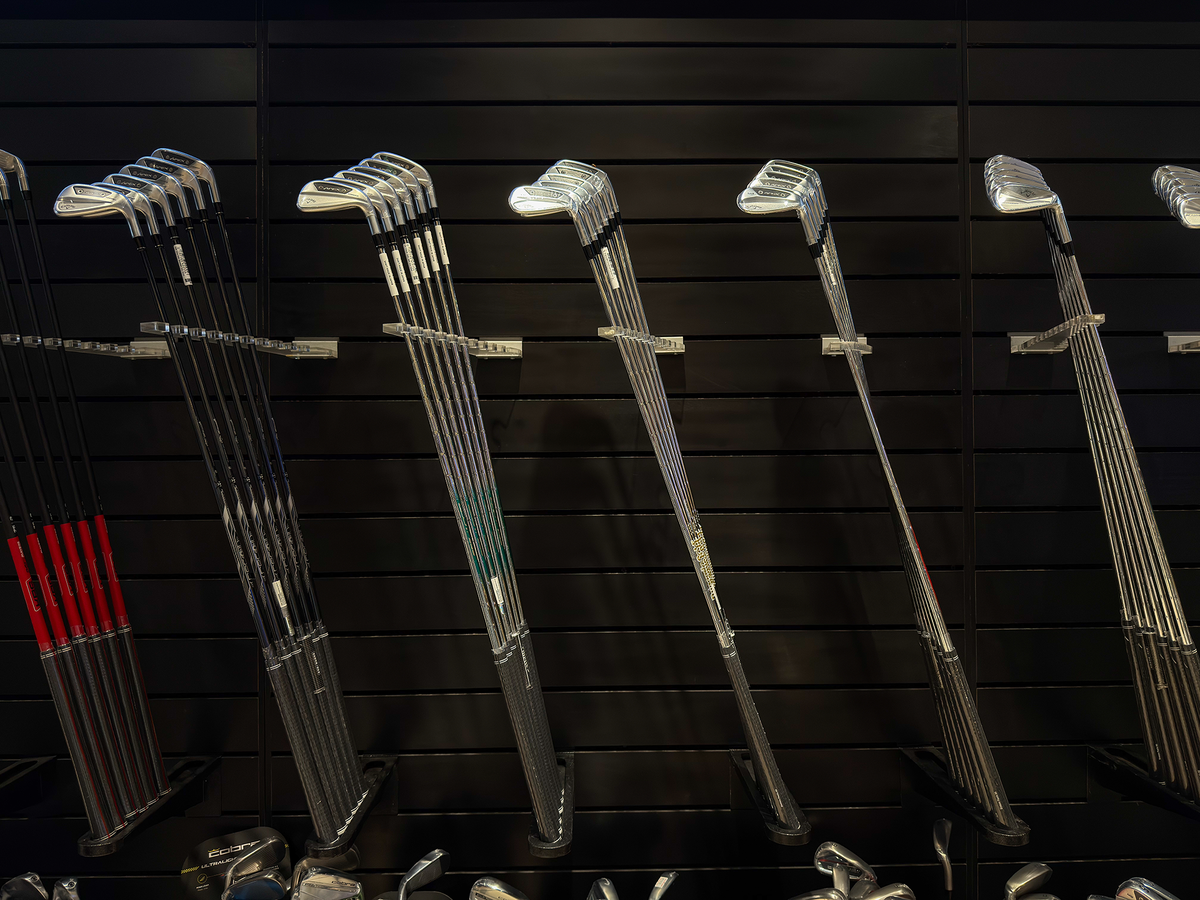
If you think graphite iron shafts are only for slow swingers, then why does one of the fastest tour players in the world, Bryson DeChambeau, use them?
Bryson is meticulous about his equipment, so if he’s gaming graphite iron shafts, there must be a reason. The evolution of graphite shafts may surprise players who think graphite is only for older, slower players.
To separate myth from fact, we asked a club fitting expert to break down the steel vs. graphite iron shaft debate. His insights might change how you think about your iron shafts.
The Expert
Brad Sparrer, PGA, became a club fitter at the Pebble Beach Academy in 2021 and today serves as the Golf Operations Manager at Boulder Ridge Golf Club in San Jose, California.
Today’s Graphite Iron Shafts
Graphite shafts have advanced at astronomical speeds over the years. It’s fitting, then, that today’s graphite shaft engineers often take advantage of aerospace-grade fibers that they didn’t have access to in the past.
Sparrer describes the difference between today’s graphite shafts and those from the turn of the century as “night and day,” adding “advances in filament winding, resin systems, and layering let engineers precisely tune stiffness, torque, and bend points.”
In other words, engineers today can create a graphite shaft to very precise specifications, setting the weight, stiffness, bend-point and torque profile exactly where they want them.
That means that golfers can find virtually any profile of iron shaft, from 40g to 130g and X-Stiff to A-Flex, in graphite.
Steel vs. Graphite Iron Shafts: Performance Comparison
It used to be that steel shafts were heavier, stiffer, and produced a more piercing ball flight; while graphite shafts were lighter, softer, and launched higher.
Sure, that could still ring true when you compare a stiffer, heavier steel shaft to a lighter, softer graphite shaft.
However, if you were to compare a steel iron shaft to a graphite iron shaft with the same specs (weight, flex, torque profile, etc.), it would be hard to tell them apart from a performance standpoint. But that doesn’t mean there aren’t some differences.
“Especially in graphite’s modern iterations, many players see tighter dispersion and better distance control due to enhanced design capabilities,” Sparrer said. “If weight, flex and profile are truly matched, the performance difference is minimal, but not nonexistent.”
Many of those benefits, however, have more to do with the player than their ball flight. Expect a smoother feel and reduced joint pain from a graphite shaft, or enjoy a better feedback and feel from each strike with a steel shaft.
Feel vs. Comfort
When deciding between steel and graphite iron shafts, the question today really comes down to feel vs. comfort. That’s because today, both materials can deliver the performance any player needs.
Steel shafts still transfer more vibration to the golfer. That means you get a better feel of strike location. If you want feedback on exactly where you strike each shot on the club face, a steel shaft will deliver that feedback better. If you want to feel the sweet sensation of a perfectly struck shot, again, a steel shaft is the better option.
However, if you suffer from joint pain and discomfort in your hands, wrists or elbows after playing or practicing, then graphite iron shafts could be the solution.
“Graphite can significantly reduce vibration and impact shock, helping players with tennis elbow, arthritis, or past injuries,” Sparrer said.
Steel vs. Graphite Iron Shafts: How to Choose
If you’ve never considered graphite iron shafts, don’t let your age or swing speed dictate your decision.
“Age and speed are part of the equation, but not the whole story,” Sparrer said. “When fitting players into steel vs. graphite, I look at tempo and transition, feel and feedback preferences, joint sensitivity, and consistency and dispersion.”
The decision today is more personal preference than performance based.