5 Ways to Spot a Fake L.A.B. Putter & Buy With Confidence
Read this before buying a second-hand L.A.B. putter
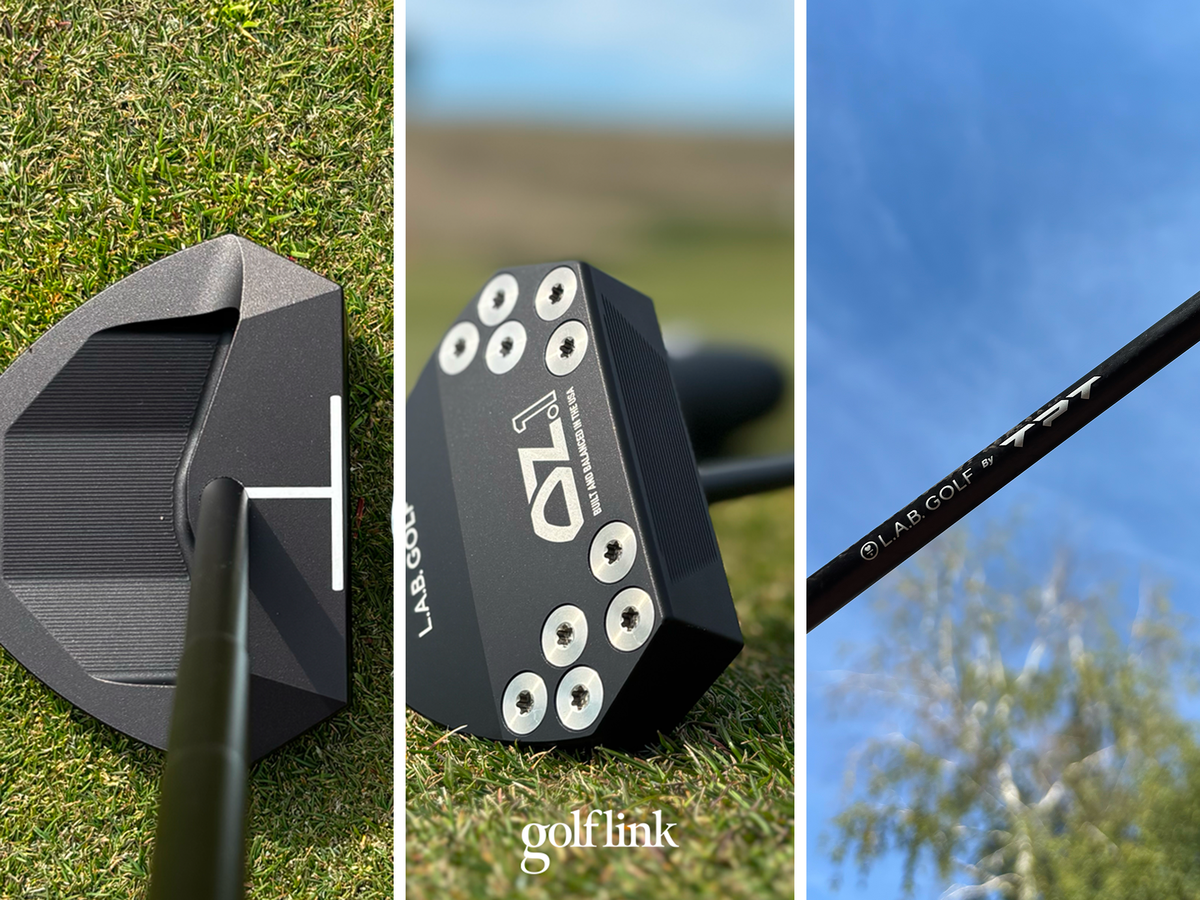
L.A.B Golf has convinced most golfers of the benefits of its Lie Angle Balance technology, but not without a price. Because of its labor-intensive build process, new L.A.B. putters rarely sell for less than $500. That reality has created a counterfeit market, where eager buyers are easily duped by fakes that are nearly indistinguishable from the real thing.
Facebook groups and Reddit threads are full of “is this legit” posts from would-be buyers, and equally full of irritated enthusiasts tired of playing detective.
After gaming multiple L.A.B. putters, touring L.A.B HQ, and reading countless posts, my advice for buyers looking for a bargain on a L.A.B. putter is the same advice my parents gave me before college: Don’t drink. But if you do, don’t drink and drive.
Translation? Don’t buy from sketchy sellers. But if you do, here’s how to boost your odds of getting the real thing.
Best Practices & Helpful Info
Let’s start with a few best practices and some helpful information that can reduce your risk of buying a counterfeit L.A.B. putter.
- Use a reputable seller: L.A.B. Outlet and 2nd Swing are the top two I’d recommend.
- Ask for receipts: If a seller won’t give you a receipt or a build sheet with your purchase, walk away.
- Trust your gut: I’ve waited as long as possible to spew this cliche, but there is simply no avoiding it with this topic. If a deal seems too good to be true, guess what? It is.
- Know the risk: The stock DF3 is most often counterfeited.
L.A.B. OZ.1i HS Life-Tested Review: L.A.B.'s Biggest Leap Yet
5 Steps to Spotting a Fake L.A.B. Putter
When it comes to spotting a counterfeit L.A.B. putter, the devil is in the details. That’s fitting, because those details are the thing that separates L.A.B. from everyone else in the first place.
The putter heads and even headcovers themselves are often indistinguishable from a real L.A.B. to a counterfeit. It’s components like the shaft, weights, and grip where you’re more likely to find tells of a fake. Not to mention the actual balance that makes a L.A.B. a L.A.B.
1. Inspect the Weights
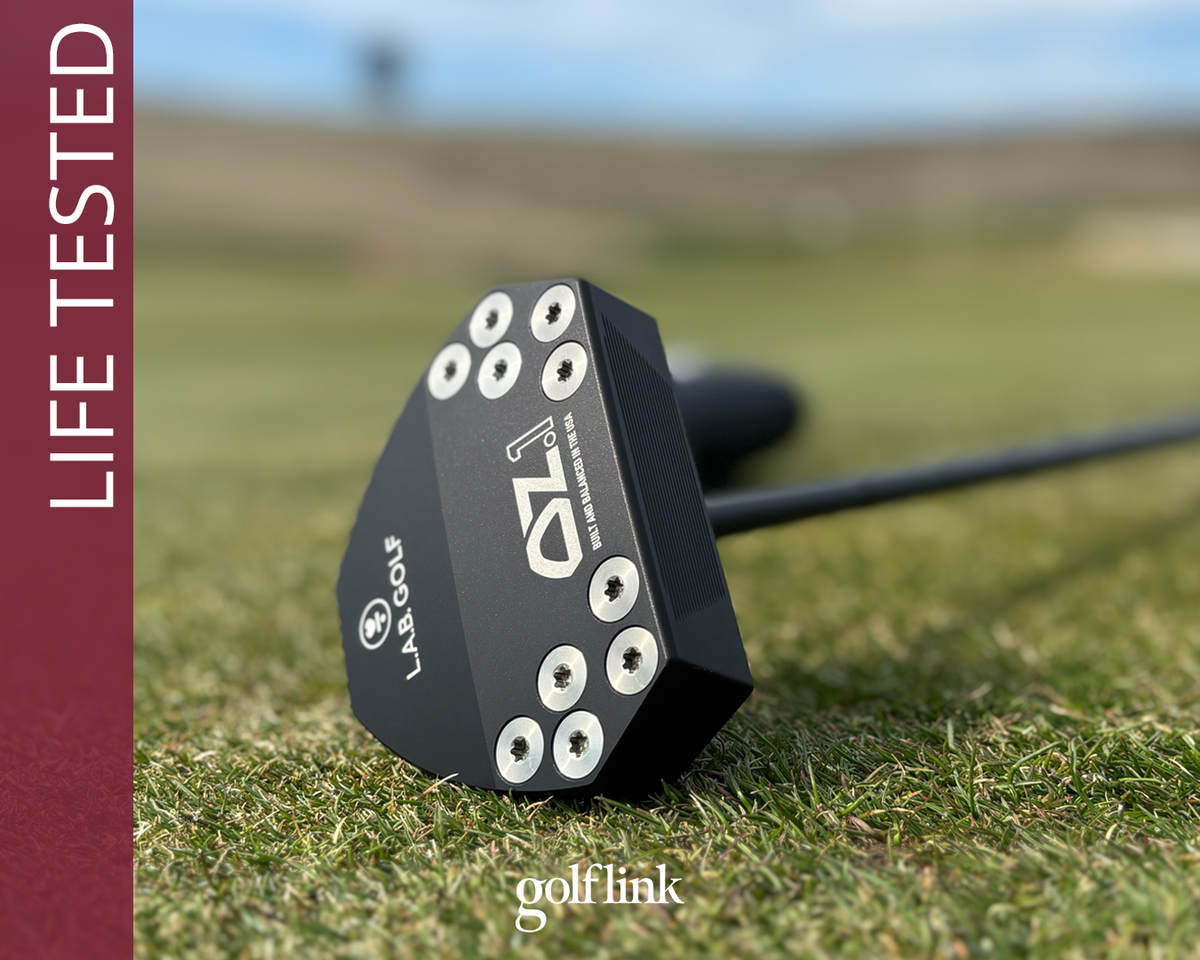
Fair warning: removing a weight from the head of a legitimate L.A.B. putter will void the warranty. However, according to one Reddit user who compared a known counterfeit (or two) to an authentic L.A.B. putter, one of the easiest ways to spot a fake L.A.B. from a real one is the weights, and there are a few key tells.
If the weights come out easily, it’s likely fake. L.A.B. secures them with threadlocker, so real screws need muscle, and sometimes even heat, to remove.
If you do get one of those weight screws out, check for the gram weight stamped on the bottom. Fakes usually aren’t labeled and often use identical weights in every port, which is why they won’t balance like a real L.A.B.
2. Check the Balance
Before we overcomplicate this, let’s remember why you want to buy a L.A.B. putter in the first place: because its balance profile makes putting easier.
We just established that a counterfeit L.A.B. putter typically has the same weight in every port, which will never create a lie-angle-balanced profile.
Before you buy one, check the balance. Place the putter diagonally on a table with the head off one end and the grip off the other and the face pointing straight up. Let go of the putter. If it comes to rest in a toe-up position, it’s balanced. If it doesn’t, it’s not balanced, and it’s not real.
3. Inspect the Shaft
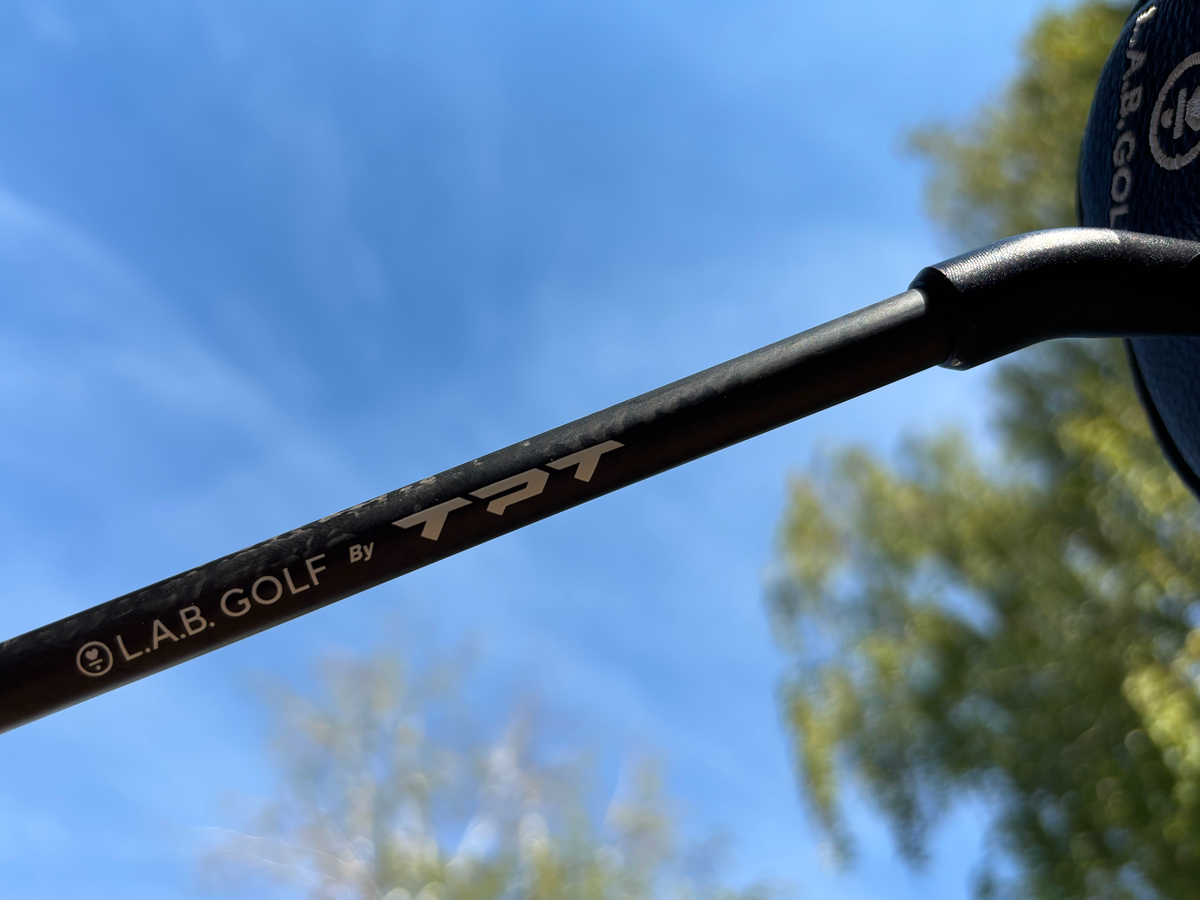
This is an authentic L.A.B. Golf x TPT shaft
The shaft can be a clear giveaway of a counterfeit L.A.B. putter. If the shaft looks or feels low quality, or has blemishes or inconsistencies, it’s probably fake.
L.A.B. uses very stiff shafts in its putters. Fun fact, while the balance of the putter helps it stay square during the stroke, a stiffer shaft actually reduces torque (the actual twisting of the putter head) at impact. A shaft that feels flexible is a red flag.
4. Inspect the Grip
One online user who compared real and fake DF3 putters reported that while the grip on the fake was convincing, it was a little shorter and felt a bit lighter than the real thing.
This can be tough to judge if you don’t have a known quantity to compare to, but it’s still worth noting.
5. Not-So-Red Flags
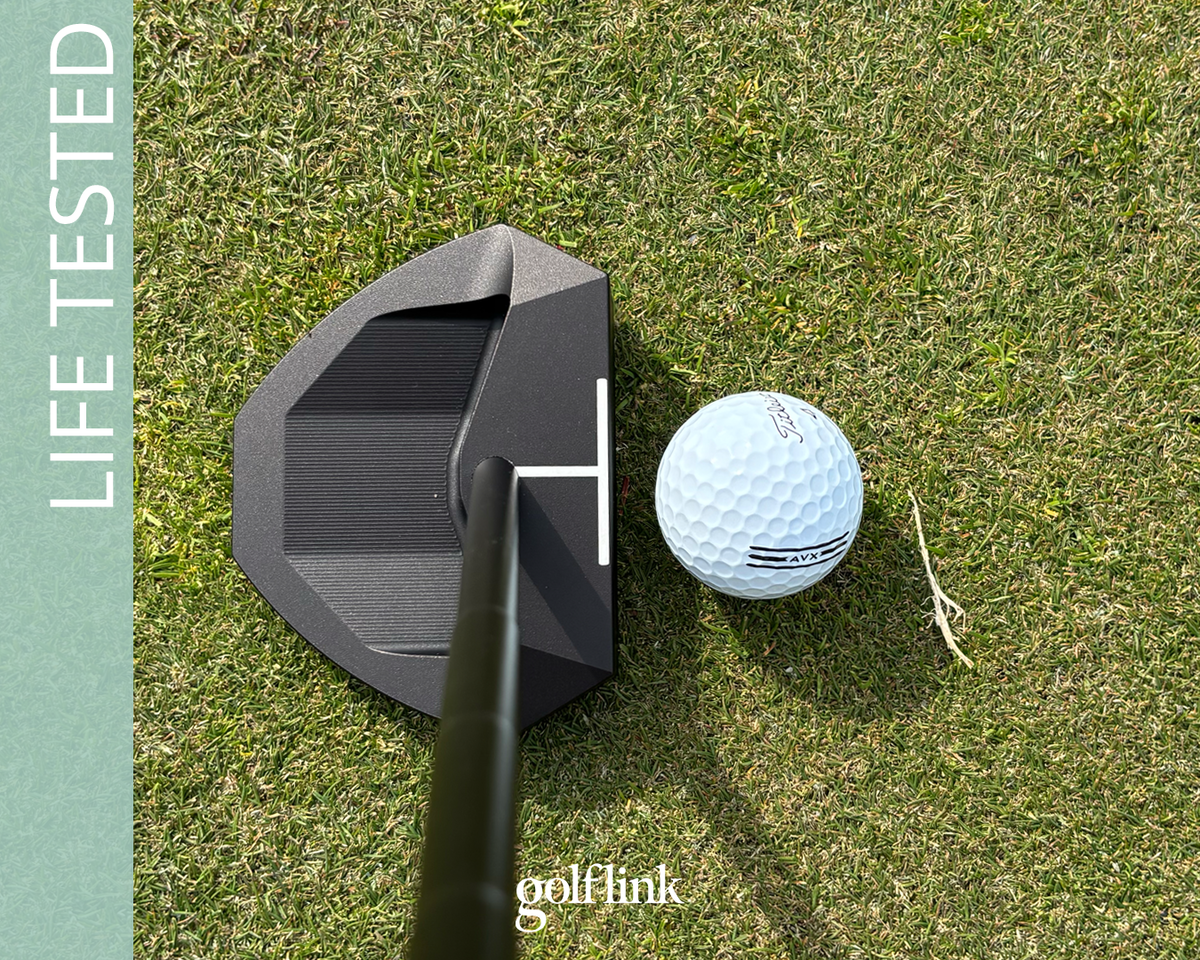
A stepped shaft in itself is not a tell of a counterfeit L.A.B. putter
For every red flag to look out for, there’s a mythical sign that, despite rumors, does not actually signify a counterfeit L.A.B. putter.
Stepped Shaft: Many genuine L.A.B. putters have a stepped shaft. In fact, I have one with a stepped shaft that came straight from L.A.B. HQ.
Flawless Head: Heads on counterfeit L.A.B. putters can be visually perfect.
Headcovers: Similar to the heads themselves, the headcovers on many counterfeit L.A.B. putters are often indistinguishable from the real ones.
Made in USA Stamp: Some genuine L.A.B. putters are stamped with Made in the U.S.A on the bottom, and some aren’t. Just because a putter doesn’t have this stamp does not mean it’s fake.
Stats Don't Lie: Here's How Much LAB OZ.1 Helped My Putting
Fake It ‘Till You Make It
The best way to avoid buying a fake L.A.B. putter is to buy a real L.A.B. putter.
At the end of the day, there are so many unauthentic “L.A.B.” putters out there that there’s really no way to buy one from a questionable source with confidence.
While these guidelines can help you spot a fake, this is not a purchase you should take a chance on. That defeats the entire purpose of gaming a L.A.B. putter. Which brings me to one last piece of advice that applies to this situation (and I’m paraphrasing): If it’s not a heck yes, it’s a heck no.