What Clubs Should Be in Your Bag? Data-Backed Answers
Here's how to decide which clubs, and how many, you should have in your golf bag

You’re allowed to carry up to 14 clubs during a round of golf, per the USGA Rules. So what clubs should you have in your bag? That depends on your skill level and the type of course you usually play.
As niche clubs like high-lofted woods, mini-drivers, and driving irons gain popularity, golfers have more options than ever to optimize their setup.
We’ll not only outline common setups, but add real data from players across every handicap range on how to set up your golf bag.
How Many Clubs Should You Carry?
Just because the USGA allows 14 clubs, doesn’t mean you need to carry that many. That allotment typically covers:
- 4 wedges
- 3 long-game clubs between driver and 5-iron
If you prefer fewer wedges or fewer long-game clubs, 12 or 13 clubs may be all you need.
Here’s a quick guide to decide how many clubs you might want in your bag:
|
Question |
If Yes |
If No |
|
Do you have at least a 15 yard gap between each long club? |
Keep your current setup. |
Removing a club to eliminate overlap. |
|
Do all four wedges offer unique yardages and shots you rely on? |
Keep all four. |
Remove a wedge you don’t need. |
|
Would you benefit from a lighter bag or simpler decisions? |
Try 12-13 clubs. |
Keep 14 clubs in your bag. |
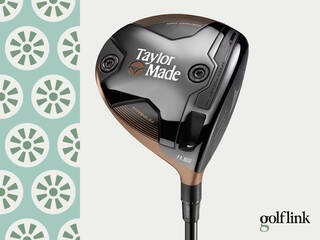
Mini Drivers: Inside the Niche History & Surging Future
Common Bag Setups: 3-Wedges vs. 4 Wedges
Virtually every player carries a driver, putter, and 6-iron through sand wedge. That accounts for nine clubs.
But how you fill in the remaining five spots (or less if you choose) depends on your strengths and course demands.
In the long game:
- Better players often keep long irons in the bag
- Mid and high handicap players usually replace long irons with hybrids or fairway woods
When it comes to short game clubs:
- Some players like a 3-wedge setup (PW-GW-SW)
- Others prefer a 4-wedge bag (PW-GW-SW-LW)
Most iron sets include at least a pitching wedge (if not a gap wedge as well). Today’s pitching wedges are usually 44-48 degrees and the loft of your pitching wedge will influence how many wedges you use, and their lofts.
Most players prefer a 4-6 degree gap between each wedge. Here are examples of 3-wedge and 4-wedge setups:
- 3 wedges: 44° PW - 50° GW - 56° SW
- 4 wedges: 46° PW - 52° GW - 56° SW - 60° LW

Complete Guide to Golf Wedge Lofts
Who Should Play 3 Wedges?
Players who:
- Need more long club options to reach par 5s, long par 4s
- Play long courses frequently
- Need more alternatives to driver off the tee box instead of a fourth wedge
Playing three wedges instead of four gives players more options for firepower in the long game. The tradeoff is fewer options for specialty shots around the greens.
Who Should Play 4 Wedges?
Players who:
- Are confident around the green
- Play courses with tight lies, deep bunkers, or various turf conditions around the greens
- Hit driver consistently and don’t rely on several alternatives off the tee
Playing four wedges gives players more tools for scoring inside 100 yards, as long as they can live with one fewer option off the tee or in the long game.
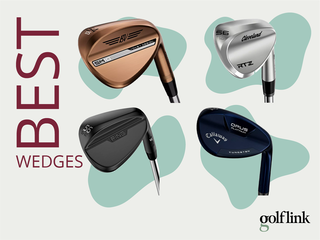
The Best Golf Wedges of 2025
Data: What Clubs to Carry by Handicap
A player’s skill level directly influences their bag setup.
This data comes from Shot Scope, based on millions of tracked shots.
|
0-5 HCP |
10-15 HCP |
20+ HCP |
|
Driver |
Driver |
Driver |
|
3 Wood |
3 Wood |
3 Wood |
|
3-Hybrid/3-Iron |
3 Hybrid |
5 Wood |
|
4 iron |
4 Hybrid |
4 Hybrid |
|
5 iron |
5 iron |
5 iron |
|
6 iron |
6 iron |
6 iron |
|
7 iron |
7 iron |
7 iron |
|
8 iron |
8 iron |
8 iron |
|
9 iron |
9 iron |
9 iron |
|
Pitching Wedge |
Pitching Wedge |
Pitching Wedge |
|
Gap Wedge |
Gap Wedge |
Gap Wedge |
|
Sand Wedge |
Sand Wedge |
Sand Wedge |
|
Lob Wedge |
Lob Wedge |
Putter |
|
Putter |
Putter |
Higher handicap players are typically less-skilled ball-strikers and usually hit the ball a shorter distance than lower-handicap players.
To account for that, higher-handicappers typically opt for easier to hit clubs in the long game, employing more woods and hybrids and beginning the iron set with a 5-iron.
Meanwhile, lower-handicap players have a deeper roster of long irons, going down to the 3-iron or 4-iron.
On the other end of the bag, higher handicap players often forego a fourth wedge, using a 13-club bag instead of the maximum 14-clubs.
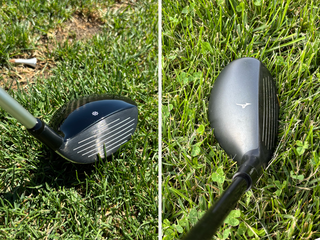
Fairway Wood vs. Hybrid: 4 Tips to Make the Right Choice
Mistakes to Avoid When Building Your Own Bag
Assembling your golf bag can be tricky. It’s important to build your bag around purpose, rather than traditional standards.
Here is some helpful advice on how to hand-pick each club you use in your bag so every club you carry serves a purpose.
- Every wedge should serve a purpose: Don’t carry four wedges just because you think you’re supposed to. Make sure you have appropriate loft-gapping (4-6 degrees) in your wedge setup and that every wedge you carry brings something unique to your game.
- Don’t carry irons you never hit: If you carry a 3-iron or a 4-iron that you wouldn’t even consider hitting in an important situation, ditch it for an alternative like a higher-lofted wood or hybrid.
Think of your bag setup as your “gameplan”: Weather, course conditions, and course style should influence which clubs make the starting rotation each round you play.
Modern Equipment’s Impact on Bag Setup
Golf equipment has changed drastically over the years. With so many niche clubs, like mini drivers, high-lofted fairway woods, and driving irons, players have more decisions to make today than ever before.
Not to mention, today’s 7-irons could be as strong as 28-degrees, whereas a 7-iron from the 1990s was closer to 35 degrees. Those two clubs fulfill completely different needs in a golf bag setup.
With all that in mind, here are four things to consider when assembling your optimal golf bag:
- Confidence: Before you even consider adding a club to your bag, you should have confidence that you can hit it well. Bagging a club that you don’t have confidence in is worse than having no club at all in that spot.
- Need: Every club in your bag must fill a need. If two clubs go the same distance, or you carry a club you never use, you’re wasting a spot in your bag.
- Lofts: If you bought game improvement irons in the last 10 years without paying attention to lofts, you might have an 8-10 degree gap between the pitching wedge and gap wedge. And the 4-iron from that set might have the same loft as your hybrid. Check all your lofts to make sure they jive.
- Gaps: Go to a simulator near you to find out your real yardages with each club. Use this data to consolidate redundant clubs (keep the one you hit the most consistently) and consider adding clubs to fill gaps that need to be filled.
14 Club Rule FAQs
The official USGA Rule on how many clubs you can carry, Rule 4.1b, states: “You must not start a round with more than 14 clubs or have more than 14 clubs during the round. If you start a round with fewer than 14 clubs, you may add clubs during the round, up to the 14-club limit.”
Here are some other common questions regarding the 14-club Rule:
What happens if you lose a club?
Unless you find the club, you are not allowed to add a club in its place.
If you’re right-handed, can you carry a left-handed club?
Yes, there is no rule against carrying certain clubs of dexterity.
If you have an adjustable driver, when can you adjust it?
All adjustable clubs must be adjusted before you tee off on the first hole. No changes after that for the remainder of the round.
Can you share clubs with another player?
No, unless the player you share clubs with is your partner in a team format and the total number of clubs between both partners combined does not exceed 14.
What happens if my club breaks?
If it broke while making a stroke, you are able to repair or continue playing with it. You are not allowed to replace it.
What if I pick up a lost club and put it in my bag?
You can pick up a club that you find on the course without penalty, even if it makes 15 clubs in your bag, but you may not use it.
It’s in the Bag
Use this article as a guide to getting your golf bag set up in the way you like it. You might find that as you advance in the game and you improve your skill set, your needs change from needing maximum distance and forgiveness to precision feel and touch. As long as you’re doing it with 14 clubs, you’re all good.