2026 Budget Golf Launch Monitors: Options From $200 to $700
Brands like Izzo, Shot Scope, and Blue Tees are making a budget launch monitor push
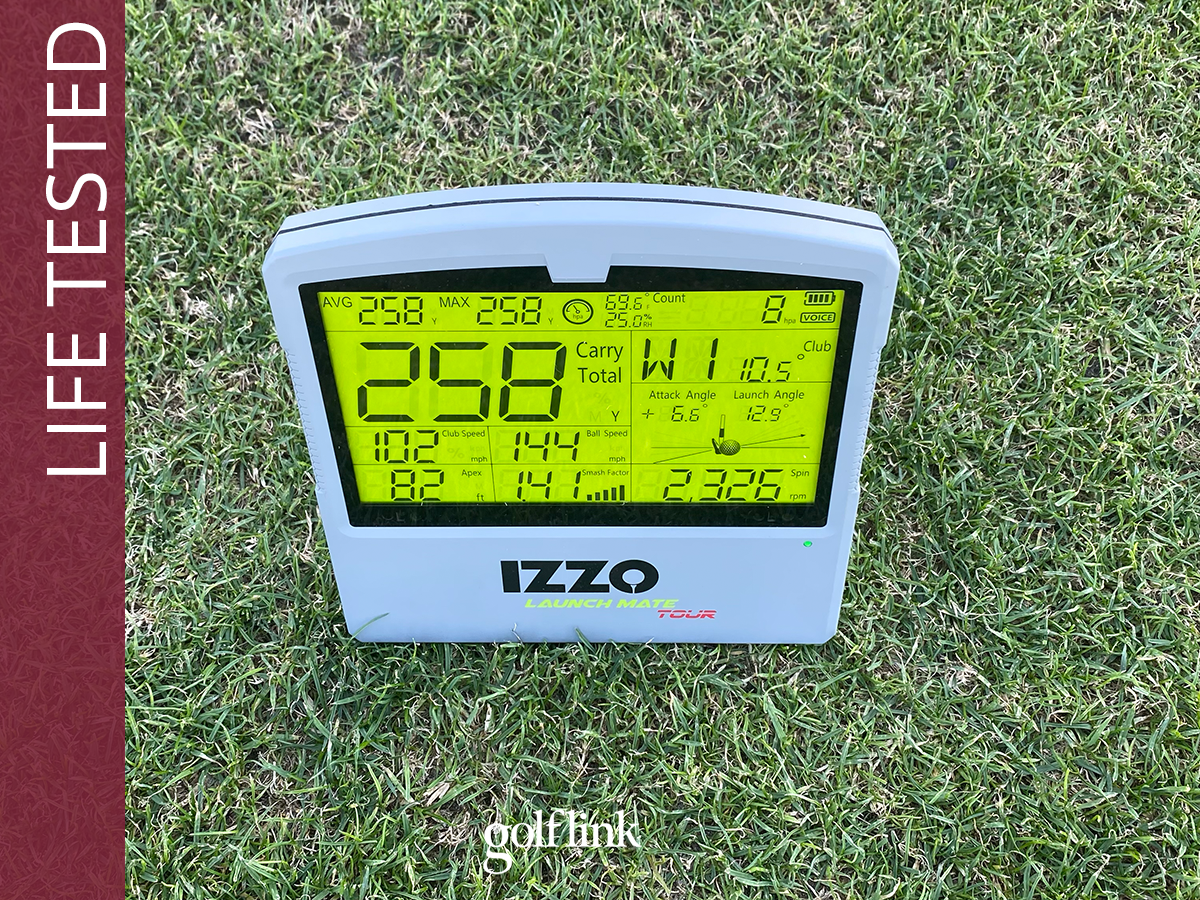
Is 2026 the year of the budget launch monitor? It seems that way, and we’re here for it.
In the last few years, launch monitors have not only become better, but they’re more affordable than ever.
Today’s budget launch monitors start at around $200, a sharp contrast to one of the top budget friendly launch monitors of the past few years, the Rapsodo MLM2Pro with its modest $700 asking price. Some of Rapsodo’s competition charges double or more for similar products, and many of those options require a subscription to take advantage of some features.
That all explains why a $200 launch monitor is so attractive for many players. If you just want to know how far you hit the ball, your ball speed and clubhead speed, there’s no need to pay more in 2026.
With new options for Shot Scope, Izzo, and Blue Tees, to name a few, golfers have more launch monitor options than ever. Now, you can choose how much you want to pay, and what data you need for that price.
Let’s take a closer look at some of today’s best budget launch monitors.
Shot Scope LM1 Launch Monitor
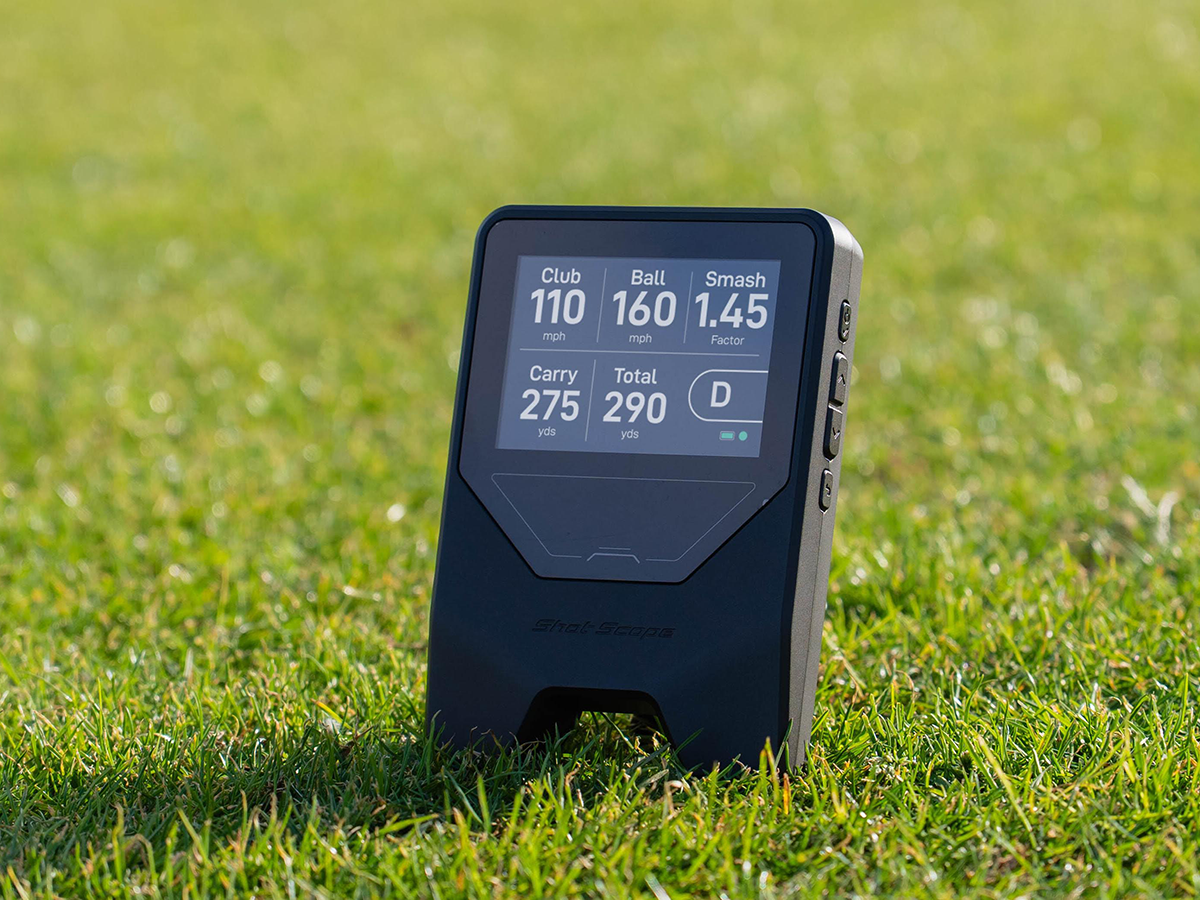
It’s no surprise that when Shot Scope, a Scottish company that specializes in golf data with its array of products, introduced its new LM1 Launch Monitor at this year’s PGA Show, there was a lot of buzz.
Lightweight and compact, it easily fits in your golf bag. You can take it with you every time you practice or play golf. It also has a vivid, full-color display, and it gives you the readings almost instantaneously.
Can you use it as a simulator? No. But if you’re just looking for numbers to help you practice or learn about your game, it offers plenty to be gained.
The announcement of the LM1 sparked so much excitement that Shot Scope sold out of its first production run before any product was shipped, which is scheduled for late March. But don’t fear; Shot Scope is already gearing up for another batch.
“We knew we had something special on our hands, and the reaction at the PGA show spoke for itself,” said Gavin Dear, Chief Commercial Officer at Shot Scope. “The level of demand we saw validated that this is exactly what the market has been waiting for. It’s one thing to believe in a product; it’s another to see that kind of validation from the industry.
| Shot Scope LM1 Price & Data |
| $199 |
| Club Speed |
| Ball Speed |
| Smash Factor |
| Carry Distance |
| Total Distance |
Izzo: Launch Mate, Launch Mate Mini, Launch Mate Tour
The Shot Scope LM1 isn’t the first $200 launch monitor. Given Shot Scope's stellar reputation for data collecting and excellent marketing, it’s understandable that golfers are excited to try the LM1. But other companies, like Voice Caddie, PRGR, and Izzo, have offered budget Doppler radar-based launch monitors for years now.
Izzo, which is probably better known for its terrific budget golf bags, has offered a $200 launch monitor for a while now. Plus, it offers two other models priced under $500.
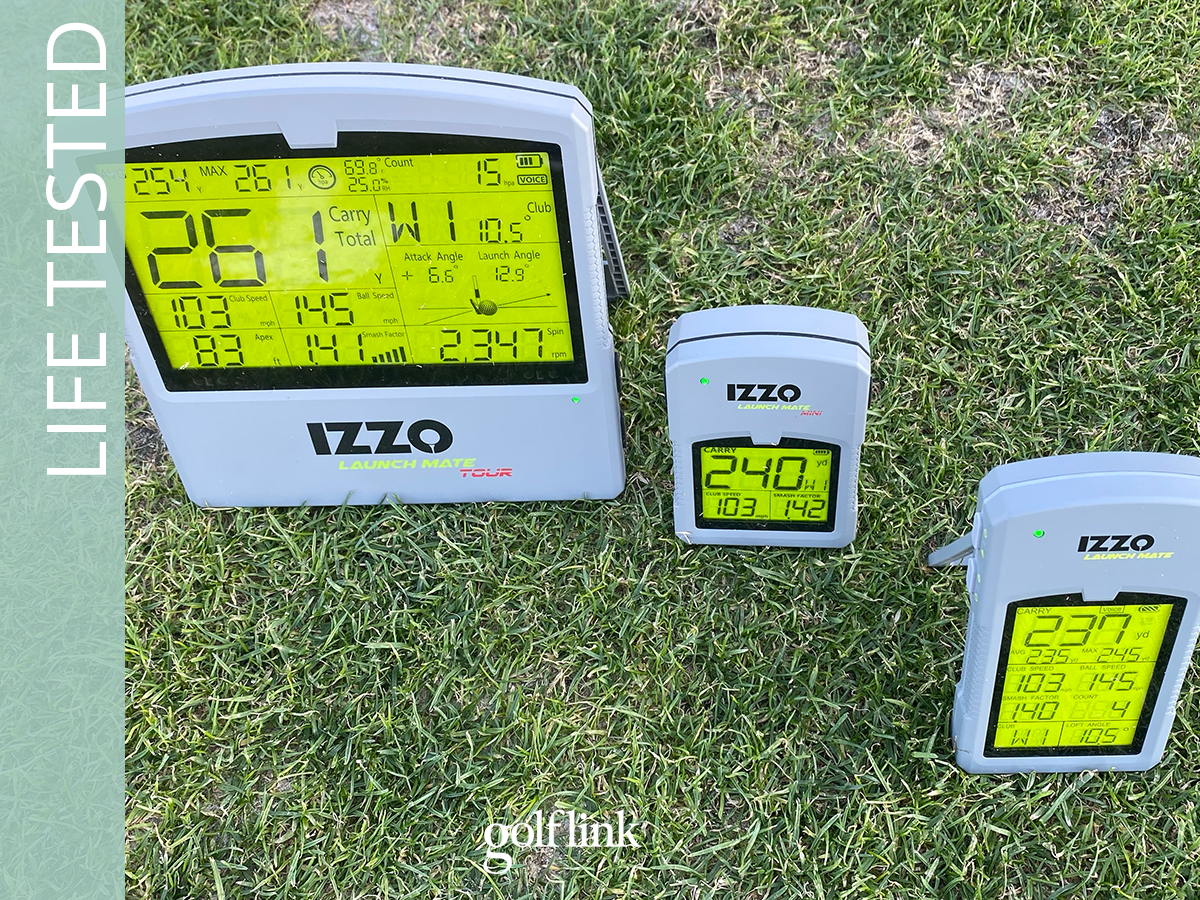
The Izzo Launch Mate Mini ($199.99) measures the same metrics as the new LM1: club speed, ball speed, smash factor, carry distance and total distance.
Izzo also offers its regular Launch Mate ($349.99), which is a little larger and adds a little more information to the screen, like averages and max distances.
The Launch Mate Tour ($499.99) adds launch angle and attack angle numbers, which can be pretty helpful if you're working on something specific in your swing.
I tested all three in Izzo’s lineup. To be honest, if I were looking for a launch monitor that gave launch angle and attack angles, I’d consider spending a couple hundred more dollars and get the Rapsodo MLM2Pro, which offers so much more and will definitely be more accurate.
But if I’m just looking for a basic launch monitor, I’d go for the Launch Mate Mini. It gives you the most bang for the buck, and it’s the most portable, which means you can have this thing with you all the time. I like the idea of easily using it on the course.
Both the Izzo Launch Mate Mini and Launch Mate use batteries (which are included), while the Tour edition has a rechargeable Lithium battery.
| Launch Mate Mini | Launch Mate | Launch Mate Tour |
| $199 | $349 | $499 |
| Club speed | Club speed | Club speed |
| Ball speed | Ball speed | Ball speed |
| Smash factor | Smash factor | Smash factor |
| Carry distance | Carry distance | Carry distance |
| Total distance | Total distance | Total distance |
| -- | Average distance | Average distance |
| -- | Max distance | Max distance |
| -- | -- | Attack angle |
| -- | -- | Launch angle |
| -- | -- | Backspin |
Rapsodo MLM2Pro
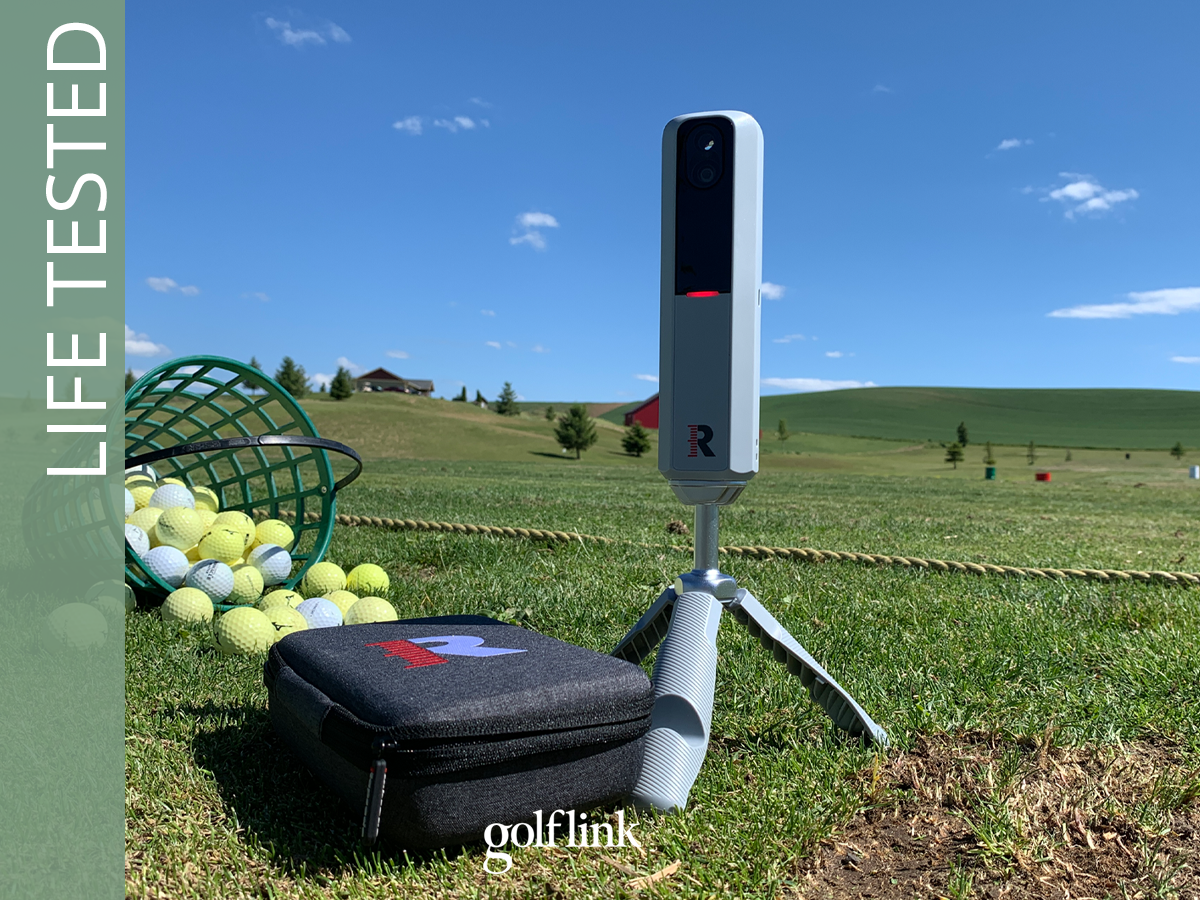
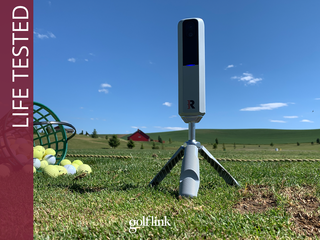
The Rapsodo MLM2 Pro is one of the most complete launch monitors in the $700-and-under category.
We've thoroughly tested the Rapsodo MLM2Pro and used it to test clubs, balls, and shafts over the last couple years.
It serves as a simulator and tracks all the metrics to back it up, including spin rate and spin axis, when used with specially marked balls from Callaway or Titleist.
Accuracy is one of the most important elements of any launch monitor, for obvious reasons, and it’s a major consideration for people shopping in the budget category. The MLM2Pro accuracy is spot on compared to the numbers I would expect on the course and what I get from other units.
| Rapsodo MLM2Pro Price & Data |
| $699 |
| Club speed |
| Ball speed |
| Smash factor |
| Carry distance |
| Total distance |
| Launch angle |
| Apex |
| Backspin |
| Spin axis |
| Launch direction |
| Descent angle |
Rapsodo Launch Monitor Review: Is the MLM2Pro Worth $699?
Voice Caddie: SC4 Pro, SC200 Plus, SC300i
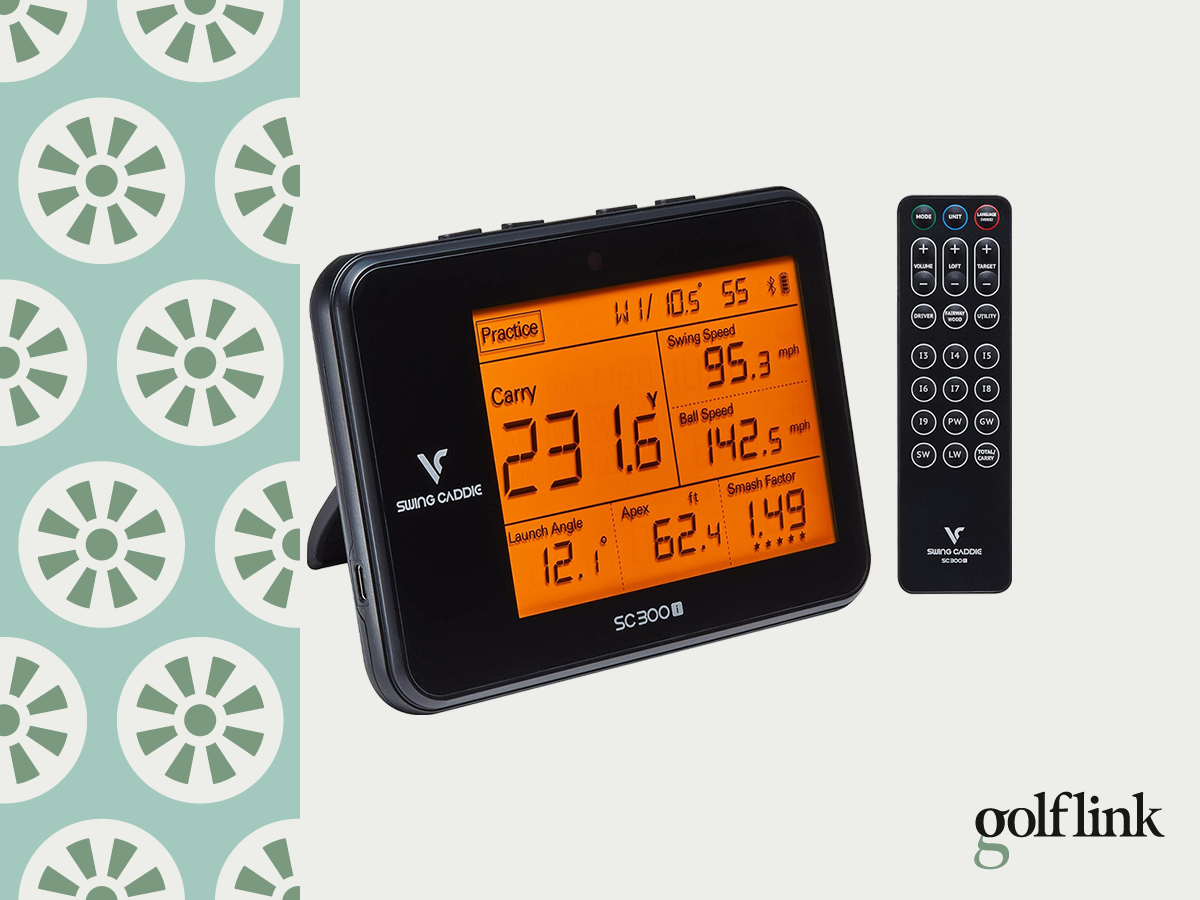
Voice Caddie is another company to consider when it comes to budget radar-based launch monitors. The premium model from this Korean-based company is the Swing Caddie SC4 Pro ($599), which goes way beyond distances and clubhead speed.
It can be paired with an iPad through the Voice Caddie app, which opens up a virtual range plus simulator capabilities (with an additional subscription cost).
Voice Caddie’s cheapest launch monitor is the Swing Caddie SC200 Plus ($279.99), which I found to be fairly reliable and consistent as it spit out the same basic numbers as Izzo’s Launch Mate Mini and the new Shot Scope LM1.
There’s also a middle-of-the-road offering, the SC300i ($399.99), which adds launch angle apex data. The SC4 Pro includes swing path and calculated spin numbers as well.
| SC200 Plus | SC300i | SC4 Pro |
| $279 | $399 | $599 |
| Swing speed | Swing speed | Swing speed |
| Ball speed | Ball speed | Ball speed |
| Smash factor | Smash factor | Smash factor |
| Carry distance | Carry distance | Carry distance |
| -- | Total distance | Total distance |
| -- | Launch angle | Launch angle |
| -- | Apex | Apex |
| -- | -- | Launch direction |
| -- | -- | Backspin |
PRGR Portable Launch Monitor
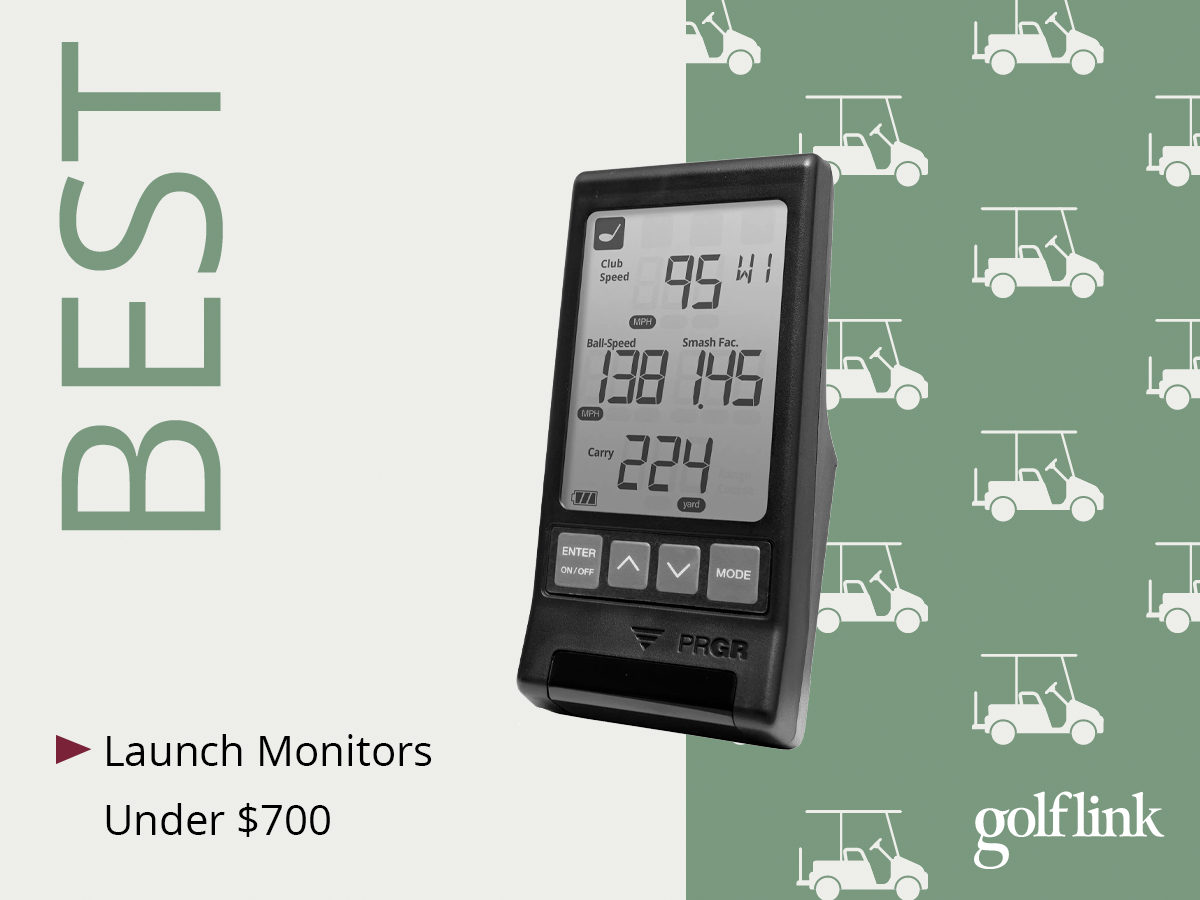
A lot of golfers have used the PRGR Portable Launch Monitor, which has been around for a few years and is now offered by SuperSpeed Golf. Because it can measure club speed without a ball, it’s a great tool for speed training.
At $229, it’s the most compact of all the launch monitors I’ve tried, and it measures the same five metrics as the Shot Scope LM1 and Izzo Launch Mate Mini.
It’s fairly simple to use, but I suspect not as easy to use as the LM1, nor is the display nearly as vibrant. That, as well as a slightly cheaper price, really makes the LM1 attractive.
| PRGR Launch Monitor Price & Data |
| $229 |
| Club speed |
| Ball speed |
| Smash factor |
| Carry distance |
| Total distance |
Blue Tees Rainmaker
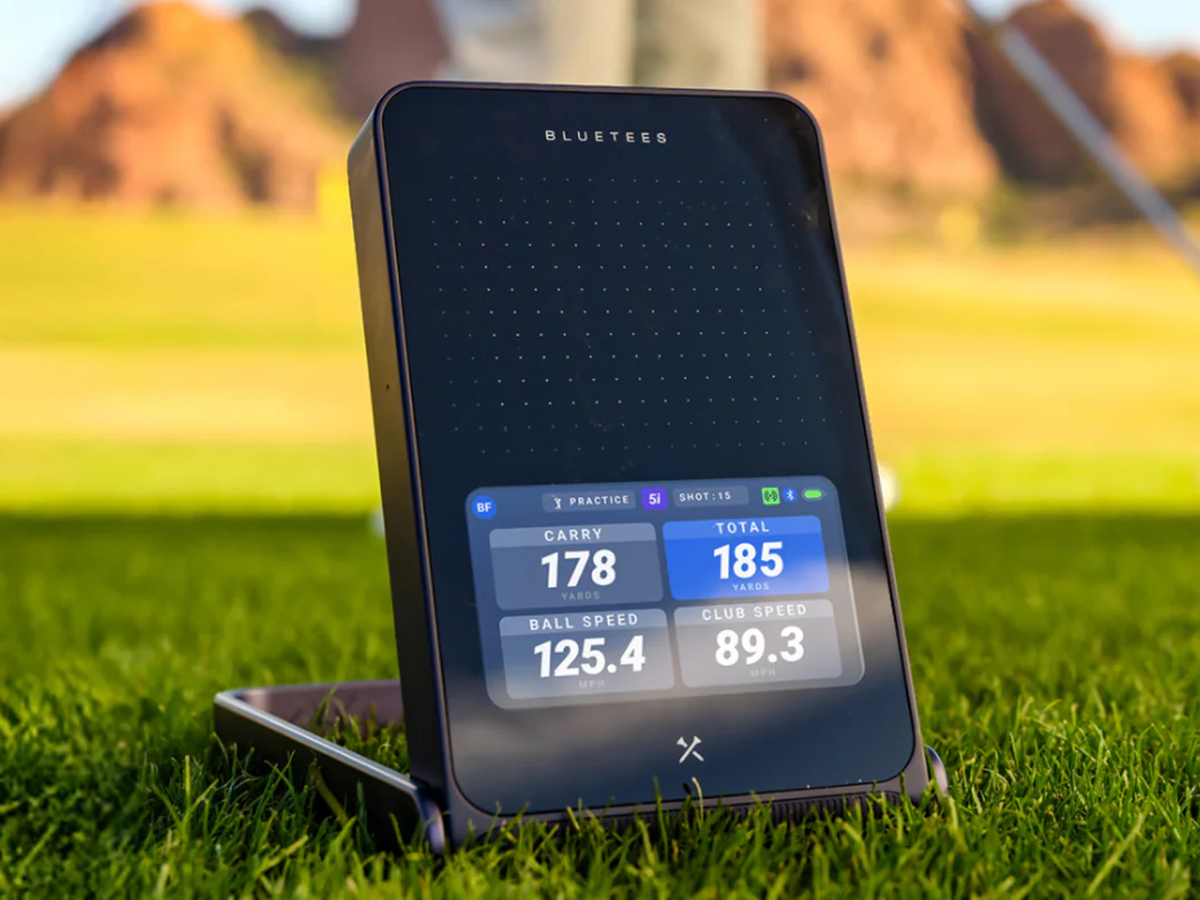
If you’re interested in the Swing Caddie SC4, however, you will probably want to take a look at another new mid-budget launch monitor on the horizon, the Rainmaker from Blue Tees Golf.
It was also introduced at the PGA Show. At $599, it is at a great price point considering everything it does.
The Rainmaker can be used both outdoors and indoors, and can function as a simulator.
It has a vibrant 4.3-inch TFT LCD that really shows up well outdoors and also comes with a remote. And, it can measure 20 performance metrics, including ball speed, club speed, carry distance, total distance, launch angle, launch direction, spin rate, smash factor, descent angle, hang time, and side metrics.
To take things to the next level, your session data flows into the same unified GAME player profile used across Blue Tees’ ecosystem, helping golfers turn practice sessions into long-term, on-course insight. That GAME profile pairs with Blue Tees’ latest rangefinders to deliver data-driven club recommendations on the course.
Not surprisingly, there’s been a lot of interest in the Rainmaker, with pre-orders going extremely well. It’s scheduled to go to market around Father’s Day.
| Blue Tees Rainmaker Price & Data |
| $599 |
| Club speed |
| Ball speed |
| Smash factor |
| Carry distance |
| Total distance |
| Launch angle |
| Launch direction |
| Backspin |
| Side total* |
| Descent angle* |
| Side* |
| Attack angle |
| Apex time* |
| Landing speed* |
| Apex |
| Spin axis |
| Side spin |
| Club path |
| Hange time* |
| Landing spin* |
| *available through Launch App only |
Pros and Cons of Budget Launch Monitors
Pros:
- Affordability: Today’s units start at around 1% the cost of top-tier units
- Portable: Most easily fit in your golf bag so you can easily use them on the range or course
- Connectivity: Many of today’s budget launch monitors connect with other devices to offer on-course club recommendations and detailed game-tracking
- Options: With budget launch monitors ranging from $200 to $700 with various levels of technology and data, you can choose what price and data package fits your needs
Cons:
- Precision: Budget radar-based units lack the precision of top-tier radar and camera based units
- Subscriptions: Many budget units require a paid subscription to unlock certain features. Although others, like Shot Scope LM1, are completely unlocked out of the box.
You might be asking how companies like Shot Scope, Izzo, and Voice Caddie can make a launch monitor so affordably.
All of them are radar-based and use different algorithms to calculate some of their metrics. Adding a camera and more sophisticated software would make them more expensive.
Rapsodo does just that (it can even show video of the clubhead and ball at impact, which is super valuable), for a few hundred more dollars.
Shopping for budget-friendly launch monitors is truly a “you get what you pay for” situation.
If you’re willing to shell out more than $25,000, you can get a Trackman 4, which is the ultimate solution used by tour players all over the world as well as clubfitters, teaching professionals and indoor golf studios and leagues.
For use both indoors and outdoors, you can put together an incredible simulator setup with it as well. Its accuracy and metrics are unquestioned. Plus, it comes with a vast array of stunning games, challenges, and simulations.
So it’s understandable that at literally 1% of that cost, today’s budget launch monitors come with some limitations.
The manufacturers themselves are the first to concede that fact. Temper your expectations when you buy a $200 launch monitor. Do that, and you’ll be pleasantly surprised at what it can do.
“I think it’s one of those things where people go into that category with high hopes,” says Jon Sherman, the founder of Practical Golf, whose newsletters, website, and podcasts are all about helping golfers get better and how technology can aid in that pursuit. “But they are not going to get the same performance with something that costs thousands of dollars more."
Getting the Most Out of Your Budget Launch Monitor
Because they are radar-based and don’t use cameras, setup details on these radar-based monitors are crucial. You must follow the directions precisely and set it up in ideal conditions.
For example, I found that when using the Izzo outdoors on a mat, it was important to get the launch monitor level with the ball. I ended up using a small box under the unit, and even then, if there’s a valley between the mat and the monitor, the dip can contribute to some skewed readings.
You also have to adhere to the recommended distance behind the ball (which is usually five feet), and that it’s level and lined up exactly with your intended line. Izzo, for example, includes a tape measure in the package so you can get the distance exactly right.
Prepare to Launch
With all that said, most golfers can probably get by with a radar-only-based unit. Even if it’s not super accurate, the data is still relative. For example, one day you’re hitting your 7-iron 150 yards, and two months later you’re hitting it 165, it’s safe to assume you’ve made improvements.
And besides, using a launch monitor is fun. And having any kind of launch monitor while you practice makes you look like you know what you're doing.