Bone Valley: David McLay Kidd Joins Streamsong's Dream Team
How David McLay Kidd married the flavor of Streamsong to the fun of Gamble Sands
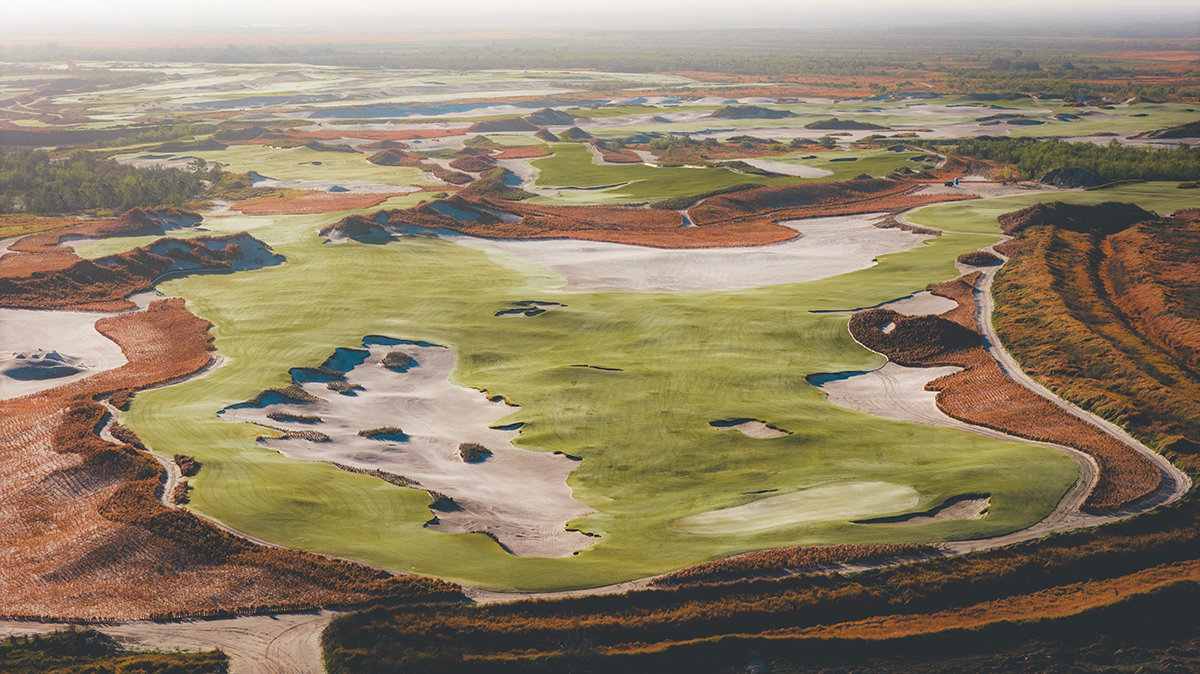
At Streamsong Resort in Florida, there’s a new kid in town, and it’s a renegade.
Streamsong’s first three courses follow a tidy color-coded naming convention – Red, Blue, Black. The fourth championship-length course at one of North America’s premiere golf destinations bucks that trend.
The official logo for Bone Valley, Streamsong's new David McLay Kidd course.
“This golf course, named after all of the fossils and relics that are here, is not going to be called a color; it’s going to be called Bone Valley,” said its creator, famed Scottish architect David McLay Kidd.
I previewed Bone Valley earlier this year on a tour with McLay Kidd. Indeed, Streamsong’s fourth act fits in with its siblings, complete with the windswept look, unusual landforms, and firm and fast playing conditions on the former phosphate mining site between Orlando and Tampa.
But Bone Valley is different. Some consider the site Streamsong’s best piece of land. That’s a high bar for a modern golf resort that’s sometimes called The Bandon Dunes of the East.
“I found so many shark teeth and fossilized wood, and all sorts of things,” McLay Kidd said. “It was an amazing experience.”
Streamsong’s Suite of Courses
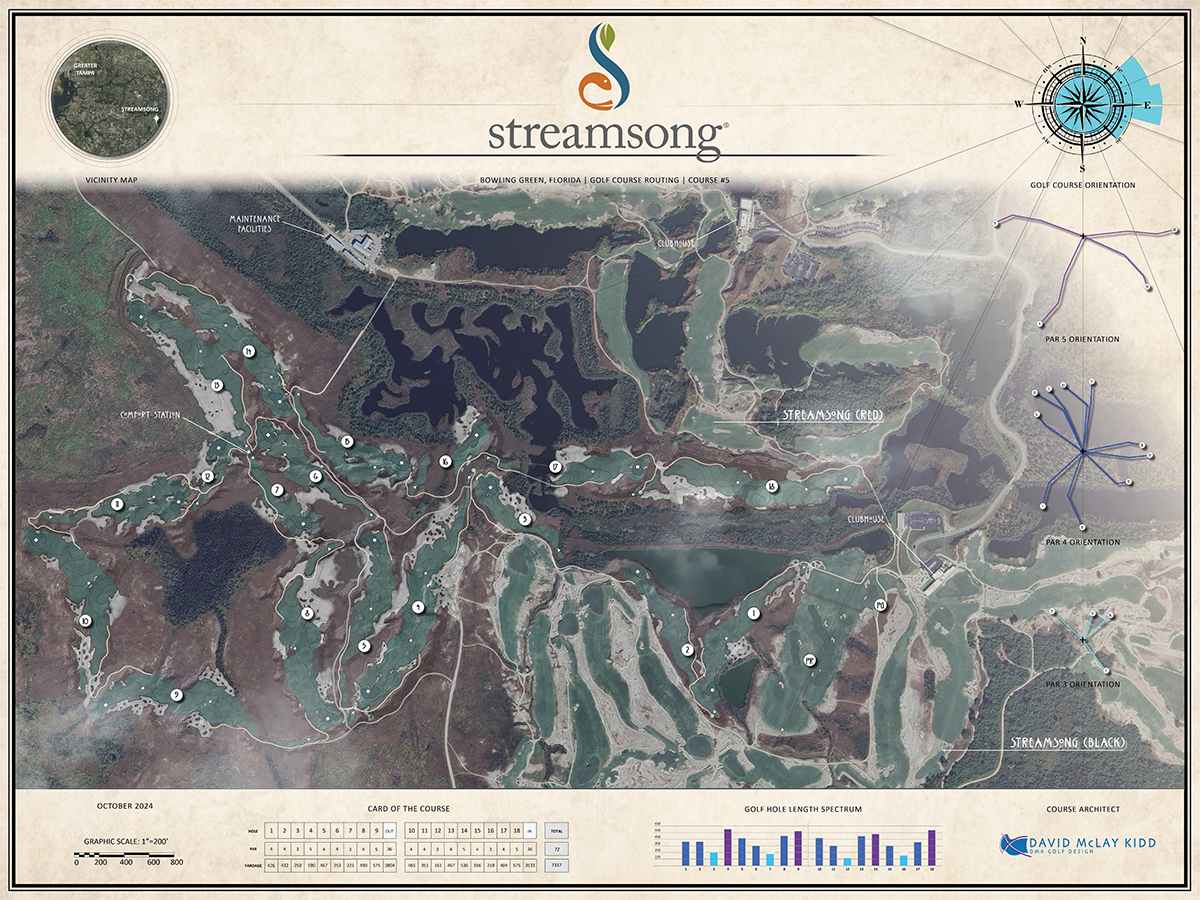
Bone Valley is officially the fifth golf course at Streamsong Resort when you count The Chain, a 19-hole short course that opened a couple years back.
The Chain and the three previous championship courses were created by three of the top design teams that this generation has seen.
Ben Crenshaw and Bill Coore crafted the Red Course, ranked 20th in Golf Digest’s America's Greatest Public Courses list. They’re also responsible for The Chain.
Tom Doak created the Blue (ranked 26th). Gil Hanse, arguably the hottest architect on the planet in the last decade or so, designed the Black Course (ranked 31st).
Streamsong also has a cool 2.5-acre putting course called Bucket, located next to The Chain.
Bucket and The Chain reflect the equipment used in the land’s mining operation.
The Most Famous Golf Course Designers
First Look at Bone Valley
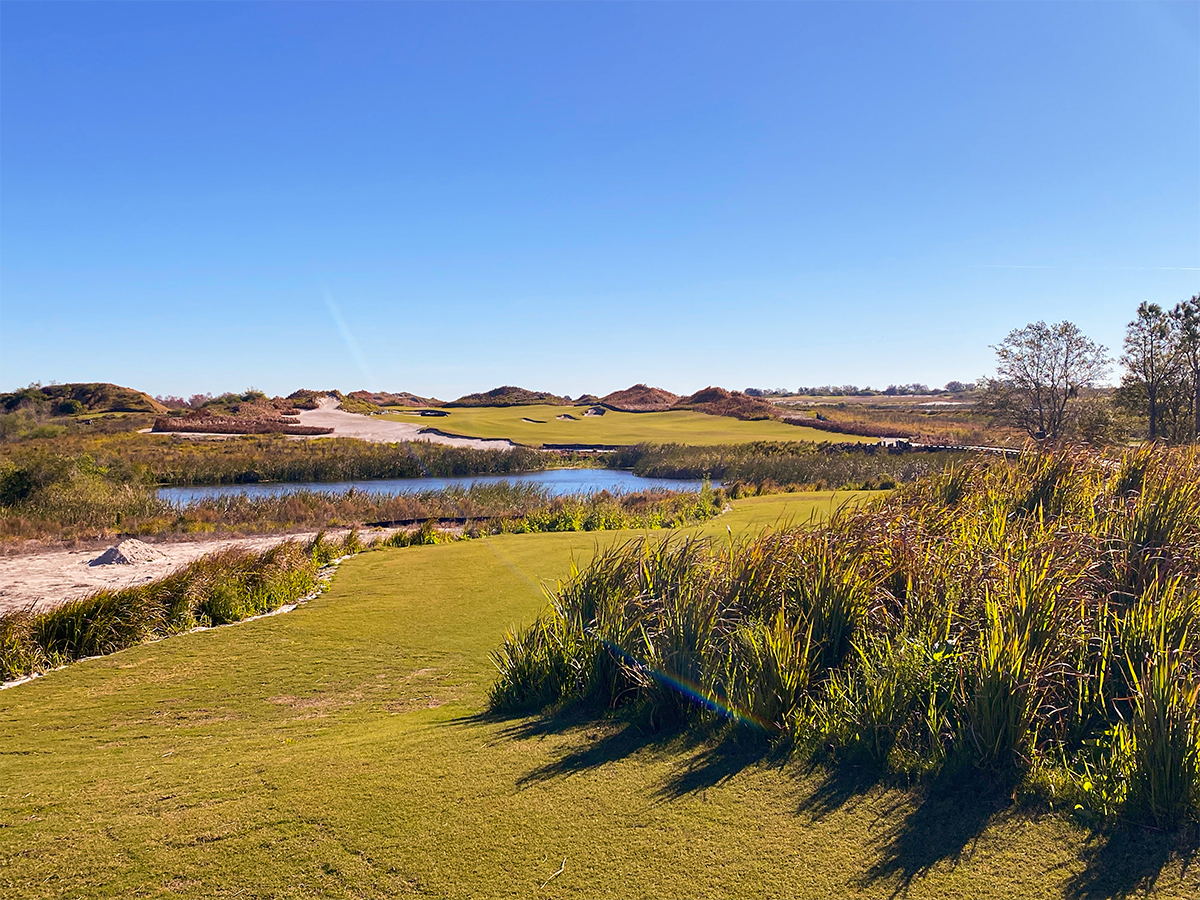
Preview of Bone Valley at Streamsong Resort during GolfLink's visit
Construction at Bone Valley began in February 2025. A good portion of the course was sodded, but much of it was sprigged, too, to save money and speed up construction and add more design features.
You could probably play it right now; that’s how far along it is. But Streamsong won’t open it until playing conditions are up to par with the other courses. There will be a soft opening this fall and a grand opening scheduled for January 2027.
For perspective, McLay Kidd also created the original course at Bandon Dunes more than 25 years ago. Doak also has a course at Bandon, Pacific Dunes, largely regarded as the second-best public course in the United States, right behind Pebble Beach Golf Links.
Coore and Crenshaw are the minds behind Bandon Trails, ranked 61st on Golf Digest's list. Hanse is the only architect on Streamsong’s resume who hasn’t designed a course at Bandon, which is regarded by many as America's best modern golf resort.
As good as the Red, Blue, and Black courses are, some have suggested the new McLay Kidd course might turn out to be the best one yet at Streamsong. It combines an incredible design with a large variety of holes on one of the best pieces of land on the property.
After touring Bone Valley with McLay Kidd, I can’t wait to play it. I can’t say yet that it will be better than the excellence that already exists at Streamsong, but it’s easy to see how it could become a favorite with many players.
If you polled golfers today who have played Streamsong, all three courses would get plenty of “best on site” votes. That’s because each course offers a different appeal.
Black is wide open with huge greens.
Red is incredibly scenic and requires more precision.
Blue reflects Doak’s love of the ground game and his minimalist philosophies.
There’s Only One Streamsong

David McLay Kidd speaks during his preview of Bone Valley
What makes Streamsong so unique?
Set on an old phosphate mining operation, it has a unique base and landforms. The sandy soil and remnants of the mining operations gave the eager and well-equipped architects blank canvases to be creative, and each of them took advantage.
Come for the golf, stay for the bass fishing, sporting clay shooting, dining, and full-service spa. The on-site lodge, offering 229-rooms, a modern architectural masterpiece conceived by Alberto Alfonso and designed to fit into its natural surroundings.
This fall, there will also be new Golf Cabins, ideal for groups or buddy trips. Each two-story cabin will feature private bedrooms and spacious common areas.

The golf, however, is what really stands out at Streamsong. The impending opening of Bone Valley will make it the only resort in the world to showcase these four great architects.
McLay Kidd was asked if he considered that elite company as competition.
“Absolutely,” he said. “I think what all of us have done really will only be judged over decades. It’s going to take 50 years to sort out who was the better. I just like to be in the conversation.
“I’m 58, so I’ve got more courses behind me than I’ve got in front of me. I desperately wanted to add something like this to my resume and legacy. And to have golfers be able to come here and, in the space of one golf trip, play the golf courses by the architects who have largely dominated this generation is really important.”
McLay Kidd had several sites to choose from for his new par-72, 7,337-yard course. He chose to have Bone Valley play out of the Black Clubhouse, using the existing practice facilities, rather than building a third clubhouse, parking lot, and range (the Red and Blue courses already share a separate clubhouse).
McLay Kidd landed on the layout after he drew the course 50 different times and 50 different ways.
“What I was looking for was trying to find a way to get a really good variety of holes, both in direction and length, and get this thing to be a real adventure, a roller coaster ride of tiny par 3s to giant par 5s, and every single thing in between, and every single direction on the compass,” he said.
To get the new course to start at the Black Clubhouse, one sacrifice had to be made. McLay Kidd routed the course over an underutilized three-hole practice area called The Roundabout.
Bone Valley Playability
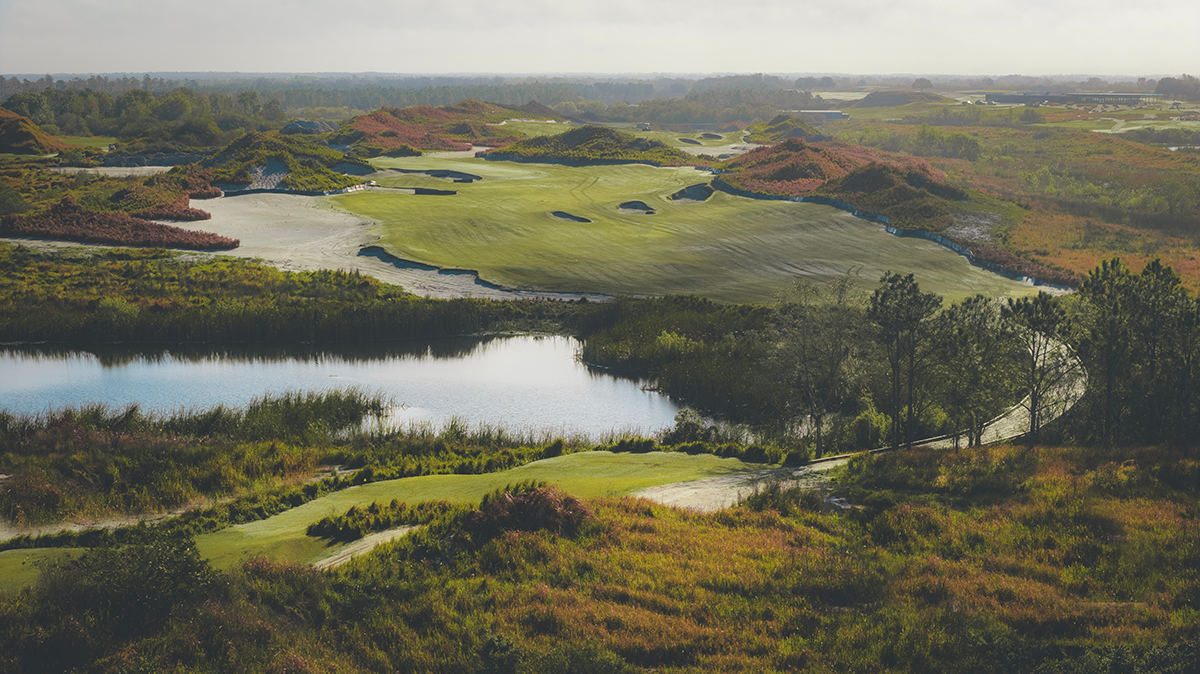
Bone Valley is generous off the tee, but if you want to score, you have to plan how you want to come into greens, which makes it a great second-shot course.
For example, there’s plenty of room right on the par-4 first hole, but if you go there, you might have a blind approach into the green that's protected by water. Not exactly ideal.
Both nines are interesting, but McLay Kidd favors the shorter back nine. Depending on the wind, they will always play differently. For example, sixth and 15th holes are both drivable par-4s for longer hitters. However, they are oriented differently, so they’ll rarely both be reachable on the same day.
Streamsong DNA
Still, McLay Kidd wanted to ensure Bone Valley fit in with the others, particularly the Red and Blue.
“When you get to the Red and the Blue, you see all the mine tailings. We had a degree of that on our site and I really wanted to embrace that,” he said. “Black didn’t have the mine tailings. I really wanted to celebrate that and use it as part of the visuals and the strategy.”
One of the biggest differences, however, is that Bone Valley has smaller, flatter greens. “I’ll let you have a two-putt, but you have to get there first,” he said.
“I wanted to bring the playability and fun and sort of whimsy we’ve kind of been known for,” he added. “This has the flavor of Streamsong married to the fun of Gamble Sands or Mammoth Dunes or any of these courses we’ve done the last dozen years. There are loads of kicker slopes, side banks, and backstops, and all sorts of ways a player could use a slower swing speed to get a ball to work towards the pin. And the higher swing speed flat bellies can still throw darts if they want.”
Another feature is based on something called the “overburden,” which was the material that had to be dug out of the ground to get to the phosphate below. It created mounds and landmarks, which Kidd used throughout the course.
“The overburden is what has made the golf really cool, and yet to the miners, it was just a nuisance in the way of getting to the phosphate,” he said.