Play it safe, avoid the big number, and move on. Don’t be a hero.
Go ahead and throw these principles of golf course management out the window when you tee it up on one of Robert Trent Jones’ 400-plus golf courses. The man made a name for himself by baiting the hero shot.
The Identity of a Robert Trent Jones Golf Course
Golf historians may debate whether or not Robert Trent Jones invented the "Heroic School" of golf course design, but we can all agree that RTJ is the man who made it cool.
Jones’ philosophy was that during a round of golf, players should have the opportunity to take on a risk in return for an easier next shot. He liked presenting risk in the form of a forced carry that, if executed, would yield a significantly better chance at birdie or par. He offered golfers unable or unwilling to take on that risk a safe option, but they’d still have a lot of work left.
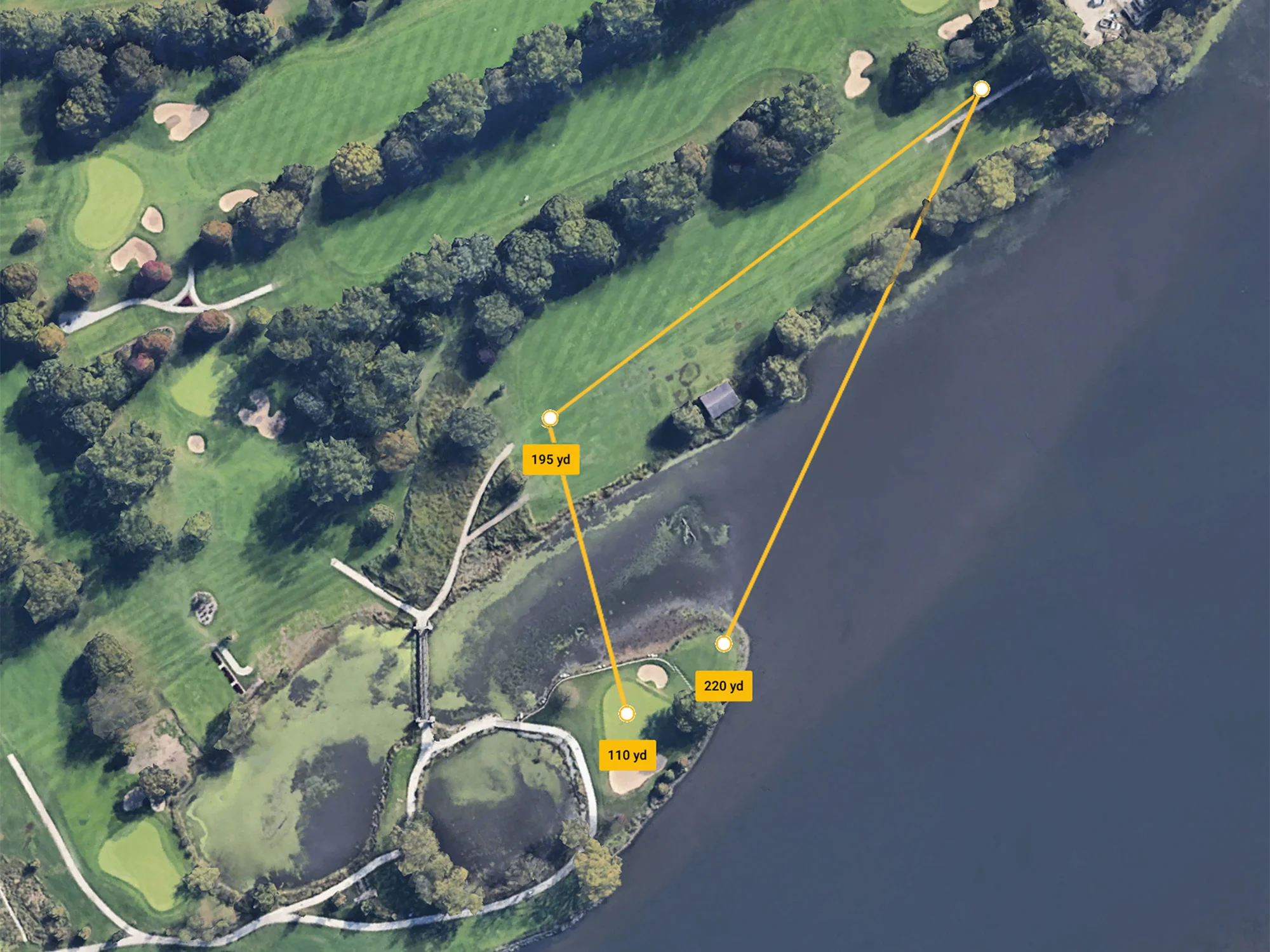
For example, take a look at the third hole at Pottawatomie Golf Course in St. Charles, Illinois (pictured above). The safe play is an easy, less than 200-yard layup off the tee, leaving somewhere around 110 yards to the middle of the well-protected peninsula green. Execute two fairly simple, straightforward shots, and you’re staring par in the face. But then there’s the hero shot.
If you’re willing to take on a little (or a lot) more risk, a 220-yard carry on the right line, just 25 yards farther than the ideal layup, brings an all-but-guaranteed birdie, and the possibility of an eagle into play. The risk? An inverted-cone-shaped landing area with water short, left, and right. The farther you hit it, the more dry land is available, but you'll also need to hit a lofted-enough club to clear the trees that frame the tee box.
The easy decision in stroke play may be to play it safe, but imagine a match play scenario when your opponent lays up off the tee. If you can just hit one good shot, you’ve stolen the hole. That’s the genius of Robert Trent Jones. That's the Heroic School of golf course design.
The Life of Robert Trent Jones Sr.
Robert Trent Jones Sr. was born in England in 1906, and moved to the United States with his parents at the age of five. He settled near Rochester, New York, and from there, golf was his compass.
He caddied at The Country Club of Rochester before becoming the golf professional at Sodus Bay Heights GC. Although he was the low-amateur at the 1927 Canadian Open, Jones was driven to do more than play golf courses, he was destined to design them.
Even today there aren’t many college programs devoted to training future golf course architects, can you imagine the prospects in the 1920s? Jones didn’t waver. He was accepted to Cornell University, where instead of taking advantage of one of the Ivy institution’s pre-built programs, he created his own.
His hand-crafted golf course design program included studies in landscape design, agronomy, art, horticulture, hydraulics, surveying, and economics. He even gained hands-on experience at Cornell, designing nine holes of the Cornell University Golf Course as a student. Jones went all-in on a career as a golf course architect. A metaphorical hero shot that yielded immeasurable rewards.
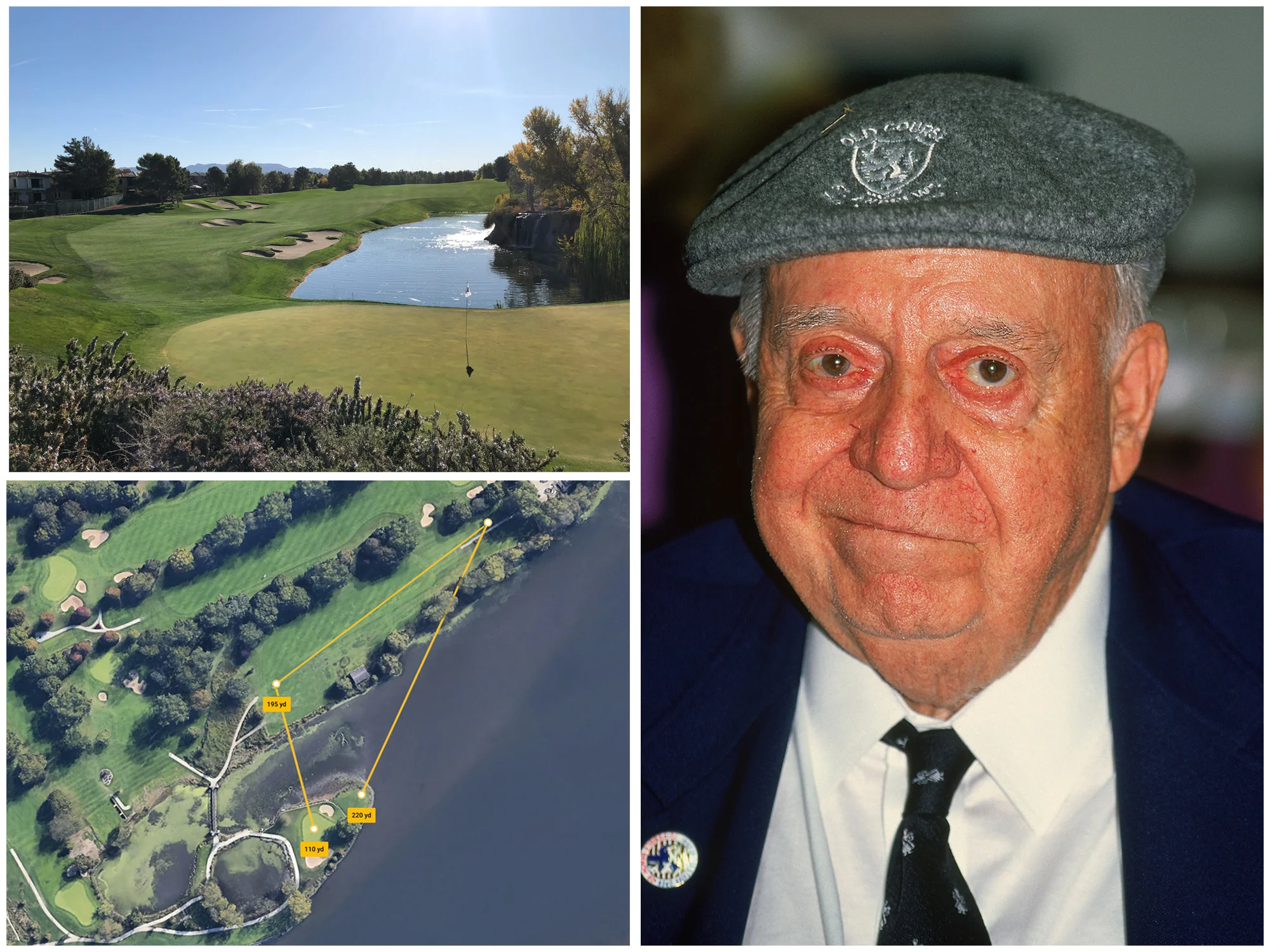
After graduating from Cornell in 1930, Jones got to work as a golf course architect. He designed courses with partner Stanley Thompson for a short period and began designing courses on his own later in the 1930s, an occupation he held until his final course, Southern Highlands, opened in Las Vegas in 1999. Robert Trent Jones died in June, 2000.
Robert and his wife, Ione Jones, had two sons, Robert Jr. and Rees, who both followed in their father’s footsteps as golf course architects.
Robert Trent Jones Course List
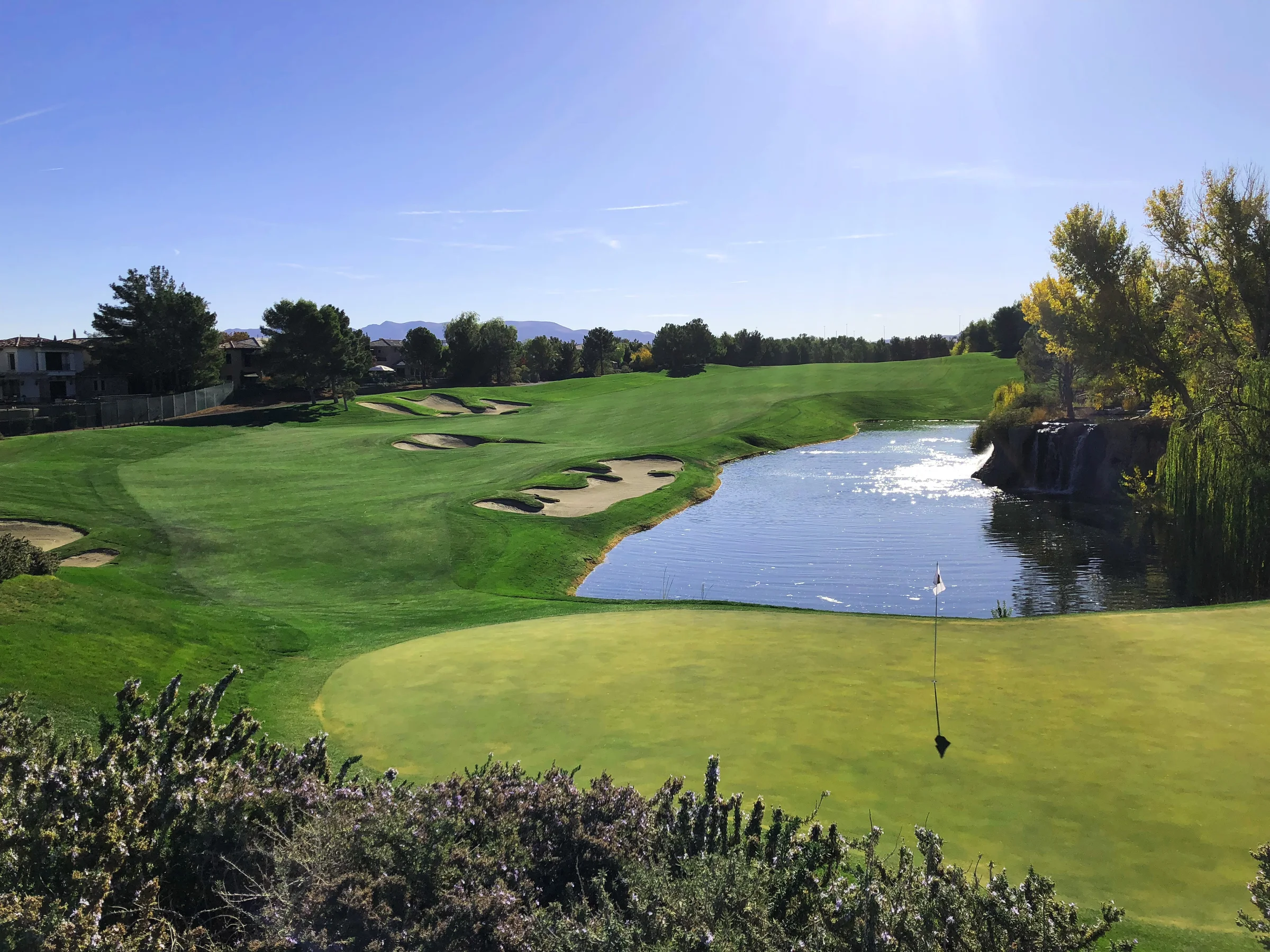
Robert Trent Jones Sr. has more than 400 golf courses to his design credit. He is well-known for the Robert Trent Jones Golf Trail in Alabama, a collection of golf public courses built in part to attract retirees to the Heart of Dixie.
Jones’ work, however, goes well beyond the trail that bears his name. He’s responsible for two holes at Augusta National and his resume includes some of the most famous golf courses in the United States, including The Olympic Club, Spyglass Hill, Stanford University Golf Club, Broadmoor Golf Club, Atlanta Athletic Club, Medinah, Congressional, Oakland Hills, Hazeltine and Bellerive.
| Course | Location | Year Opened |
| Midvale CC | Penfield, New York | 1931 |
| Durand Eastman GC | Irondequoit, New York | 1933 |
| Amsterdam Municipal | Amsterdam, New York | 1938 |
| Valley View GC | Utica, New York | 1939 |
| Punta Borinquen GC | Aguadilla, Puerto Rico | 1940 |
| Robert Trent Jones Golf Course | Cornell University, Ithaca, New York | 1940 |
| Hancock GC | Hancock, New York | 1941 |
| West POint GC | West Point, New York | 1946 |
| Peachtree GC | Atlanta, Georgia | 1948 |
| Chevy Chase CC | Chevy Chase, Maryland | 1948 |
| Sea Island GC | St. Simons Island, Georgia | 1949 |
| Baltusrol GC (Lower) | Springfield, New Jersey | 1952 |
| Olympic Club (Lake) | San Francisco, California | 1954 |
| Old Warson CC | St. Louis, Missouri | 1955 |
| Portsmouth CC | Portsmouth, New Hampshire | 1957 |
| Point O'Woods Golf & CC | Benton Harbor, Michigan | 1958 |
| Shady Oaks CC | Fort Worth, Texas | 1958 |
| Yellowstone CC | Billings, Montana | 1958 |
| Clube de Golfe de Brasília | Brasilia, Brazil | 1960 |
| Bellerive CC | Town and Country, Missouri | 1960 |
| Firestone CC (South) | Akron, Ohio | 1960 |
| Wilmington CC (South | Wilmington, Delaware | 1960 |
| Pauma Valley CC | Pauma Valley, California | 1961 |
| Turtle Point Yacht and CC | Killen, Alabama | 1961 |
| Hazeltine National GC | Chaska, Minnesota | 1962 |
| Royal Ka'anapali GC | Lahaina, Maui, Hawaii | 1962 |
| Interlachen CC | Minneapolis, Minnesota | 1962 |
| Griffith E. Harris GC | Greenwich, Connecticut | 1963 |
| North Hills CC | Manhasset, New York | 1963 |
| Burning Tree Club | Bethesda, Maryland | 1963 |
| Broadmoor GC (7-14 holes, West) | Colorado Springs, Colorado | 1964 |
| Hominy Hill GC | Colts Neck, New Jersey | 1964 |
| Real Club de Golf de Sotogrande | Cadiz, Spain | 1964 |
| Centre Hills CC | State College, Pennsylvania | 1965 |
| Seven Oaks GC | Hamilton, New York | 1965 |
| The Wigwam Resort GC | Litchfield Park, Arizona | 1965 |
| Rancocas GC | Willingboro, New Jersey | 1966 |
| Spyglass Hill | Pebble Beach, California | 1966 |
| Madeline Island GC | La Pointe, Wisconsin | 1967 |
| Mission Viejo CC | MIssion Viejo, California | 1967 |
| Atlanta Athletic Club | Duluth, Georgia | 1967 |
| Las Birsas GC | Marbella, Spain | 1968 |
| Montauk Downs | Montauk, New York | 1968 |
| Stanford University Golf Club | Palo Alto, California | 1968 |
| University of Georgia GC | Athens, Georgia | 1968 |
| Fairview CC | Greenwich, Connecticut | 1969 |
| Firestone CC (North) | Akron, Ohio | 1969 |
| Lyman Meadow GC | Middlefield, Connecticut | 1969 |
| Greenville CC (Chanticleer) | Greenville, South Carolina | 1970 |
| Port Royal GC | Southampton, Bermuda | 1970 |
| Princeville GC | Hanalei, Kauai, Hawaii | 1970 |
| Crag Burn GC | East Aurora, New York | 1971 |
| Alpine Bay GC | Alpine Bay, Alabama | 1972 |
| Bel-Air CC | Los Angeles, California | 1974 |
| Valderrama GC | Cadiz, Spain | 1974 |
| El Bosque GC | Valencia, Spain | 1975 |
| Gordon Lakes GC | Fort Gordon, Georgia | 1976 |
| CC of North Carolina (Dogwood) | Pinehurst, North Carolina | 1980 |
| CC of North Carolina (Cardinal) | Pinehurst, North Carolina | 1981 |
| Kananaskis Country GC | Kananaskis, Alberta, Canada | 1983 |
| Quinta da Marinha Golf Resorts | Cascais, Portugal | 1984 |
| Masterpiece at Treetops Resort | Gaylord, Michigan | 1987 |
| Metedeconk National GC | Jackson, New Jersey | 1987 |
| MetroWest GC | Orlando, Florida | 1987 |
| Robert Trent Jones Golf Club | Gainesville, Virginia | 1991 |
| Adare Golf Club | Limerick, Ireland | 1995 |
| Southern Highlands GC | Las Vegas, Nevada | 1999 |
| Augusta National GC (11th & 16th Holes) | Augusta, Georgia | 1947, 1950 |
| Oak HIll (East) | Rochester, New York | 1955, 1967 |
| Congressional CC (Blue) | Bethesda, Maryland | 1959, 1964 |
| Crumpin-Fox Club | Bernardston, Massachusetts | 1978, 1989 |
| Medinah CC (1 & 3) | Medinah, Illinois | 1991, 1994 |
| Cacapon Resort | Berkeley Springs, West Virginia | |
| Luisita Golf and CC | Tarlac City, Philippines | |
| Marshes GC | Ottawa, Canada | |
| Panther Valley CC | Allamuchy, New Jersey | |
| River Shore Estats & Golf Links | Kamloops, British Columbia, Canada | |
| Speidel Golf Club (Jones) | Wheeling, West Virginia | |
| St George's GC | St George's, Bermuda | |
| The Greens at North Hills | Sherwood, Arkansas | |
| The Legends CC | Eureka, Missouri | |
| The Springs GC | Spring Green, Wisconsin |