
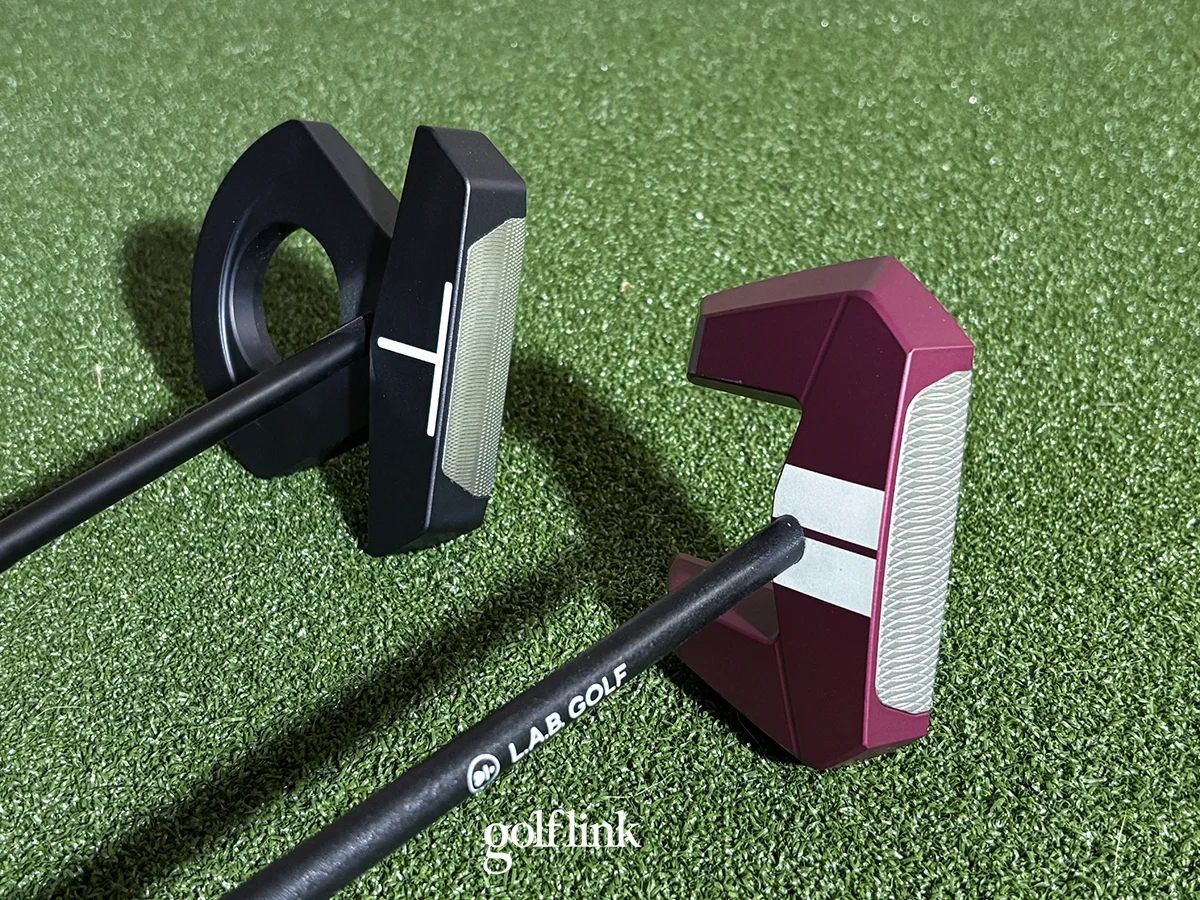
After testing the new L.A.B. MEZZ.2i, I felt that its sibling the DF3.i delivered superior stability, but I wanted to put the two putters head to head to see if the data supported that hunch. So I rolled 100 putts between the two putters.
I have good news and bad news. The good news is I have plenty of data. The bad news is that it can’t pick a winner.
Over 50 putts per putter, the DF3.i and MEZZ.2i split every category 3-2. Their average overall scores – straight from PUTTR’s head-to-head putter scoring – were 12.88 to 12.90. By my count, that's too close to call.
But a tie doesn't mean the test was a waste. Here's what’s inside those 100 putts, what they couldn't determine, and how I'd choose between these two L.A.B. putters anyway. Because after all, the devil is in the details.
Quick Answer: Which Is Better, the DF3.i or the MEZZ.2i?
In my testing, neither. The MEZZ.2i finished a hair ahead on PUTTR's overall score and won three of five runs, but the DF3.i made two more putts (38 vs. 36 out of 50). Both putters use Lie Angle Balance technology, both have a stainless steel insert, and both cost $499 stock or $599+ custom. The choice comes down to shape, alignment markings and personal preference.
How I Tested
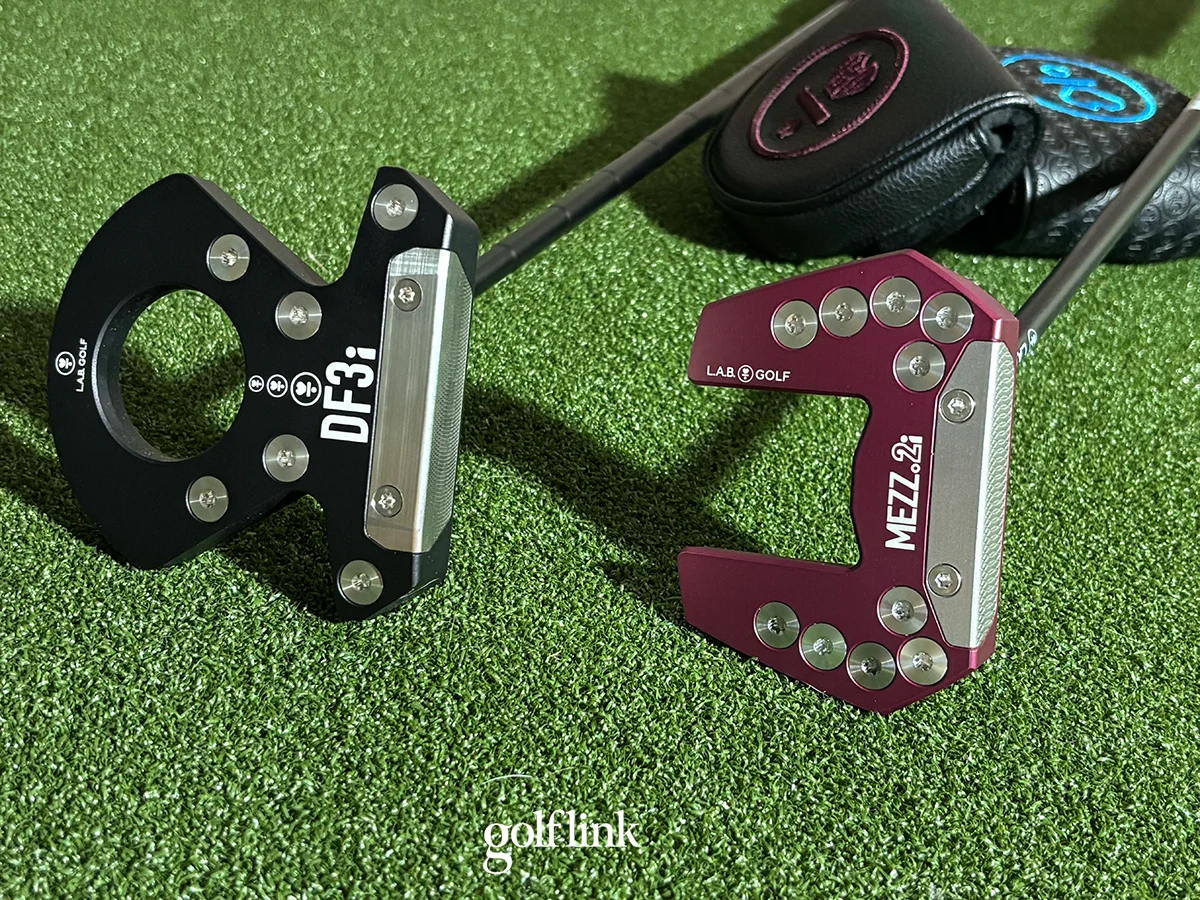
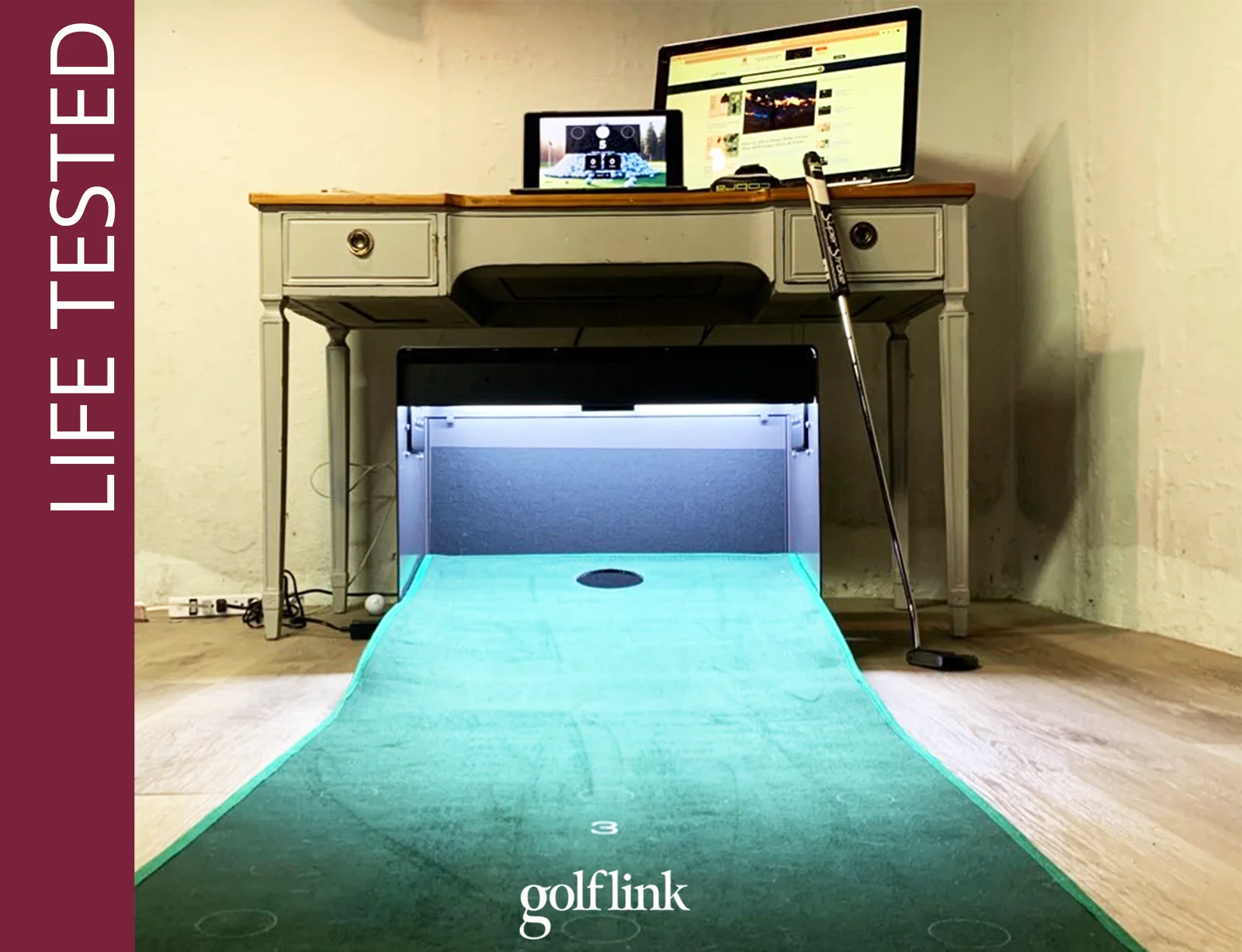
I used the head-to-head putter comparison in PUTTR, the smart putting green, to test these two putters head to head. The test tracks more than make or miss. PUTTR scores accuracy, pace, pace consistency (how much your speed varies from putt to putt) and line consistency (how much your start line varies), then rolls everything into one score.
It's built specifically to compare putters with data, so despite pondering ways I could improve the test, I decided against it, opting to let PUTTR provide the final results. I ran the test five times to collect a large enough sample size to find any advantages of either putter.
The head-to-head test:
- Putts: 10 putts per putter from 4 to 10 feet, including straight, left-to-right and right-to-left putts
- Test: Five head-to-head tests, for 50 putts per putter and 100 putts total
- Warm-up: One practice head-to-head (20 putts total) with the same two putters before I collected any data
- Ball: TaylorMade TP5x, with no alignment line
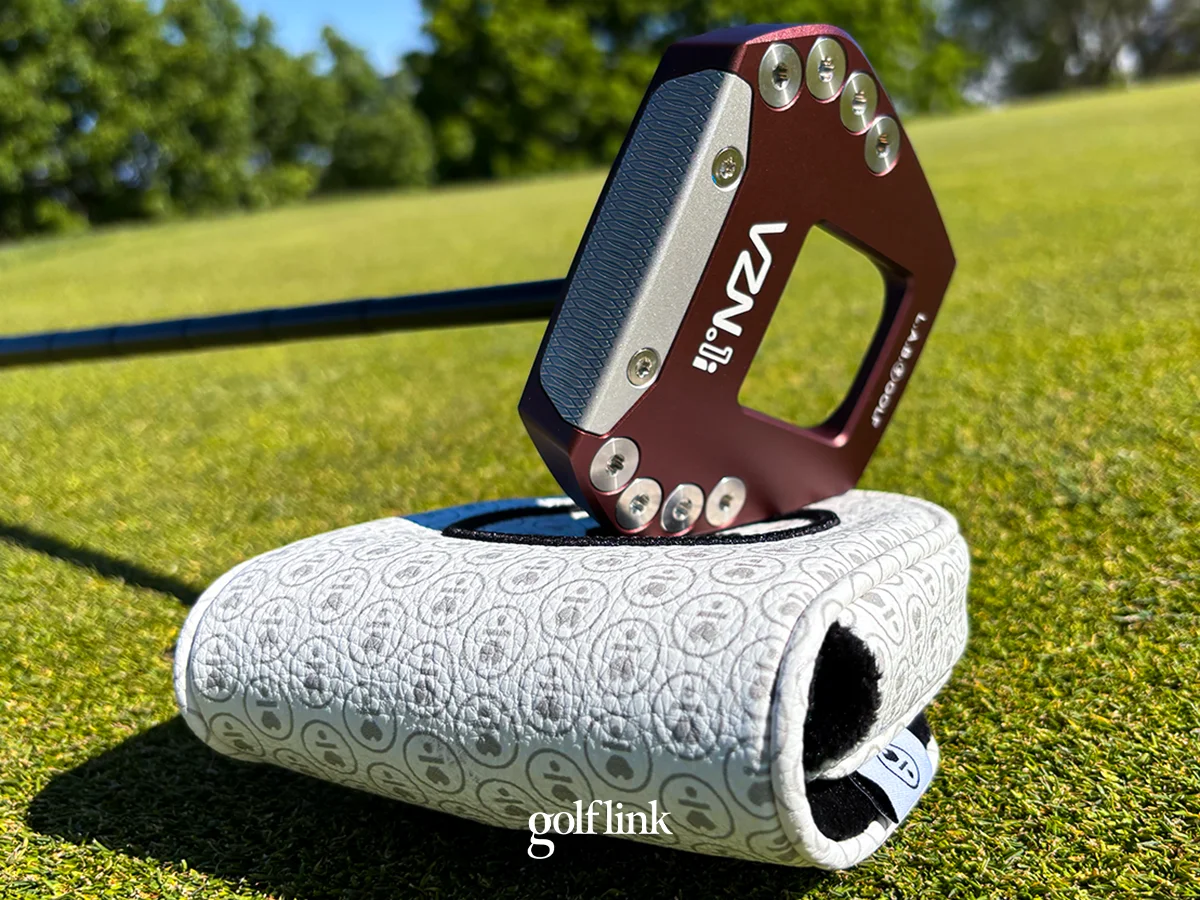
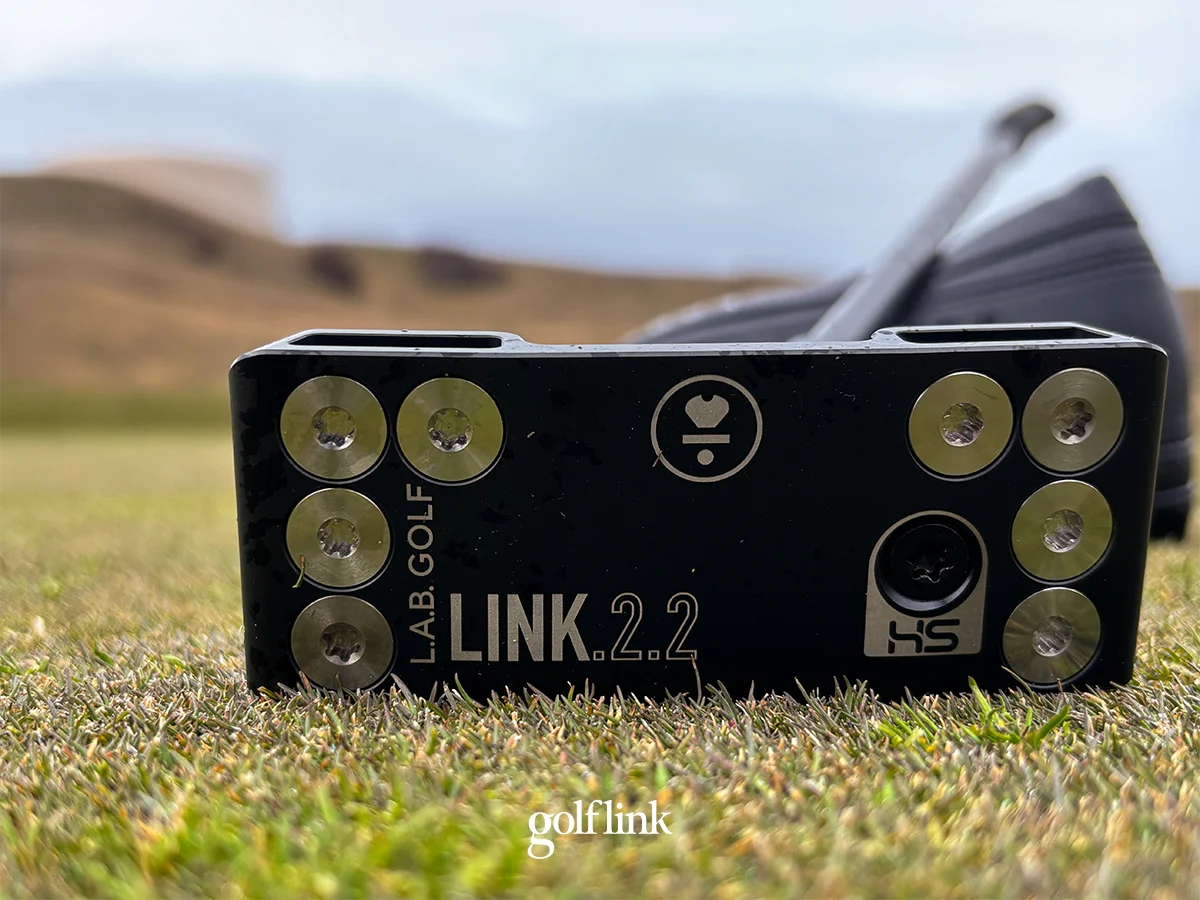
- Putters: L.A.B. DF3.i vs. L.A.B. MEZZ.2i
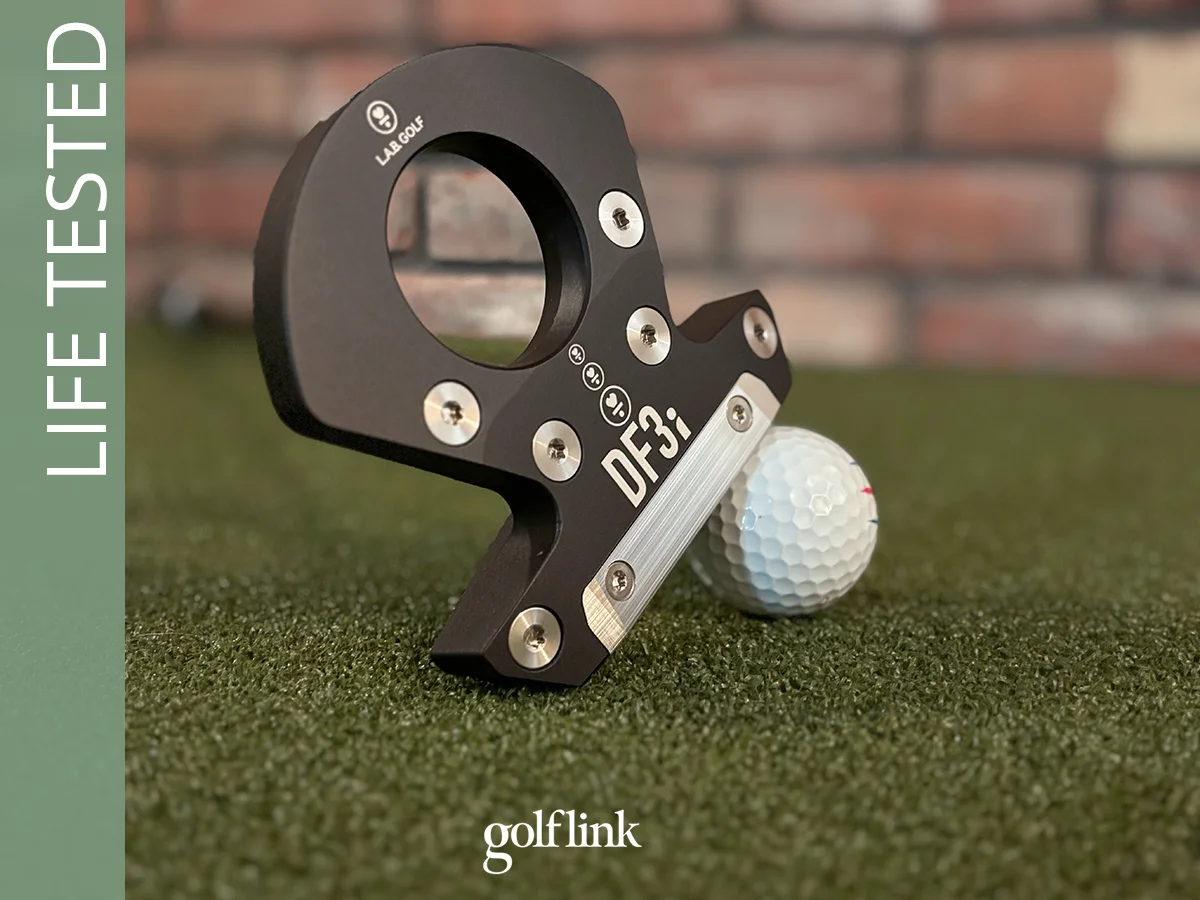
- Price: $499 stock / $599+ custom
- Face: Stainless steel insert
- Head shape: Mallet (non-traditional)
- Lie Angle Balance (zero torque): Yes
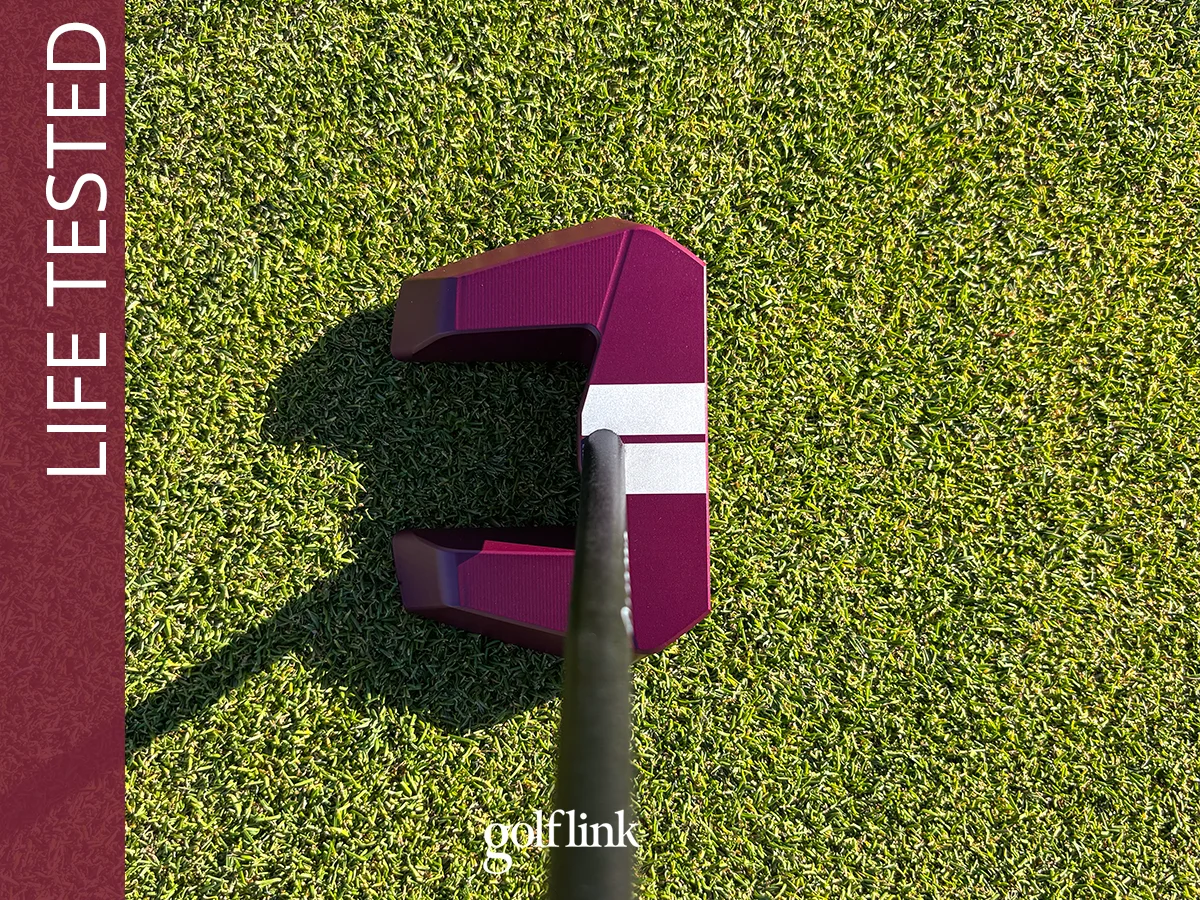
- Price: $499 stock / $599+ custom
- Face: Deep fly-milled 303 stainless steel insert
- Head shape: Fanged mid-mallet
- Lie Angle Balance (zero torque): Yes
Data: The Head-to-Head Results
Test | DF3.i | MEZZ.2i | Winner (Score) |
Putts made | 38 of 50 (76%) | 36 of 50 (72%) | DF3.i (3-2) |
Score | 12.88 | 12.90 | MEZZ.2i (3-2) |
Accuracy | 4.40 | 4.56 | MEZZ.2i (3-2) |
Pace | 8.48 | 8.34 | DF3.i (3-2) |
Pace consistency (lower is better) | 10.8 | 9.4 | MEZZ.2i (3-2) |
Line consistency (lower is better) | 14.0 | 11.9 | MEZZ.2i (3-2) |
Make Percentage: Slight Edge DF3.i
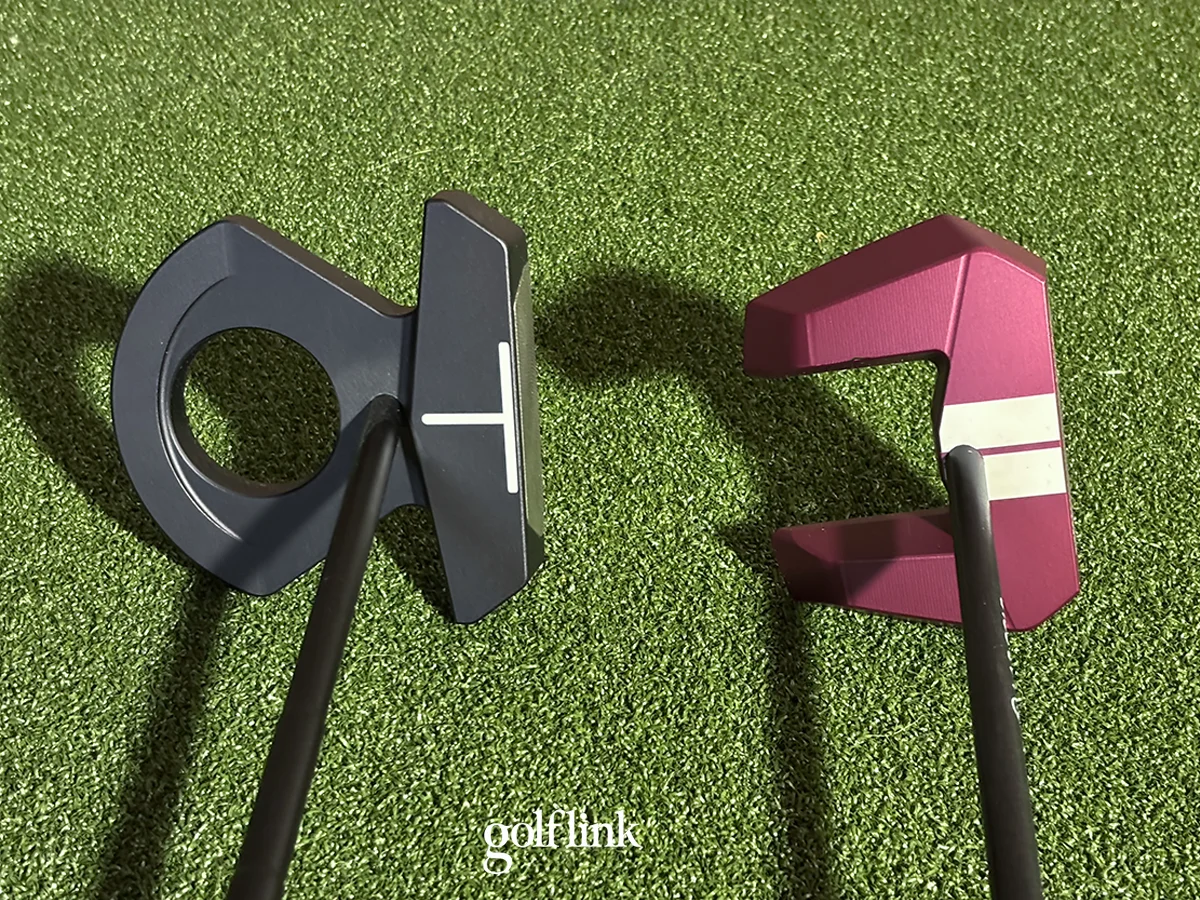
The DF3.i made 38 of 50 putts, and the MEZZ.2i made 36. That's two putts. Muddying the result is the fact that DF3.i posted both the best test (9 of 10) and the worst (6 of 10). With the MEZZ.2i, I made 7 or 8 putts in every single test.
The DF3.i's two extra makes out of 50 putts could easily be luck. I wouldn't pick a winner based on that result alone.
Accuracy: Slight Edge MEZZ.2i
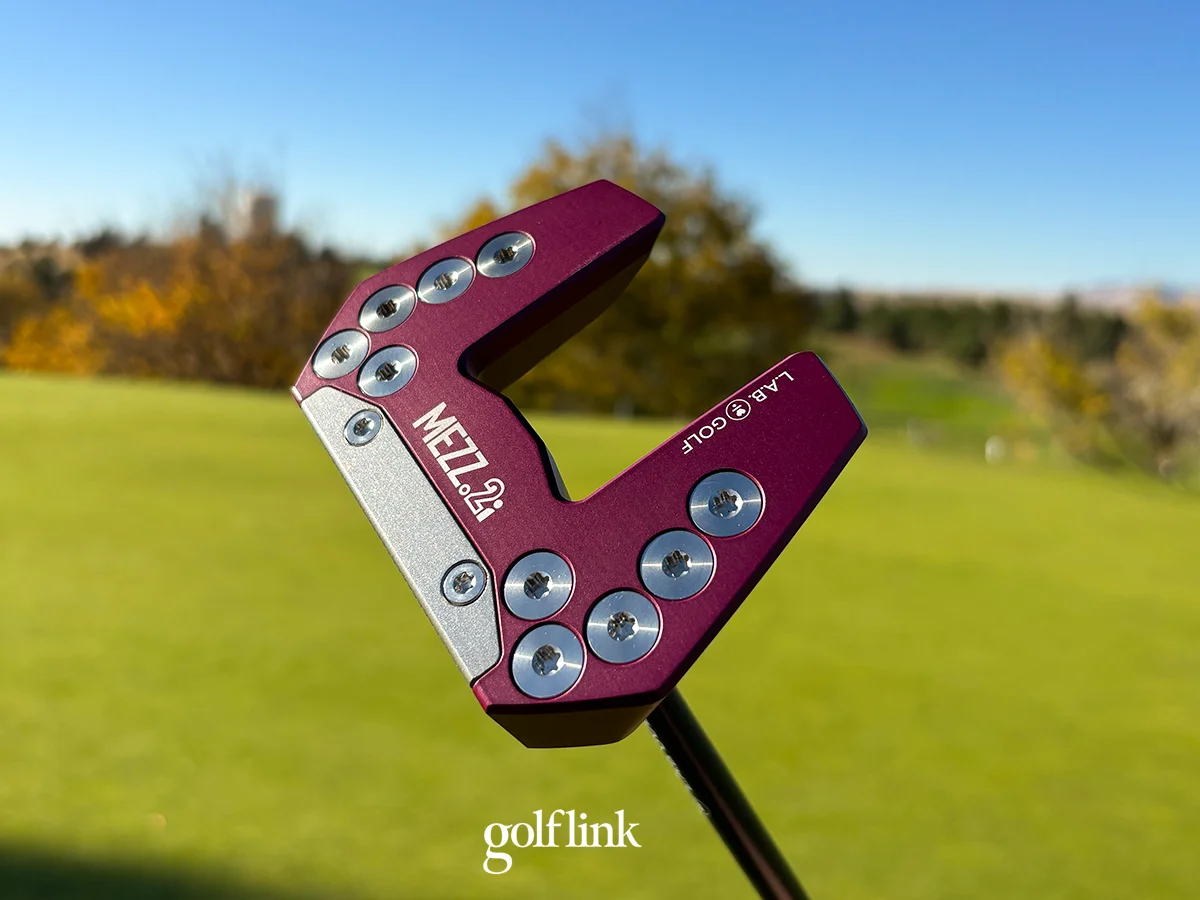
PUTTR measures where the ball falls into the hole, and uses that information to create an accuracy score. Think of the cup as a 360-degree circle (it is, after all) and every degree you stray away from dead center – even on made putts – dings the accuracy score.
With the MEZZ.2i, my accuracy score averaged 4.56 after 50 putts, a slight edge over my performance with the DF3.i (4.40). MEZZ.2i won the head-to-head accuracy battle in three of the five tests, but the gap is small.
Speed: Tie
PUTTR's pace numbers were nearly identical (8.48 for the DF3.i vs. 8.34 for the MEZZ.2i). Pace consistency is a little more complicated. The MEZZ.2i turned in the better average (9.4 vs. 10.8 in/s), but one bad DF3.i test (21.4 in/s in test 1) dragged down its average. By median, the DF3.i was actually steadier (7.0 vs. 9.9). In other words, don't read much into this one. Neither putter demonstrated an advantage over the other in pace. They were both good overall. It comes down to the third putter (that’s you) to get the most out of what either putter can offer.
Line Consistency: Slight Edge MEZZ.2i
The closest thing to a pattern came in the line consistency test. The MEZZ.2i averaged ±11.9 to the DF3.i's ±14.0, and it had the better line consistency in three of five tests. It also had the two best individual tests (±6.9 and ±7.2) but also the single worst (±17.0), so it was streakier than the averages suggest.
I said the DF3.i felt like the more stable putter, and line consistency is the closest measurement PUTTR has to gauge stability, and the numbers didn't back up my feel.
Where My Gut and the Data Disagree
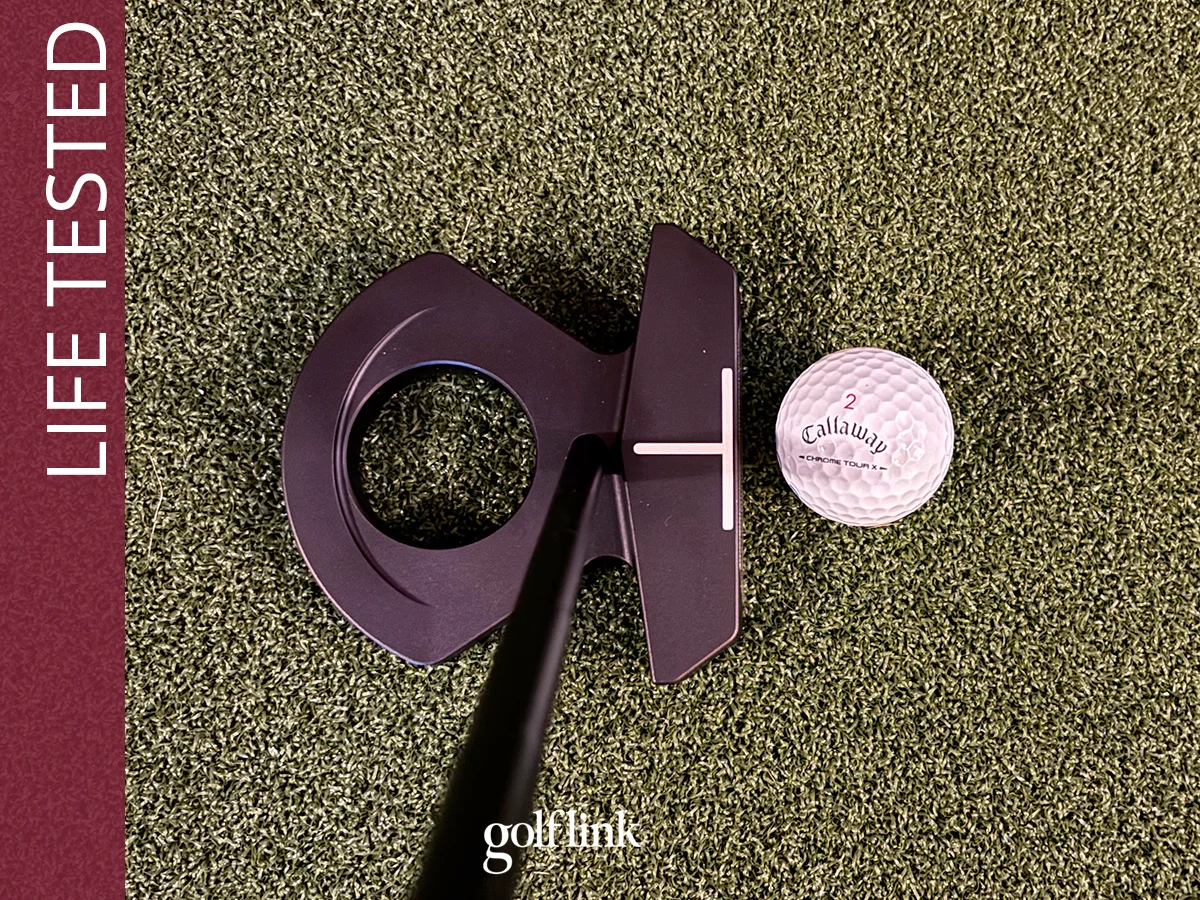
Here's what the data can't capture.
I felt more comfortable with the DF3.i in my hands. The setup felt more natural, I was more confident in its stability, and I felt like it agreed with my natural stroke a little more.
None of that shows up in the numbers. But it doesn't contradict them, either. PUTTR doesn't measure strike quality or mishits, it measures speed and accuracy, and how frequently you can get those things right.
Noteworthy Wildcard: Alignment Markings
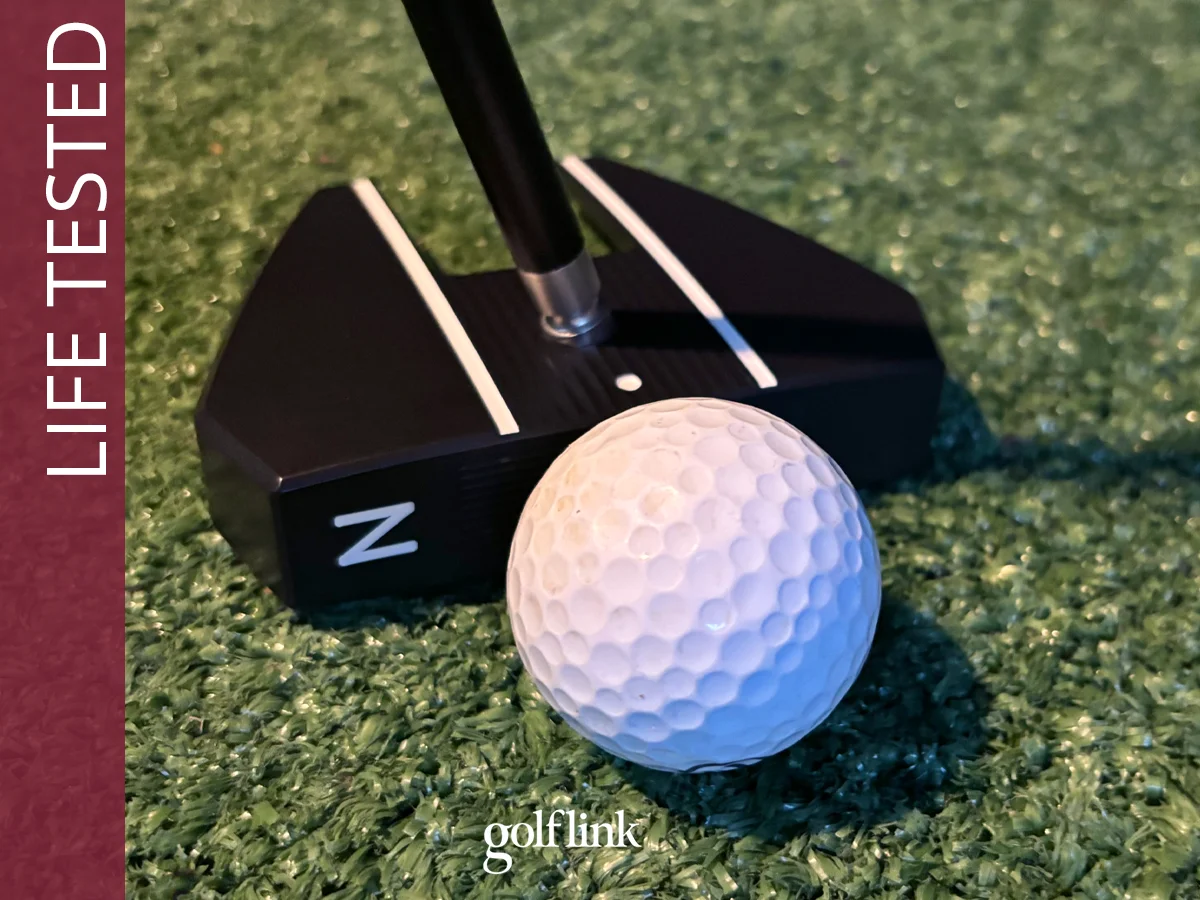
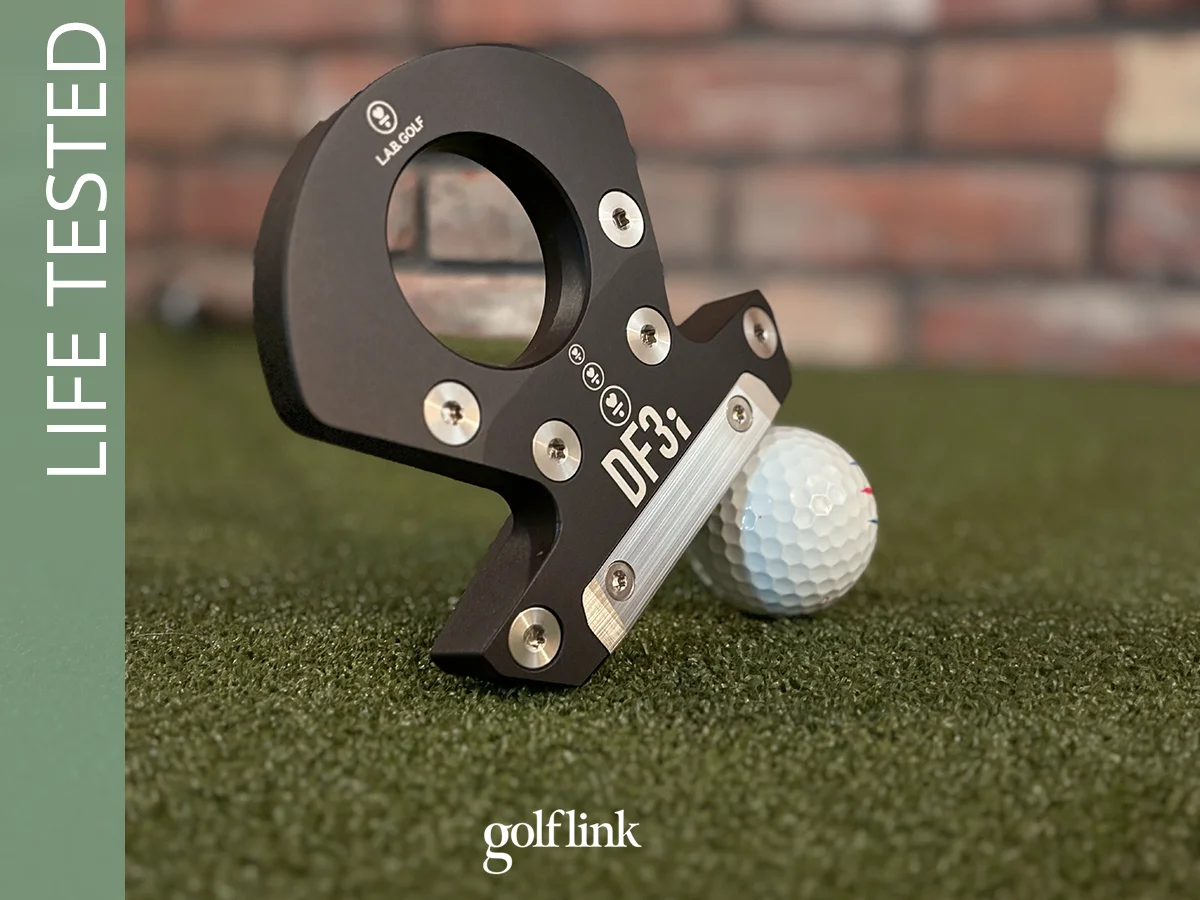
I used the same ball (a TP5x) and didn’t use the alignment line on it. It’s worth mentioning that the DF3.i and MEZZ.2i that I tested have different alignment lines. The DF3.i has a T marking and the MEZZ.2i has a racing-stripe marking (two thick lines with a thin line in between).
It’s reasonable to speculate that different alignment markings could account for some of the tiny differences in the data. The good news is that you can choose your preferred markings when you customize a L.A.B. putter, so you don't have to take mine.
DF3.i vs. MEZZ.2i: Which One Should You Buy?
I said earlier that our test didn’t produce a definitive answer, but in a way, that’s wrong. The clear takeaway is that – contrary to most golf equipment choices – you’re free to choose between DF3.i and MEZZ.2i with your heart, not your head.
They’re both incredibly stable. They’re both incredibly forgiving. They both have a nice, slightly firmer feel. As far as I can tell, neither one is particularly better than the other in any particular area. So choose the one you like looking at. Choose the one you want.
If you made me pick one, I'd pick the DF3.i, simply because I prefer the way it looks and feels at address, and I have a ton of confidence in its stability and forgiveness. But my data can't prove that it’s better.
L.A.B. DF3.i vs. MEZZ.2i FAQ
Is the L.A.B. MEZZ.2i better than the DF3.i?
Not in my testing. Over 100 putts from 4 to 10 feet, the two putters finished essentially tied. The MEZZ.2i had a slightly better average score (12.90 vs. 12.88) and the DF3.i made two more putts.
What's the difference between the L.A.B. DF3.i and MEZZ.2i?
Mostly shape and alignment markings. Both use Lie Angle Balance technology and a stainless steel insert, and both cost $499 stock or $599+ custom. The MEZZ.2i is a fanged mid-mallet. The DF3.i offers a counterbalanced version for $70 more.
Which one is more forgiving?
L.A.B. calls the DF3.i "irrationally forgiving on mishits." In my experience, both putters forgave well. I felt like the DF3.i held its distance a little better on mishits, but PUTTR's test doesn't measure mishits, so I can't back that up with data.
Does the DF3.i or MEZZ.2i have a softer feel?
Neither. Both have stainless steel inserts, which give a firmer feel and slightly more ball speed. L.A.B. recommends the original DF3 (no insert) for golfers who want a softer feel.
Making the Call
I wanted a winner, and 100 putts didn't give me one. That's the result.
The MEZZ.2i was slightly tighter on line. The DF3.i made two more putts. My gut says DF3.i, and my data says it’s a toss up.
Both are well-built, forgiving, zero torque putters that cost the same, so based on this test it simply comes down to personal preference.