How We Test Golf Rangefinders
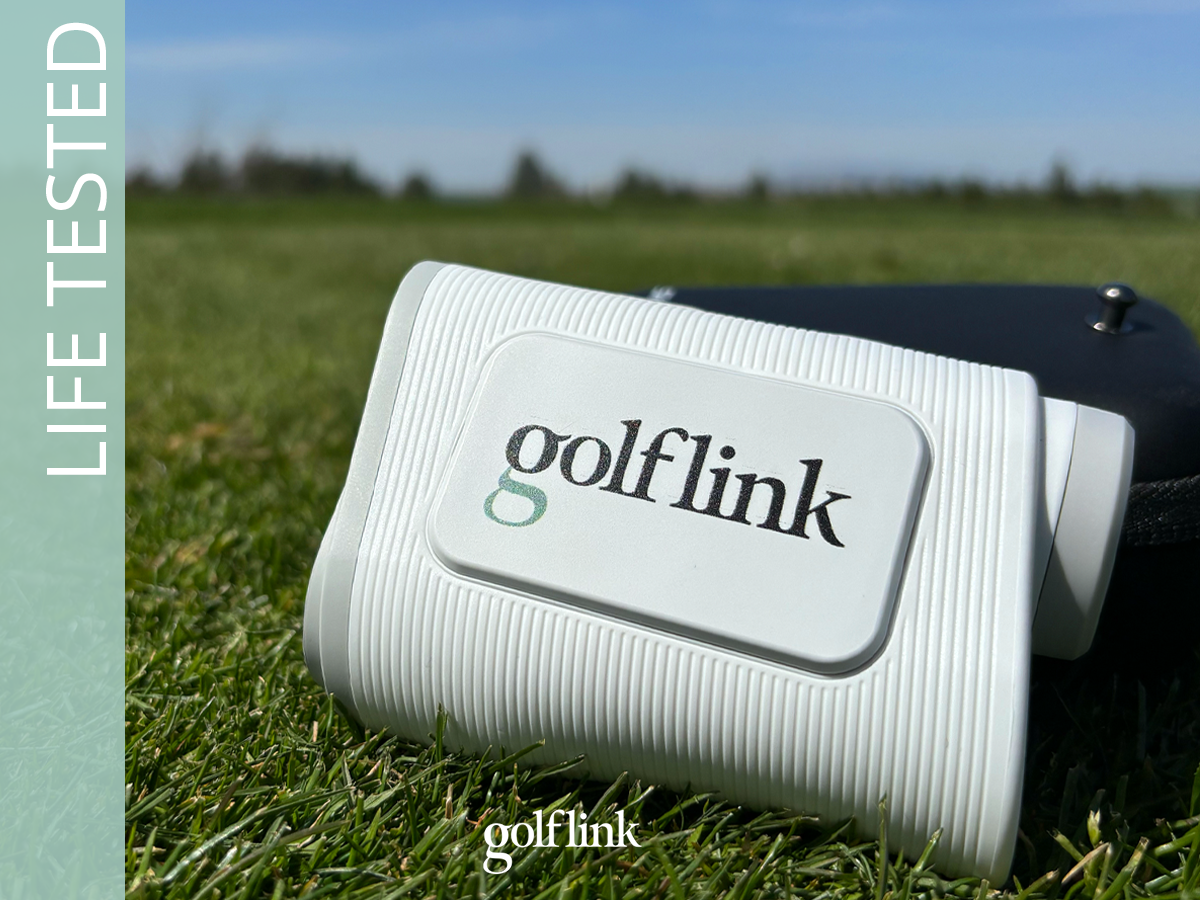
At GolfLink, we understand that choosing the perfect rangefinder is not as straightforward as it may seem. Still, it’s an important investment into your golf game that you want to get right the first time. That’s why every rangefinder we review goes through rigorous testing, both on the golf course and in a controlled environment. The data we collect creates a crystal clear picture of exactly how you can expect every rangefinder we test to perform.
Here’s exactly how we test, score, and compare every golf rangefinder that we review.
Rangefinder Selection
We test current model golf rangefinders from many of the most popular brands, paying close attention to incorporate units that offer standout and breakthrough features (like triangulation and built-in GPS).
By including rangefinders in all price ranges, you get honest and valuable feedback on performance gaps between budget and premium units, allowing you to make buying decisions based on your personal priorities.
Best Golf Rangefinders (Tested & Ranked)
Our Testing Process
Our rangefinder testing process includes testing in two capacities.
On-Course Testing
We test each unit on the golf course for a minimum of 18 holes, where we take detailed notes on convenience, features, magnet strength, optics and usability while gauging accuracy and speed.
Controlled Environment Testing
We also test each unit in a controlled, pre-measured environment to evaluate accuracy down to the inch and finalize our speed and optics ratings.
Accuracy Testing & What Our Scores Mean
We measure each rangefinder’s accuracy in a precisely calibrated environment where the true distance is known. Every unit is tested multiple times to calculate its average error, or how far off the measurements are from the known distance. We use this number to score each rangefinder’s accuracy from 1-10.
We publish these ranges to help you make informed buying decisions. Whether accuracy within a few yards is acceptable for your game, or you need down-to-the-inch accuracy, you can find which units work for you.
|
Score |
Average Error |
|
10 |
Within 1 foot |
|
9 |
1-2 feet |
|
8 |
Within 1 yard |
|
7 |
1-1.5 yards |
|
6 |
1.5-2 yards |
|
5 |
2-3 yards |
|
4 |
3-4 yards |
| 2 | 4+ |
Scoring & Weighting System
To give each rangefinder a performance score, we evaluate each unit in seven different categories and assign a score from 1-10 in each category.
Because some functions are more important than others, each category is weighted relative to its contribution to the unit’s overall performance. Here are the seven categories we consider, and how much each contributes to the rangefinder’s overall score:
- Accuracy: 30%
- Optics: 20%
- Ease of Use: 20%
- Features: 15%
- Speed: 10%
- Magnet: 5%
- Triangulation Accuracy: +5%
Once each rangefinder has a performance score based on the seven factors above, we compare the price of the unit to its performance score to give it a value rating. Then we use the performance score and value rating to determine each unit’s total score.
Bonus Feature: Triangulation Accuracy
We consider triangulation to be a bonus feature at this time. In order to reward units that offer triangulation (with favor to units with the most accurate triangulation) without punishing those that don’t, we score Triangulation as extra credit. Triangulation bonuses are based on accuracy, and worth up to an additional 5 percent of the total score. Triangulation accuracy is scored on the same accuracy scale outlined above, and for a unit to score a 5% bonus for triangulation, it must produce accuracy in triangulation mode within one foot.
Scoring Rubric & What We Test
In addition to accuracy, triangulation, and value, which are already outlined above, we score each rangefinder from 1-10 in the following categories:
|
Category |
What We Look For |
|
Optics |
Image clarity, brightness, and display readability |
|
Ease of Use |
Ergonomics, button layout, menu simplicity, and target locking intuitiveness |
|
Features |
Breadth and quality of useful features (not feature quantity for its own sake) |
|
Speed |
How quickly it locks onto targets |
|
Magnet |
Presence, strength, and placement of mounting magnet |
Here’s a general breakdown of our 1-10 scale. We may use more specific standards to rate individual categories.
- 10: Best-in-class. Outstanding in this category with zero meaningful drawbacks.
- 8-9: Excellent. Performs well with only minor trade-offs.
- 6-7: Good. Reliable but with some limitations.
- 5: Average. Gets the job done, but with compromises.
- 1-4: Below average. Issues significantly affect performance or enjoyment.
About Older Reviews
Our current testing methodology was established in 2025. We’re continually evaluating and refining our methods, and we note in each review whether the product was tested under this updated process.
Transparency & Independence
Most of the rangefinders we review are provided as samples by the manufacturers. These samples are not returned, which allows us to continue testing and comparing them to future models or as our testing protocols evolve.
Manufacturers do not receive review drafts prior to publication, and no company or affiliate relationship influences our scoring.
Receiving a sample never guarantees a positive review and has no impact on our testing and scoring methodology. Our testing and scoring process is transparent. Our priority is to serve you, the reader, the best possible information we can on how each unit performs, so you can make informed buying decisions.