Best Golf Balls of 2026 for Average Mid-Handicap Golfers
These golf balls are great for mid-handicappers because they perform and they're affordable
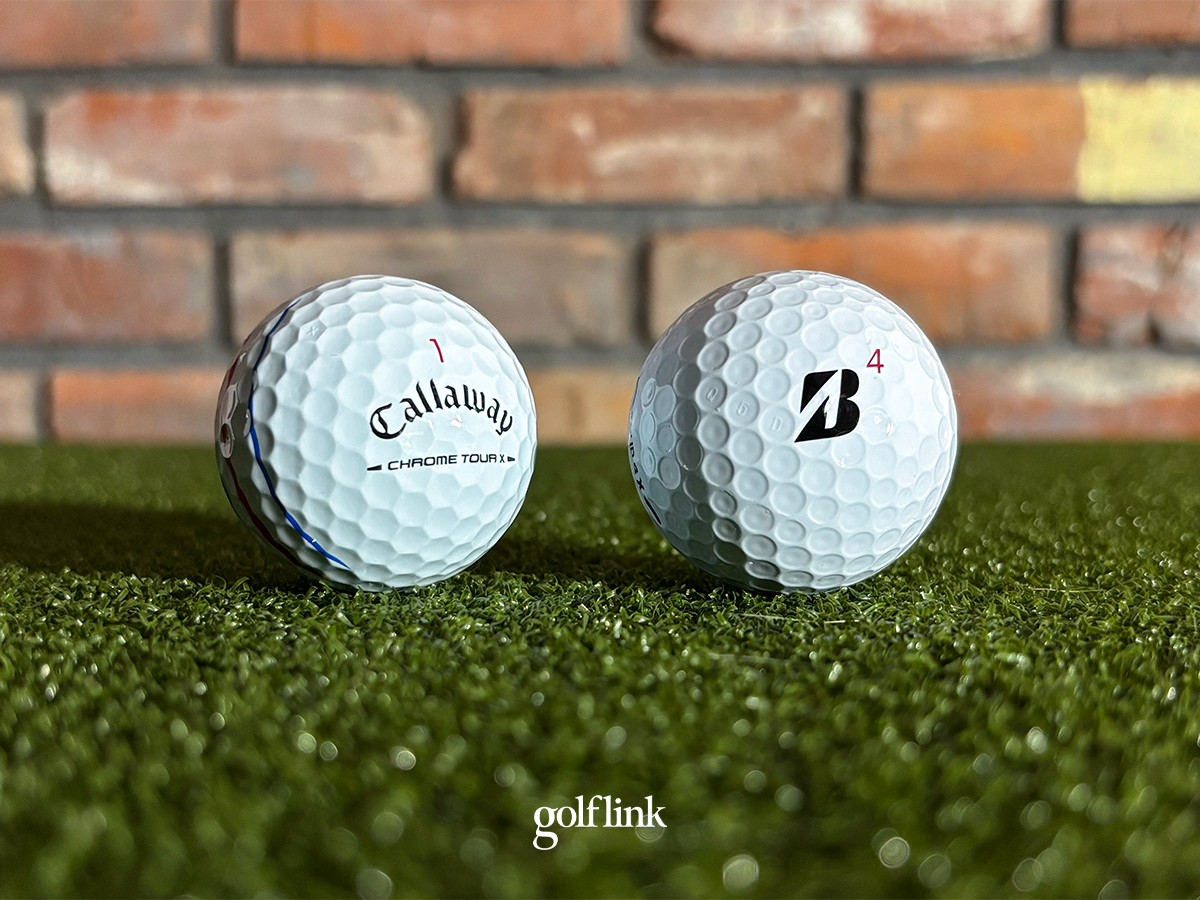
If you're a mid-handicapper — call it 10 to 20 — you're not shopping for the same ball as a scratch player, and you shouldn't be. You've got enough speed and consistency to actually use a premium ball's short-game spin, but you're likely not optimizing every last detail of your ball's performance the way a low-single-digit player might. What you need is a ball that holds greens when you catch one flush and still forgives you a little when you don't.
We tested 43 golf balls then sorted them by the characteristics that benefit mid-handicap players the most, with wedge control, distance, and stopping power carrying most of the weight.
Twelve balls made the cut. Here's how the best golf balls for mid-handicappers stack up.
How We Tested & Selected the Best Balls for Mid-Handicappers
We tested 43 golf balls for 2026 using the SkyTrak ST Max launch monitor and our published golf ball testing protocol. That means human swings, strict bands for swing speed and strike quality, and driver, 7-iron, and 50-yard testing. Then we translate that data into 1-10 scores for distance, stopping power, wedge control, accuracy, and value.
To find the best balls for average mid-handicappers, we started by cutting every ball that didn’t have a Wedge Control Score of 8.0 or higher, since that's the category mid-handicappers benefit from most but most often overlook. From there, we ranked the field using a weighted Mid-Handicap Score:
- 30% wedge control
- 25% distance
- 20% stopping power
- 15% accuracy
- 10% value
That weighting emphasizes the performance that actually helps the typical mid-handicapper's game — control inside 100 yards without costly tradeoffs.
Learn more about how we test golf balls and see the complete list of every ball we've tested.
The Definition of a Mid Handicap Golfer With Scores & Stats
Bridgestone Tour B X 2026
CHECK AMAZONCHECK DICK'S
Cover: Urethane
Construction: 3-Piece
Price: $54/dozen
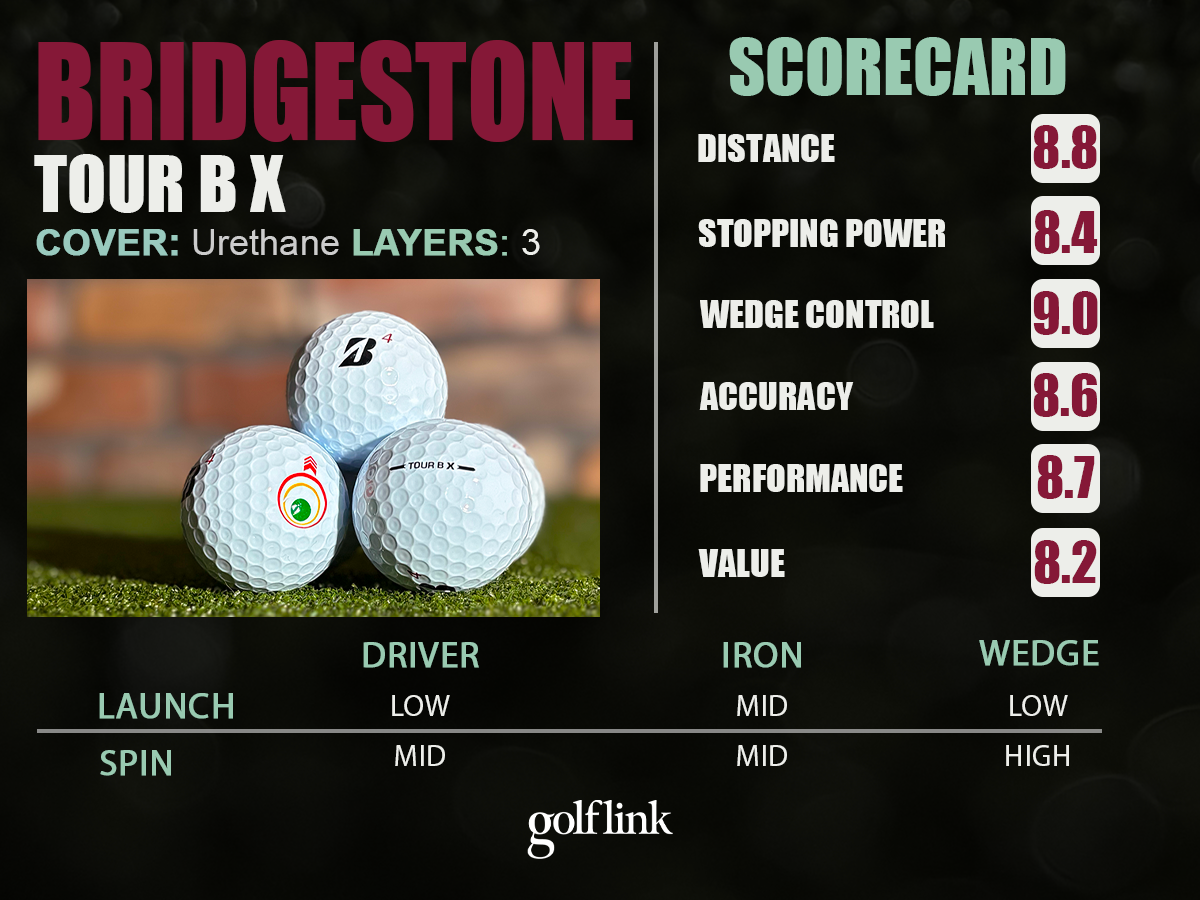
Bridgestone built Tour B X to add speed and distance without giving up control, and our test actually backs up those exact claims. Its 8.8 distance score trails only three balls on this list, and it backs that up with a 9.0 wedge control score and 8.6 in accuracy. It showed no weakness.
It's also the same ball Chris Gotterup has used to win three times on the PGA Tour in 2026.
Tour B X is for the mid-handicapper who doesn't want to choose between distance, control and accuracy. If we're honest, that suits most mid-handicappers. It's not the cheapest ball, and it doesn't have a bulk discount to lean on, but if you want that all-around performance, the price is fair.
Read our full Bridgestone Tour B X 2026 review here.
Callaway Chrome Tour X 2026
CHECK AMAZONCHECK DICK'S
Cover: Urethane
Construction: 4-Piece
Price: $57/dozen
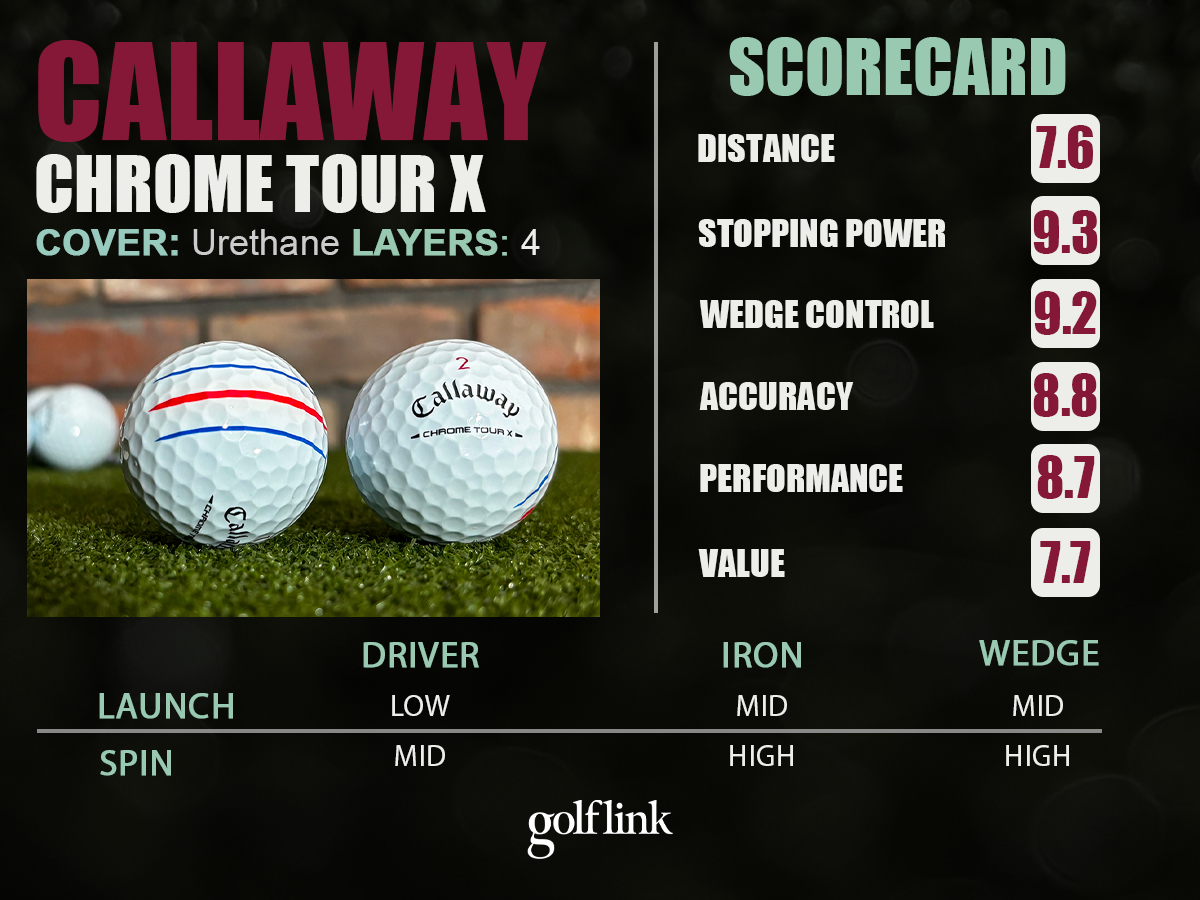
Callaway Chrome Tour X's calling card is stopping power. It posted a 9.3 in stopping power based on our iron test, the second-best mark of all 43 balls. It paired that with a 9.2 wedge control score, which landed inside the top five.
The kicker is that accuracy (8.8) held up just as well.
The one thing working against Chrome Tour X is distance (7.6), which lands in the middle of the field. That’s the tradeoff Callaway makes in order to squeeze maximum performance out of the scoring clubs.
Chrome Tour X is the ball for the mid-handicapper who values stopping approach shots on the number over an extra couple yards off the tee. If you already hit it plenty far but need a ball that stops on a dime from approach shots, Chrome Tour X does that better than almost anything else we tested.
Read our full Callaway Chrome Tour X 2026 review here.
Callaway ERC Soft
CHECK AMAZONCHECK DICK'S
Cover: Hybrid
Construction: 3-Layers
Price: $39/dozen
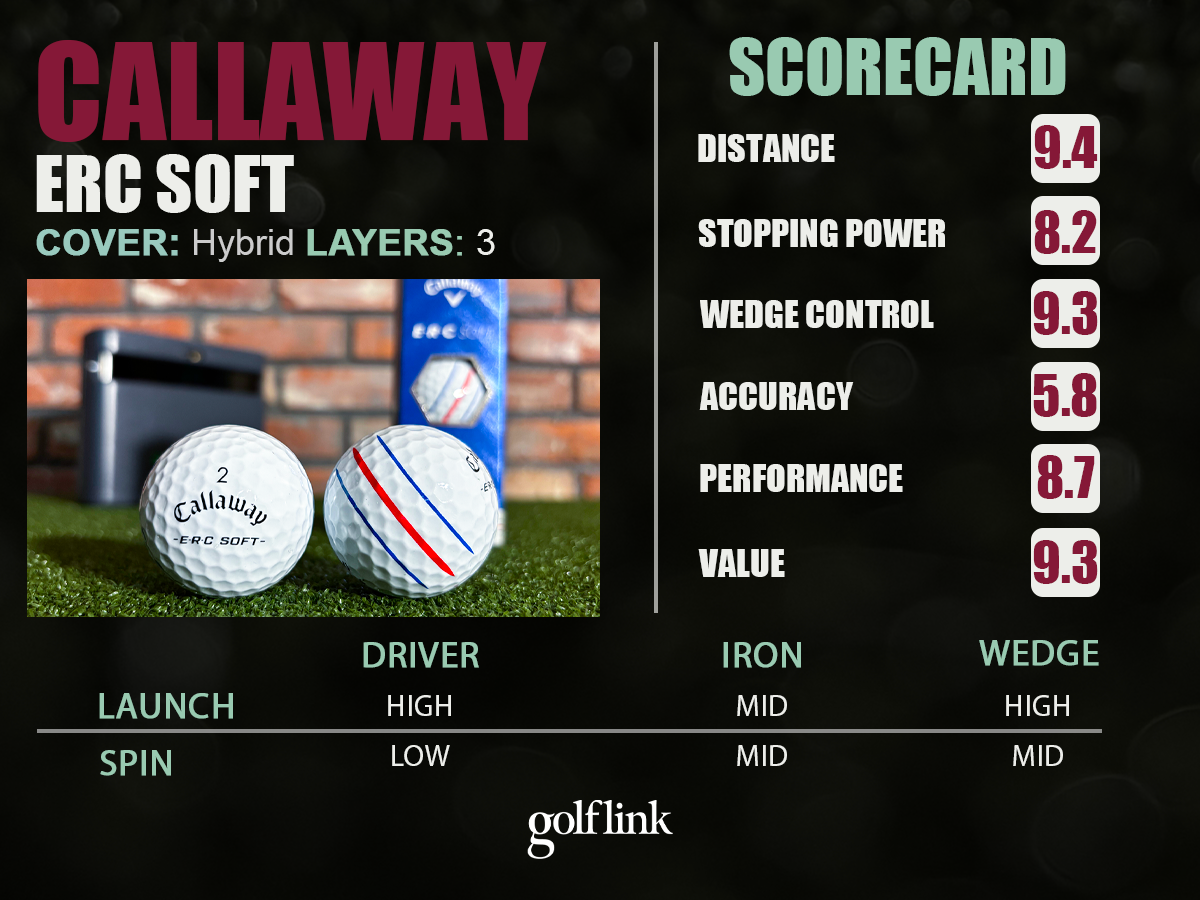
ERC Soft was the single longest ball out of all 43 we tested (9.4 distance), and it did that without being a one-trick pony. Despite its hybrid cover, its 9.3 wedge control score is right there with the best urethane balls in the field.
That combination is rare for a hybrid-cover ball and it's why ERC Soft cracks this list despite one real weakness: accuracy. Its 5.8 accuracy score is the lowest of any ball on this list, by a wide margin.
ERC Soft is for the mid-handicapper who already hits it reasonably straight and prioritizes distance and greenside touch without upgrading to a $57 tour ball. If accuracy is your bigger issue off the tee, this ball won’t fix it — but if it's not, ERC Soft gives you more short-game performance than its price and cover usually deliver.
Read our full Callaway ERC Soft review here.
Ben Hogan GS53
CHECK BEN HOGANCHECK AMAZON
Cover: Urethane
Construction: 4-Layers
Price: $49/dozen (bulk: $41/dozen, 6 dozen minimum)
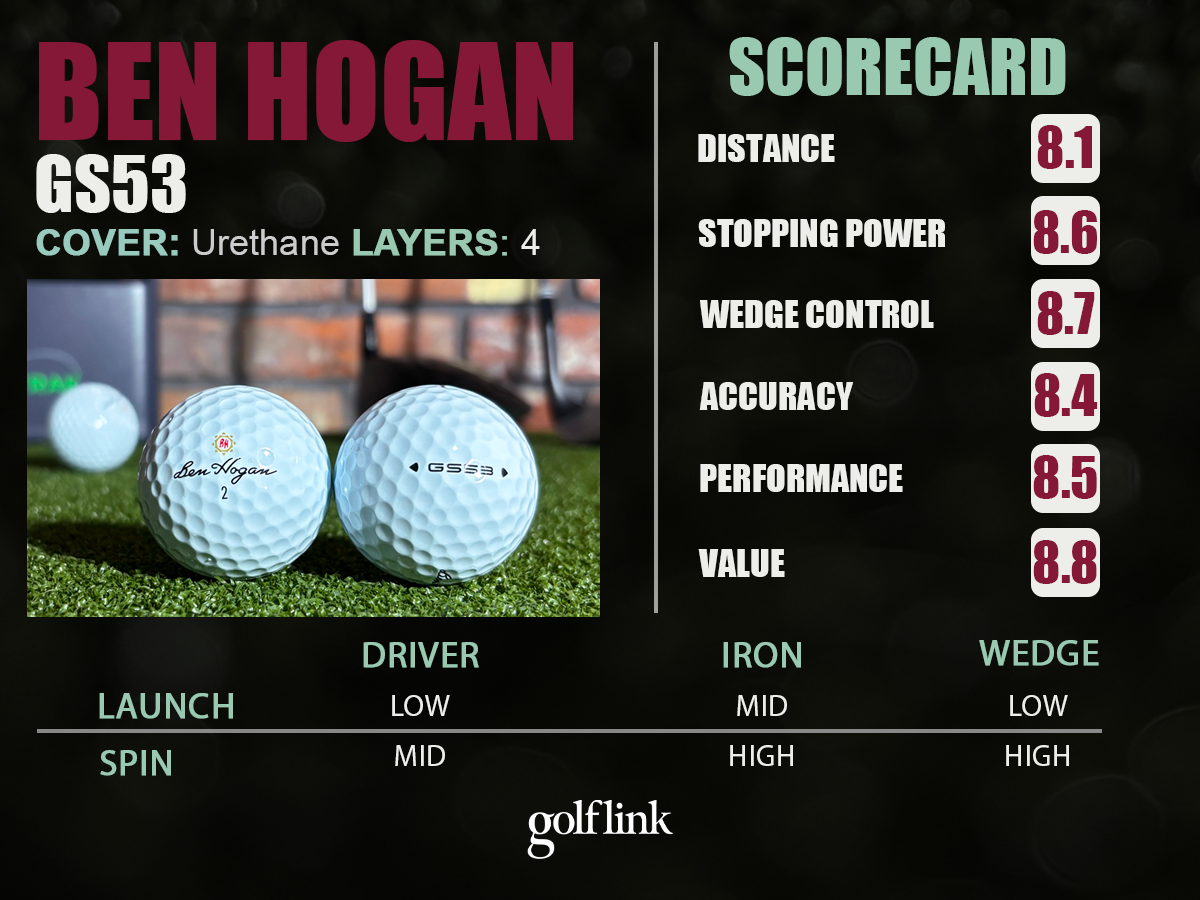
Ben Hogan GS53's standout feature is that it showed no real weaknesses. It didn't win any category, but it was near the top in all of them, from stopping power (8.6) to wedge control (8.7) to accuracy (8.4).
That accuracy performance was actually one of the bigger surprises given GS53’s firmer, mid-spin profile. It also tied for the second-best value score (8.8) of any ball on this list, because buying in bulk drops the price to $41 a dozen.
GS53 is a fit for the mid-handicapper who wants the full four-piece, X-ball experience — firm feel, superior short game spin — without the $57 price tag that usually comes with it. If you really want to nit-pick, committing to six dozen to unlock the best price is a bigger ask than most DTC brands make.
Read our full Ben Hogan GS53 review here.
Srixon Z-Star
CHECK AMAZONCHECK DICK'S
Cover: Urethane
Construction: 3-Piece
Price: $54/dozen
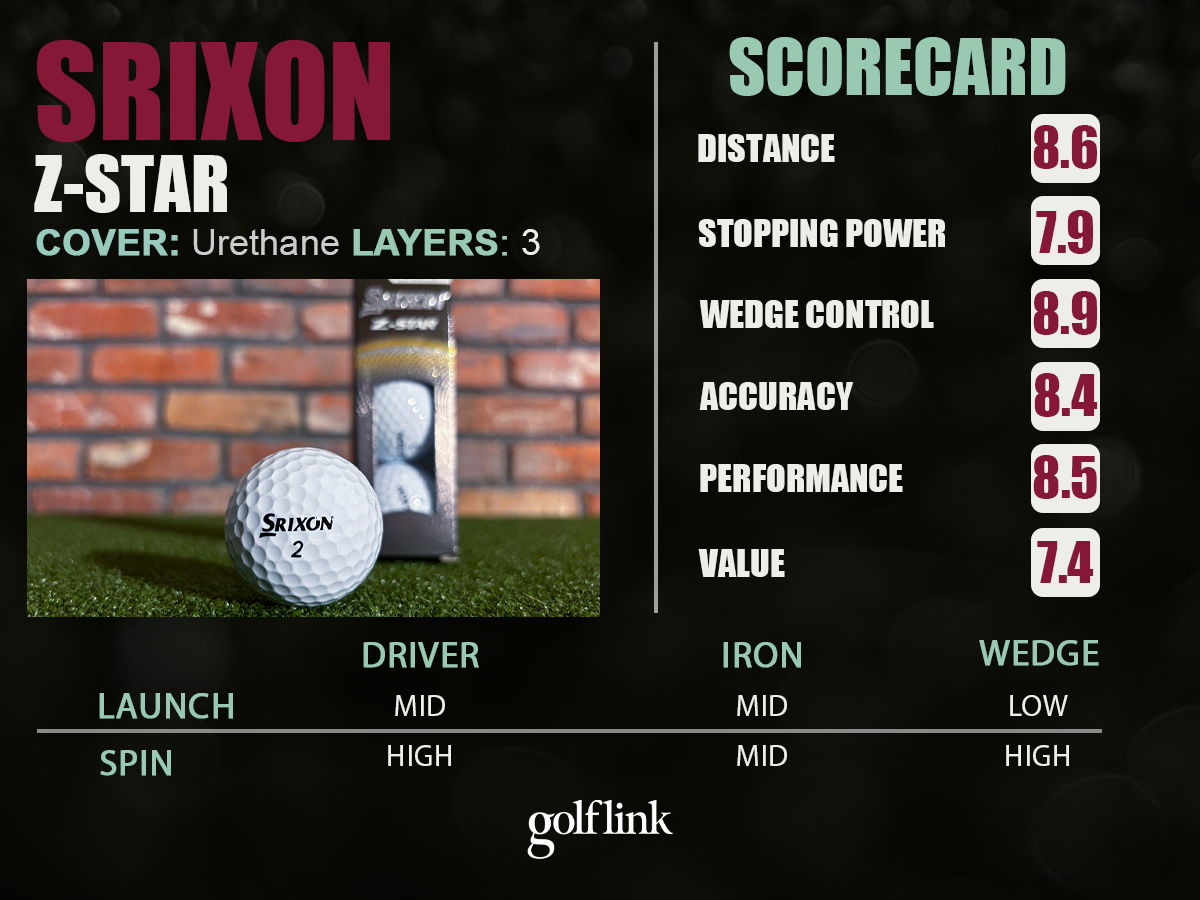
Z-Star's biggest strength is wedge control (8.9), which ranks among the best in our entire 43-ball field, paired with a strong distance score (8.6) — a combination that's tough to find outside the true tour-ball tier. Strong accuracy (8.4) is an appealing bonus.
Stopping power (7.9) is the one category that's merely solid rather than exceptional, which aligns with Z-Star's positioning as the more mid-handicap-friendly sibling to Z-Star Diamond.
Z-Star is for the mid-handicapper who wants tour-level control around the greens and off the tee, without needing the extra spin (or extra cost sensitivity) that comes with the Diamond version. It's not a budget pick, but Srixon runs a recurring Buy 3, Get 1 Free promotion that can bring the price down. That’s always worth checking before you buy.
Read our full Srixon Z-Star review here.
TaylorMade TP5 2026
CHECK AMAZONCHECK DICK'S
Cover: Urethane
Construction: 5-Layers
Price: $57/dozen
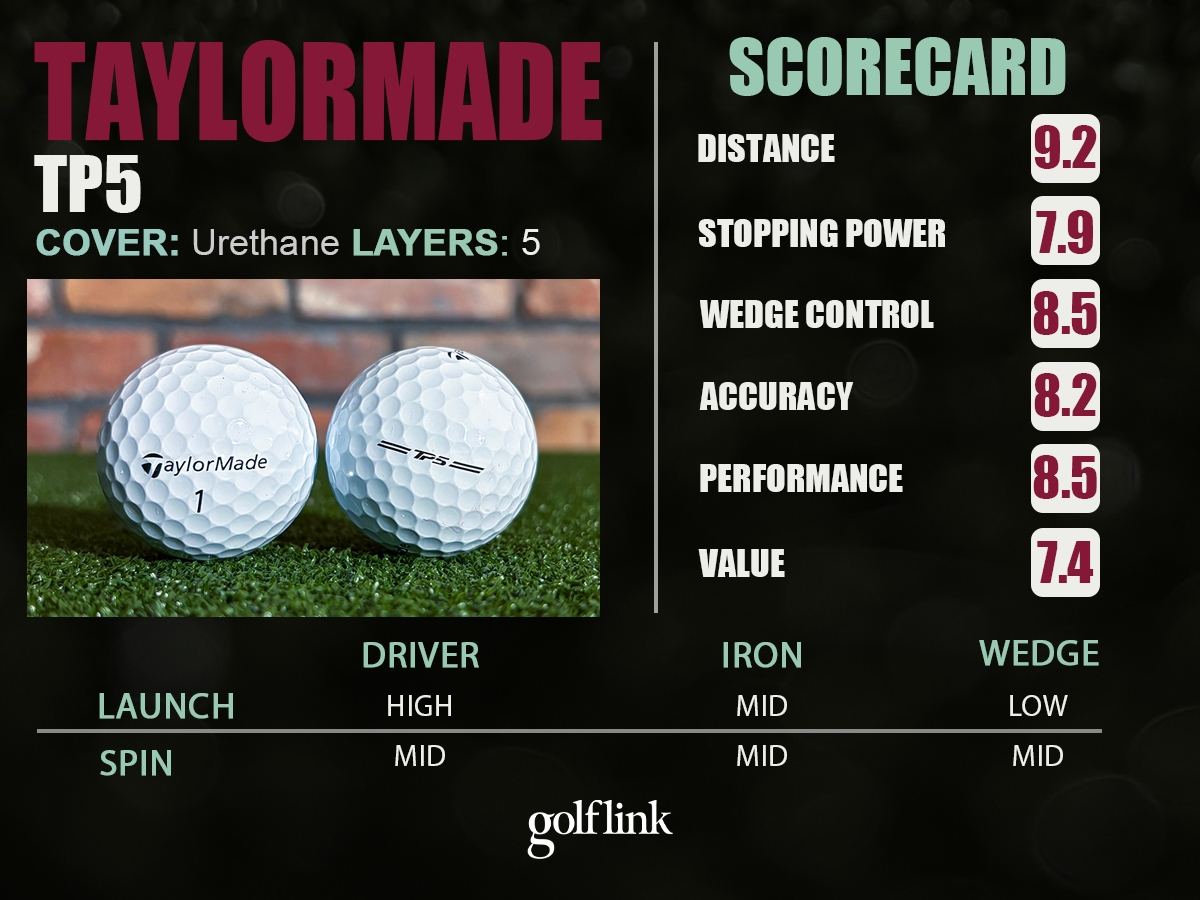
It’s tough to ignore the distance performance that TaylorMade TP5 turned in. A 9.2 score that ranked second of all 43 balls and made it comfortably the longest urethane ball we tested. Wedge control (8.5) and accuracy (8.2) are both strengths as well, so the extra distance isn't coming at the expense of control. Stopping power (7.9) is good, but not great, which is the one area where TP5 trails its firmer sibling, TP5x.
The mid-handicapper who wants to add distance without accepting a lower-spin, distance-first ball should check out TP5. If you're already long enough and want more stopping power specifically, Chrome Tour X or Tour B X above are the better fit, but for sheer distance and short-game feel, TP5 is hard to beat.
Check out our full TaylorMade TP5 2026 review here.
Callaway Chrome Tour Triple Diamond (2025)
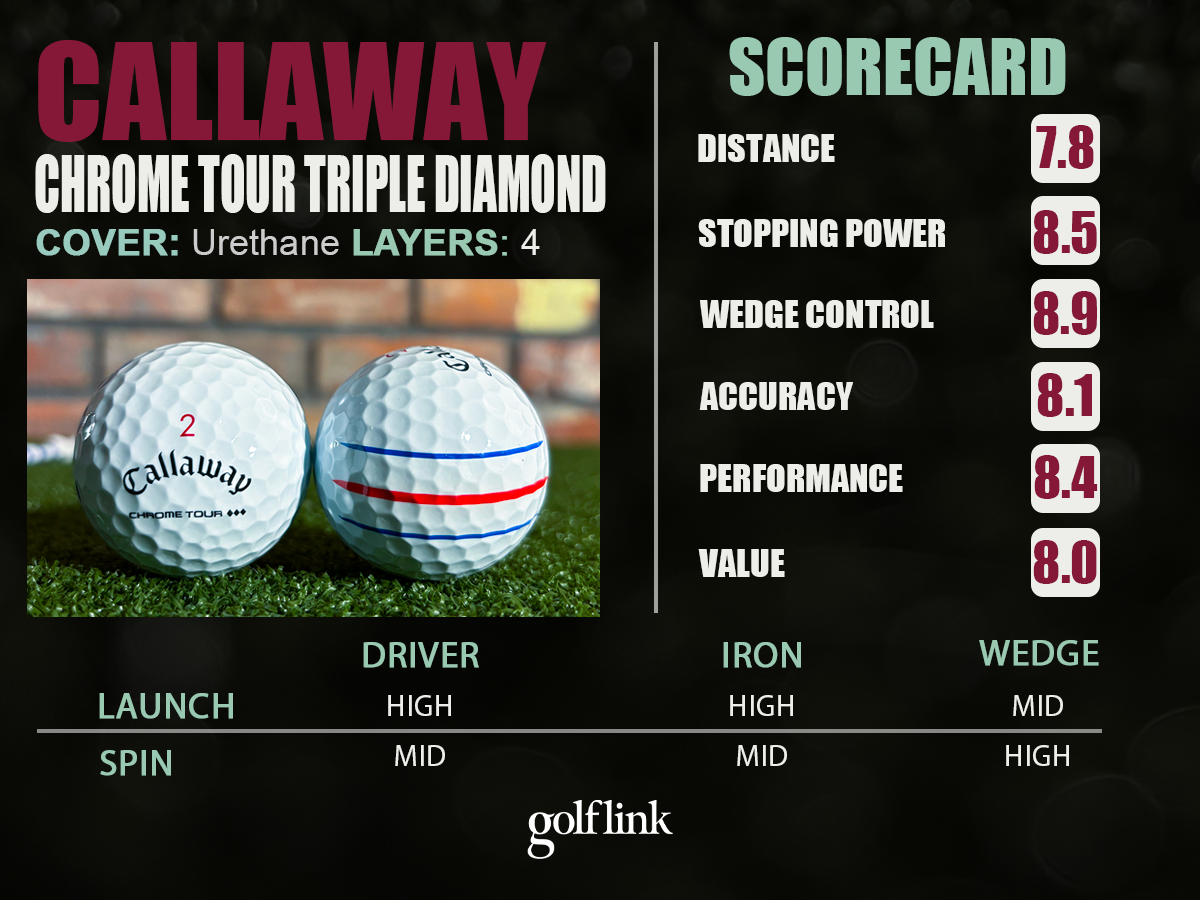
Callaway Chrome Tour Triple Diamond profile based on GolfLink testing
CHECK AMAZONCHECK DICK'S
Cover: Urethane
Construction: 4-Layers
Price: $47/dozen
Callaway Chrome Tour Triple Diamond's short-game numbers punch above most balls at this price. An 8.9 wedge control score and 8.5 stopping power score are both tour-caliber marks despite this ball now being $10 cheaper than when it launched.
Distance (7.8) and accuracy (8.1) both land closer to the middle of the pack — not a distinct advantage but not hurting in those areas, either — which is how Callaway built this one: from the scoring clubs back, not the driver forward.
Chrome Tour Triple Diamond was built with the low-single-digit player who fires at pins in mind, but the price and the data make a case for some mid-handicapper too. For the one who already controls their spin off the tee reasonably well and wants elite short-game control without paying $57 for it, this should be on your short list. If distance is your priority, the standard Chrome Tour X gives you more stopping power.
Read our full Callaway Chrome Tour Triple Diamond review here.
TaylorMade TP5x 2026
CHECK AMAZONCHECK DICK'S
Cover: Urethane
Construction: 5-Piece
Price: $57/dozen
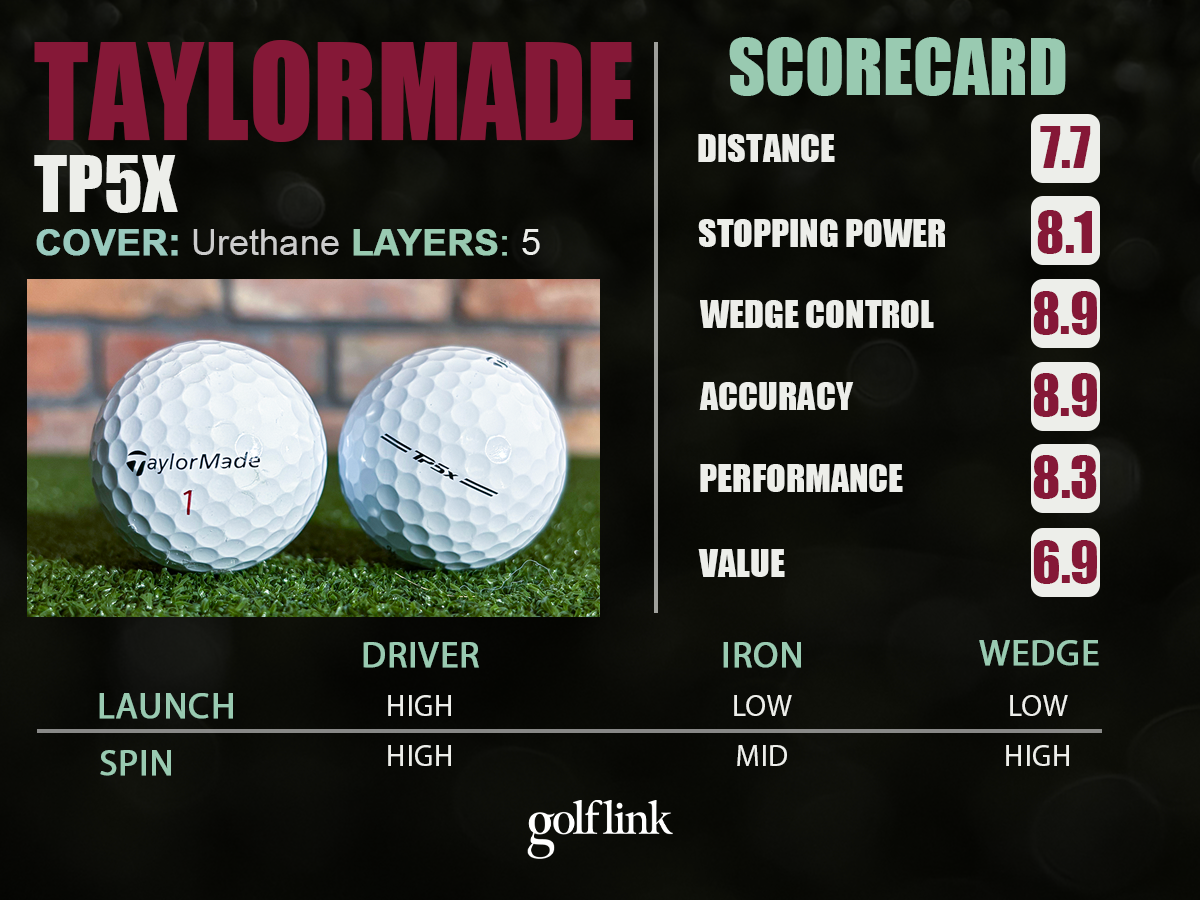
The real surprise from TaylorMade TP5x in our test wasn't distance or stopping power, it was accuracy. Its 8.9 accuracy score ranked 7th of all 43 balls, an unexpected result for a firmer, higher-spin "X" ball.
Wedge control (8.9) matched that, which appeals to many mid-handicappers. The tradeoff is value (6.9), the lowest score on this list, which is a result of premium pricing with no bulk discount to soften it, and an average distance score.
TP5x fits the mid-handicapper who wants a firmer, more penetrating ball flight than standard TP5 without sacrificing accuracy or short-game control to get it. If value or distance matter as much to you as performance, there are better options at the same or lower price.
Read our full TaylorMade TP5x 2026 review here.
Srixon Z-Star Diamond
CHECK AMAZONCHECK DICK'S
Cover: Urethane
Construction: 3-Layers
Price: $54/dozen (bulk: $34/dozen, 2 dozen minimum)
J.J. Spaun used Srixon Z-Star Diamond to win the 2025 U.S. Open, and it’s the same class of ball as Titleist Pro V1 and Callaway Chrome Tour.
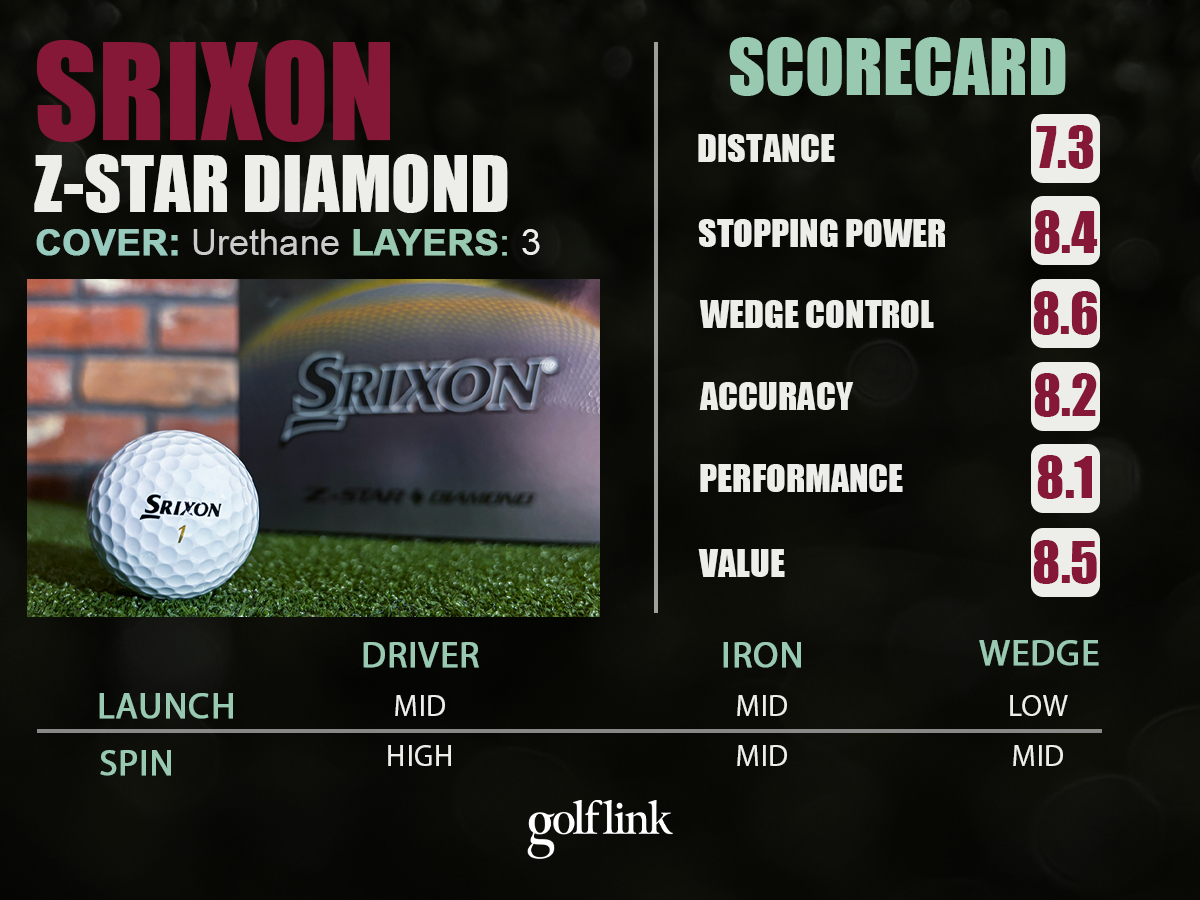
At $34 a dozen when you buy two dozen (the lowest bulk threshold on this list), Z-Star Diamond is a tour-caliber ball at a fraction of the price, which is why it posted an appealing 8.5 value score.
Wedge control (8.6) and stopping power (8.4) both hold up at a tour-ball. The one area where Z-Star Diamond didn’t exactly shine is distance (7.3), the second-lowest of any ball on this list.
Z-Star Diamond is for the mid-handicapper who already generates enough speed and wants tour-level control without the full $57 price tag. If distance off the tee is more of a priority for you than spin and control, Srixon's own standard Z-Star is the better fit.
Read our full Srixon Z-Star Diamond review here.
Maxfli Tour
CHECK DICK'S
Cover: Urethane
Construction: 3-Layers
Price: $39/dozen (bulk: $29/dozen, 4 dozen minimum)
Want distance and value from a tour-caliber ball? Check out Maxfli Tour.
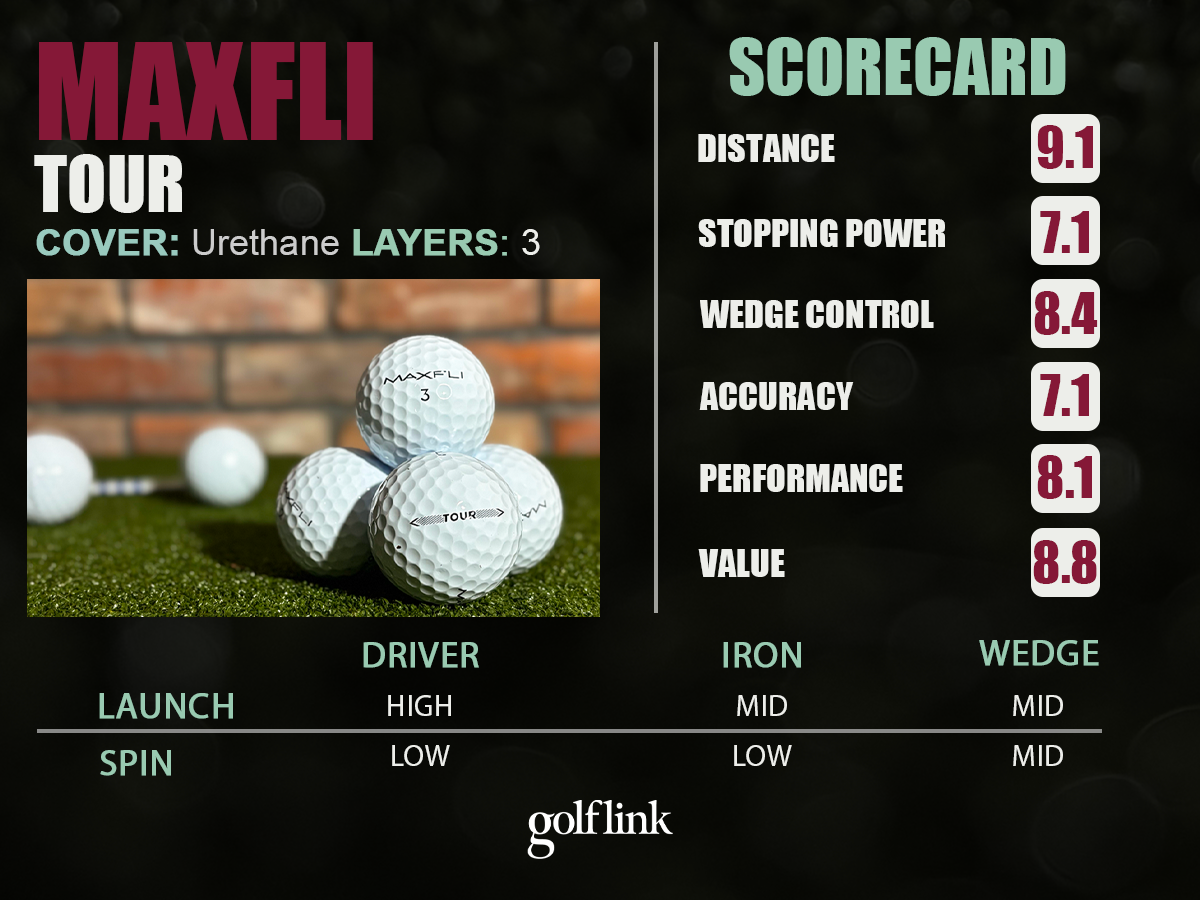
Its distance score (9.1) is one of the best of any ball on this list, urethane-covered or not, and its 8.8 value score ties Ben Hogan GS53, but Maxfli Tour does it at a lower price and a lower minimum purchase to unlock it.
Wedge control (8.4) clears our cutoff comfortably, but Maxfli Tour does give ground back in stopping power (7.1) and accuracy (7.1). Its driver dispersion was one of the wider results of our test, a tradeoff for those distance gains.
Maxfli Tour is for the mid-handicapper who wants tour-ball distance and enough short-game spin to hold greens, at one of the lowest prices you’ll find for a urethane ball. If you already fight a dispersion issue off the tee, or if precise stopping power on approach shots is what you need most, there are better fits.
Read our full Maxfli Tour review here.
Titleist Pro V1x 2025
CHECK AMAZONCHECK DICK'S
Cover: Urethane
Construction: 4-Piece
Price: $57/dozen
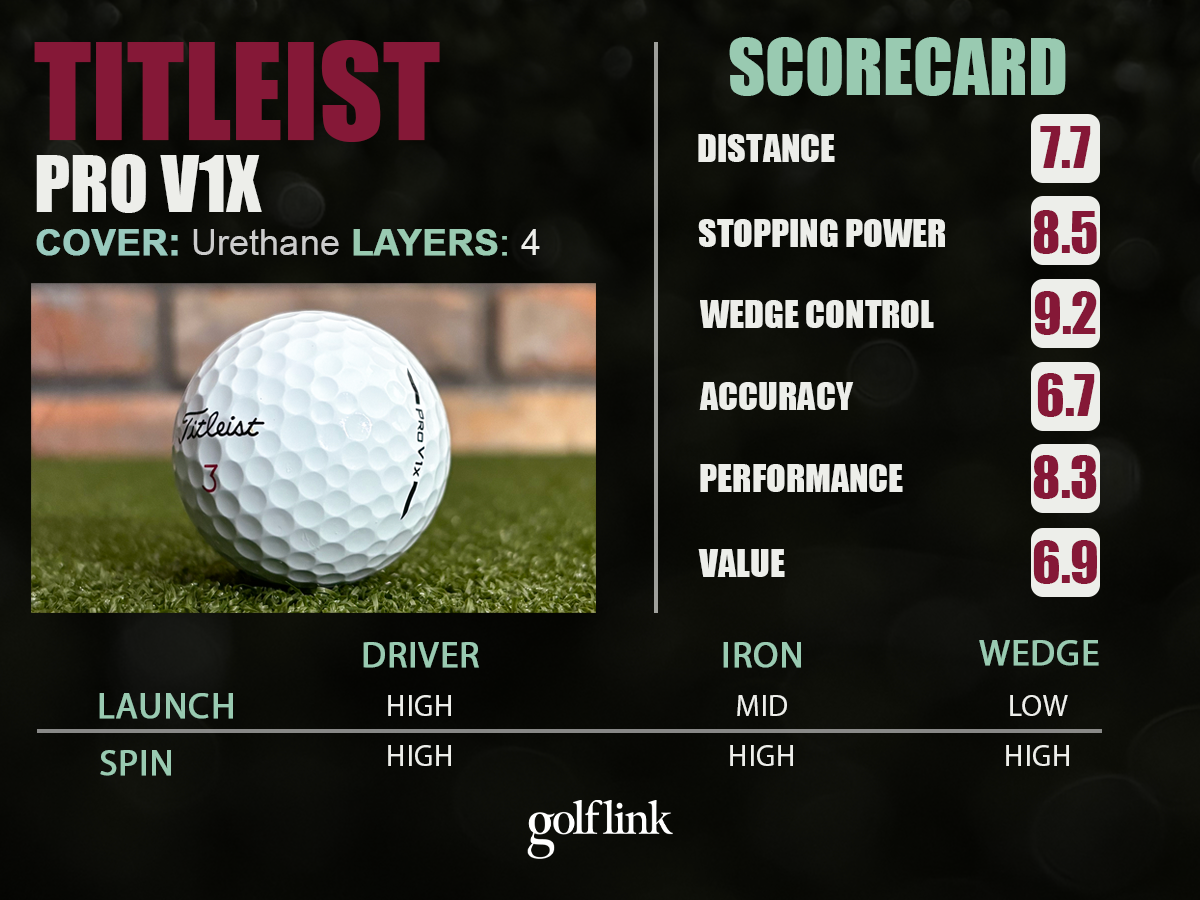
Pro V1x's wedge control score (9.2) tied for second of all 43 balls we tested, and it backs that up with top-tier stopping power (8.5). That should be no surprise for a ball that's dominated tour bags for years.
Accuracy number (6.7) is the known tradeoff, not a shock: Pro V1x's high-spin design through the bag is exactly what generates that short-game control, and the same spin naturally produces more sidespin and dispersion. For players who value workability — shaping shots on demand — over straight-shot accuracy, that’s a feature, not a flaw.
If you already trust your ball-striking and want the same short-game spin and stopping power the pros lean on, Pro V1x is a good option for you. If you're still working on tightening dispersion off the tee, it could be worth pausing before you buy.
Read our full Titleist Pro V1x 2025 review here.
Vice Pro
CHECK VICECHECK AMAZON
Cover: Urethane
Construction: 3-Layers
Price: $39/dozen (bulk: $34/dozen, 6 dozen minimum)
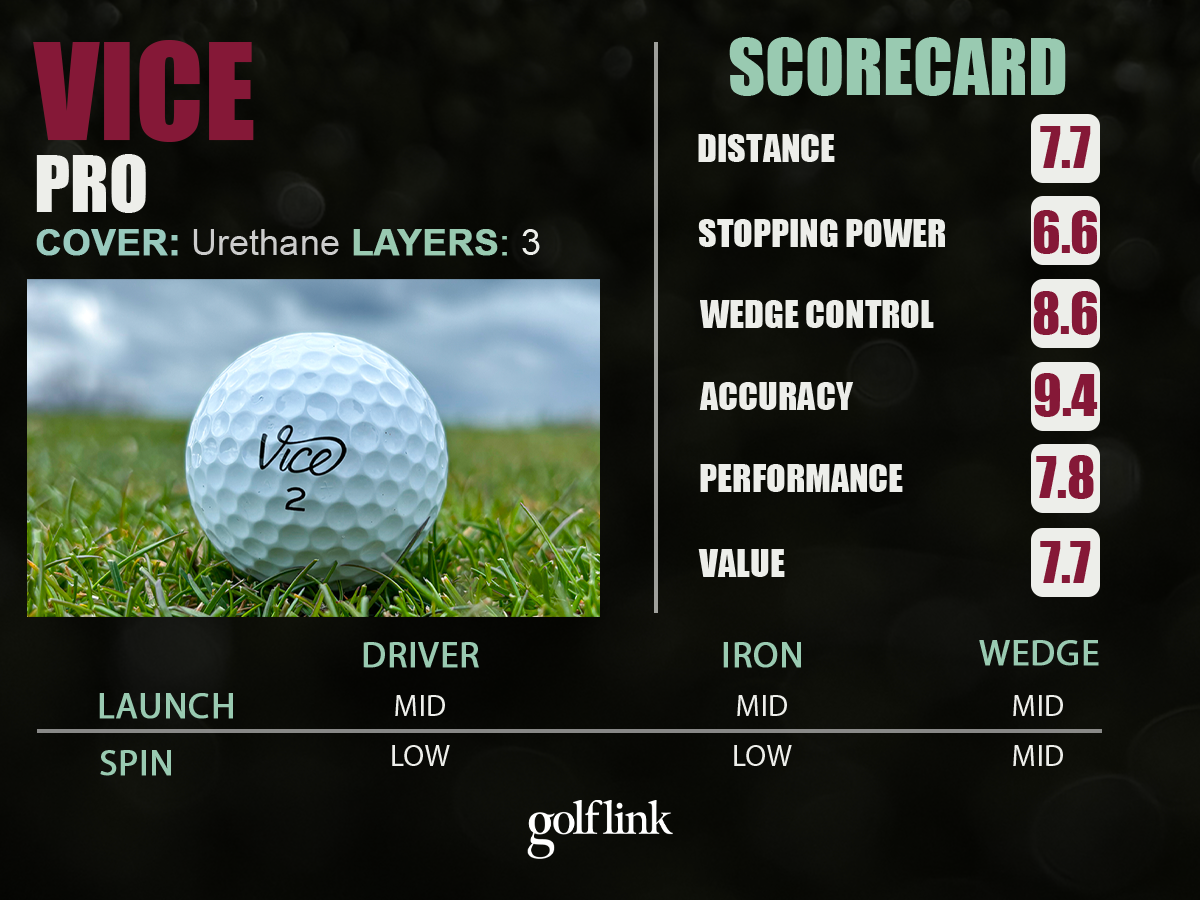
Vice Pro's accuracy score (9.4) is tied for the best of any ball we tested all year, which is a surprising result for a $39 urethane-covered ball going up against $57 tour balls. Wedge control (8.6) is right there with the field above it, too. The one number that holds it back is stopping power (6.6), the lowest score of any ball that made the cut.
If you prioritize accuracy and want tour-level short-game control at a fraction of the price, and you’re not chasing drop-and-stop performance on approach shots, Vice Pro could be the one. If control into greens from your irons is more important to you than saving about $20 per dozen, then one of the higher-stopping-power balls above may serve you better.
Read our full Vice Pro review here.
Find the Right Fit
Every ball on this list delivers short game control that gives mid-handicappers more chances to get up-and-down to save par around the green, but they don't all get there the same way.
If you want the most complete, no-weakness profile, Bridgestone Tour B X and Callaway Chrome Tour X sit at the top for a reason.
If value matters as much as performance, Ben Hogan GS53 and Maxfli Tour give you tour-level short-game control without the full tour-ball price.
If accuracy off the tee is a bigger concern than anything happening on the green, Vice Pro and TaylorMade TP5x are the two balls on this list that can help you find more fairways.
The takeaway across all 12: at the mid-handicap level, you don't have to choose between forgiveness and control. The data says you can have both, you just have to know what tradeoff you're making.