PGA Championship Cut Rules at a Glance
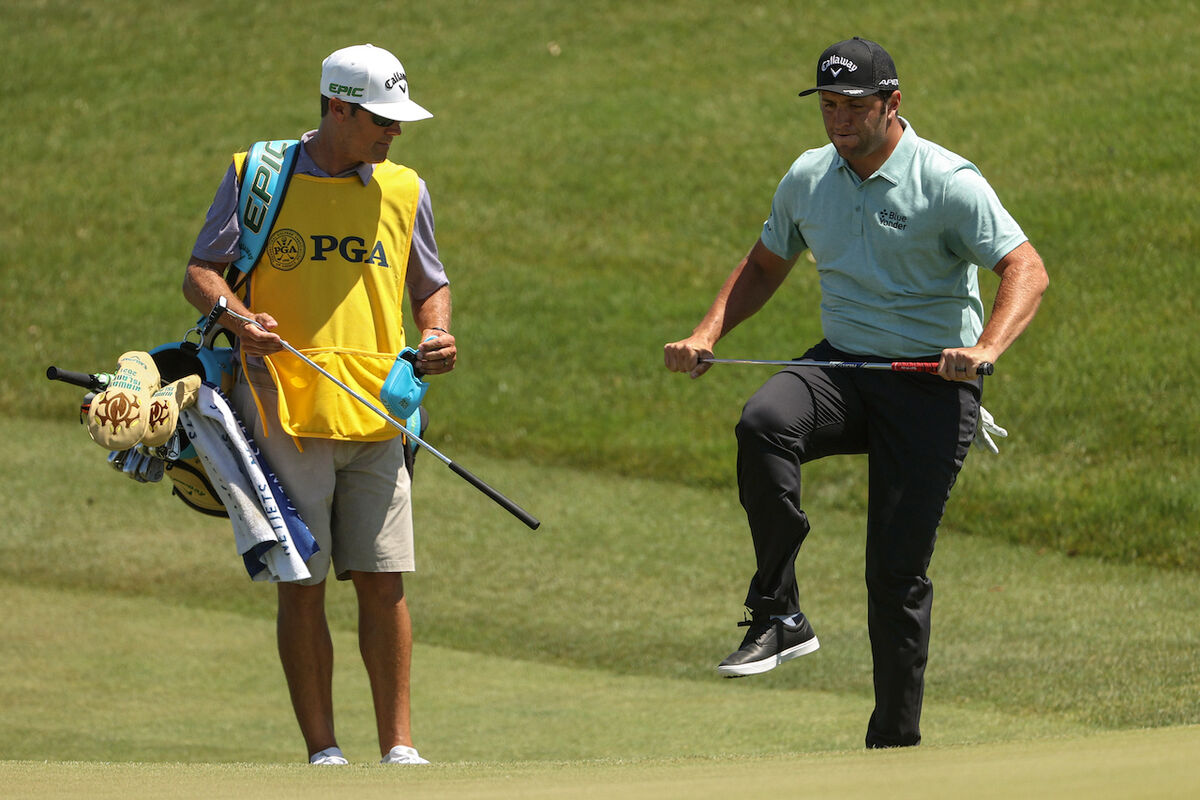
The PGA Championship is highly regarded as having the best field of golf’s four major championships. So while it’s quite the accomplishment to make it into the tournament, it’s even more impressive to make the cut at the PGA Championship. Here’s an overview of who plays in the second major of the season and how many players make it to the weekend.
Who Plays in the PGA Championship?
The maximum number of players that can compete in the PGA Championship is 156. Unlike the Masters, U.S. Open, and British Open, the PGA Championship field is comprised of only professional golfers, with no amateurs allowed to qualify.
The professionals who tee it up in the PGA Championship also include 20 club professionals who are members of the PGA of America, the men and women who run golf facilities around the country. The remainder of the field is made up of PGA tournament winners, major winners, Ryder Cup team members, individuals who have placed high enough in majors, and special invites from the PGA of America.

PGA Championship Qualifications Explained
What’s the Cutline?
The PGA Championship has a cutline of the top-70 players (plus ties) after the first two rounds of play. This eliminates more than half of the field each year, while those who make the cut advance to play the third and fourth rounds on Saturday and Sunday.
The actual number the cutline falls on varies each year. Factors like course difficulty and weather conditions impact how well the field performs as a whole, and where the cut falls.
Generally speaking, the PGA Championship cutline falls around even par to about five-over. For reference, here's a look at how where the cutline landed in recent PGA Championships.
| Year | Cutline | Players to Make Cut | Venue |
| 2024 | -1 | 78 | Valhalla |
| 2023 | +5 | 76 | Oak Hill |
| 2022 | +4 | 79 | Southern Hills |
| 2021 | +5 | 81 | Kiawah Island |
| 2020 | +1 | 79 | TPC Harding Park |
| 2019 | +4 | 82 | Bethpage Black |
| 2018 | E | 80 | Bellerive |
| 2017 | +5 | 75 | Quail Hollow |
| 2016 | +2 | 86 | Baltusrol |
How Does it Compare to Other Majors?
The PGA Championship has the same cutline as the British Open, making the two events the most forgiving of the four major championships.
By comparison, the Masters cutline is the top-50 plus ties, but also typically has a smaller field than the PGA Championship. The U.S. Open cutline is the top-60 plus ties.