Golf Ball Compression Chart & Why Compression Matters
Here are the compression ratings of many popular golf balls, and which ones fit your game best

Simply put, a golf ball’s compression rating is a measurement of how much force is required to achieve the appropriate amount of compression at impact. The lower a golf ball’s compression rating, the less force (slower swing speed) is required to compress the ball properly, and the higher the compression rating, the more force (faster swing speed) is required to compress the ball.
Now that you know how to tell if you should be playing a higher-compression golf ball (firmer) or a lower-compression ball (softer), let’s take a look at the compression ratings of today’s golf balls, and which models fit your swing speed the best.
Golf Ball Compression Chart
Players who swing their driver 105 MPH and faster should play a high compression ball, one with a compression rating of about 90 or higher. As those swing speeds drop into the mid-90s, a medium-compression golf ball – one with a rating around 65-90 – is more appropriate. If your driver swing speed is lower than that, somewhere in the 80s or low 90s, consider a low-compression golf ball, one with a compression rating under 65.
| Brand | Model | Compression | Swing Speed | Shop |
| Titleist | Pro V1x | High (108) | 105+ MPH | |
| Cut | DC | High (105) | 105+ MPH | |
| Srixon | Z-Star XV | High (102) | 105+ MPH | |
| Titleist | Pro V1 | High (100) | 105+ MPH | |
| TaylorMade | TP5x | High (97) | 105+ MPH | |
| Srixon | Z-Star | High (90) | 95-104 MPH | |
| TaylorMade | TP5 | Medium (85) | 95-104 MPH | |
| Maxfli | Tour | Medium (85) | 95-104 MPH | |
| Wilson | Triad | Medium | 95-104 MPH | |
| Bridgestone | Tour B XS | Medium | 95-104 MPH | |
| Maxfli | Tour S | Meduim (82) | 95-104 MPH | |
| Callaway | Chrome Soft | Medium (75) | 95-104 MPH | |
| Srixon | Q-Star | Medium (72) | 95-104 MPH | |
| Titleist | Velocity | Medium (65) | 85-94 MPH | |
| Srixon | Soft Feel | Low (60) | 85-94 MPH | |
| TaylorMade | Kalea | Low (60) | 85-94 MPH | |
| Bridgestone | e6 | Low (50) | 85-94 MPH | |
| Vice | Drive | Low (50) | 85-94 MPH | |
| Pinnacle | Soft | Low (40) | Up to 85 MPH | |
| Callaway | Supersoft | Low (35) | Up to 85 MPH | |
| Noodle | Long and Soft | Low (34) | Up to 85 MPH | |
| Wilson Staff | DUO Optix | Low (29) | Up to 85 MPH | |
| Titleist | TruFeel | Low | Up to 85 MPH |
Soft vs. Hard Golf Balls: How To Choose the One for You
The Impact of Golf Ball Compression
We’ve established that lower-compression golf balls require less force to compress than high-compression balls. But what does that mean for you?
On the surface, it means that the slower your swing speed, the lower the compression ball you should be playing. There’s a lot more to golf ball compression than that, so let's take a closer look at golf ball compression and how it impacts your game.
Golf Ball Compression and Distance
Because less force is required to compress a ball with a low compression rating, low-compression balls help players with slower swing speeds maximize distance. Essentially, they can compress the ball the same amount as a player who swings faster but plays a firmer ball.
How Compression Influences Spin Rate
Generally, the higher the compression rating a golf ball has, the less it will spin. Golfers with slower swing speeds can enjoy some added distance with a low-compression ball, and may also benefit from a ball that’s easier to launch because it spins more.
Increased spin, however, is a double-edged sword. More backspin for easier launch can be great, but increased side-spin can lead to more slices and hooks, missed fairways, and even penalty strokes.
Medium compression balls offer the best blend of distance and a straight ball flight, so if your swing speed doesn’t require the distance-adding benefits of a low compression ball, and you want to hit it straighter, consider a medium compression ball.
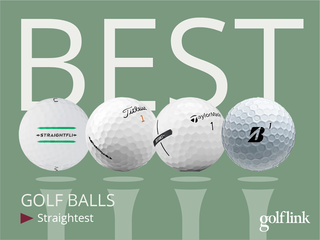
The 10 Straightest Golf Balls of 2024 to Fight a Slice
Find the Ball for Your Game
Whether you are a beginner, senior golfer or a competitive amateur, playing the best golf ball for your game is a huge step in shooting the lowest scores you’re capable of. Using the right compression for your swing speed will help you maximize your distance and accuracy, which will leave you with easier approach shots, more greens in regulation, and better scores.