Complete Guide to Golf Wedge Lofts
How your pitching wedge, gap wedge, sand wedge and lob wedge lofts impact your game
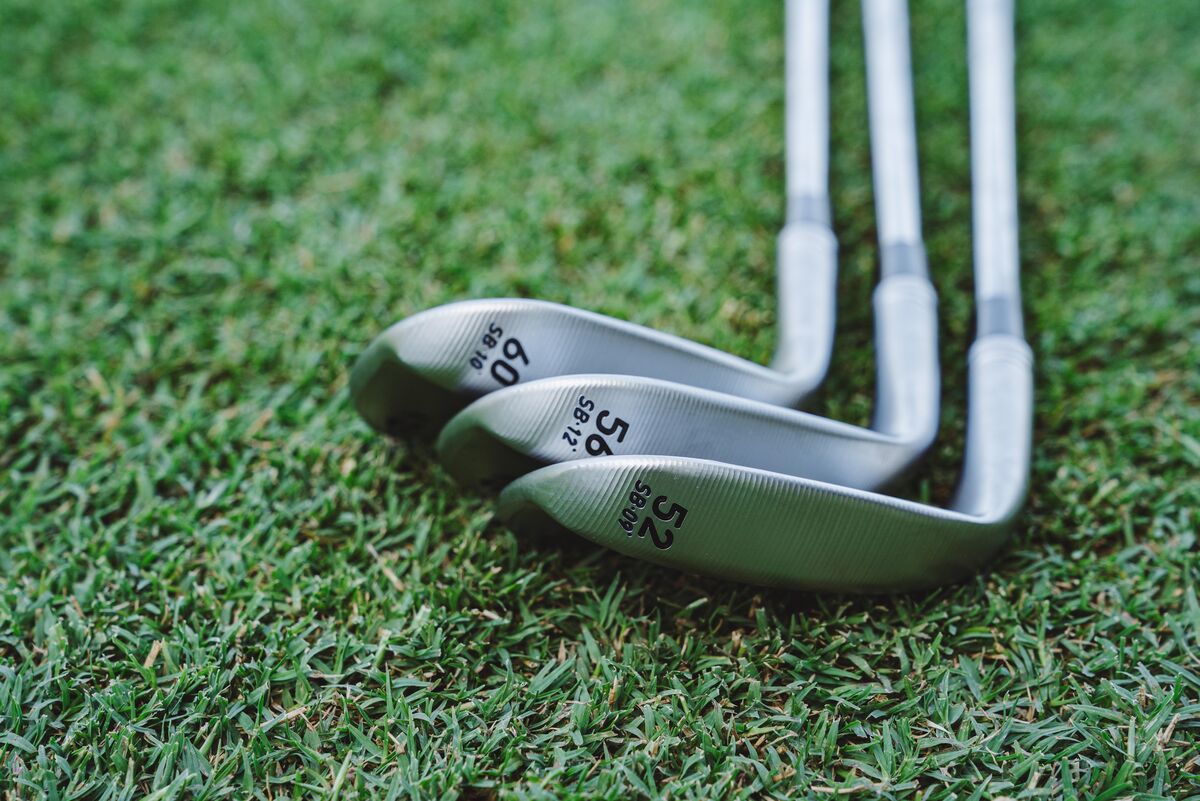
Most wedges are stamped with numbers but referred to by names, such as lob wedge or gap wedge. That’s just the tip of the iceberg in the sea of confusion around golf wedges and their lofts, but I’ll clear all that up to give you complete confidence that your lineup of wedges is optimized for success.
As a former club-fitter myself, I’ve had the opportunity to help countless golfers to dial in their wedges and find their perfect wedge combination. To allow you to tap into that expertise, I’ll lay out the loft of every wedge, how to pick the ideal lofts for each of your wedges, and how to use each wedge in your bag.
Lofts of the 4 Types of Wedges
Every wedge has a purpose, and understanding each wedge's specific purpose helps you put the optimal wedge setup in your bag. The four golf wedges are the Pitching Wedge, Gap Wedge (also known as the Approach Wedge), Sand Wedge and Lob Wedge. Here are the lofts of each type of wedge, and the standard stock length you can expect each wedge to be.
|
Wedge |
Loft Range (degrees) |
Average Length |
|
Pitching Wedge |
42-48 |
35.75 inches |
|
Gap Wedge |
48-52 |
35.5 inches |
|
Sand Wedge |
54-56 |
35.25 inches |
|
Lob Wedge |
58-64 |
35 inches |
Stock wedges almost exclusively come in even-degree lofts, especially once you get past the pitching wedge, but you can always have your wedge bent up or down a degree to better serve your needs and fit your wedge lineup.
The Sneaky Fifth Wedge
It’s no secret that golf club manufacturers have been strengthening lofts on their iron sets (reducing loft) in recent years. That’s what created the need for the gap/approach wedge (to fill the gap created by stronger-lofted pitching wedges that came with an iron set, and a traditional sand wedge purchased separately from the iron set) earlier this century.
Now, some manufacturers have added a fifth wedge to the lineup, as they churn out iron sets with pitching wedge lofts so strong that it takes two wedges to bridge the gap between that and the sand wedge.
For example, here are the lofts at the top end of PING’s most recent game-improvement iron set, the G430 irons.
- PW: 41-degrees
- AW: 45.5-degrees
- GW: 50-degrees
- SW: 54-degrees
- LW: 58-degrees
Callaway has done something similar with its Paradym irons, which have a 42-degree pitching wedge, 47-degree approach wedge, and a 52-degree gap wedge, leaving room for players to add their own sand wedge and lob wedge.
How to Optimize Your Wedge Combinations
The first step to optimizing your wedge set is to figure out the loft of the most-lofted iron or wedge in your iron set. Most iron sets end with the pitching wedge, but your set could extend through the gap wedge, or stop with the 9-iron. If you don’t know the loft, do a quick search for the specs of the make and model of your irons, and your specific lofts will be easy to find.
The next item of business is to determine how many wedges you need to carry. Four wedges these days is pretty standard. However, there are exceptions.
- If your pitching wedge is on the strong side (loft in the low 40s) you may consider carrying five wedges
- If your pitching wedge has 45-plus degrees of loft, and/or you prefer a go-to greenside club rather than a plethora of options, you may prefer just three wedges
A good rule of thumb is to aim for a 4-6 degree gap between your wedges. Here are a few sample wedge makeups with 3-wedge, 4-wedge, and 5-wedge options, that provide any golfer the sufficient yardage gapping on full swings and a variety of options around the greens. As you’ll notice, the two biggest factors that influence which wedge lofts to choose are the loft of your existing pitching wedge and the number wedges you prefer, sticking to a 4 to 6-degree (or sometimes 8-degree) gap between wedges.
Sample 3-Wedge Sets
- 44-50-56
- 44-52-60
- 46-52-58
Sampe 4-Wedge Sets
- 42-48-54-60
- 44-50-54-58
- 44-50-56-60
- 45-49-54-58
- 46-52-56-60
Sample 5-Wedge Set
- 42-47-52-56-60
Carrying fewer wedges opens up options at other places in the bag. It could give you the opportunity to add a 7-wood or even a 9-wood (which is becoming more popular), an extra hybrid, or even experiment with a mini driver or driving iron.

The Pros & Cons of a Club Champion Fitting
Pitching Wedge: 42-48 Degrees
A pitching wedge is the lowest lofted wedge and bridges the gap from your irons to your wedges. It's very likely that your pitching wedge is an extension of your iron set, as most iron sets today include everything from the 4-iron to the pitching wedge.
The average loft of a pitching wedge is between 44 and 48 degrees, although some modern pitching wedges in game-improvement sets dip as low as 41-degrees. Pitching wedge loft has gone down in recent years as more club manufacturers have made strong-lofted iron sets that produce more distance.
You can choose to purchase the pitching wedge that's a continuation of your iron set, or you can find a wedge with the ideal loft to fill that spot.
Helpful Hack
A pitching wedge is a great club choice to start your warmup session. You can easily transition from hitting half shots to full-swing shots as you get loose.
When to Use Pitching Wedge
Here are a few example situations where a pitching wedge is usually a good option:
- Full-swing shots from distances that align with your pitching wedge distance
- Knockdown shots that stay below the wind
- Bump-and-run shots around the green
What Is the Loft of a Pitching Wedge? Standard Loft and Beyond
Gap Wedge: 48-52 Degrees
The gap wedge didn't exist until relatively recently. As club-makers began de-lofting irons, they created created massive void in many players' golf bags between a typical 45-degree pitching wedge and a 56-degree sand wedge. That's when manufacturers began filling the loft gap with the appropriately-named gap wedge.
Today, you'll find manufacturers such as Titleist and Callaway going as low as 47 or 48 degrees with their gap wedges, depending on the particular iron set they pair with. The industry standard for gap wedge loft, at one point, was 52 degrees, and depending on the loft of your pitching wedge, a 52-degree gap wedge may still be appropriate.

Approach Wedge Loft and 5 More A-Wedge Answers
Helpful Hack
A solid understanding of how far you hit a full gap wedge shot will pay dividends every round.
When to Use a Gap Wedge
- Full-swing shots from your stock gap wedge distance
- Half and three-quarter-swing shots from inside 100 yards
- Higher bump-and-run shots around the green
Sand Wedge: 54-56 Degrees
The sand wedge was invented to, not surprisingly, get you out of the sand. Golfers quickly realized that a higher-lofted wedge was required to shovel golf balls out of sand traps. Today, sand wedges are more versatile, allowing you to hit a wide variety of shots, including full shots into greens and precision shot-game shots.
The loft of a sand wedge is between 54 and 56 degrees. It's always wise to properly gap your sand wedge loft evenly from your gap wedge.
Helpful Hack
If you learn how to open the face of your sand wedge to manipulate your trajectory, spin and stopping power, you can eliminate the need for a lob wedge from your wedge set makeup.
When to Use a Sand Wedge
A sand wedge is one of the more versatile clubs in your bag. It's not only suitable for full swing shots and partial wedge shots inside 100 yards, but many players rely on their sand wedge for all bunker shots, shorter chip and pitch shots around the green, and even higher lob and flop shots.
- Full-swing
- Half-swing
- Bunker shots
- Short-sided greenside shots
- Flop shots
- Pitch and chip shots around the green
Lob Wedge: 58-64 Degrees
The lob wedge's usefulness is the most debated of all the wedges. If you have the game to play precision shots by opening the face of your sand wedge, you can eliminate the need for a lob wedge. Others contend that a lob wedge is too difficult for the average amateur player to use every round.
The lob wedge is the highest-lofted wedge available, spanning from 58 to 65 degrees of loft, while 58 and 60-degree lob wedges are the most popular.
When to Hit a Lob Wedge
Here are some shots where a lob wedge may come in handy:
- Full-shots
- Bunker shots
- Short-sided greenside shots
- Flop shots
- Getting over obstacles (for example: a bunker between you and the hole)
The Lob Wedge Explained: 8 Answers You're Looking For
Beyond Loft: The Important Details of Your Wedges
We already went over loft, but there are several other aspects of wedges that you should consider when constructing your perfect wedge set.
Did you know that the course conditions where you typically play can influence which grind, bounce, and head design is ideal for you? That might sound really granular, but here's how it makes a difference.
Bounce
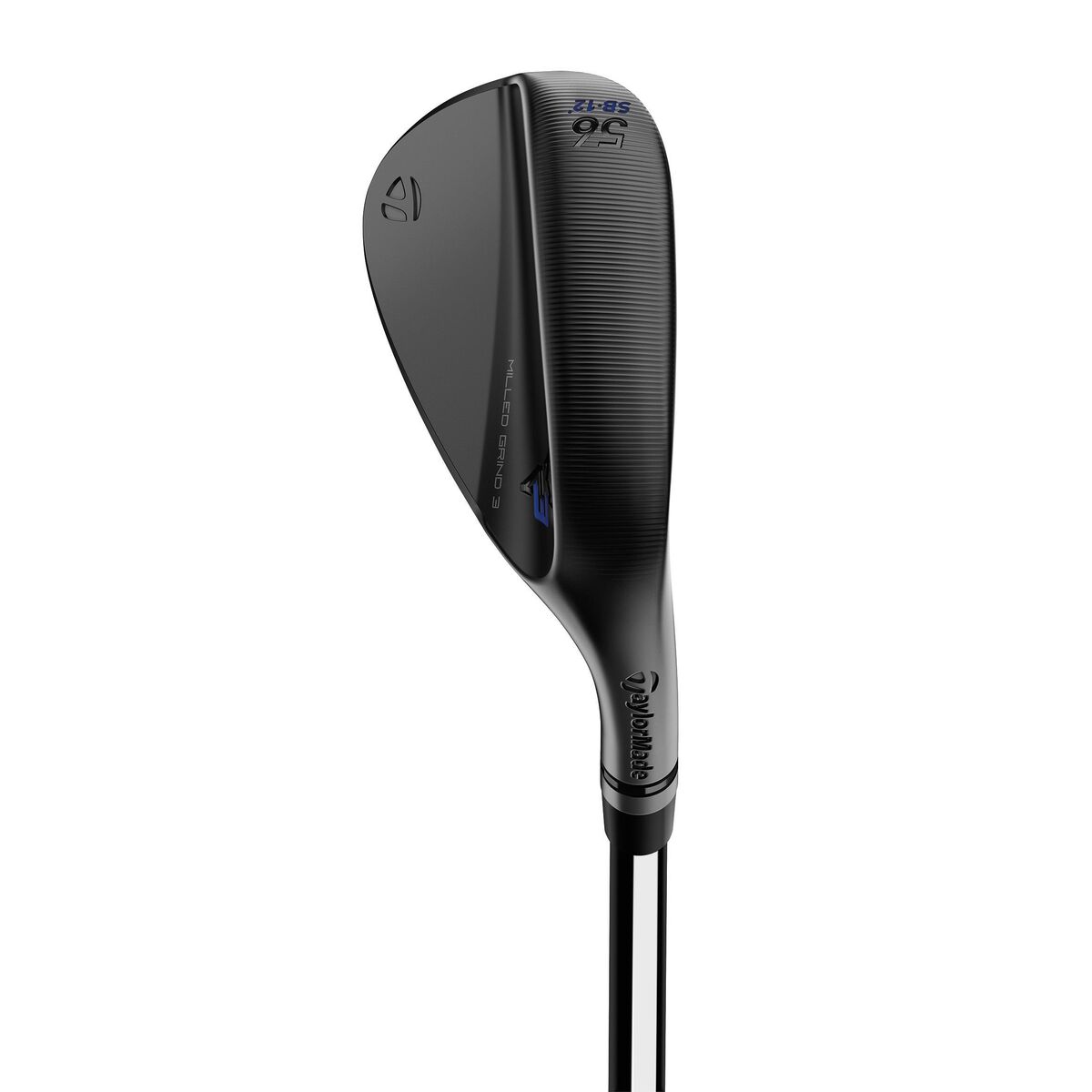
The leading edge of a wedge and the lowest point of the sole create an angle, which is referred to as a wedge's bounce. When you strike the golf ball, the bounce is the area that interacts with the turf or sand. Wedge bounce is determined by how high that leading edge is off of the ground.
- Low-Mid bounce wedges: Wedges between 4 and 10-degrees or less of bounce. Low-mid bound wedges reduce the chance of thin shots and typically work better on tighter turf and sand. Players with steeper attack angles who take bigger divots typically benefit from low bounce wedges.
- High bounce wedges: Any wedge with over 10-degrees of bounce. High bounce wedges are designed to glide through more lush grass and sand that's deep and soft. Players with more shallow attack angles who take smaller divots should consider a high bounce wedge.
Grind
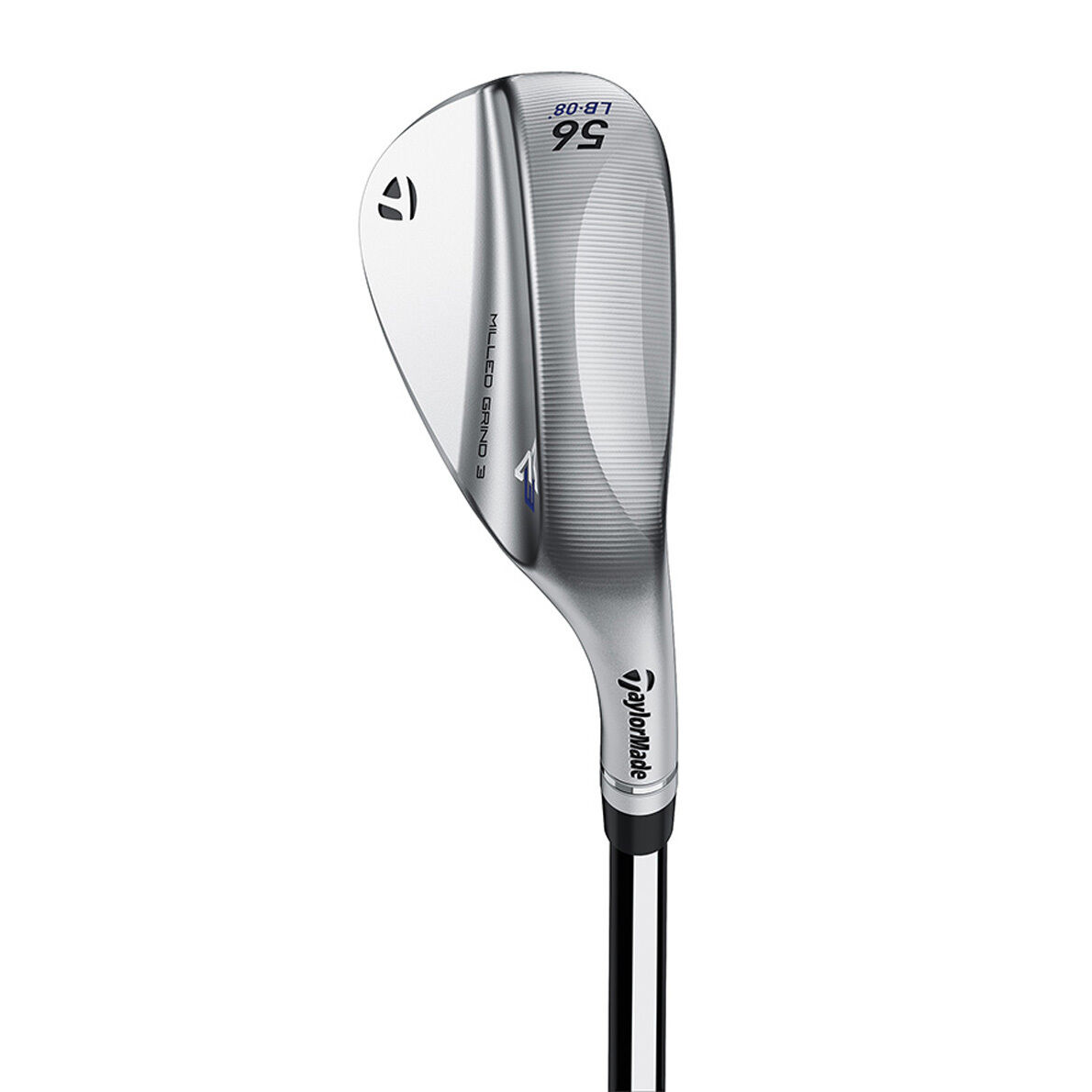
A wedge's "grind" is the shape of its sole. Custom grind options vary from each manufacturer. Grind affects the way the sole of the wedge interacts with the turf. By removing material from the sole, it allows the wedge to further work in tandem with the bounce.
Using Titleist and its Vokey wedges as an example, the company offers six different grind options for players to choose from depending on their own bounce preferences and typical turf conditions. Be sure to consult the manufacturer's suggestions before determining which grind is best for you, given your attack angle, turf conditions and the types of shots you want to hit with your wedges.
Head Design
The head design on wedges have changed a lot in recent years. There are three main types for you to choose from.
Traditional: This is a standard wedge clubhead. Traditional wedges appear the most similar to your irons but are slightly smaller and more compact.
Game Improvement: There are several wedge lines available today which have wider soles and cater to players who need additional help getting the ball in the air or out of a bunker. These wedges are likely larger in size than traditional wedges.
High Toe: Manufacturers such as TaylorMade, Wilson, and PING have brought back wedge designs with full-face of grooves that extend all the way up to the toe of the clubhead.
Where You Play
Depending on what region you play most of your golf in, your wedges should match those course conditions.
Firm conditions: Areas of the country that don't get as much rain such as the desert of the southwest should consider wedges with less bounce.
Soft conditions: Places like the midwest and northeast U.S. have softer conditions due to heavier rainfall. A wedge with higher bounce would be most useful in those regions.
When is it Time to Replace Your Wedges?
Wedges are precision clubs, but you can't be precise with your wedges once the grooves are worn. So how often should you replace your wedges, and how do you know when it's time?
The main thing to keep an eye out for is the condition of the grooves on your wedges. Over time, those softer, more vulnerable grooves deteriorate, and inconsistencies arise. Having sharp grooves that are in good condition always leads to optimal spin and performance around the green. If your wedge grooves are damaged, aged, or just plain worn down from how much you play, it's time to replace them.
Keep Your Wedges Sharp
Wedges, in many instances, are your saviors on the golf course. You can hit bombs off of the tee and have a smooth putting stroke, but being able to chip, flop, and splash it close to the pin is as valuable as anything. It starts with having the right tools to do the job. We hope this guide helps you construct the best wedge set for your playing style.