How a Golf Ball's 336 Dimples Impact Your Game
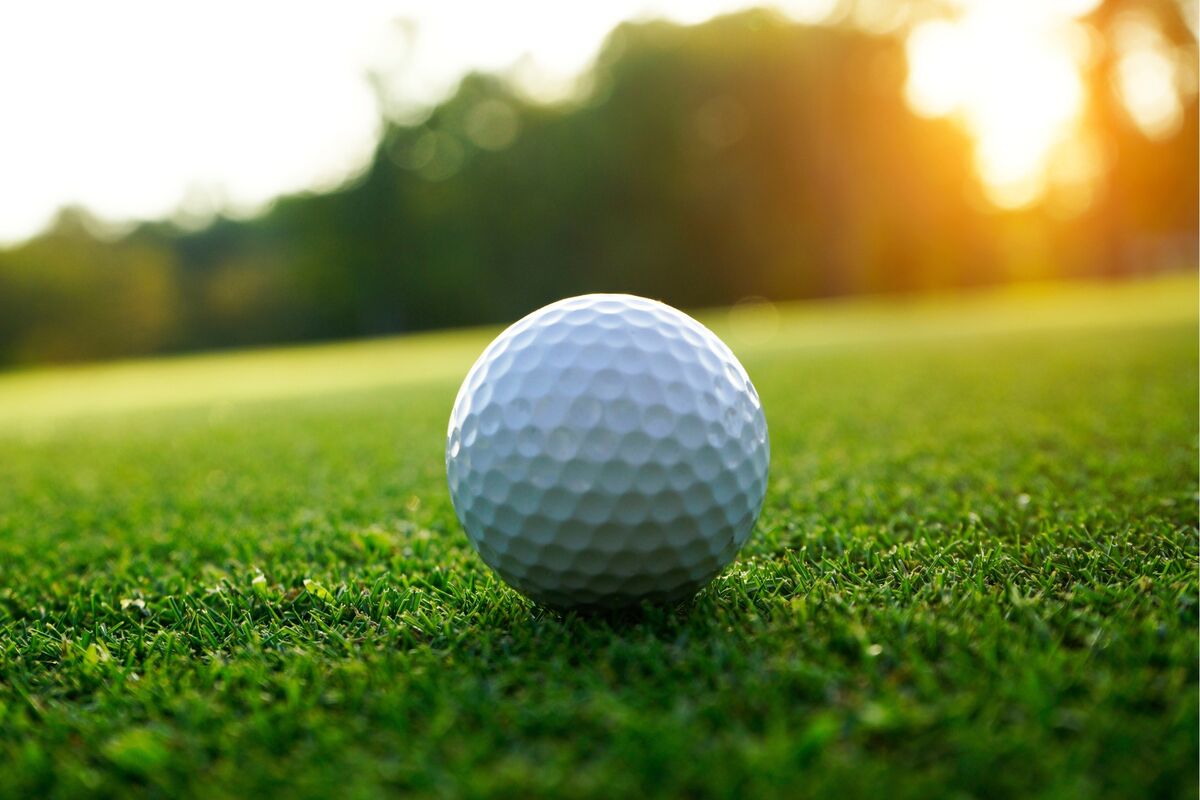
It’s common for a golf ball to have 336 dimples. But that doesn’t fully answer the question “how many dimples does a golf ball have?” The truth is most golf ball have anywhere between 300-400 dimples.
Let’s take a closer look.
How Many Dimples Does a Golf Ball Have?
Here’s how many dimples some of today’s most popular golf balls have:
- Titleist Pro V1: 388
- Srixon Soft Feel: 338
- Callaway Chrome Soft: 332
- TaylorMade TP5: 322
- Kirkland Signature: 338
Like almost every other design element that makes its way onto today’s golf equipment, the dimples on a golf ball are there to make the ball go farther.
In fact, according to Steve Quintavalla, the USGA’s Senior Director of Equipment Research and Testing, a golf ball with dimples will travel almost twice as far as a ball without dimples would travel.
If dimples are good for a golf ball, the next question becomes, is too much of a good thing bad? And if so, how many dimples is the perfect amount?
These are all great questions. Golf ball manufacturers manipulate the number, shape, size, and even edge angles of dimples to optimize ball flight and trajectory.
Benefits of Dimples
So, how exactly do dimples make a golf ball fly farther?
“A golf ball has dimples to reduce wind resistance or aerodynamic drag,” Quintavalla said in a USGA profile on golf ball dimples. “When you reduce it, you can make golf balls go a lot farther.”
Most dimples measure just one-fifteenth of a millimeter, and while the USGA has regulations for almost every other element of a golf ball, there are no regulations on how many dimples a golf ball can have, or what shape or size they are. This allows manufacturers to experiment with different counts, patterns, and shapes of their dimples.
For example, Callaway has used a hexagonal dimple for years. In 2021, Bridgestone released the e12 Contact golf ball with raised centers in its dimples. The Titleist Pro V1, one of the most popular golf balls ever created, features 388 dimples, while its sibling, the Pro V1x, has 348 dimples.
Dimples also impact a shot’s lift. Deeper dimples result in a lower-flying ball, while a ball with shallower dimples flies higher.
History of Golf Ball Dimples
Early golf balls consisted of leather balls filled with boiled goose feathers. This method was used for hundreds of years.
It was not until 1845 that golf balls were made from the gum of a Malaysian sapodilla tree. These "gutta-percha" balls were completely smooth and could travel much farther than the leather pouch golf ball.
However, golfers quickly realized that the ball handled better and traveled even farther after it had been used, and thus dented and scuffed, a few times.
In 1897, a patent was issued for a golf ball with indentations, providing the first proof of early experimentation. Dimpled balls continued to gain traction throughout the first two decades of the 20th century. David Stanley Froy was an early pioneer of the dimpled ball, using one at the 1900 British Open. By 1921, dimpled golf balls had achieved a standard weight and size and had become required equipment in major tournaments.
During the 1930s, the use of dimpled golf balls became standard, and the outside of golf balls has changed very little since then.