Simple At-Home Golf Workout to Make You a Better Golfer
Golf fitness is a big part of your on-course performance, and there are plenty of simple, at-home exercises you can do to better yourself and your golf game. An expensive gym membership isn't the answer for everyone. With a little time and some determination, this golf workout program can help your scores go down.
Golf Muscles
Having toned arms is great when you're hitting the beach, but it's not the only top necessity for a proper golf swing. Instead, concentrate on your golf muscles -- your back, legs and core -- to improve your golf game in your home gym.
Back
Keeping your back in good shape can only prolong your golf life. Too often we see professional and amateur players alike plagued by back issues. You can get away with aches and pains in just about every area, but if your back is hurting, you can't swing the club.
Your back goes through a lot in a golf swing. From the twisting backswing to a full finish, your back guides your golf swing. Your back muscles should be at or near the top priority in your golf workout routine.
Legs
Just because you ride in a cart doesn't mean your legs can be out of shape. Much of the power in your golf swing comes from your legs. Your legs take the brunt of the force throughout a round of golf, between swinging and walking, so be sure to make your legs a priority.
If you ignore your leg muscles you will notice that your bottom half will struggle to keep up with your upper half. It's easier to power through weak arms than it is weak legs on the golf course.
Core
Your core is the area from your waist all the way to your lower chest. These muscles are important because they rotate through a golf swing and allow you to execute a proper golf swing by making a full turn in your backswing and a second full turn when you go through the ball, just like your back. Your core allows you to fire at the golf ball and your core muscles are vital if you intend on having intense and prolonged practice sessions.
Arms
When you look at toned players such as Brooks Koepka or Tiger Woods you'll instantly notice how big their arms are. Paying complete attention to your golf muscles can't be accomplished without some arm work. It's not the ultimate necessity, but you do need to make sure your arms are able to keep up with adding speed to your swing and taking on the impact of every golf shot.
Balance, Flexibility, and Stamina
No matter what your golf workout goal is, it's important to remember that you can't maximize your effort on the golf course without good balance, flexibility and stamina.
Balance
Great balance is key to a well-executed golf swing. Watch professionals swing and notice that just before they begin their takeaway their feet and legs are often in motion. This is their way of finding the best balance. Your leg and core exercises will help with this if you do them correctly.
Flexibility
All of the stretching you do along with some of the resistance training will help your flexibility. Having a flexible body will make the unnatural motions of a golf swing much easier.
Stamina
A four to five hour round of golf requires stamina if you plan on finishing strong, just like a 90-minute soccer match or a 48-minute basketball game. Your golf workout routine should continually push you and keep you ready for longer days on the golf course.
How to Structure a Golf Workout Program
Putting together a golf workout plan requires a few key elements.
Time
Be realistic with how much time you have to devote to your workout plan each day and week. Setting unrealistic expectations leads to frustration and often results in abandoning your plan. If you only have 15 minutes per day, stay true to that amount of time and understand that it might take you a little longer to reach your goals, and that's okay.
Realistic Expectations
Understand what is realistic for you. Achieving a six-pack in a month is probably not going to happen, but perhaps dropping an inch on your waistline is. Bonus, you get to buy new golf clothes.
Have Fun
It's important to remember that you're working out for golf, which should be fun. However you need to enhance your enjoyment is up to you, but consider things like watching golf while you're working out or taking breaks between sets to roll a few putts.
Stretches
All good workout routines begin with stretching. Stretching helps prepare your body for the workout and prevents injury during your workout.
Shoulder Stretch
- Equipment Needed: golf club
- Muscles Worked: arms, chest, back, flexibility, balance
- Reps: 10
- Sets: 3
Hold a golf club in front of your body with your palms facing upwards. Begin the stretch with your legs shoulder-length apart. Bend over at the waist no more than halfway, keeping your back flat and your chest pushed forward. Keeping your back straight is more important than how far you can bend at the waist. From this starting position, raise the club above your head to stretch your shoulders. You should feel slight pressure but never stretch to the point of pain. Then lower the club.
Rotational Stretches
- Equipment Needed: yoga mat, towel, golf club
- Muscles Worked: core, back, flexibility, balance
- Reps: 10
- Sets: 3
Begin the stretch straddling a bench, or with a yoga mat or folded towel between your legs. This is to keep your legs and hips in a stable position. Then place the club behind your back, held in place by your elbows with each hand placed on your solar plexus (between your chest and your belly button). Keeping your hips stationary, rotate your torso both ways as far as is comfortable, holding each rotation for two seconds. Repeat the stretch 10 times. This stretch helps rotational flexibility which helps generate power in your golf swing.
Legs
Add power to your golf game by strengthening your legs with these golf leg workouts.
Lateral Squat
- Equipment Needed: yoga mat
- Muscles Worked: legs, core, balance
- Reps: 5 per side
- Sets: 5
The lateral squat focuses mainly on strengthening glutes and your groin, but also helps loosen up hamstrings and your hips to prevent injury and increase flexibility.
Start with your feet around a shoulder length and a half apart. Shift your weight to your left, bending your knee while keeping your right leg strength. Your shoulders should remain in line with your bent knee, with both feet facing forward. Then raise up out of the squat and repeat the exercise on your right side.
Side Plank
- Equipment Needed: yoga mat
- Muscles Worked: legs, core, arms, balance
- Reps: 5
- Sets 5
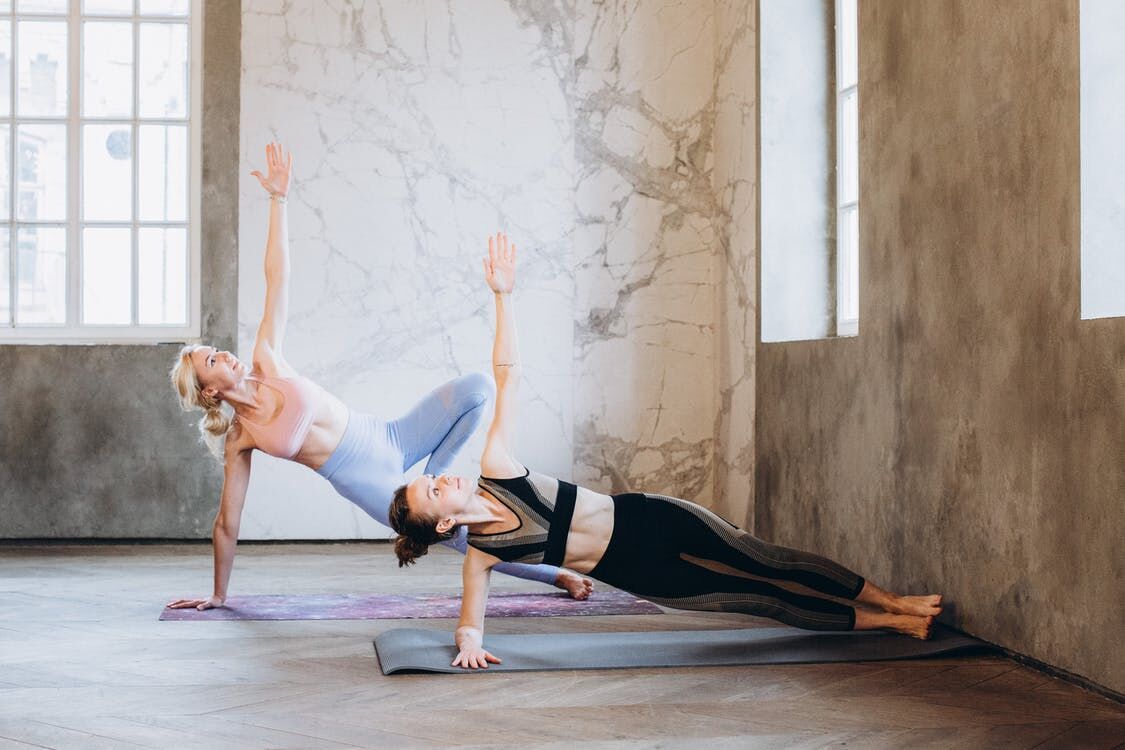
The Side Plank works all the muscles of your side and helps your stabilizer muscles that are crucial to preventing injury. Begin the exercise by laying on your side with your elbow under the shoulder and your forearm touching the ground. Your feet should be straight and stacked on top of each other or staggered if you need more stability.
Next, lift your hips off the ground and keep your body in a straight line, using your core muscles to keep yourself elevated. Hold the pose for 15-30 seconds. For an added challenge lift your free arm up to the ceiling, or extend your planted arm.
Arms
These arm exercises are great for golf because they will help you keep your arms strong, toned, and resistant to injury without adding mobility-restricting bulk.
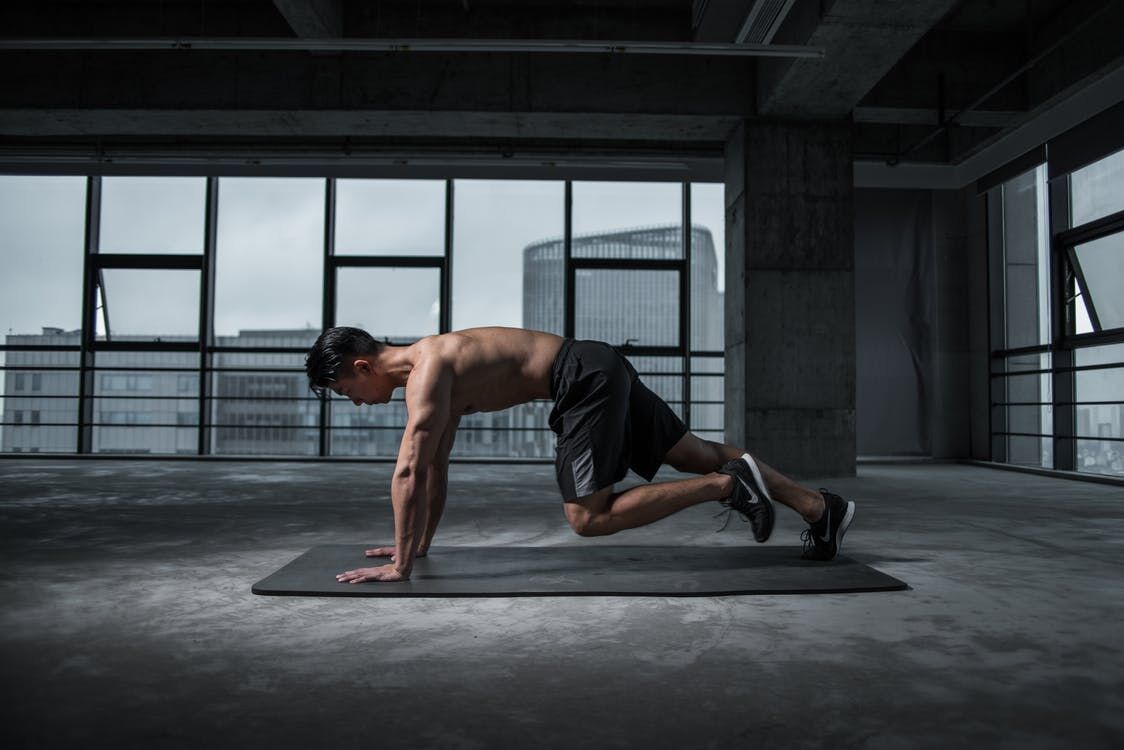
1 Legged Push-Up
- Equipment Needed: none
- Muscles Worked: arms, chest, core, balance
- Reps: 10
- Sets: 3
Start in a standard push-up position and then lift one leg off the ground. Keep the raised leg straight and complete a push-up. Golfers can get the most out of this exercise by strengthening arms, core, glutes, and quads in one exercise while also stretching hamstrings.
Top Medicine Ball Exercises For Golf
Medicine ball exercises are a great way to increase power and distance in your golf swing.
Russian Twists
- Equipment Needed: medicine ball, yoga mat (optional)
- Muscles Worked: core, back, balance
- Reps: 25
- Sets: 3
Russian twists are a common exercise that build core and oblique muscle strength. Lay on the small of your back and upper butt. Keep your chest and legs off the ground. Tuck your legs in so your knees are bent and the abdominal muscles are contracted. Then, rotate your upper body side to side, touching the medicine ball on the ground on each side. This is much like the rotation of a golf swing and is extremely useful to your power and balance.
Side Throws
- Equipment Needed: medicine ball, yoga mat (optional)
- Muscles Worked: arms, back, core, legs
- Reps: 10
- Sets: 3
Use a wall or partner and throw the ball from one side of your body and release it on the opposite side. Stand with your knees bent and rotate your torso back. Then explosively release the ball through. This exercise is much like the rotation of a golf swing and helps build power and explosiveness which leads to increased club speed. Do three sets of 10 on each side.
Back Throws
- Equipment Needed: medicine ball
- Muscles Worked: arms, back, core, legs
- Reps: 10
- Sets: 3
Back throws are simple throws where you take the ball and hold it between your legs. Then, explosively jump upward and throw the medicine ball back and up over your head.
This move will increase your back strength and explosiveness. It will also help with strength so that the strain put on your back during a golf swing is not a problem.
Toe Touches
- Equipment Needed: medicine ball, yoga mat
- Muscles Worked: core, legs
- Reps: 20
- Sets: 3
Toe touches are a common abdominal exercise that are much more strenuous, but also more beneficial, with a medicine ball. In this exercise, lay on your back and lift your legs off the ground so the bottom of your feet point toward the sky. Holding the ball, touch it to your toes. Then, bring the ball back above your head on the ground and repeat. Focus on keeping your legs up and the abdominal muscles contracted.
Best Band Exercises for Golf
A resistance band provides a number of exercise options for improving your overall conditioning and strength. It can be particularly effective for golfers who are trying to build strength in their core and upper body. Older golfers who are losing a bit of distance may get some relief in that area by exercising with a resistance band.
Seated Row
- Equipment Needed: resistance band, exercise ball or chair
- Muscles Worked: arms, back, core
- Reps: 10
- Sets: 3
Wrap the band around a fixed object in front of you and sit on an exercise ball (preferred) or a chair. Start off with your arms extended. As you tense your back, pull your arms in to your sides with your hands facing each other. Release your arms slowly to return to the starting position.
Chest Press
- Equipment Needed: resistance band, exercise ball or chair
- Muscles Worked: arms, back
- Reps: 10
- Sets: 3
The chest press exercise works best while sitting on an exercise ball that forces you to balance, but it can also be done on a bench or a chair. Wrap the band around a strong object (hook, chair, or table) behind you and hold the handles. Start with your elbows bent and your arms parallel to the ground. Press your arms out but do not lock your elbows. Repeat this move 10 times.
Biceps Curls
- Equipment Needed: resistance band
- Muscles Worked: arms
- Reps: 10
- Sets: 3
Stand on the resistance band and hold the handles. Your palms should be facing the ceiling. Bring your hands up to your shoulder and then lower them to waist level, perpendicular to the floor. Repeat this exercise 10 times.
Example of Weekly Golf Exercise
Here is an example of how you can structure your weekly golf exercise so to get all of your key workouts in a reasonable timeframe. It's important to note that the set and reps are recommended as a beginner, but they can be increased or decreased as you see fit. For a longer, more intense workout, combine two consecutive days into one.
Stretch daily before you begin your workout and on the days noted where no other exercises take place. Stretching is vital to the flexibility of your golf swing and also keeps your muscles prepared for your next workout.
Your days that you only stretch can be increased or decreased as well.
| Day | Exercise |
| Monday | Stretch (shoulder), Lateral Squat, Push-Ups |
| Tuesday | Stretch (rotational) Side Plank, Russian Twists, Seated Row |
| Wednesday | Stretch Only (shoulder) |
| Thursday | Stretch (rotational), Lateral Squat, Side Throws, Chest Press |
| Friday | Stretch (shoulder), Back Throws, Toe Touches |
| Saturday | Stretch (rotational), Side Plank, Push Ups, |
| Sunday | Stretch Only (rotational) |