Golf Drills for Kids
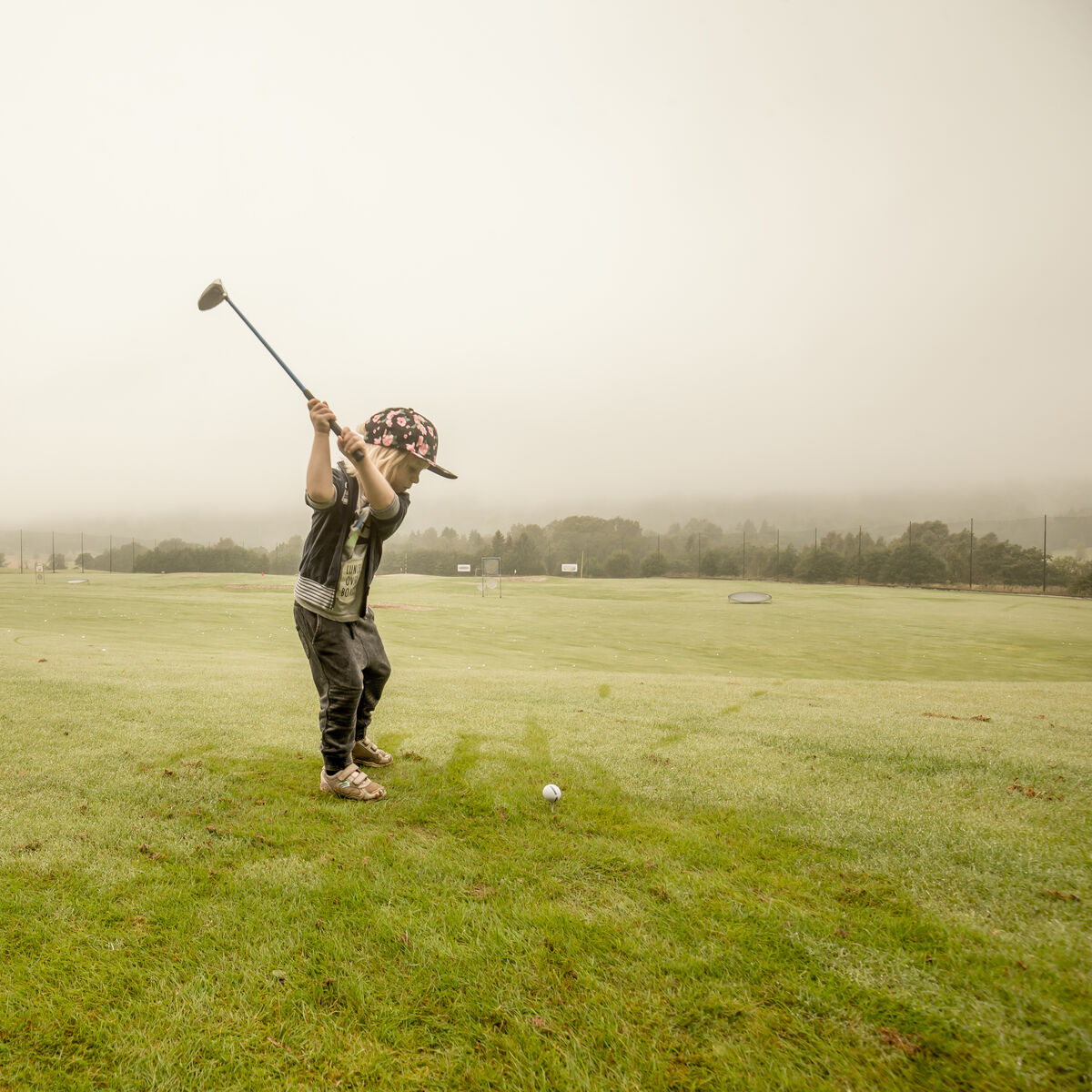
Many drills can be difficult for kids to grasp. If you have a young player that you're trying to get hooked on the sport, here are some drills to help. These drills are simple, effective and fun, and they require minimal equipment or setup. They cover each area of the game, from the tee to the green. Incorporate these into your young player's game and you'll see a stronger interest and improved technique.
The Driving Range
On the range, most children will have problems keeping their bodies low and will top the ball. Start off by teeing everything up for the beginning player. This builds confidence and produces immediate results by always getting the ball off the ground.
For the more advanced player, work on aim and picking out targets. Get the junior golfer to imagine a fairway on the range. Use markers such as flags or targets for visual representation of your "fairway." Assign points to balls that stay within the fairway. Play a game with your child to see who can score the most points.
Using the targets already on the course, play a skills game with your junior golfer. Have him pick a green or target and a club. Go head-to-head to see who can get his ball closest to the pin, the winner getting to choose the next green. Feel free to assign points to make it more challenging.
Chipping Green
For better chips, have your junior golfer work on stopping the ball and getting it close to the hole. To do this, have her focus on where to land the ball, as opposed to the hole. This will help her learn feel and understand the slope of the greens better. Once you've established the "landing area," mark it with a tee or a towel, giving her a visual marker to aim for.
You can also encourage better pitches by placing the golf bag between the player and the green. This will force the player to get the ball airborne in order to get it to the target (the green).
If you have access to string, you can draw a 3-foot circle around the hole and play a game in which the junior golfer must get his ball inside that circumference. You can award points for successful shots as well as play along with him.
Putting Games
Using tees, set up putts at different lengths. Set up 3-, 6- and 9-foot putts along the same putting line. Have the junior player putt from the 3-foot mark first, and if she makes it, have her progress to the 6-foot mark, and so on.
You can also have the player start from a hole and take a step, and putt from that spot (1-foot putt). If that putt is holed, the player can then take two steps from the hole, presumably two feet, and attempt that putt, and so on. If the player fails to hole the putt in a single stroke, he takes a step forward, in essence losing a foot of length. After 15 to 20 minutes, ask the player how many "feet" he was able to get to.
Set up a putting ring by using 6 to 10 golf balls, depending on the length of the putt. Select a distance from the hole (7 feet) and in an equidistant circle set up the golf balls in a ring around the cup. Have the player putt each ball at the hole and count how many she makes.