How to Master the Single Plane Golf Swing (Like a Pro)
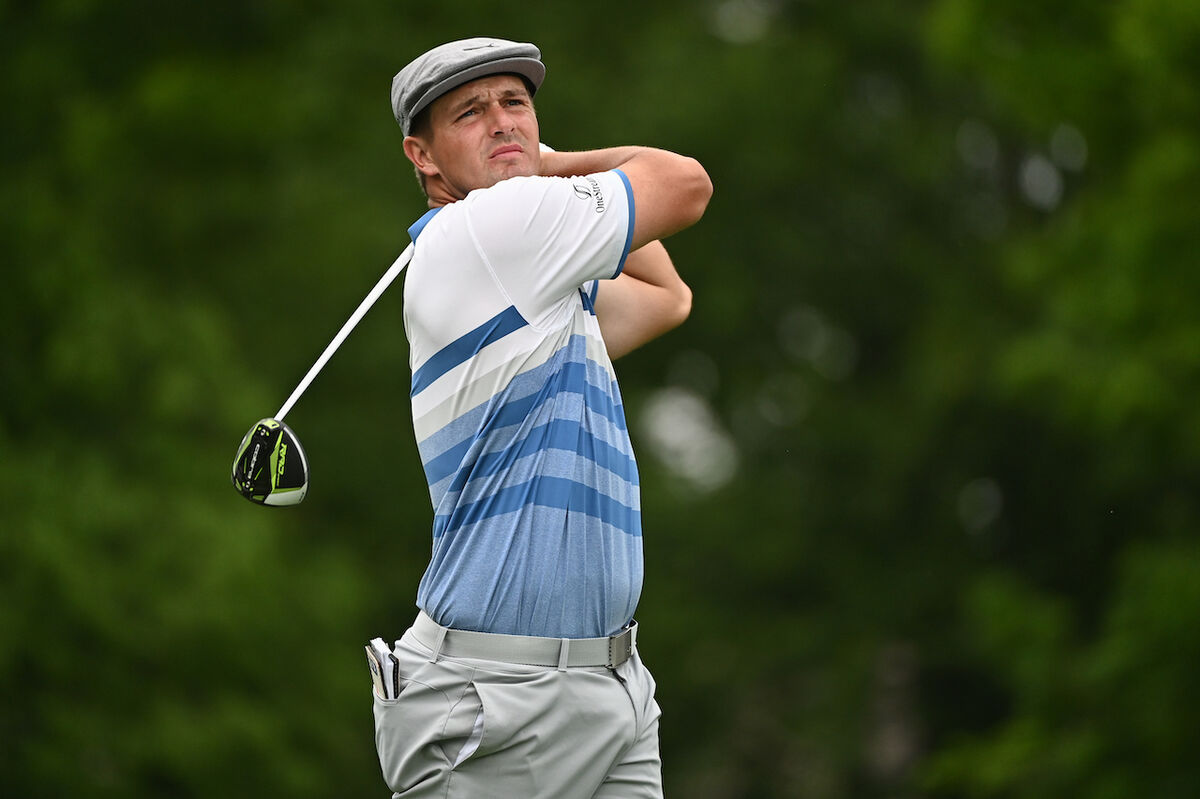
With art and science on opposite ends of the spectrum, the single plane golf swing rests as far on the science end as one can travel.
It could be debated for decades whether the golf swing itself is more art or science. Feel players will advocate to eliminate over-thinking and simply make a natural, athletic swing. Technical players will argue the importance of dynamic loft, face-to-path, hip turn, shaft lean, attack angle, and who knows how many other metrics. The fact is the golf swing itself doesn’t even reside on the spectrum. It’s the players who, usually unknowingly, choose the art-to-science ratio that best suits their game.
With that in mind, it should come as no surprise that the golfer known as the Mad Scientist, Bryson DeChambeau, employs the single plane golf swing, the most scientific version of the golf swing imaginable.
Benefits of the Single Plane Golf Swing
However scientific the single plane swing is, the entire purpose of the technique is to eliminate variables, resulting in a repeatable swing that’s simple to master. While there are science-based theories that go into the setup and execution of the swing, it doesn’t take a scientist to execute the single plane swing.
In any golf swing, the lie angle of the shaft represents the plane. A single plane golf swing will trace that plane from setup, to the backswing and throughout the downswing. This eliminates the need to have to get the shaft back on-plane at impact, which is key to a successful two-plane golf swing.
How to Make a Single Plane Golf Swing
There are a few key differences between a single plane golf swing and the more traditional two plane swing.
Setup For a Single Plane Swing
To set up for the single plane swing, lift your hands until your trail arm is on the same plane as your shaft, eliminating the angle created by your trail arm and and shaft. Your lead arm will be slightly higher than the shaft. This may also require you to stand an inch or so farther away from the ball. DeChambeau provides an excellent example of this setup.
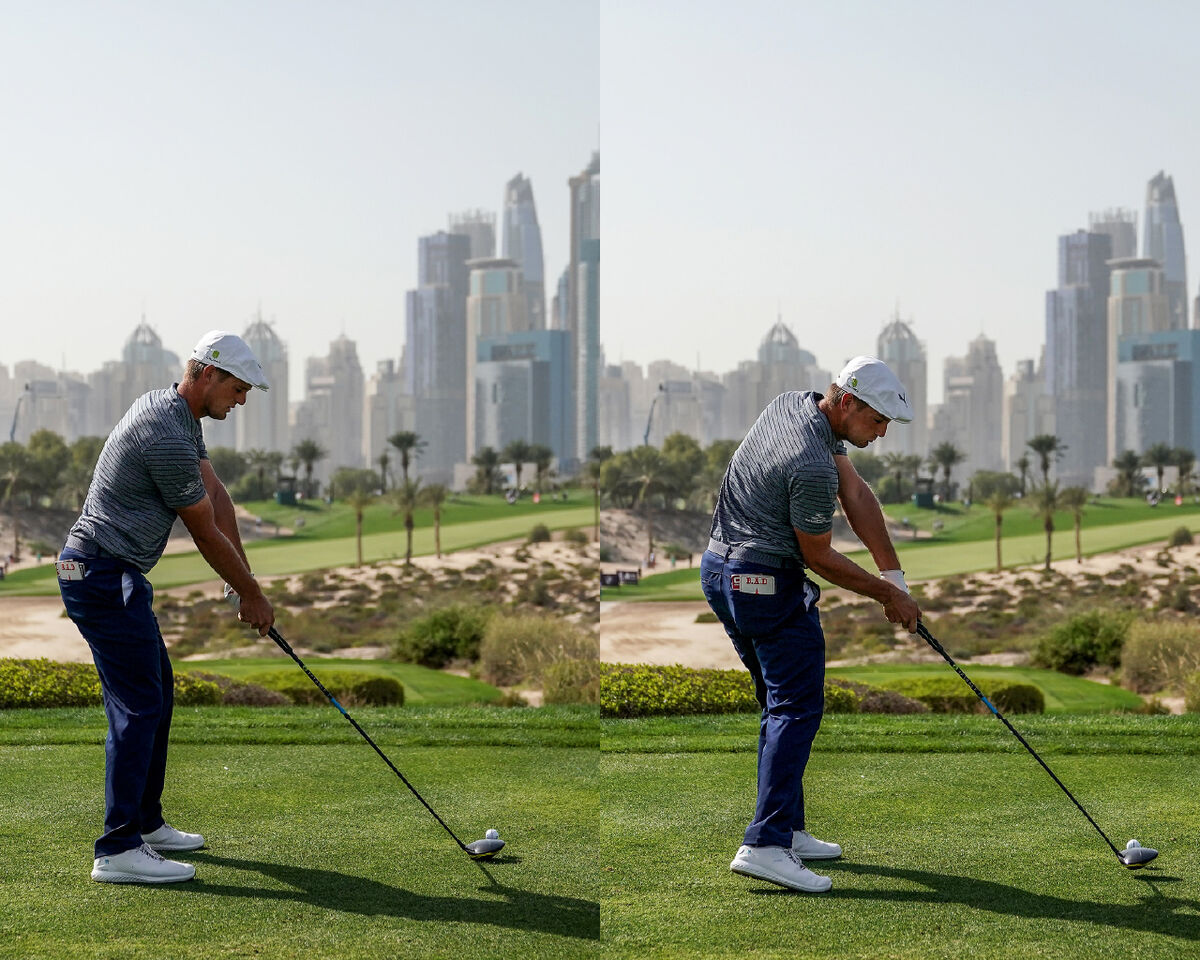
Bryson DeChambeau at address and impact
Another tip for the single plane setup is to move your hips slightly forward, toward the target. With these adjustments, your setup and impact positions are as identical as possible, which makes sense for a single plane swing. Feel it out on the range to find the setup that works best for you before taking the single plane swing to the course.
During the Swing
Once you're set up for the single plane golf swing, the swing itself is fairly simple, keeping a few key concepts in mind.
First, you want to maintain your spine angle from setup throughout the entire swing. If your goal is to keep your swing on the same plane from start to finish, it only makes sense that you wouldn’t change your spine angle and posture in the middle of it.
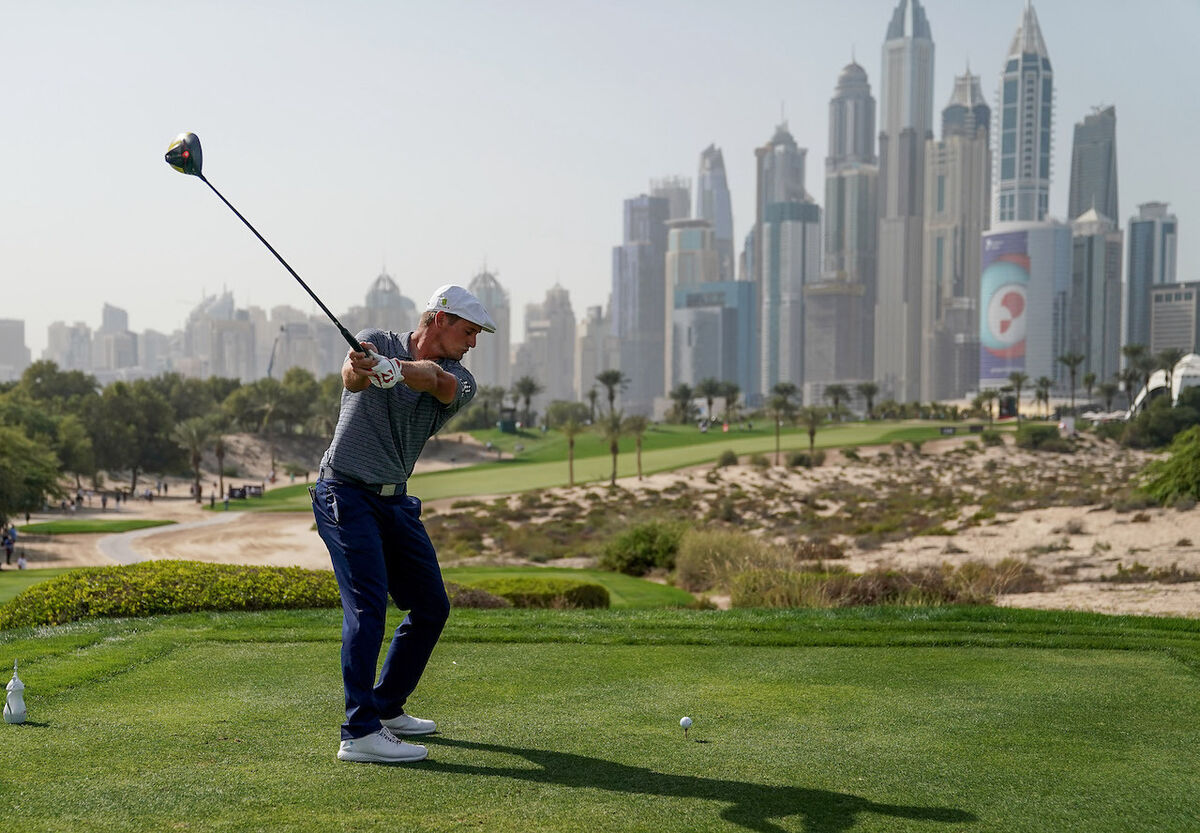
The main goal of the single plane swing is to keep the club on the plane you established at address. Simply trace that plane on your takeaway, throughout your backswing, and on the downswing. Even when your trail arm folds near the end of the backswing, keeping your lead arm on-plane is a great checkpoint.
The final thing to keep in mind during the single plane swing is to keep the club face square throughout the swing. This will ensure that you deliver it square at impact and hit shots straight down the fairway repeatedly.
Does the Single Plane Golf Swing Work?
Like any golf swing or technique ever invented or taught, when the single plane golf swing is executed properly, it works. The reason people choose the single plane swing is because by minimizing or eliminating many variables, the swing is easier to learn and repeat.
Who Has a Single Plane Golf Swing
Moe Norman is credited with discovering the single plane swing. Norman won 55 times in Canada, including two Canadian PGA Championships and eight Canadian PGA Seniors’ Championships.
Today, Bryson DeChambeau most famously employs a single plane golf swing, in addition to several other unorthodox techniques including the use of one-length clubs and arm lock putting. DeChambeau’s biggest win to date is a triumph in the 2020 U.S. Open.
One Plane vs. Two Plane Golf Swing
The single plane swing is more of an around-the-body swing, and the plane of the swing tends to be flatter. Imagine taking the club along the plane and bringing it down to the ball on the same line, then following through along that same plane. Everything happens along a single plane.
The two-plane swing is more complicated. Most two-plane golfers take the club back above the plane, then drop the club under the plane on the forward swing. Some golfers will follow-through above the plane, as well, which creates the famous "reverse C" finish that was popular in the 1970s.
Essentially, the first plane of the two-plane swing -- the backswing -- is steeper than the forward swing, which has to be shallower and more "on plane" to strike the ball firmly. So the arms work on the more upright plane, while the body rotates around another flatter plane. Jack Nicklaus has the most famous two-plane swing in history, but for a vivid example of the upright take-back and the flatter downswing, check out Jim Furyk.
Who Should Try the Single Plane Golf Swing?
Golfers who enjoy tinkering with their swing, and studying the mechanics of each movement might appreciate the simplicity of the single plane swing, which celebrates the concept of no wasted movements and no unnecessary variables.
Anybody interested to see if they can gain some consistency and straighten out their golf shots is a good candidate to give a single plane golf swing a try. Beginning golfers especially, who haven’t yet established a two-plane swing, should strongly consider learning the single plane swing to see if they can pick up the game and improve more quickly, as the two-plane swing can be difficult to learn and master.
Golfers who have an established swing that is effective and repeatable should do everything in their power to maintain that swing, and should not consider a swing change. If it ain’t broke, don’t fix it.