The History of Professional Golf
From the Scots in the 1700s to LIV's emergence in 2022, here's the history of professional golf

For almost as long as there has been golf, there have been professional golfers. From the early days on the links of Scotland to today's multimillion-dollar tour events, there are some milestones in the history of professional golf.
Timeline of Professional Golf History
- 1700s: The earls and dukes of Scotland began playing golf competitively
- Early 1800s: Scotland’s best golfers began competing at St. Andrews
- 1853: The first St Andrews professional broke 80
- 1860: The first Open Championship was contested at Prestwick
- 1895: The first U.S. Open is staged at Newport CC in Rhode Island with nine professionals and one amateur, marking the start of professional golf in the United States
- 1916: The Professional Golfers’ Association (PGA) of America is founded and the first PGA Championship is contested
- 1927: The first Ryder Cup, pitting the top professional golfers from the United States against the top British players, is contested at Worcester CC in Massachusetts
- 1934: The first Masters Tournament is held at Augusta National GC in Georga March 22-25, then called the Augusta National Invitation Tournament
- 1950: the LPGA was founded by 13 women now known as The Founders
- 1968: The PGA Tour is established as the world’s top professional golf tour when a group of touring professionals see the need to break away from the PGA of America
- 1972: The European Tour is founded
- 1997: Tiger Woods wins his first major, the 1997 Masters, which ushered in a new era of professional golf
- 2007: The PGA Tour launches the FedEx Cup, it’s first playoff-style end to the season
- 2022: LIV golf hosts its first season and begins luring some of the top players away from the PGA Tour
Early History of Professional Golf
Golf emerged in the Middle Ages as a game of hitting an object from one area to another in as few strokes as possible.
In the 1700s, the earls and dukes of Scotland began playing golf competitively in what may be considered one of the early professional leagues. The game evolved in the sandy and rolling terrain of the Scottish countryside from around 1750 to 1850, where it was famously introduced at St. Andrews.
St. Andrews Golf History
The top golfers in Scotland began to gather in the early 1800s for meetings and competitions regularly at St. Andrews in Fife. Competitions consisting of dozens of rounds over days began to be played and the first St. Andrews professional broke a score of 80 on the developing course in 1853.

The 26 Oldest Golf Courses in the World
The Open Championship
In 1860, the first purpose-built golf course was completed by "Old" Tom Morris in Prestwick, Scotland. Soon after, the first Open Championship was played by top professionals in the country.
The early Open Championship was dominated by Old Tom Morris and Willie Park, Sr. Soon after, the best golfers around Scotland began playing in organized events with prize money.
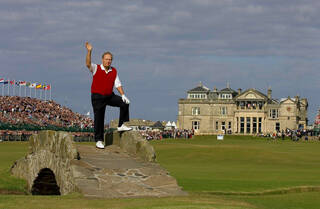
The Open Championship: History of Golf's First Major
First U.S Pros
The 1895 U.S. Open in Newport, Rhode Island, featured nine professional golfers and one amateur. It is widely acknowledged as the start of the professional game in the United States.
The Professional Golfers Association was formed in 1916. Most members were golf course pros. The same year, the first PGA Championship was held in Bronxville, New York.
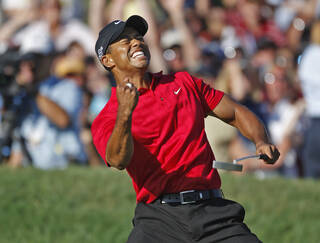
History of Golf's U.S. Open
The Early 1900s
Golf expanded from Great Britain to the United States in the early 1900s, and was expanded by the founding of Professional Golf Associations first in Great Britain and then in America.
This era was characterized by the play of three players on both sides of the Ocean. Harry Vardon, John Henry Taylor and James Braid played in and won most of the Open Championships and the U.S. Open Championships from 1890 to 1914. These golfers popularized the sport across the world.
In 1927, the first Ryder Cup, matching the best American and British pro golfers, was held. Professional golf would be dominated by Bobby Jones, Gene Sarazen, Ben Hogan and Sam Snead from the 1920s to the 1960s.
Modern Professional Golf
Modern professional golf saw its beginning in the 1960s with the emergence of Arnold Palmer, Gary Player and Jack Nicklaus by the 1970s.
The PGA Tour separated from the PGA itself in the late 1960s. This split emphasized the difference between tournament players and golf course pros. In 1972, the PGA Tour helped create a European Tour, linking important European tournaments into a PGA style circuit.
The professional game continued to expand around the world, through Asia and Africa, and tournaments became larger, prizes became bigger, audiences became larger and the equipment became more specialized.
The level of play and skill increased year by year, and golfers like Greg Norman, Nick Faldo and Tiger Woods boosted the popularity of the game through the 1990s and into the 2000s.
To ensure the continued prominence of pro golf, the PGA launched the FedEx Cup in 2007, giving golf its first playoff-caliber events.
The Emergence of LIV Golf
LIV Golf was founded in 2021 and held its first season in 2022. LIV quickly became a rival tour to the PGA Tour when some of the biggest names capitalized on huge financial offers to jump from the PGA Tour to LIV. Some of the early players to make the jump included major winners Phil Mickelson, Bubba Watson, Dustin Johnson, Brooks Koepka, Bryson DeChambeau, Patrick Reed, Sergio Garcia, Cameron Smith and European Ryder Cup stalwart Ian Poulter.