History of Spalding Golf Clubs
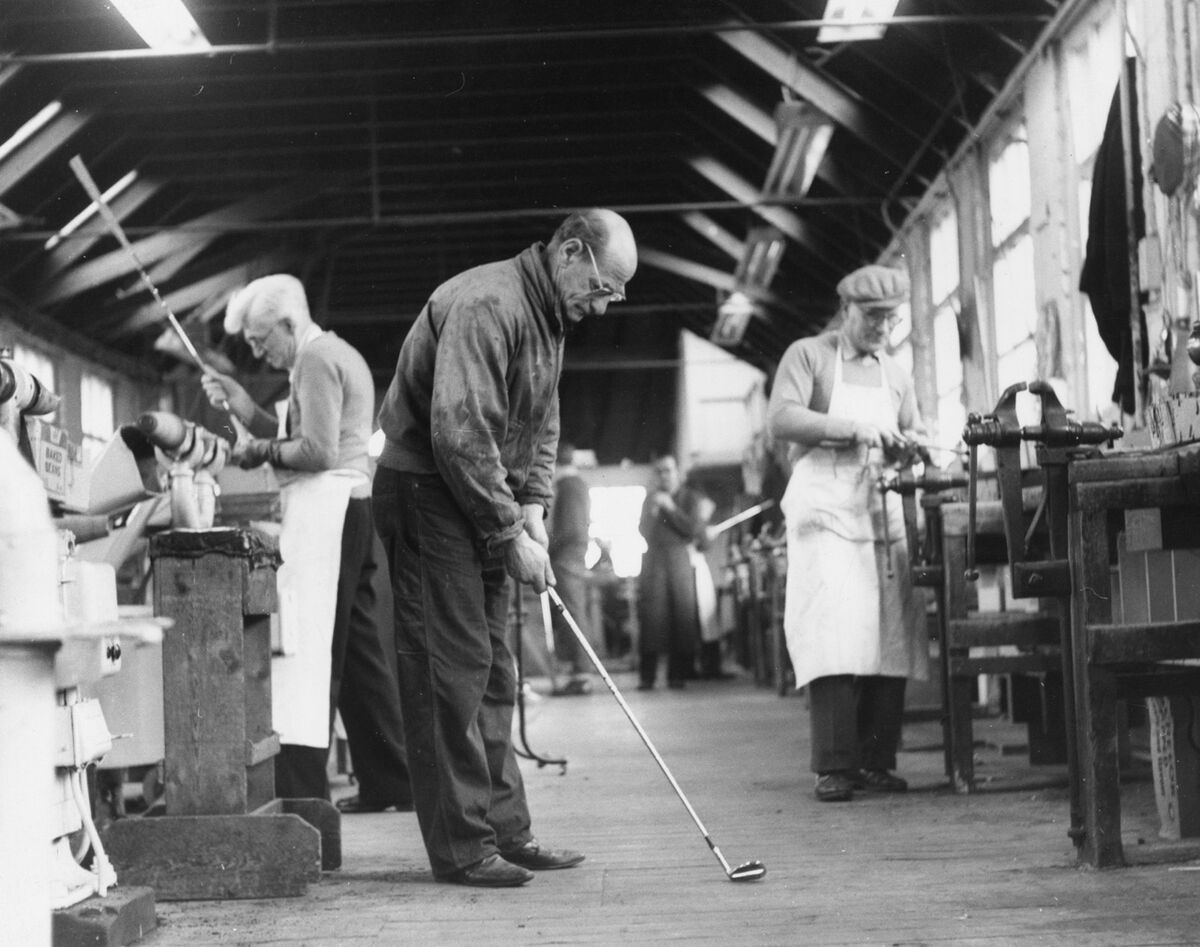
No matter what brand of club you pull from your bag, you owe some thanks to one company — Spalding. At the turn of the 20th Century, golf had stirred mild interest in the United States, and A.G. Spalding & Brothers sporting goods saw an opportunity.
The company was already selling golf balls when, in 1905, it became the first in America to offer its own brand of golf clubs.
The Early Years of Spalding Golf
Starting in 1900, Spalding opened club-making factories in London and in Fife, Scotland, producing forged iron heads for Spalding clubs sold both in the UK and U.S. Irons made during that time are distinguished by an anvil cleek mark.
The company's unique "baseball mark" — A.G. Spalding had helped put baseball on the map--was stamped on the clubs and below it "Made in Great Britain" appeared. Throughout America, the affordable Spalding clubs flew off the shelves and reaped huge catalog sales.
Spalding Golf Innovation
Spalding introduced many variations of hickory-shafted clubs to bring distance and control to the professional and duffer alike. By 1910, the company was selling aluminum fairway clubs and its Gold Medal series (1910 to 1919) featured aluminum bronze.
The company’s lead-faced putters also provided better touch for players. One of the most famous Spalding clubs was the Cran Cleek (club with a narrow face and little loft) for poor fairway lies and even putts. Today, collectors prize the narrow-faced Cran Cleek.
Deep Grooved and Drop Forged
Golfers have always known that deep-grooved irons produce better control and spin. Spalding led the way with such deep-grooved designs as the "waterfall" and waffle-face irons. Until the USGA banned deep-grooved irons, Spalding's Stop 'Em and Dedstop clubs brought a smile to countless players' faces.
By the Roaring '20s, A.G. Spalding & Brothers was using the process of "drop forging" to manufacture metal club-heads. Club-makers’ traditional method had been to shape metal heads with an anvil and forge.
Now, like Henry Ford's assembly-line Model T's, Spalding craftsmen used a mechanical hammer to craft club-heads, drill sockets in them to attach the shaft and then polish the heads, all of which allowed Spalding to mass produce matching club sets.
State-of-the-Art Shafts
Spalding club-makers paid as much scrutiny to shafts as heads. The company experimented throughout the 1920s and 1930s with lathe-turned hickory shafts that featured circular ridges spaced at standard intervals down the entire shaft.
The design gave the clubs an exotic bamboo look; the underlying message being that these clubs offered players bamboo's legendary flexibility and whip-like strength.
Too Many Choices
With Spalding's mass-market success breeding scores of imitators, players could pick and choose from countless club lines. Golf bags bulged with 20 to 25 clubs, and the USGA, fearing too many specialty clubs had watered down the skill required in golf, took action. In 1938, the USGA passed an edict limiting players to 14 clubs.
Popular Spalding Golf Clubs
Some of the most popular Spalding Club models were:
- The Cran Cleek
- Spalding Pro Response
- Spalding Eclipse Irons
- Spalding Tour Edition Irons
- Spalding Molitor complete set
- Top-Flite Synchro-Dyned Irons
At one time, Greg Norman used the Spalding Tour Edition irons, now a collectors item, on Tour. Buyers can still find Spalding clubs on some secondary sites.
End of Spalding Golf
The success of Spalding golf clubs had compelled the USGA to act, but this success was not destined to last forever. Mismanagement and a growing golf market led Spalding to cease manufacturing golf products, selling off popular brands like Top Flite to Callaway in the early 2000s.
Image: Central Press/Hulton Archive via Getty Images