How to Putt in Golf: A Complete Guide From Stance to Speed
Learn how to putt effectively and beam with confidence on the greens

Golf is an intricate sport that demands a wide range of skills to succeed. Knowing how to putt is a huge part of that.
Every shot matters, from the full swing to chipping and bunker shots to pitching. But that's not all; mastering the mental game and playing the course strategically separates elite golfers from the rest.
If you want to succeed at golf, you must be able to call on all your abilities. Putting effectively is particularly crucial to your success.
In this article, I'll teach you how to putt. We’ll explore the importance of putting and I’ll explain why you must focus on this crucial skill set within the game.
Why is Putting So Important?
Putting is crucial to playing good golf because it constitutes a significant portion of the total strokes taken during a round of golf. Statistics reveal that approximately 40% of all strokes made in a round of golf are putts. With that stat in mind, you can see why becoming a good putter is essential to reducing your scores.
The ability to hit it long and accurately from the tee or stick it close to the pin regularly on approach shots means nothing if you can't pay it off with the putter.
To putt effectively, you need a combination of skill, technique, and mental focus. You must also develop the ability to read the green, judge the speed and break of the putt, and maintain your composure under pressure. Even professional golfers devote significant time to practicing their putting, as putting is often the difference between winning or losing a tournament.
Pre-Putt Process
Like with all aspects of the game, a big portion of what goes into a good shot happens before you even begin your swing or, in this case, your putting stroke.
To get ready to hit your putt, you must get your eyes set, get your body set, and get a good grip. You must also get a proper read of the line of the putt.
Get Your Eyes Set
Golf instructors have long taught that your eyes should be set up directly over the ball as you address your putt.
However, through continued research and understanding of the putting stroke, I now believe that the eyes can be slightly inside the ball and target line or even slightly over that line. It really all comes down to what's best for you based on you body, eyesight, and comfortability over the ball.
I recommend starting with your eyes over the ball as a baseline and, then adjusting to suit your needs. No matter what is best for you, you must be consistent each time you set up to the ball.
Get Your Body Set
Once you get your eyes set, it’s time to align your body parallel to the left of the target line for a right-handed player, or parallel right for our lefty friends.
You must look at three critical checkpoints with your body lines, ensuring your shoulders, hips, and toe lines are all parallel to your target line.
Before beginning your stroke, remember that keeping your head and body still throughout the stroke is critical. This helps you maintain your balance and control throughout your stroke.
After you get set with your eye line and body lines, concentrate on how your body is positioned over the ball. I love the concept of forming a triangle with your shoulders at the top and your arms hanging straight down as you grip the putter. Not only is this visual helpful in setup, but it is extremely useful to reference as you stroke the putt.
How to Hold a Putter
There are various techniques for gripping the putter, and the best putting grip style for you depends on two factors; your personal preference and how well it suits your tendencies. The following are the most commonly used putting grip styles in the game today:
- Traditional Putting Grip/Reverse Overlap Putting Grip
- Cross-Handed or Lead Hand Low Putting Grip
- The Broomstick Approach
- ArmLock and WristLock Putting Grips
- Claw Putting Grip
- Saw Putting Grip
- The Prayer Putting Grip
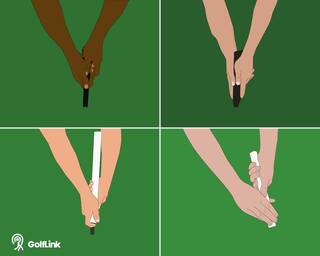
7 Putting Grips: Which One Should You Roll With?
Using the wrong grip style for your putting stroke could make it challenging to be a proficient and effective putter.
Knowing which grip style is best for you and your ability to square the face up best at impact will come down to trial and error.
Try several different grip styles to find the one that’s best for you. Here’s how I recommend you do this:
- Start by selecting a straight, five-foot putt
- Create a "gate" using two tees, slightly wider than a golf ball.
- Place a ball behind the midpoint of the gate, about one foot away.
- Now, try putting the ball through the gate using a variety of the above-mentioned grip styles. Doing this lets you test your clubface control and find the grip that helps you start the ball on the correct line. If the ball hits either tee, you then know that you need to improve your start line, which could mean a grip change.
Keep practicing until you find the perfect grip that works for you.
The Putting Stroke
The putting stroke is a rhythmic back-and-forth motion of the putter's head. The consistency with which you can replicate a reliable putting stroke determines your prowess as a putter.
Generally speaking, you can use one of two different primary putting stroke styles: the straight-back-straight-through method and the arc-style method.
With the straight-back-straight-through stroke, the putter stays on the target line for most of the stroke. Even with this method, a slightly arced backstroke is needed for longer putts since the putter head must travel further.
With the arc-style putting stroke, the putter is taken back slightly to the inside of the target line, follows that arc back to a square impact position, and then finishes to the inside during the follow-through. Tiger Woods is known for his use of the arcing putting stroke.
Regardless of your preferred putting style, my keys to ensuring a sound stroke are below.
- First and foremost, keeping your head and body still is essential. This helps you maintain balance, consistency, and control throughout the stroke.
- Next, I'd like to reiterate the importance of forming a triangle with your shoulders, arms, and the putter. This triangle should remain steady as you begin your stroke. Soften your elbows slightly, they should touch just under your rib cage.
- If you're a straight-back-straight-through putter, during your backswing, ensure that the centerline of the putter head moves away from the ball and stays on the target line. On longer putts, you need to take a longer stroke, which creates a slight arc. That’s perfectly fine and, in fact, necessary. As you swing forward, focus on moving the centerline of the putter head back down the target line. Try to minimize wrist movement and rotation, and keep your lead wrist flat as you move toward the target.
- If you're more of an arc-style putter, the putter's centerline will swing just inside of your target line during the backstroke. As the putter head returns towards the ball on the forward stroke, you follow the same arc as you did on the way back. There will be a minimal amount of wrist rotation in this type of stroke.
Another great tip is to pay attention to your lead wrist. It should be flat at impact, with the backside of your hand facing the target.
Just after impact, the putter face should continue to arc on the post-impact side of the stroke, just to the inside of the target line. This stroke style is a mini version of a full swing in golf.
Keep your head and body still throughout the stroke as you rock the triangle back and forth. Once you've completed the throughstroke, hold your head steady and look down at the spot where the ball was set up for three seconds
Tempo is King in Putting
If you have good tempo, you will have good distance control, which is critical to being a good putter. Maintaining a smooth and controlled tempo ensures that you strike the ball with the right speed and direction consistently.
One of the most critical things to understand about tempo in the putting stroke is that it should always remain the same, regardless of the length of the putt or the speed of the greens. A good benchmark is a 2:1 ratio, meaning your backstroke lasts twice as long as your throughstroke.
The variable that changes when putts increase in length is the length of your stroke. Your tempo ratio should always remain the same. Some people have a quicker stroke, and others have a slower stroke, but that ratio of around 2:1 should be the goal regardless of the speed of your stroke.
The best thing you could ever do for yourself to practice your tempo is to purchase and use the Blast Golf Sensor. This is an incredible tool for mastering your tempo.
You can become a more confident and successful putter by mastering your tempo.
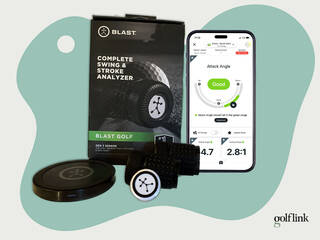
Blast Golf Review: 3 Takeaways From the Swing Analyzer
Reading Putts and Starting Lines
Here's the routine I have long taught my students to use to become a great green-reader and make more putts.
- Pay attention to how your approach shot, chip shot, or pitch shot reacts on the green. Watch its movement until it comes to a stop. Watch how your playing partners' shots react and roll as well.
- To prepare for your putt, stand behind the ball and examine the line in which your putt will move. Visualize the ball rolling in that direction and going into the hole.
- Next, move around the hole counterclockwise and stop at the 3 o'clock position. Look at the line from that angle and visualize the ball going in. Repeat this process at the noon and 9 o'clock positions.
- Once you return to your ball, take another look at the line from behind it. Make sure that you always have an aim line marking on the ball. You will need that to align it with the apex point on the line you have chosen for your putt. Visualize the ball going in.
- Take a couple practice strokes behind your ball and on your line to get a feel for the length of stroke you will need. As you make those practice strokes, visualize the ball going into the hole.
- Before stroking your putt, say to yourself three times, "I am going to make this putt." Then, focus on your stroke and listen for the sound of the ball dropping into the hole before you look up.
While there are several steps to this routine, you can get through this process in a minute or two, and much of the work can be done while your partners are putting.
Helpful Hack
To truly master the art of putting, you must have complete confidence in your putting line. Once you find the perfect line, pick a point about 6 inches past your ball on that line. Make this point your target for aligning the mark on your golf ball. Trust me, using a mark on your golf ball for alignment is essential if you want to get the ball started on your line correctly every time. Those first few inches are everything.
Be a Confident Putter
When it comes to putting, confidence is essential. While great fundamentals can help build confidence, it's not always enough. Your mindset can impact your performance, especially during competition. That's why confidence is crucial. Work on confidence as if it were like any other fundamental in golf.
To become a confident putter, you must own three things:
- Solid fundamentals
- A regular putting practice regimen
- A free-flowing stroke
By mastering these elements, you'll confidently approach every putt and sink more of them on the green.